Neurological Sleep Medicine: Diagnosing Complex Sleep and Brain Disorders

Neurological sleep medicine evaluates sleep disorders that may involve the brain, nerves, muscles, breathing regulation, or abnormal movements during sleep. Symptoms such as severe daytime sleepiness, dream enactment, unusual nighttime behaviors, seizures during sleep, or sudden weakness with emotions deserve medical assessment.
Key Takeaways
- Neurological sleep medicine evaluates sleep disorders that may involve the brain, nerves, muscles, breathing regulation, or abnormal movements during sleep.
- Symptoms such as severe daytime sleepiness, dream enactment, unusual nighttime behaviors, seizures during sleep, or sudden weakness with emotions deserve medical assessment.
- Diagnosis often combines a detailed sleep history with tests such as polysomnography, video monitoring, EEG, actigraphy, and daytime sleepiness testing.
- Treatment depends on the cause and may include sleep routine changes, breathing support, medicines, neurological care, or management of related conditions.
- Patients should seek urgent advice if sleep symptoms involve injury risk, breathing pauses, confusion, new neurological signs, or sudden worsening.
Neurological sleep medicine focuses on sleep problems that are closely connected to the brain, nerves, breathing control, movement, memory, mood, and daytime alertness. A careful diagnosis can help distinguish common sleep difficulties from complex neurological sleep disorders that need targeted care.
Overview
Neurological sleep medicine is a specialized area that examines how the brain and nervous system affect sleep, and how disturbed sleep affects brain health. Sleep is not a passive state; it is an active process controlled by networks in the brain that regulate breathing, muscle tone, dreaming, memory consolidation, hormone rhythms, and alertness. When these systems are disrupted, a person may experience symptoms that look like insomnia, fatigue, seizures, movement disorders, breathing problems, or changes in behavior during sleep.
This field is especially helpful for people with complex or overlapping symptoms. For example, someone may snore and feel sleepy during the day because of obstructive sleep apnea, but another person may be sleepy because of narcolepsy, circadian rhythm disruption, medication effects, depression, or a neurological disorder. Similarly, movements during sleep may come from restless legs syndrome, periodic limb movements, REM sleep behavior disorder, nocturnal seizures, or medication-related effects.
The goal of neurological sleep medicine is to identify the true cause of sleep-related symptoms and match treatment to the individual. Diagnosis often requires a careful history, input from a bed partner when available, review of medications and medical conditions, and specialized sleep testing. With the right diagnosis, many people experience safer sleep, better daytime function, and improved quality of life.
Common Sleep and Brain Disorders Evaluated
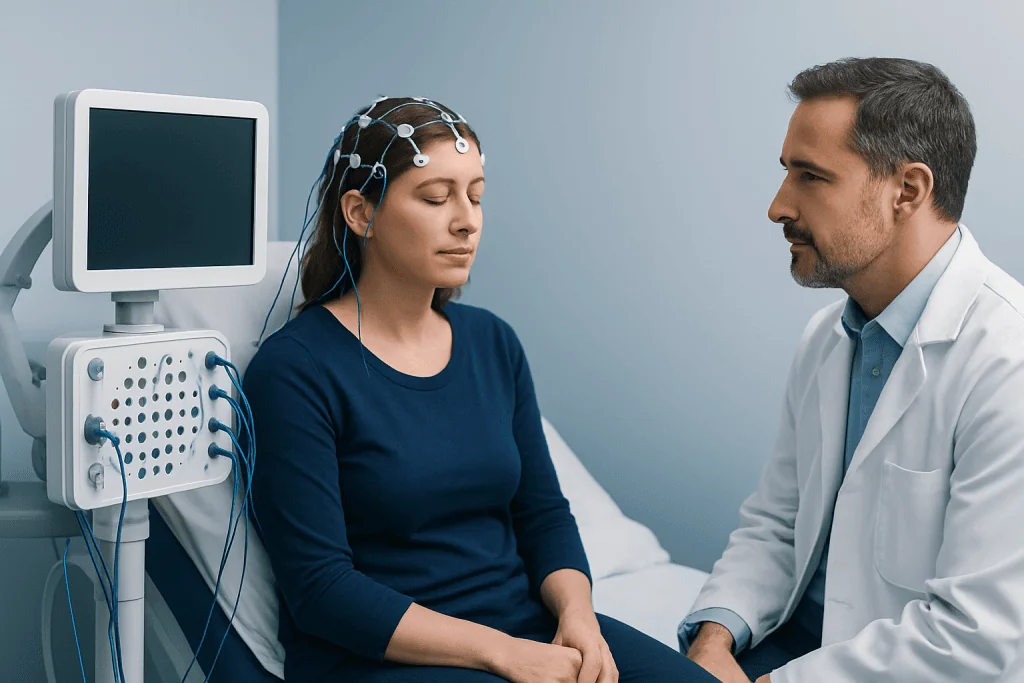
Neurological sleep clinics evaluate a wide range of conditions. Some are primarily sleep disorders, while others are neurological diseases that disrupt sleep. Conditions may involve breathing during sleep, unusual behaviors, abnormal movements, excessive sleepiness, or difficulty maintaining a stable sleep-wake rhythm. Because symptoms can overlap, specialist assessment is often needed before deciding on treatment.
Examples include narcolepsy and other central disorders of hypersomnolence, in which the brain has difficulty regulating wakefulness. Symptoms may include irresistible sleep attacks, vivid dream-like experiences at sleep onset or waking, sleep paralysis, and in some cases cataplexy, which is sudden muscle weakness triggered by emotions. REM sleep behavior disorder is another neurological sleep condition in which the normal muscle relaxation of dreaming sleep is reduced, allowing a person to move, shout, kick, or act out dreams.
Other commonly assessed conditions include restless legs syndrome, periodic limb movement disorder, sleep-related epilepsy, parasomnias such as sleepwalking or night terrors, circadian rhythm sleep-wake disorders, and sleep apnea with neurological complications. Sleep problems are also common in Parkinson’s disease, dementia, stroke, multiple sclerosis, migraine, epilepsy, traumatic brain injury, and neuromuscular disorders. In these cases, improving sleep can be an important part of overall neurological care.
Symptoms That May Suggest a Neurological Sleep Disorder

Many people occasionally sleep poorly, especially during stress, illness, travel, or schedule changes. A neurological sleep evaluation may be useful when symptoms are persistent, unusual, disruptive, or associated with daytime impairment. The pattern of symptoms matters: when they occur, how often they happen, whether the person remembers them, and whether another person has witnessed the events.
Symptoms that may point to a brain-related sleep disorder include excessive daytime sleepiness despite adequate time in bed, sudden sleep episodes, dream enactment, repetitive movements, unexplained nighttime confusion, or episodes that resemble seizures. Some people experience morning headaches, poor concentration, memory concerns, mood changes, or worsening neurological symptoms after poor sleep. Others may have fragmented sleep because of leg discomfort, breathing pauses, pain, or medication side effects.
- Loud snoring, choking, gasping, or witnessed breathing pauses during sleep
- Falling asleep unintentionally during quiet activities, work, or driving
- Sudden muscle weakness triggered by laughter, surprise, or strong emotion
- Acting out dreams, punching, kicking, or falling out of bed
- Repetitive leg jerks, crawling sensations in the legs, or an urge to move at night
- Episodes of confusion, wandering, screaming, or unusual behavior during sleep
- New sleep problems in a person with epilepsy, Parkinson’s disease, stroke, dementia, or neuromuscular disease
Keeping a sleep diary for one to two weeks can help the clinician understand bedtime, wake time, naps, caffeine use, nighttime awakenings, and daytime symptoms. If safe and appropriate, a short video recorded by a family member may also help document unusual nighttime behaviors, but it should never replace a medical evaluation.
Causes and Risk Factors
Sleep and brain disorders can arise from many different mechanisms. Some involve brain chemicals that regulate wakefulness and dreaming, while others involve nerve pathways controlling movement, breathing, or muscle tone. Genetic factors, age, other neurological diseases, medications, mental health conditions, alcohol use, shift work, and irregular sleep schedules can all contribute. In many patients, more than one factor is present.
Obstructive sleep apnea occurs when the upper airway repeatedly narrows or closes during sleep, causing brief awakenings and oxygen fluctuations. Although it is often discussed as a breathing disorder, it can have important neurological effects, including daytime sleepiness, morning headaches, concentration problems, and increased strain on the brain and cardiovascular system. Central sleep apnea is different; it occurs when the brain’s breathing control signals become unstable, and it may be associated with certain neurological, heart, medication-related, or high-altitude factors.
Parasomnias and sleep-related movement disorders can be influenced by sleep deprivation, fever, stress, certain antidepressants or sedatives, alcohol, and untreated sleep apnea. REM sleep behavior disorder is particularly important to assess because it may be linked in some patients to neurological conditions affecting movement and cognition. Narcolepsy and related hypersomnolence disorders involve abnormal regulation of sleep-wake cycles and may begin in adolescence or adulthood.
Risk factors differ by condition, so a complete medical history is essential. The clinician may ask about family history, past head injury, seizures, fainting, migraine, mood symptoms, pain, breathing problems, weight changes, menopause, medications, supplements, caffeine, alcohol, and work schedule. This broad approach helps avoid treating only the most obvious symptom while missing an underlying neurological cause.
How Diagnosis Is Made
Diagnosis begins with a detailed consultation. The doctor asks about sleep timing, sleep quality, daytime alertness, dreams, movements, breathing, safety events, and neurological symptoms. A bed partner’s observations can be very valuable, because many sleep events are not remembered by the person experiencing them. The assessment may include physical and neurological examination, review of medications, and screening for mood, pain, endocrine, heart, lung, and metabolic conditions that can affect sleep.
The most common overnight test is polysomnography, often called a sleep study. It records brain waves, eye movements, muscle tone, breathing, oxygen levels, heart rhythm, body position, and limb movements while the person sleeps. Video polysomnography is especially useful when there are unusual behaviors, suspected REM sleep behavior disorder, possible nocturnal seizures, or complex movement symptoms. In some cases, extended EEG monitoring may be added to better evaluate seizure-like events.
For excessive daytime sleepiness, a multiple sleep latency test may be performed the day after an overnight sleep study. This measures how quickly a person falls asleep during scheduled naps and whether REM sleep occurs unusually early, which can support a diagnosis such as narcolepsy when interpreted with the clinical history. A maintenance of wakefulness test may be used in selected circumstances to evaluate the ability to stay awake, especially when safety-sensitive activities are involved.
Other tools may include actigraphy, a wearable device that estimates sleep-wake patterns over several days or weeks, and sleep diaries. Blood tests, brain imaging, respiratory tests, or neurological investigations may be recommended when symptoms suggest another medical cause. The best diagnostic plan is individualized; not every patient needs every test.
Treatment Options
Treatment depends on the diagnosis, symptom severity, safety concerns, and the person’s general health. For some conditions, improving sleep habits and treating triggers can make a meaningful difference. For others, targeted therapy such as airway support, medication, neurological treatment, or behavioral intervention is needed. A clear diagnosis helps avoid unnecessary medicines and ensures that serious sleep-related safety risks are addressed.
For obstructive sleep apnea, treatment may include positive airway pressure therapy, oral appliances in selected patients, weight management when relevant, positional therapy, treatment of nasal obstruction, or surgery in carefully chosen cases. Central sleep apnea requires evaluation of the underlying cause and may need specialized breathing support. People with neuromuscular disorders may need assessment of nighttime ventilation, because weak breathing muscles can affect sleep quality and oxygen or carbon dioxide levels.
Narcolepsy and hypersomnolence disorders may be managed with structured sleep schedules, planned naps, attention to driving safety, and medications prescribed by a sleep specialist. Restless legs syndrome treatment may involve checking iron status, reviewing medications that worsen symptoms, improving sleep routines, and using specific medicines when needed. Parasomnias may improve with adequate sleep, avoiding alcohol, reducing sleep deprivation, and treating coexisting sleep apnea; some conditions require medication or neurological follow-up.
REM sleep behavior disorder often requires bedroom safety measures, such as removing sharp objects, padding corners, placing the mattress lower if falls occur, and protecting the bed partner. Medication may be considered when behaviors are frequent or dangerous. When sleep symptoms occur alongside epilepsy, Parkinson’s disease, stroke, dementia, migraine, or multiple sclerosis, coordinated care between sleep medicine and neurology can help align treatment with the broader neurological plan.
Prevention, Self-Care, and Safer Sleep
Not all neurological sleep disorders can be prevented, but healthy sleep routines can reduce triggers and support treatment. A consistent sleep-wake schedule, a relaxing wind-down routine, morning light exposure, regular physical activity, and limiting late caffeine or alcohol can help stabilize sleep. People who work shifts or travel frequently may benefit from personalized circadian rhythm advice rather than relying on trial and error.
Sleep safety is important when there are nighttime behaviors, falls, confusion, seizures, or dream enactment. The bedroom should be arranged to reduce injury risk: clear the floor, secure windows, consider door alarms if wandering occurs, and avoid sleeping on a top bunk or near sharp furniture. If a person has possible sleep attacks or severe daytime sleepiness, driving and operating machinery should be discussed with a doctor until symptoms are controlled.
Patients can support their evaluation by bringing a medication list, sleep diary, prior sleep study reports, and notes from a bed partner. It is helpful to describe the most concerning events in practical terms: what time they occur, how long they last, whether the person can be awakened, whether there is shaking or breathing difficulty, and how the person feels afterward. This information helps the clinician distinguish between parasomnias, seizures, breathing-related arousals, and other causes.
For international patients, Acibadem International’s multidisciplinary specialists and JCI-accredited hospitals can evaluate and treat complex sleep and neurological disorders within a coordinated care setting. As with any medical concern, the most appropriate plan should be based on an individual examination and qualified professional advice.
When to See a Doctor
A medical evaluation is recommended when sleep problems persist for several weeks, interfere with work or relationships, cause daytime sleepiness, or create safety concerns. It is also important to seek care when sleep symptoms appear together with neurological signs such as seizures, weakness, tremor, memory changes, fainting, severe headaches, or changes after a stroke or head injury. Early assessment can clarify the cause and reduce the risk of injury or worsening daytime function.
People should seek prompt medical advice if they have witnessed breathing pauses, repeated choking or gasping during sleep, sudden sleep episodes while driving, violent dream enactment, unexplained falls from bed, or confusion after nighttime events. New or worsening sleep symptoms in someone with epilepsy, Parkinson’s disease, dementia, multiple sclerosis, neuromuscular disease, heart failure, or significant lung disease should also be reviewed by a clinician.
Emergency care is needed if a sleep-related event is followed by prolonged confusion, injury, chest pain, severe shortness of breath, stroke-like symptoms, or a seizure that does not stop quickly. For less urgent but concerning symptoms, a neurologist, sleep medicine specialist, pulmonologist, psychiatrist, or primary care doctor may be the right starting point, depending on the main complaint. The key message is reassuring: complex sleep symptoms are often understandable once they are carefully evaluated.
Frequently asked questions
What is neurological sleep medicine?
Neurological sleep medicine is the assessment and treatment of sleep disorders that involve the brain, nerves, muscles, or neurological control of breathing and movement. It helps diagnose conditions such as narcolepsy, REM sleep behavior disorder, sleep-related seizures, restless legs syndrome, and sleep problems linked to neurological diseases.
How is a neurological sleep disorder different from ordinary insomnia?
Insomnia usually means difficulty falling asleep, staying asleep, or waking too early, but it can have many causes. A neurological sleep disorder may involve abnormal brain activity, movements, breathing control, dream enactment, or excessive daytime sleepiness despite enough sleep. A specialist evaluation can identify whether insomnia is the main problem or a symptom of another condition.
What happens during a sleep study?
During polysomnography, sensors record brain waves, eye movements, muscle activity, breathing, oxygen levels, heart rhythm, and limb movements while the person sleeps. The test is painless, and the information helps doctors understand sleep stages, breathing events, movements, and unusual behaviors. Video monitoring may be added when nighttime behaviors or seizures are suspected.
Can sleep apnea affect the brain?
Sleep apnea can contribute to daytime sleepiness, poor concentration, morning headaches, mood changes, and reduced sleep quality. Repeated breathing pauses may also place stress on the cardiovascular and nervous systems. Treating sleep apnea can improve alertness and may support overall brain and body health.
Are unusual movements during sleep always seizures?
No. Movements during sleep can come from parasomnias, restless legs syndrome, periodic limb movements, REM sleep behavior disorder, breathing-related arousals, medications, or seizures. Because these conditions can look similar, video sleep testing and sometimes EEG monitoring may be needed to make the correct diagnosis.
When should someone worry about acting out dreams?
Acting out dreams should be discussed with a doctor, especially if it involves punching, kicking, shouting, falling out of bed, or injuring oneself or a bed partner. It may be related to REM sleep behavior disorder or another sleep condition. Safety measures in the bedroom are important while the cause is being evaluated.
Can neurological sleep disorders be treated?
Many neurological sleep disorders can be managed effectively once the correct diagnosis is made. Treatment may include sleep routine changes, breathing support, medication, safety planning, or management of an underlying neurological condition. The best approach is individualized and should be guided by a qualified healthcare professional.
References
- American Academy of Sleep Medicine
- National Institute of Neurological Disorders and Stroke
- European Sleep Research Society
- World Sleep Society
- Mayo Clinic
This article is for general information only and is not a substitute for professional medical advice. Please consult a qualified doctor about your individual situation.
Neurological Sleep Medicine in Turkey — costs, top hospitals & a free quote
JCI-accredited · board-certified surgeons · reply within 24h