Multiple Sclerosis: Relapses, MRI Findings, and Neuroimmunology Care

Multiple sclerosis occurs when the immune system mistakenly attacks myelin and nerve pathways in the central nervous system. A relapse is a new or clearly worsening neurological symptom lasting at least 24 hours and not explained by fever, infection, or overheating.
Key Takeaways
- Multiple sclerosis occurs when the immune system mistakenly attacks myelin and nerve pathways in the central nervous system.
- A relapse is a new or clearly worsening neurological symptom lasting at least 24 hours and not explained by fever, infection, or overheating.
- MRI is central to diagnosis and monitoring because it can show the number, location, and activity of MS lesions.
- Treatment may include relapse therapy, disease-modifying therapy, symptom management, rehabilitation, and lifestyle support.
- Early specialist care can help reduce inflammatory activity, monitor safety, and support long-term function and quality of life.
Multiple sclerosis is a chronic immune-mediated condition affecting the brain, spinal cord, and optic nerves. Understanding relapses, MRI findings, and neuroimmunology care helps patients make informed decisions with their medical team.
Overview
Multiple sclerosis, often called MS, is a chronic condition in which the immune system targets parts of the central nervous system, including the brain, spinal cord, and optic nerves. The immune attack damages myelin, the protective covering around nerve fibers, and may also affect the nerve fibers themselves. This can interrupt the way signals travel between the brain and the rest of the body.
MS is not the same for every person. Some people have symptoms that come and go, while others experience gradual progression over time. The most common early pattern is relapsing-remitting MS, where episodes of new or worsening neurological symptoms are followed by partial or complete recovery. Other forms include secondary progressive MS and primary progressive MS.
Modern MS care focuses on early diagnosis, careful monitoring, and individualized treatment. Neuroimmunology specialists evaluate how the immune system is affecting the nervous system and help choose therapies that balance effectiveness, safety, pregnancy plans, infection risks, and the patient’s personal priorities.
Symptoms and Relapses
MS symptoms depend on which part of the central nervous system is affected. Common symptoms include blurred or painful vision, numbness or tingling, weakness, balance problems, dizziness, fatigue, bladder changes, muscle stiffness, tremor, pain, and cognitive difficulties such as slower processing speed or trouble concentrating. Symptoms may be mild, intermittent, or more limiting.
An MS relapse, also called an attack or flare, is generally defined as new neurological symptoms or clear worsening of previous symptoms that lasts at least 24 hours, occurs in the absence of fever or infection, and follows a period of stability. Relapses may develop over hours or days. Recovery can take days, weeks, or sometimes longer.
Not every symptom worsening is a true relapse. Heat, lack of sleep, stress, urinary tract infection, respiratory infection, or fever can temporarily bring back old symptoms; this is often called a pseudo-relapse. Because treatment decisions differ, patients are encouraged to contact their doctor when symptoms are new, severe, unusual, or persistent.
Causes and Risk Factors

The exact cause of MS is not fully understood. It is considered an immune-mediated disease that develops when genetic susceptibility interacts with environmental and lifestyle factors. MS is not contagious, and it is not caused by a single known behavior or exposure.
Factors associated with a higher risk include a family history of MS, certain immune-related genes, low vitamin D levels, limited sunlight exposure, Epstein-Barr virus infection, smoking, adolescent obesity, and living in regions farther from the equator. Women are affected more often than men in relapsing forms of MS, although the course and severity vary widely among individuals.
Risk factors do not mean that a person will definitely develop MS, and many people with MS have no close relative with the condition. In clinical care, these factors are considered alongside symptoms, neurological examination, MRI findings, and laboratory tests to build a complete picture.
MRI Findings in Multiple Sclerosis
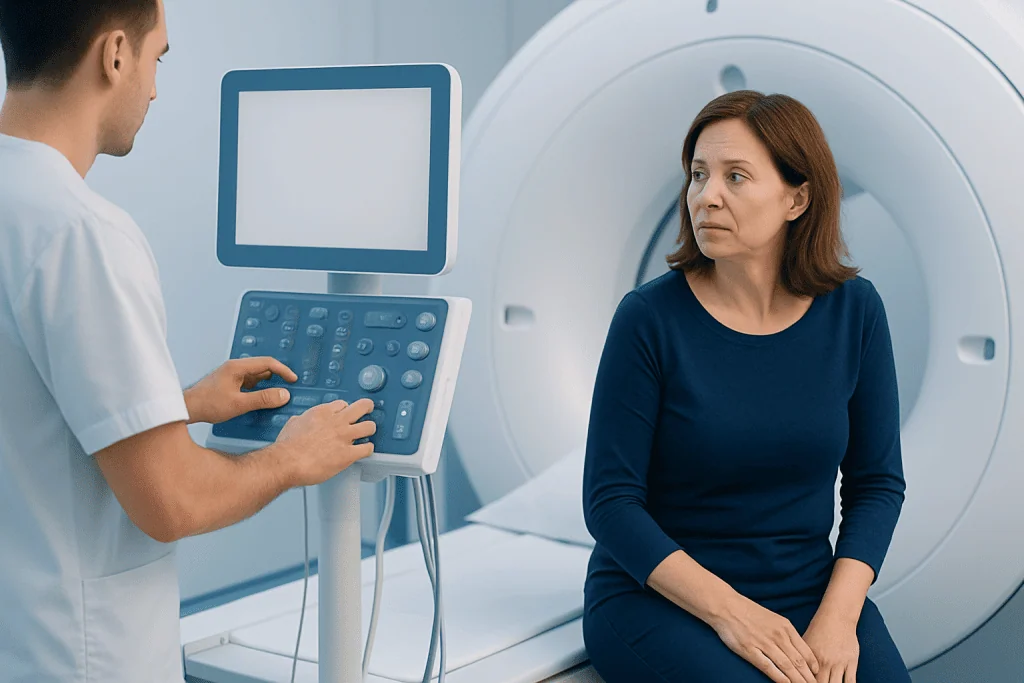
Magnetic resonance imaging, or MRI, is one of the most important tools for diagnosing and monitoring MS. MRI can detect areas of inflammation or scarring called lesions or plaques. In MS, lesions often appear in characteristic locations such as around the ventricles of the brain, in the corpus callosum, near the cortex, in the brainstem or cerebellum, and within the spinal cord.
MS diagnosis often relies on evidence that lesions are separated in space and time. “Dissemination in space” means lesions are found in typical different areas of the central nervous system. “Dissemination in time” means there is evidence that disease activity occurred at different points, such as a mix of older and newer lesions or new lesions appearing on a follow-up MRI.
Contrast material, such as gadolinium, may be used in selected MRI studies to identify active inflammation. A contrast-enhancing lesion suggests more recent inflammatory activity, while non-enhancing lesions usually represent older areas of damage. MRI findings must always be interpreted together with symptoms and examination findings, because other conditions can sometimes produce similar-looking changes.
Follow-up MRI is also used to assess whether treatment is controlling inflammatory activity. A person may feel clinically stable but still develop new lesions, so periodic imaging can provide information that is not available from symptoms alone. The timing and type of MRI depend on the patient’s disease course, therapy, and medical history.
Diagnosis and Neuroimmunology Evaluation
Diagnosing MS requires careful evaluation because there is no single test that proves the condition in every case. A neurologist or neuroimmunology specialist reviews the patient’s symptom history, performs a neurological examination, and orders MRI of the brain and often the spinal cord. The clinician also considers whether the pattern fits recognized diagnostic criteria for MS.
Additional tests may help confirm the diagnosis or rule out conditions that can mimic MS. Blood tests may be used to evaluate infections, vitamin deficiencies, autoimmune diseases, vascular conditions, and other inflammatory disorders. Cerebrospinal fluid testing through lumbar puncture may show oligoclonal bands, which indicate immune activity within the central nervous system. Visual evoked potentials or optical coherence tomography may be used when optic nerve involvement is suspected.
Neuroimmunology care is particularly important when symptoms or imaging are atypical. Conditions such as neuromyelitis optica spectrum disorder, MOG antibody-associated disease, small vessel disease, migraine-related MRI changes, infections, and metabolic disorders may require different treatment approaches. Accurate diagnosis helps avoid unnecessary therapy and supports timely care when treatment is needed.
Treatment Options
MS treatment usually has several goals: treat relapses, reduce future inflammatory activity, manage symptoms, support recovery, and preserve daily function. For a significant relapse, doctors may recommend high-dose corticosteroids for a short period to reduce inflammation and speed recovery. If a severe relapse does not respond adequately, plasma exchange may be considered in selected cases.
Disease-modifying therapies are used to reduce the frequency of relapses and the development of new MRI lesions in relapsing forms of MS. These medications may be injectable, oral, or infusion-based. Choice of therapy depends on disease activity, MRI burden, age, other medical conditions, pregnancy plans, infection risk, vaccination status, monitoring requirements, and patient preference. No single therapy is best for everyone.
Symptom management is also a core part of care. Fatigue, bladder symptoms, muscle stiffness, pain, walking difficulty, mood changes, and cognitive symptoms may improve with a combination of medications, physiotherapy, occupational therapy, exercise planning, sleep support, and psychological care. Rehabilitation can help patients maintain independence and adapt strategies for work, home, and daily activities.
Regular follow-up is important because MS and its treatments require monitoring. Doctors may review symptoms, neurological examination findings, blood tests, MRI results, side effects, infections, and treatment goals. Adjustments can be made if there are relapses, new MRI lesions, poor tolerability, or changes in life plans such as pregnancy.
Prevention, Self-care, and Daily Living
There is currently no proven way to completely prevent MS, but healthy habits can support general nervous system health and may help people manage symptoms. Smoking cessation is strongly encouraged because smoking is associated with worse MS outcomes. Regular physical activity, adapted to the person’s ability, can support strength, balance, mood, sleep, and fatigue management.
Many patients benefit from practical self-care routines. Helpful measures may include pacing activities, staying cool in hot weather, treating infections promptly, maintaining regular sleep, eating a balanced diet, and discussing vitamin D testing with a doctor. Stress management, counseling, and support groups may also help patients and families adjust to life with a chronic condition.
Vaccination planning is an important part of MS care, especially before starting certain immune therapies. Patients should ask their doctor which vaccines are recommended and whether any live vaccines should be avoided during specific treatments. Medication should not be stopped or changed without medical advice, as interruption can sometimes increase disease activity.
When to See a Doctor
A person should seek medical evaluation if they develop new neurological symptoms such as vision loss, double vision, weakness, numbness, balance problems, difficulty walking, bladder dysfunction, or persistent dizziness. Prompt assessment is especially important if symptoms last more than 24 hours, are worsening, or interfere with daily activities.
People already diagnosed with MS should contact their care team when they suspect a relapse, develop signs of infection, experience new medication side effects, or notice changes in mobility, thinking, mood, or bladder control. Urgent care is appropriate for sudden severe symptoms, major weakness, loss of vision, confusion, chest pain, or breathing difficulty.
For international patients seeking coordinated evaluation, Acibadem International’s multidisciplinary specialists and JCI-accredited hospitals provide diagnosis and treatment planning for neurological and neuroimmunological conditions, including MS. Patients should bring previous MRI images, reports, laboratory results, medication lists, and relapse history to help the medical team make informed decisions.
Frequently asked questions
What is the difference between an MS relapse and a pseudo-relapse?
A true MS relapse is a new or clearly worsening neurological symptom lasting at least 24 hours and not caused by fever, infection, or overheating. A pseudo-relapse is a temporary return or worsening of old symptoms triggered by factors such as heat, stress, or infection. Because the distinction can be difficult, patients should contact their doctor when symptoms are new, persistent, or concerning.
Can MRI diagnose multiple sclerosis by itself?
MRI is a key part of MS diagnosis, but it does not stand alone. Doctors interpret MRI findings together with the patient’s symptoms, neurological examination, medical history, and sometimes cerebrospinal fluid or other tests. This is important because migraine, vascular changes, infections, and other inflammatory diseases can sometimes resemble MS on imaging.
What do active lesions on MRI mean?
Active lesions usually refer to areas of recent inflammation, often seen when a lesion enhances after contrast is given. They can show that the disease has been active recently, even if symptoms are mild or absent. Treatment decisions depend on the full clinical picture, not one MRI feature alone.
Does everyone with MS need disease-modifying therapy?
Many people with relapsing MS are advised to consider disease-modifying therapy to reduce relapses and new MRI lesions. However, treatment choice depends on the diagnosis, disease activity, risks, benefits, age, pregnancy plans, other health conditions, and patient preferences. A neurologist or neuroimmunology specialist can explain the most appropriate options.
Can people with MS exercise safely?
Most people with MS can exercise safely when the program is adapted to their abilities and symptoms. Activity may help strength, balance, fatigue, mood, and general health. Patients with heat sensitivity, mobility issues, or heart and lung conditions should ask their doctor or physiotherapist for a safe plan.
Is multiple sclerosis inherited?
MS is not directly inherited in a simple pattern like some genetic diseases. Having a close relative with MS may increase risk, but most family members of people with MS never develop the condition. Environmental and immune factors also play important roles.
References
- National Multiple Sclerosis Society
- Multiple Sclerosis International Federation
- American Academy of Neurology
- European Committee for Treatment and Research in Multiple Sclerosis
- National Institute of Neurological Disorders and Stroke
This article is for general information only and is not a substitute for professional medical advice. Please consult a qualified doctor about your individual situation.
Multiple Sclerosis in Turkey — costs, top hospitals & a free quote
JCI-accredited · board-certified surgeons · reply within 24h

More from the Health Library



Related Specialists

Prof. Dr. Fatih Aydoğan
General Surgery
Assoc. Prof. Dr. Hakan Hasdemir
Cardiology
Prof. Dr. Taner Güneş
Orthopedic Surgery & Traumatology
Dr. Buket Özel Bingöl
Otorhinolaryngology