Brain Aneurysm Coiling vs Clipping: How Treatment Choices Are Made

Coiling is a minimally invasive endovascular procedure performed through the blood vessels, while clipping is open microsurgery performed through a small skull opening. Ruptured aneurysms are emergencies; unruptured aneurysms are assessed by balancing the risk of future bleeding against treatment risks.
Key Takeaways
- Coiling is a minimally invasive endovascular procedure performed through the blood vessels, while clipping is open microsurgery performed through a small skull opening.
- Ruptured aneurysms are emergencies; unruptured aneurysms are assessed by balancing the risk of future bleeding against treatment risks.
- Aneurysm size, shape, neck width, location and nearby blood vessel branches strongly influence whether coiling or clipping is more suitable.
- Patient age, general health, medications, pregnancy status and previous bleeding history are also part of the decision.
- Long-term follow-up imaging is often needed, especially after endovascular treatment, because some aneurysms can reopen over time.
Brain aneurysm coiling and clipping are both established treatments used to prevent bleeding or rebleeding from a weakened blood vessel in the brain. The best choice depends on the aneurysm, the patient and the experience of a multidisciplinary neurovascular team.
Overview
A brain aneurysm is a bulge or ballooning in the wall of an artery in the brain. Many aneurysms never cause symptoms, but some can leak or rupture, causing bleeding around the brain, known as subarachnoid hemorrhage. Treatment aims to seal the aneurysm away from normal blood flow so the risk of bleeding or rebleeding is reduced.
The two traditional treatment approaches are endovascular coiling and microsurgical clipping. In coiling, a specialist navigates tiny tubes through the blood vessels, usually from the groin or wrist, and places soft coils inside the aneurysm to promote clotting. In clipping, a neurosurgeon reaches the aneurysm through a surgical opening and places a small metal clip across its neck.
There is no single best treatment for every aneurysm. Brain aneurysm coiling vs clipping decisions are individualized after reviewing imaging, symptoms, rupture status and the patient’s overall health. The safest and most durable option is usually determined by a team that includes neurosurgeons, interventional neuroradiologists, neurologists and intensive care specialists when needed.
Symptoms and Rupture Warning Signs
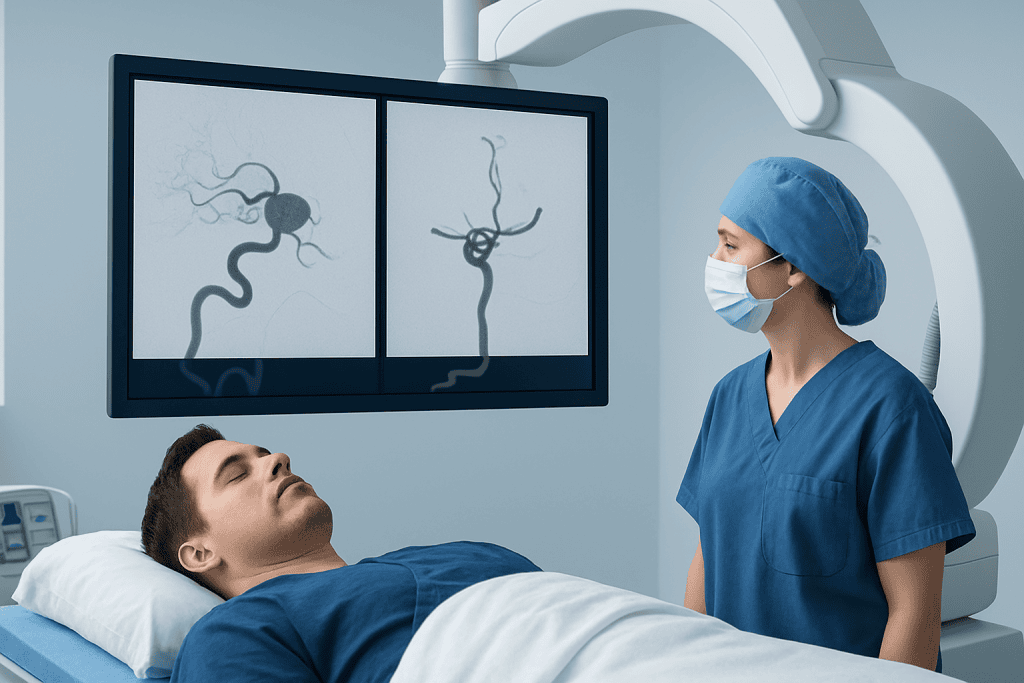
Unruptured brain aneurysms are often found by chance during imaging for headaches, dizziness, trauma or another medical concern. When they are small and not pressing on nearby nerves, they may cause no symptoms at all. Larger aneurysms may occasionally cause pain behind the eye, double vision, drooping eyelid, facial numbness or changes in pupil size.
A ruptured aneurysm is a medical emergency. It may cause a sudden, very severe headache often described as the worst headache of a person’s life. Other symptoms can include nausea, vomiting, neck stiffness, sensitivity to light, confusion, fainting, seizure, weakness, speech difficulty or loss of consciousness.
Any sudden severe headache, especially if it is different from previous headaches or occurs with neurological symptoms, should be treated urgently. Early diagnosis and treatment can help reduce the risk of further bleeding and allow specialists to manage complications such as pressure in the brain, narrowing of blood vessels and fluid buildup.
How Doctors Assess a Brain Aneurysm

The first step is detailed imaging. Computed tomography angiography, magnetic resonance angiography and catheter cerebral angiography can show the aneurysm’s size, shape, neck width and relationship to nearby arteries. Catheter angiography is more invasive than CT or MRI scans, but it can provide highly detailed images that are especially useful when treatment is being planned.
Doctors look closely at whether the aneurysm is ruptured or unruptured, because this changes the urgency and risk balance. A ruptured aneurysm generally needs prompt treatment to prevent rebleeding. An unruptured aneurysm may be treated or monitored, depending on its estimated bleeding risk and the patient’s preferences after counseling.
Important aneurysm features include location, size, shape, neck width, irregular bulges and whether important artery branches arise from the aneurysm. Patient factors also matter, such as age, blood pressure, smoking history, family history, previous subarachnoid hemorrhage, other medical conditions and the ability to safely take blood-thinning or antiplatelet medicines if a stent-assisted endovascular technique is considered.
Aneurysm Coiling: What It Involves
Endovascular coiling is performed from inside the blood vessels. Under imaging guidance, a thin catheter is advanced to the aneurysm, and soft platinum coils are placed into the aneurysm sac. These coils slow blood flow and encourage clot formation inside the aneurysm while preserving normal blood flow through the parent artery.
Some aneurysms can be treated with coils alone. Others require balloon assistance, stent assistance or a flow-diverting device, depending on the anatomy. Stents and flow diverters can be helpful for wide-necked or complex aneurysms, but they often require antiplatelet medication, which may not be suitable for every patient, especially in some emergency bleeding situations.
Coiling is less invasive than open surgery and often has a shorter early recovery period. It can be particularly useful for aneurysms in certain deep or difficult-to-reach locations, including many posterior circulation aneurysms. However, some coiled aneurysms can compact or reopen over time, so follow-up imaging is commonly recommended.
Aneurysm Clipping: What It Involves
Microsurgical clipping is performed by a neurosurgeon through a craniotomy, which is a carefully planned opening in the skull. Using a microscope and fine instruments, the surgeon exposes the aneurysm and places a small clip across its neck. The clip stops blood from entering the aneurysm while keeping the normal artery open.
Clipping can provide a very durable closure for many aneurysms, especially those with a wide neck, branch vessels near the neck or anatomy that is not ideal for coiling. It may also allow the surgeon to remove blood clots or relieve pressure in selected ruptured aneurysm cases. The approach, however, is more invasive than coiling and typically involves a longer initial recovery.
The suitability of clipping depends on the aneurysm’s location and the patient’s surgical risk. Some aneurysms are straightforward to reach through standard microsurgical corridors, while others are deep, surrounded by critical structures or located in areas where endovascular treatment may be safer. A careful risk-benefit discussion is essential before choosing surgery.
How Treatment Choices Are Made
When comparing brain aneurysm coiling vs clipping, doctors consider both short-term safety and long-term durability. In general, coiling may be favored when the aneurysm is accessible through the arteries, has a shape that can hold coils securely and is located where open surgery carries higher risk. Clipping may be favored when the aneurysm has a broad neck, incorporates branch vessels or is likely to recur after coiling.
Rupture status strongly affects the decision. In a ruptured aneurysm, the priority is to secure the aneurysm quickly and safely to prevent rebleeding. Coiling is often considered when it can be performed promptly and the anatomy is suitable, while clipping may be chosen if the aneurysm anatomy, associated bleeding pattern or need for clot evacuation makes surgery more appropriate.
For unruptured aneurysms, the decision may be less urgent and more preference-sensitive. Doctors estimate the future rupture risk and compare it with the risks of coiling, clipping or observation. Small aneurysms in lower-risk locations may be monitored with periodic imaging, while larger, growing, irregular or higher-risk aneurysms may be treated even if they have not caused symptoms.
Patient-specific factors can shift the recommendation. Advanced age, frailty, heart or lung disease and certain medications may increase surgical risk. On the other hand, the need for long-term antiplatelet medication after stent-assisted endovascular treatment may be a concern for some patients. A shared decision-making discussion should include the expected benefits, possible complications, need for follow-up and alternatives.
Recovery, Follow-up and Self-care
Recovery differs depending on whether the aneurysm was ruptured and which treatment was used. After elective coiling for an unruptured aneurysm, hospital stay and return to routine activities may be shorter than after clipping, although individual recovery varies. After clipping, patients need time for the incision, skull and surrounding tissues to heal, and fatigue can last for several weeks.
Recovery after a ruptured aneurysm is more complex. Patients may need intensive monitoring for complications of subarachnoid hemorrhage, such as vasospasm, hydrocephalus, seizures or changes in sodium balance. Rehabilitation may be needed for weakness, speech problems, memory changes, swallowing difficulties or reduced stamina.
Follow-up imaging is part of long-term care. Coiled aneurysms may require more frequent imaging to confirm the aneurysm remains sealed, while clipped aneurysms are often durable but may still be checked depending on the case. People with one aneurysm may also be evaluated for additional aneurysms, especially if there is a family history.
Self-care focuses on reducing vascular risk. Patients are usually advised to control blood pressure, stop smoking, limit excessive alcohol, follow medication instructions and attend all follow-up appointments. Physical activity, work, travel and driving should be resumed only according to the treating doctor’s guidance, particularly after a rupture or open surgery.
When to See a Doctor
Emergency care is needed for a sudden severe headache, fainting, seizure, new weakness, difficulty speaking, confusion, vision changes or a stiff neck with severe headache. These symptoms do not always mean an aneurysm has ruptured, but they require urgent medical assessment. Prompt evaluation is the safest approach.
A person with a known unruptured aneurysm should keep scheduled visits with a neurologist, neurosurgeon or neurointerventional specialist. They should also seek medical advice if headaches change noticeably, new neurological symptoms appear or there are questions about pregnancy, blood thinners, surgery for another condition or long-distance travel.
International patients may benefit from having imaging and records reviewed by a multidisciplinary neurovascular team before treatment decisions are finalized. Acibadem International’s JCI-accredited hospitals provide diagnosis and treatment for brain aneurysms through neurosurgery, interventional neuroradiology, neurology, intensive care and rehabilitation teams, depending on each patient’s needs.
Frequently asked questions
Is coiling safer than clipping for a brain aneurysm?
Coiling is less invasive and may have a shorter early recovery, but it is not automatically safer for every aneurysm. The safety of each option depends on aneurysm anatomy, rupture status, patient health and the team's experience. Some aneurysms are better treated with clipping because it may be more durable or technically safer.
Is clipping more permanent than coiling?
Clipping is often highly durable because the clip closes the aneurysm neck directly. Coiled aneurysms can also remain stable long term, but some may reopen or need additional treatment. This is why follow-up imaging is especially important after endovascular treatment.
Can an unruptured brain aneurysm be watched instead of treated?
Yes, some unruptured aneurysms are monitored rather than treated immediately. Observation may be appropriate when the aneurysm is small, stable and in a lower-risk location, or when treatment risk is higher than the estimated rupture risk. The decision should be reviewed regularly with imaging and specialist follow-up.
How do doctors choose treatment for a ruptured aneurysm?
A ruptured aneurysm is usually treated urgently to reduce the chance of rebleeding. Doctors review angiography images to decide whether coiling, clipping or another endovascular method can secure the aneurysm most safely. The patient's neurological condition and any need to manage bleeding-related complications also influence the plan.
Will a patient need blood thinners after coiling?
Coiling alone may not require long-term antiplatelet medication, but stent-assisted coiling or flow diversion often does. These medicines help prevent clotting around the stent or device. The treating specialist will explain the medication plan and check whether it is safe for the individual patient.
Can a brain aneurysm come back after treatment?
An aneurysm that has been treated can occasionally reopen, particularly after some endovascular procedures. New aneurysms can also develop in some people, although this is not common. Regular follow-up imaging helps doctors detect changes early and decide whether any further treatment is needed.
References
- American Heart Association
- American Stroke Association
- National Institute of Neurological Disorders and Stroke
- European Stroke Organisation
- Society of NeuroInterventional Surgery
This article is for general information only and is not a substitute for professional medical advice. Please consult a qualified doctor about your individual situation.
Explore treatments in Turkey — costs, top hospitals & a free quote
JCI-accredited · board-certified surgeons · reply within 24h
Check your numbers in seconds
BMI, calories, due date, blood pressure and 30+ more clinical calculators — free, instant, doctor-reviewed ranges.

More from the Health Library



Related Specialists

Dr. Mehmet Erkan Altun
Anesthesiology
Prof. Dr. Taner Güneş
Orthopedic Surgery & Traumatology
Prof. Dr. Mustafa Karahan
Orthopedic Surgery & Traumatology
Assoc. Prof. Dr. Aras Şenvar
Otorhinolaryngology