

Moyamoya Disease: Stroke Risk, Imaging, and Treatment Planning

Moyamoya disease causes progressive narrowing of brain arteries and the growth of fragile collateral vessels. Symptoms may include transient weakness, speech changes, headaches, seizures, or stroke-like episodes.
Key Takeaways
- Moyamoya disease causes progressive narrowing of brain arteries and the growth of fragile collateral vessels.
- Symptoms may include transient weakness, speech changes, headaches, seizures, or stroke-like episodes.
- MRI, MRA, CT angiography, catheter angiography, and blood-flow studies help confirm the diagnosis and guide treatment.
- Treatment planning depends on symptoms, age, blood-flow reserve, stroke history, and the pattern of vessel narrowing.
- Revascularization surgery may be recommended for selected patients to improve blood supply to the brain.
Moyamoya disease is a rare condition in which important arteries at the base of the brain gradually narrow, reducing blood flow and increasing the risk of stroke. Careful imaging, risk assessment, and individualized treatment planning can help protect brain function and reduce future events.
Overview
Moyamoya disease is a rare disorder affecting the blood vessels that supply the brain. In this condition, the internal carotid arteries and their main branches gradually become narrowed or blocked near the base of the brain. As blood flow decreases, the body tries to compensate by forming many tiny collateral vessels. On angiography, these small vessels can look like a hazy cloud, which is why the Japanese term moyamoya, meaning puff of smoke, is used.
The condition can occur in children or adults. Children often present with reduced blood flow to the brain, causing transient ischemic attacks or ischemic strokes. Adults may also have ischemic symptoms, but they can sometimes present with bleeding in the brain because the collateral vessels may be fragile. The course is variable, and some people have mild symptoms for years while others have repeated neurological events.
Moyamoya disease is different from narrowing caused by common atherosclerosis, although both can affect brain circulation. When the same moyamoya-type vessel changes occur together with another condition, such as sickle cell disease, neurofibromatosis type 1, Down syndrome, prior head radiation, or certain autoimmune conditions, it may be called moyamoya syndrome. In both forms, the main goal of care is to understand blood-flow risk and reduce the chance of future stroke.
Symptoms and Stroke Risk
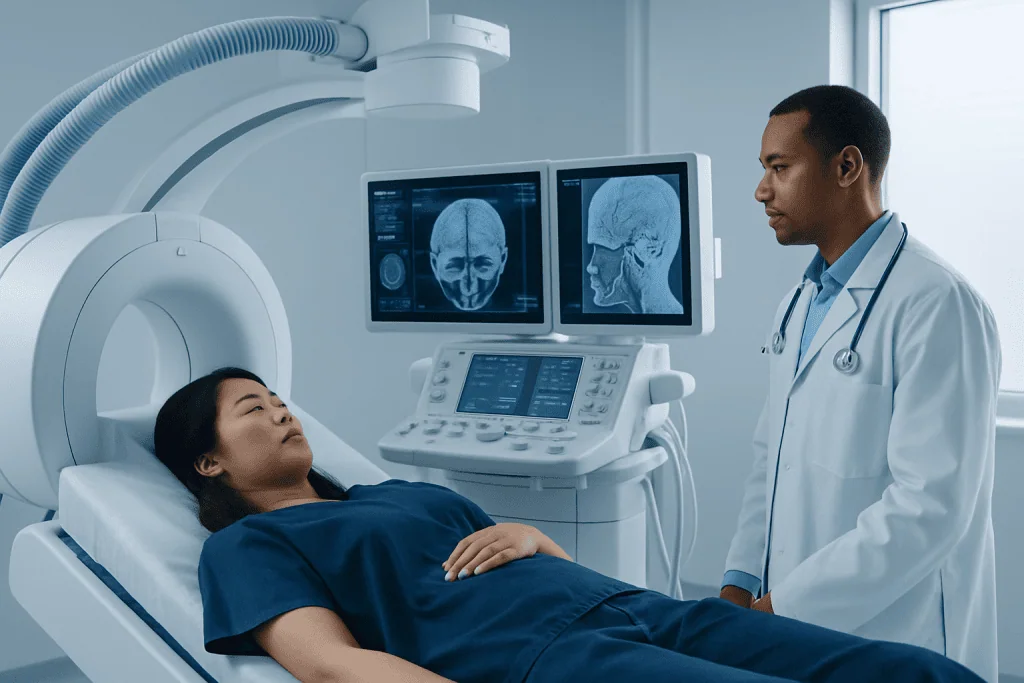
Symptoms of moyamoya disease are related to either reduced blood flow or, less commonly, bleeding from fragile collateral vessels. Some episodes are brief and improve fully, while others may indicate a stroke and need urgent medical evaluation. Symptoms can be triggered by dehydration, fever, crying, intense physical effort, hyperventilation, or changes in blood pressure, especially in children.
Possible symptoms include:
- Sudden weakness or numbness on one side of the body
- Speech or language difficulty
- Vision changes or loss of part of the visual field
- Headache, dizziness, fainting, or confusion
- Seizures
- Problems with walking, coordination, memory, or school performance
- Involuntary movements in some cases
Stroke risk is not the same for every patient. Doctors consider several factors, including previous transient ischemic attack, previous stroke or bleeding, age, the extent of artery narrowing, whether one or both sides are affected, and whether imaging shows reduced blood-flow reserve. A patient with frequent symptoms or poor reserve may need more active treatment planning than someone found incidentally and stable on follow-up imaging.
Causes and Risk Factors
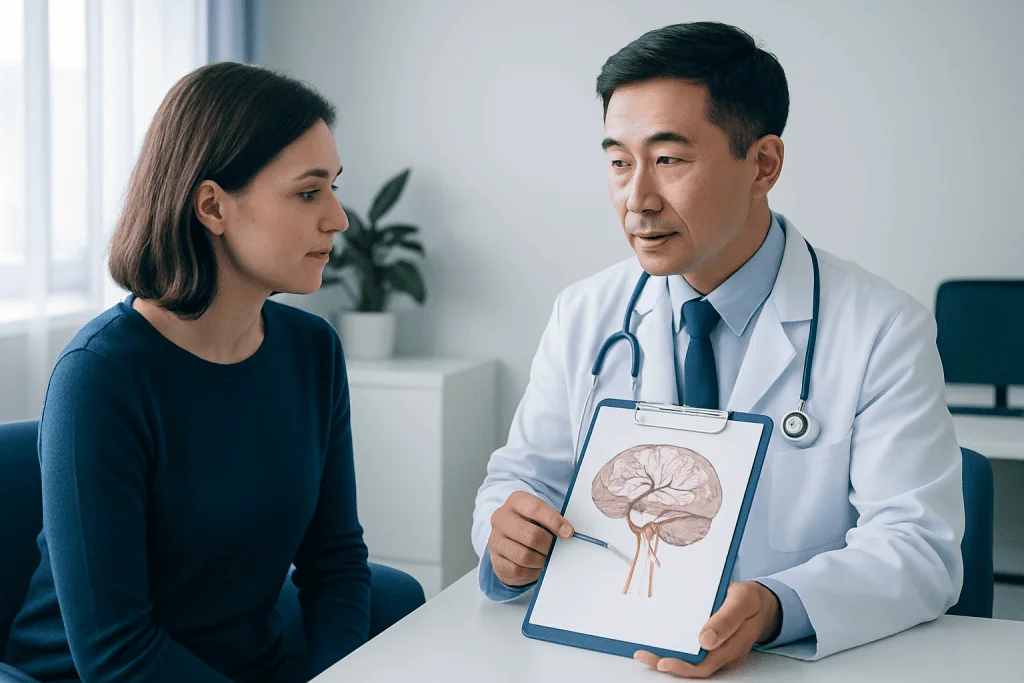
The exact cause of moyamoya disease is not fully understood. It is believed to involve abnormal changes in the vessel wall that lead to progressive narrowing. Genetic factors appear to play a role in some families, and the condition is more commonly reported in East Asian populations, although it occurs worldwide and can affect people of any background.
Moyamoya may occur on its own or be associated with other medical conditions. Doctors may look for related disorders when appropriate, especially in children or in adults with other signs suggesting a systemic condition. Associated conditions can include sickle cell disease, Down syndrome, neurofibromatosis type 1, thyroid autoimmune disease, prior cranial radiation therapy, and certain inflammatory or autoimmune disorders.
Traditional vascular risk factors, such as high blood pressure, diabetes, smoking, and high cholesterol, do not usually cause moyamoya disease. However, managing these factors is still important because they can affect overall brain and heart health. Avoiding dehydration and treating fever or illness promptly may also help reduce situations that place stress on brain blood flow.
Diagnosis and Imaging Tests
Diagnosis usually begins with a neurological examination and a careful history of symptoms. Because moyamoya disease affects blood vessels, imaging is central to confirming the diagnosis and planning treatment. A doctor may also order blood tests or additional evaluations to look for associated conditions when the clinical picture suggests moyamoya syndrome.
MRI of the brain can show whether there has been a prior stroke, small areas of injury, bleeding, or other changes. Magnetic resonance angiography, or MRA, helps show narrowing of the major arteries and collateral blood vessels. CT angiography may also be used to evaluate the blood vessels, particularly when rapid assessment is needed or when MRI is not suitable.
Catheter cerebral angiography remains an important test in many patients because it provides detailed images of the brain arteries and collateral circulation. It can help classify the pattern and stage of disease and is often used when surgery is being considered. Although it is an invasive test, it is performed by specialized teams with careful monitoring.
Blood-flow and perfusion studies are especially helpful for treatment planning. These may include MR perfusion, CT perfusion, SPECT, PET, or other specialized methods depending on the center. These tests assess how well the brain is receiving blood and whether it can increase flow when needed. This information helps doctors estimate stroke risk and decide whether revascularization may be beneficial.
Treatment Planning
Treatment planning for moyamoya disease is individualized. The care team considers symptoms, imaging findings, age, overall health, previous strokes, bleeding history, and whether the disease affects one or both sides of the brain. The goal is to reduce the risk of future stroke while avoiding unnecessary procedures in patients who are stable and low risk.
Medical management may include careful control of blood pressure, hydration guidance, treatment of associated conditions, and management of vascular risk factors when present. Some patients may be prescribed antiplatelet medication to reduce clotting risk, particularly when ischemic symptoms are present, but this decision depends on the individual situation and bleeding risk. Medication can support care, but it does not reverse the artery narrowing.
Surgery may be considered when symptoms continue, imaging shows poor blood-flow reserve, or the future stroke risk is judged to be significant. Revascularization surgery aims to improve blood supply by connecting or encouraging blood vessels from outside the skull to support the brain. The timing and type of surgery are chosen carefully, especially in children, adults with recent stroke, or patients with bleeding presentations.
Revascularization Surgery Options
Revascularization procedures are broadly grouped as direct, indirect, or combined. In direct bypass, a scalp artery is connected to a brain artery to provide more immediate blood flow. One common example is superficial temporal artery to middle cerebral artery bypass. This option may be used more often in adults when suitable vessels are available.
Indirect procedures place vascularized tissue, such as a scalp artery, muscle, or membrane, in contact with the brain surface so new blood vessels can gradually grow over time. These techniques are often used in children because their brains tend to form new vessels more readily. The improvement is not immediate, so careful follow-up is important while the new circulation develops.
Combined approaches use both direct and indirect methods. The best choice depends on the patient age, vessel size, location of reduced blood flow, surgical anatomy, and the experience of the neurosurgical team. Before surgery, doctors also plan anesthesia and perioperative care carefully because stable blood pressure, oxygenation, and hydration are important for protecting the brain.
After surgery, follow-up imaging and neurological assessment help evaluate recovery and blood-flow improvement. Rehabilitation may be needed if a person has weakness, speech difficulty, cognitive changes, or other effects from a prior stroke. Recovery varies, but many patients benefit from coordinated care involving neurology, neurosurgery, neuroradiology, rehabilitation, and pediatric or adult medicine specialists.
Prevention and Self-Care
There is no proven lifestyle measure that prevents moyamoya disease from developing, but self-care can reduce avoidable stress on brain circulation. Patients are usually advised to maintain good hydration, avoid prolonged fasting, and seek medical attention for fever, vomiting, or illnesses that may cause dehydration. Children may need school guidance so teachers understand symptoms that require prompt attention.
It is important not to start or stop blood-thinning medications without medical advice. Patients should also discuss exercise, air travel, pregnancy, and planned surgeries with their doctor, because special precautions may be needed depending on disease severity and treatment history. For children, parents should ask the care team about safe activity levels and what to do if brief neurological symptoms occur.
Long-term follow-up is a key part of care. Moyamoya can progress over time, and symptoms may change even after a period of stability. Follow-up visits may include neurological examination, imaging, medication review, and discussion of any new symptoms. At Acibadem International, multidisciplinary specialists in JCI-accredited hospitals evaluate and treat moyamoya disease for international patients, including diagnostic imaging, neurology, neurosurgery, and rehabilitation planning.
When to See a Doctor
Any sudden stroke-like symptom should be treated as an emergency. This includes sudden weakness, numbness, facial drooping, speech difficulty, severe confusion, loss of vision, trouble walking, seizure, or an unusually severe headache. Even if symptoms improve within minutes, urgent evaluation is important because a transient ischemic attack can be a warning sign.
A person should also see a neurologist if they have repeated brief episodes of weakness, numbness, speech difficulty, unexplained seizures, or imaging that suggests narrowing of the brain arteries. Children with episodes triggered by crying, exercise, fever, or hyperventilation should be assessed carefully, especially if symptoms affect one side of the body.
Patients already diagnosed with moyamoya disease should contact their care team if symptoms become more frequent, new symptoms appear, pregnancy is planned, or another major medical procedure is being considered. Regular follow-up allows treatment plans to be adjusted before complications occur and helps families feel more prepared about warning signs and next steps.
Frequently asked questions
Is moyamoya disease the same as a stroke?
Moyamoya disease is not the same as a stroke, but it can increase the risk of stroke. The disease narrows important brain arteries, which may reduce blood flow or cause fragile collateral vessels to bleed. Some people are diagnosed after a transient ischemic attack or stroke, while others are found during imaging for another reason.
Can moyamoya disease be cured?
There is no medication that cures the artery narrowing itself. Revascularization surgery can improve blood supply to the brain and may reduce the risk of future events in selected patients. Long-term follow-up is still needed because the condition can progress or affect both sides of the brain.
How is moyamoya disease diagnosed?
Diagnosis is based on symptoms, neurological examination, and imaging of the brain and blood vessels. MRI and MRA are commonly used, and catheter angiography may be recommended for detailed vessel mapping. Perfusion imaging can help show whether the brain has enough blood-flow reserve.
Does everyone with moyamoya disease need surgery?
Not everyone needs surgery immediately. Doctors consider symptoms, prior stroke or bleeding, imaging results, blood-flow reserve, age, and overall health. Some patients are monitored closely, while others are advised to have revascularization because their risk of future stroke is higher.
Is moyamoya disease inherited?
Some cases appear to have a genetic component, and family clustering has been described. However, many people with moyamoya disease have no known family history. If more than one family member is affected, a neurologist or genetic counseling service can advise whether relatives should be evaluated.
What should patients avoid after a moyamoya diagnosis?
Patients should avoid dehydration and should seek advice during illnesses that cause fever, vomiting, or poor fluid intake. They should not change antiplatelet or blood-thinning medicines without a doctor’s guidance. Activity recommendations, travel, pregnancy, and planned procedures should be discussed with the treating team because precautions depend on individual risk.
References
- National Institute of Neurological Disorders and Stroke
- American Heart Association and American Stroke Association
- Mayo Clinic
- StatPearls Publishing
- Cleveland Clinic
This article is for general information only and is not a substitute for professional medical advice. Please consult a qualified doctor about your individual situation.
Explore treatments in Turkey — costs, top hospitals & a free quote
JCI-accredited · board-certified surgeons · reply within 24h
Check your numbers in seconds
BMI, calories, due date, blood pressure and 30+ more clinical calculators — free, instant, doctor-reviewed ranges.

More from the Health Library


Related Specialists
Dr. Melek Sedef Yavaş
Emergency Service
Assoc. Prof. Dr. Özlem Akgün Doğan
Pediatric Genetic Diseases
Asst. Prof. Dr. Deniz Demircioğlu
Dermatology
Assoc. Prof. Dr. Halenur Bozdağ
Gynecology & Obstetrics