EEG Test Preparation: What to Do Before, During, and After the Study
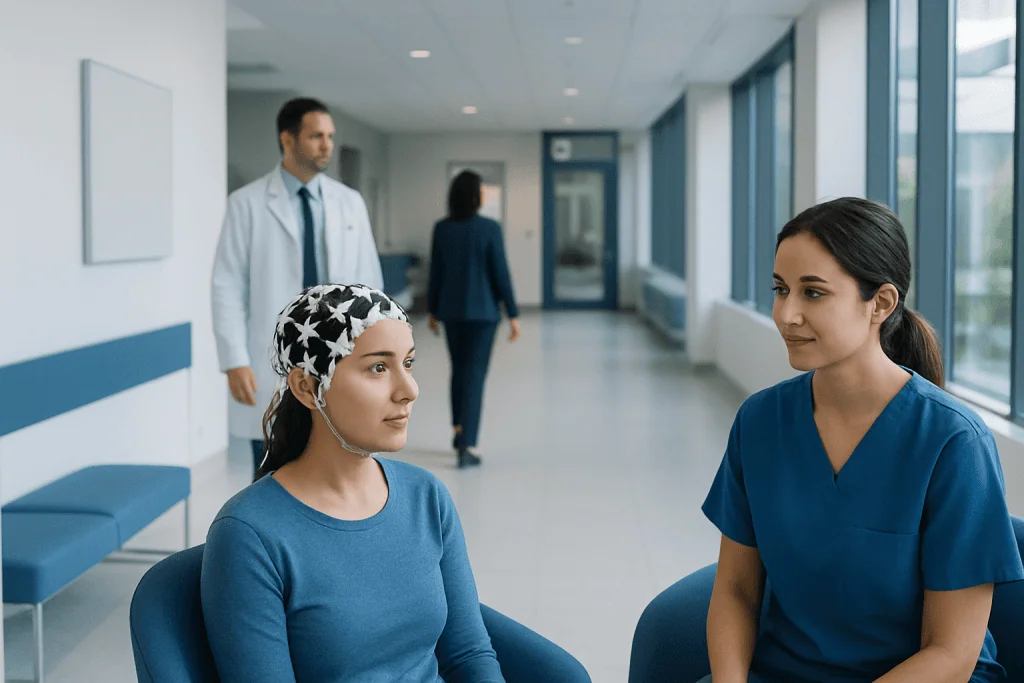
An EEG records the brain’s electrical activity through small electrodes placed on the scalp. Patients are often asked to arrive with clean, dry hair and to avoid hair products before the test.
Key Takeaways
- An EEG records the brain’s electrical activity through small electrodes placed on the scalp.
- Patients are often asked to arrive with clean, dry hair and to avoid hair products before the test.
- Some EEGs require sleep deprivation or special medication instructions, so the care team’s guidance should be followed closely.
- The test is painless, and most people can return to normal activities soon afterward unless they received sedation.
- Questions about food, caffeine, medicines, or driving should be discussed with the ordering doctor before the appointment.
EEG test preparation is usually simple and focuses on helping the recording be as clear and accurate as possible. Knowing what to do before, during, and after the study can make the experience easier and more comfortable.
Overview: What an EEG Is and Why Preparation Matters
An electroencephalogram, often called an EEG, is a test that records the brain’s electrical activity. Small sensors called electrodes are placed on the scalp to detect the signals the brain produces. The test does not send electricity into the brain and is generally painless.
Doctors use EEGs to help evaluate several neurological symptoms and conditions. It may be recommended for seizures, fainting episodes, unusual spells, confusion, sleep-related problems, or to support the evaluation of conditions such as epilepsy. In some settings, EEG may also be used as part of broader neurological monitoring.
Good EEG test preparation matters because outside factors can affect the quality of the recording. Hair products, missed instructions, lack of sleep when sleep is required, or certain medicines can sometimes make the test harder to interpret. Careful preparation helps the clinical team capture the clearest possible results.
What to Do Before an EEG Test
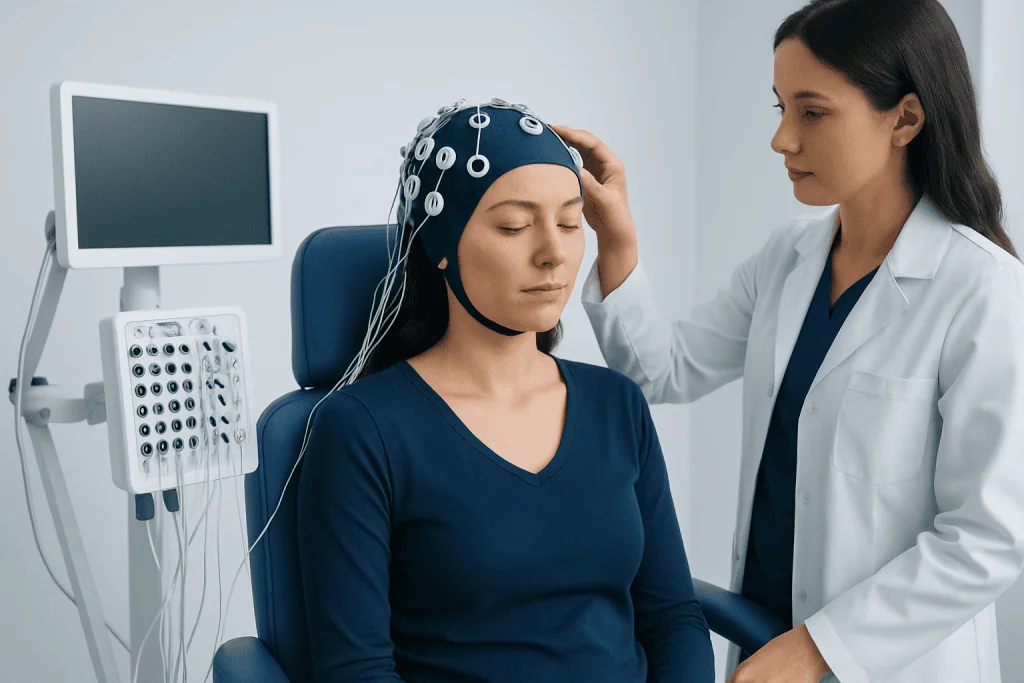
Before the appointment, patients are usually told to wash their hair the night before or the morning of the test. The scalp should be clean and dry, and hair sprays, oils, gels, creams, and conditioners that leave residue should be avoided unless the care team says otherwise. Clean hair helps the electrodes stick properly and improves the recording quality.
Eating instructions can vary, but many people can eat normally before a routine EEG. However, they may be asked to avoid caffeine for several hours because it can affect alertness and brain activity. Drinks and foods that may contain caffeine include coffee, tea, cola, energy drinks, and some chocolate products.
Medication instructions are especially important. Patients should not stop or change prescription medicines on their own, including anti-seizure medicines, sleep medicines, or anxiety medicines. If a medicine could affect the EEG, the ordering doctor will explain whether to continue it, delay it, or adjust the timing safely.
Some EEG studies are done while the patient is sleep-deprived or expected to fall asleep during the recording. In those cases, the care team may ask the patient to sleep less than usual the night before. It is helpful to confirm in advance:
- Whether fasting is needed
- Whether caffeine should be avoided
- Whether regular medicines should be taken
- Whether sleep deprivation is required
- Whether someone else should drive after the test
How to Prepare for Special Types of EEG

Not all EEGs are the same. A routine EEG often takes a relatively short time and may be done while the patient is awake, drowsy, or briefly asleep. Other studies, such as sleep EEGs, ambulatory EEGs, or prolonged video EEG monitoring, may involve additional instructions tailored to the purpose of the test.
For a sleep EEG, reduced sleep the night before may help the patient fall asleep during the study. For an ambulatory EEG, electrodes may stay in place for an extended period while the patient goes about daily activities. In that case, the team usually explains how to protect the equipment, keep the electrodes dry, and track symptoms or events in a diary.
In prolonged monitoring, patients may be admitted for observation if doctors need to record events more closely. This can be particularly helpful when evaluating recurring episodes or planning care for seizure-related conditions. In some cases, EEG is part of a wider assessment that may include neurology evaluation or brain and nerve check-up.
What Happens During the EEG Procedure
When the patient arrives, a technologist usually measures the head and marks areas on the scalp where electrodes will be placed. The electrodes are attached with a special paste, adhesive, or cap. This part may feel slightly cool or sticky, but it should not be painful.
During the recording, the patient is often asked to lie still and relax. Depending on the reason for the test, the technologist may ask the patient to open and close the eyes, breathe deeply and quickly for a short period, or look at flashing lights. These steps are standard parts of some EEG studies and help reveal useful patterns in brain activity.
If the test includes sleep, the room may be kept quiet and dim to help the patient rest. For longer monitoring, a video recording may be used along with the EEG so doctors can compare physical symptoms with the brain wave pattern. This type of combined assessment may be useful when symptoms are difficult to describe or occur unpredictably.
Although EEGs are generally safe, certain activation techniques such as flashing lights or hyperventilation can rarely trigger symptoms in sensitive individuals. The team performing the test is trained to monitor the patient and respond appropriately if this happens.
What Patients May Feel During and After the Study
An EEG is not usually painful. The electrodes only record activity and do not cause electric shocks. Most patients simply notice the feeling of the electrodes on the scalp and the paste or gel used to hold them in place.
Some people may feel a little tired if they were asked to sleep less before the test. Deep breathing during the recording can occasionally cause temporary lightheadedness or tingling, but these sensations usually pass quickly once normal breathing resumes. Flashing lights may feel uncomfortable for some patients, especially if they are sensitive to bright light.
After the test, the electrodes are removed and the paste is cleaned off as much as possible. Hair may feel sticky afterward, so many patients prefer to wash their hair once they get home. If no sedative was used and the patient is not sleep-deprived to the point of unsafe fatigue, normal daily activities can often be resumed.
After the EEG: Recovery, Results, and Next Steps
Routine EEG aftercare is usually minimal. Patients can generally return to work, school, or home activities unless their doctor gives different instructions. If sleep deprivation was part of the preparation, rest may be needed afterward, and it may be safer to avoid driving until fully alert.
Results are not usually given immediately at the bedside. A neurologist or neurophysiology specialist reviews the recording and looks for patterns that may suggest seizures, abnormal slowing, or other changes. A normal EEG does not always rule out a neurological condition, and an abnormal EEG does not automatically confirm a diagnosis on its own.
The EEG findings are interpreted together with the patient’s symptoms, examination, and often other tests. Depending on the reason for the study, the next step may include follow-up with a specialist, further imaging such as MRI, or a broader assessment in cases involving episodes of loss of awareness, sleep disturbances, or suspected sleep apnea.
Near the end of the care pathway, patients seeking international care may also wish to know that Acibadem International’s multidisciplinary specialists and JCI-accredited hospitals diagnose and treat neurological conditions for international patients.
Tips for a Smoother EEG Experience
Simple practical steps can make the test day easier. Wearing comfortable clothing can help, especially for longer recordings. It is also helpful to bring identification, the doctor’s request if needed, a list of medicines, and details about any recent symptoms or events.
Patients who are having prolonged monitoring may want to ask ahead about meals, bathroom breaks, and whether a family member can stay nearby. For children or anxious adults, bringing a familiar comfort item, quiet entertainment, or planning reassurance in advance may reduce stress.
Helpful reminders include:
- Wash hair and avoid styling products before the test
- Follow instructions about sleep, food, caffeine, and medicines
- Arrive on time to allow electrode placement
- Tell the team about recent illness, scalp irritation, or pregnancy if relevant
- Ask about driving if sleep deprivation or sedation is involved
When to Contact a Doctor
Most people do not have any problems after an EEG, but they should contact their doctor if they are unsure about medication timing, eating instructions, or what activities are safe afterward. It is better to ask in advance than to guess, especially for patients with epilepsy, frequent spells, or complex medical needs.
Medical advice should also be sought if there is significant scalp irritation after electrode removal, if the patient has a seizure pattern that is different from usual, or if severe fatigue makes travel or daily activities unsafe. If the EEG was ordered because of concerning symptoms such as repeated blackouts, new confusion, or possible seizures, follow-up is important even if the patient feels well after the study.
Emergency care may be needed for serious symptoms such as a prolonged seizure, trouble breathing, severe injury during an episode, or failure to regain usual awareness. For non-emergency questions, the ordering neurologist or neurophysiology team is the best source of guidance.
Frequently asked questions
Can a patient eat before an EEG?
Many patients can eat normally before a routine EEG, but instructions may vary depending on the type of study. Heavy fasting is not always required, though caffeine may need to be avoided. The safest approach is to follow the testing center’s specific guidance.
Should medicines be stopped before an EEG?
Medicines should not be stopped unless the doctor specifically gives instructions to do so. Some medicines can affect EEG results, but changing them without supervision may be unsafe. Patients should bring a complete medication list and ask about anything they are unsure about.
How long does an EEG take?
A routine EEG often takes less than an hour, although preparation and electrode placement add extra time. Sleep EEGs, ambulatory EEGs, and prolonged video EEG monitoring can last much longer. The exact timing depends on why the test was ordered.
Is an EEG painful?
An EEG is generally painless. The electrodes record electrical activity from the scalp and do not send electricity into the body. Some people notice minor discomfort from adhesive or scalp cleaning, but the test itself is usually well tolerated.
Can a patient drive after an EEG?
Many people can drive after a routine EEG if they feel normal and did not receive sedation. However, if they were sleep-deprived or feel drowsy, driving may not be safe. It is wise to ask in advance whether arranging a ride home is recommended.
What should be done with the hair after the test?
The technologist usually removes much of the paste or gel after the EEG, but some residue may remain. Washing the hair at home is often enough to remove what is left. Gentle shampooing is usually all that is needed unless the care team advises otherwise.
Does a normal EEG mean there is no neurological problem?
Not necessarily. A normal EEG can still occur in someone who has symptoms or a neurological condition, because abnormal activity may not happen during the recording. Doctors interpret EEG findings together with the patient’s history, examination, and other tests.
References
- National Institute of Neurological Disorders and Stroke
- American Clinical Neurophysiology Society
- Epilepsy Foundation
- National Health Service
- Mayo Clinic
This article is for general information only and is not a substitute for professional medical advice. Please consult a qualified doctor about your individual situation.
Hair transplant in Turkey — costs, graft counts & a free assessment
JCI-accredited · board-certified surgeons · reply within 24h
Add us as a Preferred Source to see more of our trusted health content across Google Search, AI Overviews and Discover.

More from the Health Library



Related Specialists

Prof. Dr. Rüştü Serter
Endocrinology
Prof. Dr. Zehra Serpil Ustalar
Anesthesiology
Prof. Dr. M. Faruk Köse
Gynecology & Obstetrics
Prof. Dr. Mehmet Akif Özdemir
Pediatrics