

Body Aesthetics Myths Corrected: Why Fat Removal Is Not Weight Loss

Key Takeaways
- Liposuction and non-surgical fat reduction act only on subcutaneous fat, the layer under the skin, and leave visceral fat around the organs, the depot most linked to diabetes and heart disease, untouched.
- Mayo Clinic lists being within about 30 percent of your ideal weight, with firm elastic skin and no smoking, among the usual criteria for considering liposuction.
- Fat cells removed by liposuction do not grow back, but remaining cells anywhere in the body can enlarge with weight gain, which can change the distribution of fat.
- The NHS states liposuction is not a treatment for obesity and does not remove cellulite or stretch marks, two of the most common misunderstandings at consultation.
- Swelling can hide the result for weeks; the NHS describes up to about 6 months for a treated area to fully settle, so early appearance is not the final one.
- Mayo Clinic describes body dysmorphic disorder as a condition that cosmetic procedures do not relieve, which is why reputable teams screen for it before offering any contouring.
Fat removal procedures such as liposuction reshape specific areas by taking out subcutaneous fat, the layer just under the skin, but they are not a weight-loss treatment. Mainstream guidance from Mayo Clinic and the NHS describes them as contouring for people already at a stable weight, not a way to treat obesity, lower body weight substantially, or reduce the visceral fat that drives metabolic risk.
The changing-room light is unkind, and she knows it. She turns sideways, presses two fingers into the soft curve below her ribs, and does the mental arithmetic that so many people do: if that went, surely the number on the scale would fall too. Her consultation is next week. She has already drafted the question, half hoping the answer is yes.
The honest answer is more interesting than yes or no, and it sits at the heart of the most stubborn body aesthetics myths. We treat weight and shape as the same thing because the same anxieties feed both. Yet a surgeon removing fat from a hip is doing something quite different from a body losing fat through months of changed habits, and the scale, the mirror and the blood tests each tell a different part of that story.
This explainer walks through what fat removal actually does, what it cannot do, and how to think clearly when a procedure is being discussed. The decisions stay with you and your treating team; the evidence is here to make those conversations sharper.
Body aesthetics myths start with a scale, and that is the problem
Body aesthetics myths tend to begin with a number. The bathroom scale says one thing, the mirror says another, and most of us quietly assume they measure the same problem. They do not. Weight is the sum of everything: bone, muscle, water, organs, blood and fat, with fat itself divided between the layer under the skin and the fat packed around the organs. Shape is about where a relatively small share of that total happens to sit.
Fat removal procedures work on distribution. They take fat from a chosen zone, a flank or a thigh or the area under the chin, and leave the rest of the body exactly as it was. Mayo Clinic puts it plainly: liposuction is not considered an overall weight-loss method or an alternative to weight loss. The NHS goes further and states that it is not a treatment for obesity and does not remove cellulite or stretch marks.
Why does the myth survive? Partly because the language around these procedures borrows from dieting. People talk about fat the way they talk about pounds, as a single quantity that can be subtracted from anywhere. Partly because before-and-after imagery compresses months of recovery into a single flattering frame. And partly because many people who want contouring have also, at some point, wanted to weigh less, so the two wishes blur together.
Separating them matters for safety as much as for expectations. Someone who hopes a procedure will lower their blood pressure, improve their blood sugar or let them stop thinking about food is likely to be disappointed, and disappointment after surgery is harder to live with than disappointment before it. The sections that follow pull the two ideas apart, one mechanism at a time.
What actually happens during fat removal
Liposuction, the most common surgical fat-removal procedure, is a method of breaking up and suctioning out fat from beneath the skin through small incisions. Most modern versions begin with the tumescent technique: a large volume of sterile salt solution containing a local anesthetic and a medicine that narrows blood vessels is infused into the target area. The fluid firms the tissue, numbs it and reduces bleeding. The surgeon then passes a cannula, a thin hollow tube attached to suction, back and forth through the fat layer to loosen and remove it.
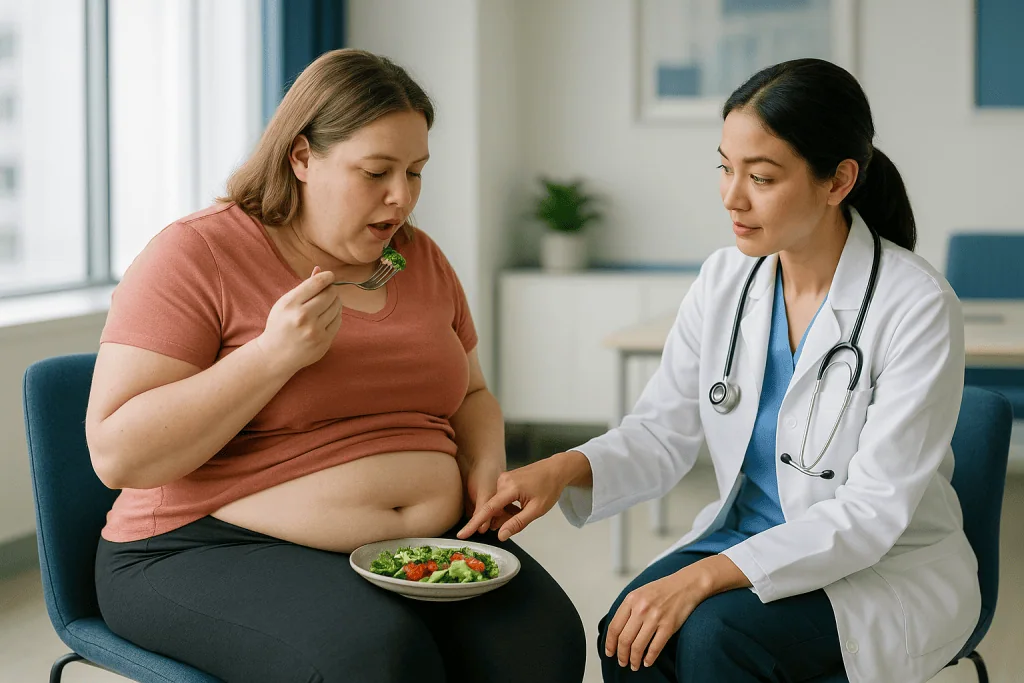
Some techniques add energy before suction. Ultrasound-assisted liposuction uses sound waves to rupture fat-cell walls; laser-assisted versions use light energy to liquefy fat. Mayo Clinic describes these as variations on the same core idea rather than fundamentally different operations. The procedure may be done under local anesthesia with sedation or under general anesthesia, depending on how many areas are treated. The NHS notes that it typically takes 1 to 3 hours.
Non-surgical fat reduction works on a slower timeline. Cryolipolysis, often described as fat freezing, chills the skin fold through an applicator to a temperature that injures fat cells while sparing skin and nerve. Other devices use heat, radiofrequency or focused ultrasound for a similar end. In each case the body’s immune system gradually clears the damaged cells over the following weeks, so the change appears slowly rather than on the day.
What unites every approach is the tissue it reaches. All of them act on subcutaneous fat, the layer that sits between skin and muscle and can be pinched between finger and thumb. None of them reaches the fat inside the abdomen. That single anatomical fact explains most of what follows.
Is liposuction weight loss? What the scale really shows
Is liposuction weight loss? Strictly speaking, a small amount of tissue leaves the body, so a small amount of weight leaves with it. In practice the number on the scale is a poor guide to what has happened, for three reasons.
The first is physics. Fat is less dense than water, so a given volume of it weighs a little less than the same volume of fluid. A visible change in the outline of a thigh can correspond to a modest change in weight. The second is timing. In the first days after surgery the treated area fills with swelling and residual fluid, and many people weigh the same or slightly more than they did before. The NHS and Mayo Clinic both describe swelling that takes months, not days, to resolve, and the scale follows that curve rather than the surgery date.
The third reason is the most important. Clinicians screen for a stable weight before offering contouring because the procedure is designed to refine a shape, not to change a trajectory. Mayo Clinic lists being within roughly 30 percent of your ideal weight among the usual criteria. Someone who is actively gaining or losing is asked to wait, since the result would be drawn on a moving target.
There is also a deeper point about what weight loss means medically. When a person loses fat through changed eating, activity, medication or bariatric surgery, the loss occurs across every fat depot at once, including the fat around the organs. Blood pressure, blood lipids and blood sugar often shift because the whole system is changing. Removing subcutaneous fat from one zone does not set that cascade in motion. The scale can nudge downward; the metabolism does not get the memo.
Fat removal vs weight loss: the fat you cannot see
The comparison of fat removal vs weight loss becomes clearest once two kinds of fat are named. Subcutaneous fat is the layer directly under the skin: it is what you pinch at the waist and what a cannula or a cooling paddle can reach. Visceral fat is the fat stored deep in the abdomen, wrapped around the liver, intestines and other organs. Harvard Health describes visceral fat as making up only around a tenth of total body fat in most people, yet it is the depot most strongly linked to type 2 diabetes, heart disease and other metabolic conditions.

The mechanism matters. Visceral fat is metabolically active, releasing fatty acids and inflammatory signals directly into the blood supply that feeds the liver. Subcutaneous fat is comparatively quiet. Harvard Health notes that a waist circumference above about 35 inches in women or 40 inches in men is often used as a rough marker of excess visceral fat, because a tape measure around the middle captures the hidden fat that no mirror shows.
Now follow the logic. A fat-removal procedure can reduce the visible layer over the abdominal wall and leave the deep fat behind the muscles untouched. The silhouette changes; the waist measurement may change a little; the metabolic risk that visceral fat represents stays where it was. Weight loss achieved through diet, physical activity, medical treatment or bariatric surgery does the reverse of this in one sense: it tends to reduce visceral fat early and efficiently, which is part of why even modest overall weight loss can improve blood sugar and blood pressure.
This is not an argument against contouring. It is an argument for asking the right question of it. If the goal is a smoother line, fat removal addresses the right tissue. If the goal is health risk, it addresses the wrong one.
Does fat come back after liposuction?
Does fat come back after liposuction? The honest answer has two halves. Fat cells that are removed do not return; adults do not generate large numbers of new fat cells in treated areas, and Mayo Clinic describes the removal as permanent in that specific sense. The second half is the one the myths skip: the fat cells that remain, in the treated zone and everywhere else, can still enlarge. Gain weight after the procedure and the body stores the surplus wherever it has capacity.
What that looks like varies. Mayo Clinic notes that if you gain weight after liposuction, your fat distribution may change, and that fat can accumulate in areas that were not treated or, in some cases, deeper within the abdomen. Research on whether removed subcutaneous fat is preferentially replaced by visceral fat is limited and not conclusive, so it is fair to say the risk is plausible rather than proven. What is well established is simpler: a result drawn at one weight will not look the same at a very different weight.
This is why the phrase stable weight appears so often in clinical guidance. Stability is not a moral standard; it is a practical condition for the result to mean anything. Someone whose weight swings substantially from year to year is likely to see the contour change with it, and may be advised to postpone until things settle.
There is also a kinder way to read this. A procedure that cannot stop fat storage elsewhere also cannot be blamed for it. Weight changes after contouring usually reflect the same forces that drive weight changes without it: sleep, appetite, activity, medications, illness, life. The surgery altered a shape. It did not alter the person’s biology, and no ethical clinician will suggest otherwise.
Who fat removal is usually for, and who is asked to wait
Guidance from Mayo Clinic and Cleveland Clinic describes a fairly consistent picture of the person for whom liposuction is usually considered. They are adults close to a stable, healthy weight for their frame, with pockets of fat that have not responded to diet and physical activity. Their skin still has reasonable elasticity, so it can retract over the smaller volume rather than hanging loose. They do not smoke, or have stopped well before surgery, because smoking impairs healing and raises complication risk. Their general health is good enough that anesthesia and a surgical procedure are considered low risk.
Several groups are commonly asked to wait or to consider another path. Someone who is still actively losing weight, or planning a pregnancy, is often advised to let the body reach a settled state first. People with conditions that affect healing or bleeding, including poorly controlled diabetes, significant heart or lung disease, or a clotting disorder, need those conditions assessed and managed before any elective operation. Anyone taking a medicine that affects clotting will have that reviewed by the prescribing clinician; no one should change such a medicine on their own ahead of a consultation.
Body mass index, a ratio of weight to height used as a population screening tool, often enters the conversation. The NHS is explicit that liposuction is not a treatment for obesity, and surgeons generally regard a higher BMI as a reason to discuss weight management rather than contouring first. That is about outcomes and safety, not judgment.
A final group deserves careful attention: people whose distress about a body area is out of proportion to what others see. Body dysmorphic disorder, a mental health condition in which a perceived flaw dominates daily thought, is described by Mayo Clinic as a condition that cosmetic procedures do not relieve. A thoughtful team screens for it and offers psychological support rather than a procedure.
Surgical and non-surgical body contouring compared
Body contouring is an umbrella term for procedures that reshape the body by removing fat, tightening skin or both. It is often confused with weight management, so a side-by-side view helps. Timelines below are typical ranges described by Mayo Clinic and the NHS, not promises.
| Approach | What it acts on | What usually changes | Typical timeline to settle | What it does not do |
|---|---|---|---|---|
| Surgical liposuction | Subcutaneous fat in chosen areas | Local contour; small change in weight | Swelling eases over weeks; final shape over several months, up to about 6 months | Treat obesity, remove visceral fat, tighten loose skin, remove cellulite |
| Non-surgical fat reduction (cold, heat, ultrasound devices) | Subcutaneous fat in a fold that fits the applicator | Gradual local reduction, often more modest than surgery | Visible over weeks to a few months as cells are cleared | Change overall weight or metabolic risk |
| Skin-tightening surgery (for example abdominoplasty) | Excess skin and sometimes muscle laxity | Firmer contour where skin is loose | Longer recovery than liposuction; months to final result | Primarily remove fat or weight |
| Lifestyle weight management | Total body fat, including visceral fat | Weight, waist, blood pressure, blood sugar, lipids | Weeks to years, gradual | Choose where fat is lost first |
| Medical weight management (prescribed medicines, bariatric surgery) | Appetite, absorption or gut hormone signalling; total fat | Substantial weight and metabolic change in appropriate candidates | Months to years under clinical supervision | Target shape; decisions sit with the prescribing team |
The pattern is hard to miss. Everything in the top half of the table reshapes; everything in the bottom half changes health markers. Some people are appropriately offered both, in sequence, with weight management first and contouring once weight has been stable. Which path fits, and in what order, is a decision for the treating team after a proper assessment.
What the first days and weeks after fat removal usually look like
The days after liposuction are rarely dramatic, but they are rarely glamorous either. The NHS describes bruising, swelling and numbness in the treated area that can last for several weeks, along with some fluid leaking from the small incisions in the first day or two. A compression garment, a firm elastic wrap worn over the area, is usually fitted straight after surgery and worn for several weeks to limit swelling and help the skin settle against its new contour. Pain is generally managed with medicines prescribed or recommended by the surgical team; how and for how long is their call.
Movement is encouraged early. Gentle walking from the first day helps circulation and lowers the risk of blood clots in the legs, a concern after any procedure that involves anesthesia and reduced mobility. Strenuous exercise and heavy lifting are typically held back for a few weeks; the NHS suggests most people can expect to return to work after about 2 weeks, depending on the extent of surgery and the nature of the job.
Then comes the part nobody photographs: waiting. Swelling masks the result. The treated area can look uneven, lumpy or even larger than before in the first weeks, which is normal and not a sign that something went wrong. Mayo Clinic notes that it may take several months for the swelling to subside and the final contour to appear, and the NHS puts the upper end at about 6 months for the area to fully settle.
Non-surgical treatments reverse the order. There is little to recover from on the day beyond temporary redness, numbness or tenderness, but the change arrives slowly as the body clears the damaged fat cells over the following weeks. Either way, the calendar, not the mirror, is the honest judge of a result.
Risks and alternatives in plain language
Every fat-removal procedure carries risk, and the clearest guidance lists them without drama. Mayo Clinic describes contour irregularities, where the skin looks bumpy, wavy or withered because of uneven removal or poor skin elasticity; these can be permanent. Fluid can collect under the skin in a pocket called a seroma, which may need draining. Numbness in the treated area is common and usually temporary, though it can persist. Infection is uncommon but serious when it occurs. The cannula can, rarely, puncture an internal organ, which requires emergency surgery.
Two rarer complications deserve naming because they are the reason large-volume procedures are approached with caution. Fat embolism occurs when loosened fat enters a blood vessel and travels to the lungs or brain, a medical emergency. Shifts in fluid levels during and after surgery can strain the heart and kidneys, and the local anesthetic in tumescent fluid can reach toxic levels if volumes are very large. Mayo Clinic notes that risk rises when more areas or larger volumes are treated in a single session. More is not better.
Non-surgical fat reduction has a gentler risk profile but is not risk-free. Temporary pain, bruising and numbness are expected. A rare response to cryolipolysis called paradoxical adipose hyperplasia, in which the treated fat enlarges and firms rather than shrinks, has been reported; it typically requires surgical correction. Burns and pigment change are possible with heat-based devices.
Alternatives depend on the actual goal. For health risk, weight management through diet, activity, prescribed medicines or bariatric surgery acts on the fat that matters metabolically. For loose skin, excision rather than suction is the relevant tool. For distress that feels out of proportion, psychological therapy addresses the thing a procedure cannot reach. Doing nothing is also a legitimate alternative, and a good team will say so.
Common body image myths that shape the decision
Common body image myths rarely announce themselves; they arrive as assumptions. The first is that everyone else is reasonably content with their body and you are the exception. Surveys across age groups consistently find dissatisfaction to be widespread, which makes it ordinary rather than a personal failing. The second is that body image is about how you look. Psychologists define it instead as how you perceive, think and feel about your body, which is why two people with similar shapes can experience them completely differently.
People searching for the main theories about body image usually meet three. Sociocultural theory holds that media, peers and family transmit appearance ideals that most bodies cannot meet. Objectification theory describes how being routinely evaluated by appearance leads people to monitor their own bodies from the outside, as an observer would. The tripartite influence model ties those pressures together through two habits of mind: comparing yourself with others and internalizing the ideal as your own standard. None of these theories suggests that changing the body reliably changes the image of it.
That gap is where a third myth lives: fix the feature and the feeling follows. For many people with a specific, proportionate concern, contouring does ease it. For those whose distress is driven by comparison, internalized ideals or body dysmorphic disorder, the feeling tends to migrate to a new feature. Mayo Clinic describes body dysmorphic disorder as a condition in which a perceived flaw, often minor or invisible to others, occupies hours of thought each day, and notes that cosmetic procedures do not relieve it. The recommended treatments are cognitive behavioral therapy and, where a clinician judges appropriate, medicines from the antidepressant class, with timelines and choices set by the prescribing team.
Asking which of these describes your own situation is not a test to pass. It is simply the most useful question in the whole process.
What people often get wrong about body aesthetics
Several body aesthetics myths deserve a direct correction, because they influence real decisions.
- Liposuction treats cellulite. It does not. The NHS states this plainly. Cellulite reflects fibrous bands tethering skin to deeper tissue; removing fat beneath it can leave the dimpling unchanged or more visible.
- Fat removal tightens loose skin. Suction removes volume; it does not shrink skin. Where elasticity is poor, the result can be looser skin, which is why candidates with good skin tone are preferred and skin excision is a separate procedure.
- You can spot-reduce fat with exercise. Crunches strengthen abdominal muscle but do not preferentially burn the fat over it. Fat loss through activity happens body-wide. This is one of the most persistent myths about the human body.
- Fat turns into muscle, or muscle turns into fat. They are different tissues. One can shrink while the other grows, but neither converts into the other.
- Sweating burns fat. Sweat is water loss for cooling. The weight returns with the next glass of water.
- Removing fat improves cholesterol or blood sugar. Subcutaneous fat removal leaves visceral fat untouched, and the evidence does not support a meaningful metabolic benefit from contouring alone.
- Non-surgical devices give surgical results. They treat less fat per session and act gradually. They are a different tool with a different risk profile, not a shortcut to the same end.
- Removing more fat is always better. Larger volumes raise the risk of fluid shifts, anesthetic toxicity and contour irregularity. Surgeons set limits for safety, not caution for its own sake.
One more correction is cultural rather than clinical. Wanting a procedure is not vanity, and declining one is not denial. Both are reasonable responses to living in a body under constant evaluation. The myth that matters most is the one that says there is a right answer for everyone.
Questions to ask your care team
A consultation goes better when the questions come from understanding rather than hope. These are the ones that tend to produce the most useful answers.
- Which tissue will this procedure change, and which will it leave alone? Ask specifically whether loose skin, cellulite or deeper abdominal fat is part of what you are hoping to address, so the team can say honestly what the technique can and cannot reach.
- How do you assess whether my weight is stable enough, and what would make you advise waiting?
- Which of my current conditions or medicines affect the plan? Raise anything that influences bleeding, healing or anesthesia, and let the prescribing clinician decide what, if anything, should change.
- What is the realistic range of results for someone with my skin elasticity and fat distribution? Ask to see a spread of outcomes rather than the best case.
- What complications have you seen in your own practice, how often, and how were they managed?
- How many areas and how much volume do you plan to treat in one session, and why that limit?
- What will the first two weeks look like day by day, and when would you expect the final shape to be visible?
- Who do I contact after hours if something worries me, and which signs mean I should go straight to emergency care?
- What happens to the result if my weight changes by a meaningful amount in either direction?
- If you were advising a family member with my goals, would you suggest this, something else, or nothing yet?
Notice that none of these asks the team to promise an outcome. The most trustworthy answer to several of them is a range, a probability or a candid I do not know. A team willing to give those answers is a team worth listening to, and the final decision about whether and when to proceed remains yours, made together with them.
When to call your doctor
Most recovery after fat removal is uneventful, but a short list of signs should prompt a same-day call to the surgical team or, where noted, emergency care. These are drawn from the complications described by Mayo Clinic and the NHS.
- Seek emergency care immediately for chest pain, sudden shortness of breath, coughing up blood, confusion or fainting. These can signal a blood clot travelling to the lungs or a fat embolism, both of which are medical emergencies.
- Call urgently for a calf that becomes swollen, warm, red or painful on one side, which can indicate a deep vein clot.
- A fever, or a treated area that becomes increasingly red, hot, hard or foul-smelling, may point to infection.
- Bleeding that soaks through dressings and does not slow with gentle pressure needs assessment.
- Severe or worsening pain that is not controlled by the plan your team gave you, or pain that changes character, should be reported rather than endured.
- Rapidly increasing swelling, a tense fluid-filled area, or skin that turns dusky, grey or very pale may indicate a fluid collection or a problem with blood supply to the skin.
- Nausea, vomiting, dizziness or a marked drop in how much urine you pass can reflect fluid imbalance, especially after larger-volume procedures.
- Numbness or tingling that spreads rather than settles, or a limb that feels weak, should be checked.
Outside of surgery, there is one more reason to reach out. If thoughts about a body area are consuming hours of your day, driving you to avoid people or places, or pushing you toward repeated procedures without relief, speak to your primary care clinician. That pattern is treatable, and it deserves the same seriousness as any physical symptom. Whatever the sign, when in doubt, call; teams would far rather hear about a false alarm than miss an early warning.
Where the evidence actually stands, and what matters most
Strip the marketing away and the evidence base for fat removal is modest and consistent. Liposuction reliably reduces subcutaneous fat in treated areas in appropriately selected adults, with a known complication profile that rises with volume. Non-surgical devices produce smaller, gradual changes with fewer serious risks. Neither alters visceral fat in any meaningful way, neither is a treatment for obesity, and neither has been shown to improve the metabolic markers that predict heart disease and diabetes. Those are not controversial statements; they are what Mayo Clinic, the NHS and Harvard Health all describe.
What is less settled is also worth saying. Whether fat lost from one area is preferentially regained elsewhere, including around the organs, has been studied in small trials with mixed findings; the honest summary is uncertain rather than reassuring or alarming. Long-term satisfaction depends heavily on who is selected, how realistic their expectations were and what their weight does afterwards, which is why reputable sources decline to quote a single success figure.
If one thing matters most, it is this: name the goal before naming the procedure. A smoother hip line is a legitimate goal, and contouring is the right tool for it. Lower blood pressure, better sleep, a healthier relationship with food or relief from relentless self-scrutiny are also legitimate goals, and contouring is the wrong tool for every one of them. Confusing the two is the body aesthetics myth that costs people the most, in time, in risk and in hope.
The woman in the changing room can still go to her consultation. She simply goes with a better question: not whether the scale will move, but whether the thing she wants changed is the thing this procedure changes. Her team can answer that one honestly, and the decision, made with them, remains hers.
Frequently asked questions
Is liposuction weight loss or something different?
It is something different. Liposuction removes subcutaneous fat from specific areas to change shape, and Mayo Clinic and the NHS both state it is not a weight-loss method or a treatment for obesity. A small amount of tissue leaves the body, but swelling can mask any change on the scale for weeks, and the procedure does not alter appetite, metabolism or the deeper fat that affects health.
Does fat come back after liposuction?
The removed fat cells do not return, but the fat cells that remain can enlarge if you gain weight, in treated and untreated areas alike. Mayo Clinic notes that weight gain afterwards can change where fat accumulates. Whether removed fat is preferentially replaced by deeper abdominal fat is uncertain in the research, so the practical advice is simply that a result holds best at a stable weight.
What is the difference between fat removal vs weight loss for my health?
Weight loss through diet, activity, prescribed medicines or bariatric surgery reduces fat everywhere, including visceral fat around the organs, which is why it can improve blood pressure, blood sugar and lipids. Fat removal takes only the layer under the skin from chosen areas and has not been shown to improve those health markers. One changes risk; the other changes shape.
What are the most common body image myths?
The most common are that everyone else is satisfied with their body, that body image is simply about appearance, and that changing a feature reliably changes how you feel about it. Psychologists define body image as perception and feeling rather than looks, and research on sociocultural pressure and comparison suggests the feeling often persists or shifts to a new feature unless it is addressed directly.
What are the main theories about body image?
Three are widely taught. Sociocultural theory holds that media, peers and family transmit appearance ideals most bodies cannot meet. Objectification theory describes how routine evaluation by appearance leads people to monitor themselves from the outside. The tripartite influence model links those pressures through social comparison and internalizing the ideal. None predicts that a procedure alone will resolve body dissatisfaction.
What are some common myths about the human body related to fat?
Several persist. Fat does not turn into muscle, or muscle into fat; they are different tissues. Exercise cannot spot-reduce fat over a specific muscle; loss happens body-wide. Sweating removes water, not fat. And cellulite is not simply excess fat; it reflects fibrous bands tethering skin to deeper tissue, which is why the NHS says liposuction does not remove it.
Who is usually asked to wait before fat removal?
People who are actively losing or gaining weight, planning a pregnancy, smoking, or living with poorly controlled diabetes, significant heart or lung disease or a clotting disorder are often asked to wait or to address those issues first. Anyone whose distress about an area seems out of proportion may be offered psychological assessment before any procedure. The treating team makes that judgment after a full assessment.
How long does it take to see the result after liposuction?
Longer than most people expect. Bruising and swelling can last several weeks, and the NHS describes up to about 6 months for the area to settle completely. Mayo Clinic similarly notes that final contour may take several months to appear. In the early weeks the area can look uneven or even larger, which is a normal stage rather than a sign of a problem.
Do non-surgical fat reduction treatments work as well as surgery?
They work differently. Devices using cold, heat or ultrasound injure fat cells that the body then clears over weeks, producing gradual and generally more modest changes than surgery in a single session. They avoid anesthesia and incisions but still carry risks such as numbness, bruising and, rarely with cryolipolysis, fat that enlarges rather than shrinks. Neither approach affects weight or metabolic health.
What signs after fat removal mean I should seek urgent help?
Chest pain, sudden breathlessness, coughing up blood, confusion or fainting need emergency care, as they can signal a clot or fat embolism. Call your team urgently for a swollen, warm or painful calf, fever, spreading redness or heat at the site, bleeding that will not slow, rapidly increasing swelling, dusky or very pale skin, or severe pain that is not controlled by your plan.
References
This article is for general information only and is not a substitute for professional medical advice. Please consult a qualified doctor about your individual situation.

More from the Blog

Classic Liposuction vs Energy-Assisted Techniques: When the Traditional Method Still Fits
Classic liposuction removes fat with a thin tube and suction alone; energy-assisted techniques add ultrasound, laser, radiofrequency or a motorized cannula to loosen fat…

Life After HD Liposculpture: How Training and Weight Changes Affect the Sculpted Lines
Life after HD liposculpture depends on two things the operation does not control: your body weight and your muscle. The fat cells removed do…

BBL Recovery Time: Honest Milestones From Surgery to Final Shape
Most people return to desk work about one to two weeks after a Brazilian butt lift, sit normally again around six to eight weeks,…

What Labiaplasty Results Usually Look Like Once Swelling Settles: Realistic Expectations
Once swelling settles, labiaplasty results usually show inner labia (labia minora) that sit level with or tucked inside the outer labia, with edges that…
Inner vs Outer Thigh Lift: Which Incision Pattern Suits Which Kind of Loose Skin
An inner (medial) thigh lift removes loose skin along the inside of the thigh through an incision hidden in the groin crease, sometimes extended…

How Lipedema Is Diagnosed: The Exam, Imaging and Staging That Shape a Treatment Plan
Lipedema is diagnosed clinically. A clinician takes a detailed history of when the fat pattern began, examines the limbs for symmetrical, tender, easily bruised…