

Can Being Cold and Wet Make You Sick? What Really Causes Colds and Why the Belief Persists

Key Takeaways
- Colds are caused by more than 200 viruses, most often rhinoviruses, and spread through droplets and hands rather than rain, damp or cold air.
- Symptoms of a cold begin one to three days after exposure, which is why a memorable soaking so often gets blamed for a virus caught earlier.
- The Cardiff foot-chilling study of 2005 and the Foxman airway-cell study of 2015 suggest chilling may help a virus already in the nose, but neither shows cold creating infection.
- Hypothermia, a core temperature below 35°C (95°F), is the real emergency of being wet and cold; confusion, slurred speech and drowsiness are warning signs.
- Feeling chilled is often the first sign of a fever starting, so the chill is a symptom of the infection rather than its cause.
- Washing hands with soap for at least 20 seconds and keeping unwashed hands away from the face do more to prevent colds than any amount of staying dry.
Being wet and cold does not by itself give you a cold or the flu; those illnesses are caused by viruses you catch from other people. Chilling may slightly raise the odds that a virus already in your nose takes hold, but the evidence for that is modest. The real danger of prolonged wet, cold exposure is hypothermia, which is an emergency if confusion, slurred speech or drowsiness appear.
It happens at every school gate on a wet afternoon. A child runs out without a coat, the rain finds the gap between collar and neck, and a grandparent says what grandparents have said for a century: you will catch your death. By the following evening the child has a runny nose, and the case looks closed.
Except it was never really open. The question people type, can you get sick from being wet and cold, has been studied in laboratories, in volunteer trials and in large seasonal surveys, and the answer is more interesting than either the folk wisdom or the flat denial you may have read on a forum. Rain does not carry viruses. Chill does not create them. Yet a cold nose is not quite neutral territory either.
What follows separates three things that usually get tangled together: what causes a cold, what cold and damp actually do to the body, and why a wrong idea has survived so stubbornly.
Can you get sick from being wet and cold? The short answer
No, not in the way the saying implies. A cold is an infection caused by a virus, and you can only develop one if a virus reaches the lining of your nose or throat. Rainwater, a damp shirt or a wet head of hair carries no cold virus. If you walk home soaked and nobody has sneezed near you in the past few days, you are not going to come down with anything infectious because of the weather alone.
There is a narrower, more honest version of the old claim. Laboratory work suggests that the common cold virus, rhinovirus, copies itself more efficiently in slightly cooled airway cells, and the nose is the coolest part of the airway. So if a virus is already sitting in your nasal passages, a spell of chilling might tip the balance in its favor. That is a possible nudge, not a cause, and the human studies behind it are small.
The thing to actually worry about after a long, wet, cold exposure is heat loss. Water pulls warmth from skin far faster than air does, and a core body temperature that drops below 35°C (95°F) is hypothermia, which the NHS lists as a medical emergency. If someone who has been out in cold rain becomes confused, slurs words, stops shivering or grows unusually sleepy, that needs emergency care, not a hot drink.
What really causes colds: viruses, not weather
Every cold starts with a virus, and there is no shortage of candidates. The CDC notes that more than 200 different viruses can produce the familiar bundle of sneezing, sore throat and congestion, with rhinoviruses the most frequent culprits. A virus is a particle far too small to see that cannot reproduce on its own; it has to enter your cells and borrow their machinery.
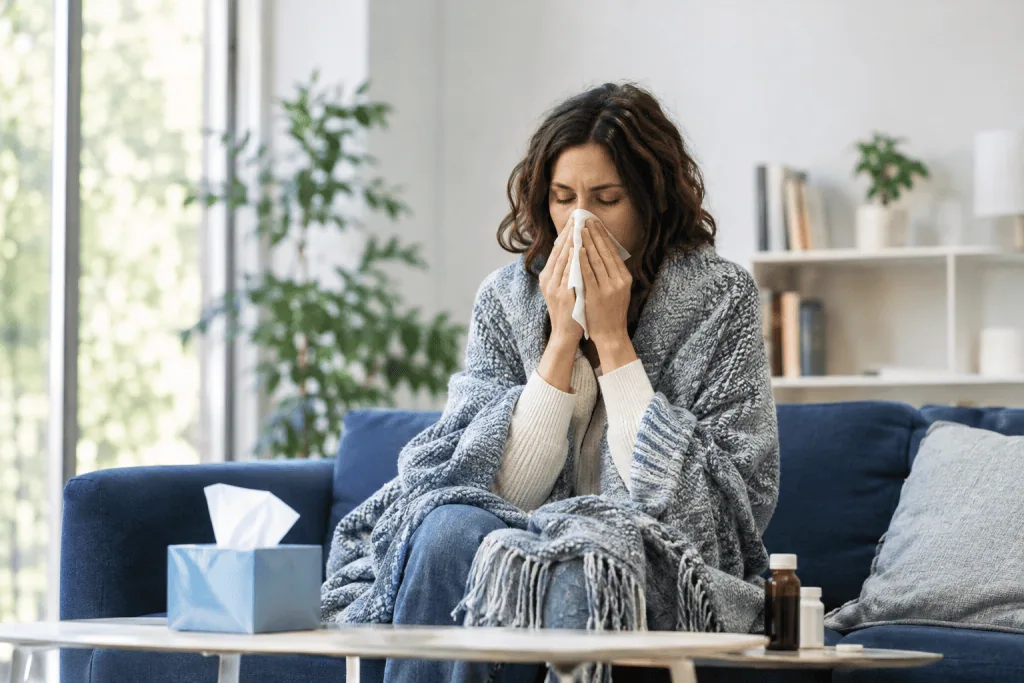
The route in is almost always other people. According to CDC and NHS guidance, cold viruses travel in droplets released when an infected person coughs, sneezes or talks, and they also survive for a time on hands and surfaces such as door handles, keyboards and shared cups. You pick them up by breathing droplets in or by touching a contaminated surface and then your eyes, nose or mouth. Symptoms typically begin one to three days after exposure, a lag that matters enormously for how the myth took hold, as a later section explains.
Adults average two to three colds a year, the CDC reports, and children catch more because they have met fewer viruses and spend their days in close, hands-on groups. Most colds settle within about 7 to 10 days. None of that arithmetic changes with the forecast; what changes in winter is how often the virus gets its chance.
Can you catch a cold from being cold? What the studies actually found
Researchers have tried, repeatedly, to make volunteers ill with cold alone. In the mid-twentieth century, teams in Britain and the United States chilled people in damp clothes, sat them in drafts and then exposed some of them to cold viruses. The chilled groups did not catch colds more often than the warm ones. Those older trials are the foundation for the standard medical line that cold does not cause colds.
Two more recent pieces of work complicate the picture without overturning it. The Cardiff foot-chilling study of 2005 asked 180 volunteers to sit with their feet in cold water for 20 minutes; over the next four to five days, 29 percent of the chilled group reported cold symptoms compared with 9 percent of the control group. The catch: nobody was tested for a virus, symptoms were self-reported, and the authors themselves proposed that chilling may have activated an infection already present rather than created one.
Then came the Foxman study of 2015, which grew mouse airway cells at 33°C, roughly the temperature of the human nose, and at 37°C, core body temperature. Rhinovirus multiplied far more readily at the cooler temperature, and the cells mounted a weaker antiviral defense. That is a plausible mechanism for a cooled nose giving a virus an easier start. It is also cells in a dish, not people in the rain, which is why clinicians describe the effect as possible and modest rather than proven.
Can you get sick from the rain?
Rain itself is close to harmless. Falling water is not a vehicle for respiratory viruses, and the idea that getting wet in the rain makes you sick confuses two separate things: the water on your skin and the person who coughed on the bus you then boarded to get out of the rain.

What rain genuinely does is cool you. Wet fabric conducts heat away from the body many times faster than dry fabric, and evaporation from damp skin keeps pulling warmth out long after the shower has passed. Add wind and the loss accelerates. For a short walk home that produces nothing worse than discomfort and a sharp appetite for a hot meal. For hours of exposure, especially in someone very young, very old, exhausted, or wearing cotton that stays sodden, it can push core temperature down toward hypothermia.
So the honest answer to whether you can get ill from being in the rain and cold is: not with an infection, but possibly with a cold-exposure injury if the exposure is long enough. The practical consequence is simple. Getting dry and warm after a soaking is wise, but its benefit is protection from heat loss, not from germs. The germ-related part of staying well in rainy weather is washing your hands once you are indoors and keeping a little distance from anyone who is visibly unwell.
Does cold weather make you sick, or just make colds more common?
Colds do cluster in colder months, and that pattern is real; the CDC describes rhinovirus activity as peaking in the cooler seasons. The question is why, and the weather is only the first link in a longer chain.
Behavior changes first. When it is cold outside, people move indoors, close windows and share air in smaller spaces for longer. Schools are in session. Public transport is crowded. Every one of those shifts increases the number of droplets a person breathes in from others, which is the only thing that actually spreads a cold.
Air changes next. Cold outdoor air holds little moisture, and heated indoor air becomes drier still. Dry air lets small droplets stay suspended longer, and several laboratory studies have found that some respiratory viruses survive better at low humidity. Dry air also stiffens the mucus layer that lines the nose and slows the tiny hairs, called cilia, that normally sweep particles toward the throat to be swallowed. A nose that clears itself less efficiently gives a virus more time to find a cell.
Finally there is the cooled-nose effect described above, which may give rhinovirus a slight head start in winter. Put those links together and cold weather earns its reputation indirectly: it rearranges how and where people breathe near each other and makes the airway a slightly easier target. It does not manufacture illness from nothing.
Can you get sick from being wet and cold in a different way? Hypothermia and frostbite
Here the folk warning was right about the danger and wrong about the name. The genuine risk of a long, wet, cold exposure is that the body loses heat faster than it can make it.
Hypothermia means a core body temperature below 35°C (95°F); the NHS describes it as an emergency that needs treatment in hospital. Early signs are shivering, pale or cold skin, fast breathing and tiredness. As the temperature falls further, shivering can stop, speech becomes slurred, thinking becomes muddled and the person grows drowsy. That progression is why a cold, wet companion who seems unusually quiet or confused needs urgent help rather than reassurance. Water is the accelerant: immersion or soaked clothing strips warmth from the body far more quickly than cold air at the same temperature, and wind compounds it.
Frostbite is a separate cold injury in which skin and the tissue beneath it freeze, most often in fingers, toes, ears, the nose and cheeks. The affected area goes numb, then white or waxy, and may blister on rewarming. Wet gloves and socks raise the risk sharply because damp insulation stops insulating.
Neither condition involves a virus, and neither is prevented by anything you drink or take. Dry layers, a wind-resistant outer shell, warm fluids and getting indoors are the whole of the prevention, and gradual rewarming without rubbing the skin is what first-aid guidance supports while help is on the way.
Why the belief persists: a lag, a chill and a very human brain
Ideas rarely survive this long without a good disguise, and this one has three.
The first is timing. A cold shows itself one to three days after the virus got in. A soaking is memorable; the stranger who sneezed in the queue two days earlier is not. When symptoms appear, the mind reaches for the most vivid recent event and files it as the cause. Psychologists call this confirmation bias: the rainy walk that was followed by a cold is remembered, while the dozens that were not are forgotten.
The second disguise is that the very first symptom of many infections is feeling cold. As the immune system reacts to a virus, it releases signaling chemicals that nudge the brain’s thermostat upward, and until the body catches up with the new setting you shiver and reach for a blanket. That means a chill often arrives before the sore throat or fever. People then conclude that the chill brought the illness, when in truth the illness brought the chill.
The third is language. The word cold describes both a temperature and a disease in English and in many other languages, so the link is baked into the way the illness is named. Add a century of parents saying it with love, and you have a belief that feels like experience even though the experience points elsewhere.
Chilled, cold or flu? How clinicians tell them apart
When someone arrives after a cold, wet day feeling unwell, a clinician is sorting between a few possibilities, most of them harmless. The pattern of symptoms, how fast they came on and the person’s temperature do most of the work; tests are rarely needed for a straightforward cold.
| Cause | Typical features | Usual next step |
|---|---|---|
| Simply chilled | Shivering, cold hands and feet, no sore throat or congestion; settles within an hour or so of getting warm and dry | Warm up, dry clothes, watch for hypothermia signs |
| Common cold | Sore throat first, then runny or blocked nose, sneezing, mild cough; little or no fever in adults; improves over 7 to 10 days | Self-care at home; see a clinician if symptoms worsen or last beyond about three weeks |
| Flu (influenza) | Sudden onset, fever, aching muscles, exhaustion that keeps you in bed; the NHS notes most people feel better within about a week | Rest and fluids; earlier review for people at higher risk such as older adults, pregnant people and those with long-term conditions |
| Hypothermia | Core temperature below 35°C (95°F); confusion, slurred speech, drowsiness, shivering that stops | Emergency care |
| Chest infection or pneumonia | Cough with discolored phlegm, fever, breathlessness, chest pain on breathing, often following a cold | Clinical examination; a chest X-ray or blood tests may be arranged |
One distinction worth stressing: a cold creeps, flu arrives like a slammed door. The NHS puts the difference bluntly: with flu you feel too unwell to carry on as normal, whereas with a cold you usually can. That pace of onset, not the weather on the day, is what a clinician asks about first.
What to do if you get rained on to avoid getting sick
Think of it as two separate jobs, because the measures that stop you catching a virus and the measures that stop you losing heat are different.
For heat loss, the job is quick and mostly common sense. Get out of wet clothes as soon as you can, including socks, which lose insulation the moment they are damp. Dry your hair and skin. Put on dry layers and, if you are still shivering, a warm drink and a warm room help the body recover its temperature. Hot showers are pleasant and fine for a healthy adult who is merely chilly; for someone showing signs of hypothermia, first-aid guidance favors gradual rewarming with blankets and warm, non-alcoholic drinks, because alcohol widens blood vessels in the skin and speeds heat loss.
For infection, the job is about hands and distance, not dryness. CDC guidance on preventing colds comes down to washing hands with soap and water for at least 20 seconds, keeping unwashed hands away from the eyes, nose and mouth, and staying away from people who are sick where you can. The crowded bus shelter is a far more likely place to meet a virus than the puddle beside it.
What does not help: there is no mainstream evidence that supplements, special teas or a particular food taken after a soaking lower your chance of a cold. The same applies to the wet-hair question: going outside with damp hair after a shower makes you colder, nothing more.
Does cold weather weaken your immune system?
This is where the evidence is genuinely mixed, and it is worth saying so plainly rather than picking a side.
On one hand, prolonged, serious cold stress does change how the body behaves. Blood vessels in the skin and nose narrow to conserve heat, which reduces the flow of infection-fighting white blood cells to the nasal lining. The 2015 airway-cell work described earlier found a weaker interferon response, interferon being a signaling protein cells release to warn neighbors of a virus, at nose-like temperatures. Together these suggest the first line of defense in the nose may be a little slower when cooled.
On the other hand, the whole-body immune system of a healthy person out in ordinary winter weather is not meaningfully suppressed. Decades of volunteer studies failed to show that chilling makes people more likely to catch an experimentally introduced cold, which is a direct test of the question and a fairly reassuring one.
Two other winter factors get blamed, with uneven support. Vitamin D levels do fall in winter at higher latitudes because skin makes less of it with less sunlight, and the NIH Office of Dietary Supplements notes that low vitamin D is associated with more respiratory infections in some studies, while trials of supplementation have given inconsistent results. Sleep and stress, which also shift in winter for many people, have stronger evidence as influences on susceptibility to colds than temperature does. The honest summary: cold weather makes a small, local difference in the nose; the big levers are exposure, hands, sleep and the people around you.
What people often get wrong
Feeling a chill means you have caught a chill. There is no such illness. A chill is a sensation, either from losing heat or from a fever beginning. If it is the latter, the virus arrived days ago.
Antibiotics will head off a cold after a soaking. Antibiotics act on bacteria and have no effect on the viruses that cause colds and flu, so there is nothing for them to head off. Taking them for a viral illness exposes you to side effects and contributes to resistance without any benefit. Whether a bacterial complication such as a chest infection needs treatment is a judgment for the clinician who examines you.
Cold air itself is full of germs. Outdoor air in winter is generally cleaner, in infectious terms, than a warm, crowded, closed room. It is the room, not the weather, that spreads the virus.
A hat prevents most heat loss because heat escapes through the head. The head loses heat roughly in proportion to its share of body surface, which is modest. A hat helps because the head is usually the only uncovered part, not because it is a special chimney.
If I did not get wet, I cannot have been exposed. Exposure is about droplets and hands. A perfectly dry handshake followed by a rub of the eyes is a far more efficient way to catch a cold than any rainstorm.
Being cold-hardy means never catching colds. Regular swimmers in cold water are not spared rhinovirus; they simply meet the same viruses everyone else does and recover on the same timeline.
When to see a doctor
Most colds, including the ones that follow a wet day, need nothing more than rest, fluids and patience. A clinician should be involved in two situations: when the exposure itself has harmed the body, or when an infection is behaving unusually.
Call emergency services for signs of hypothermia after cold or wet exposure: confusion, slurred speech, drowsiness or difficulty staying awake, shivering that has stopped, very slow or shallow breathing, or a body temperature below 35°C (95°F) if you can measure it. Numb, white or waxy fingers, toes, ears or nose after cold exposure also need urgent assessment for frostbite.
Seek same-day advice for anyone with breathing difficulty or breathlessness at rest, chest pain, coughing up blood, a fever that keeps rising or persists beyond a few days, a severe headache with a stiff neck or a rash that does not fade under pressure, or any sudden deterioration after a period of improvement. Infants under three months with any fever, children who are unusually floppy or hard to wake, and pregnant people with flu-like illness should be assessed promptly rather than waited on.
Arrange a routine appointment if cold symptoms last beyond about three weeks, if you have a long-term heart or lung condition, a weakened immune system or are over 65 and feel significantly unwell, or if you keep getting one cold after another. The clinician will take a history, examine your chest, ears and throat and decide whether any test is useful. For an ordinary cold, usually none is.
Frequently asked questions
Can you get ill from being in the rain and cold?
Not with an infection. Colds and flu are caused by viruses passed between people, and rain carries none of them. Being out in cold rain for a long time can lower body temperature, and prolonged exposure can lead to hypothermia, which is a medical emergency. The sensible response to a soaking is to get dry and warm; the sensible response to cold season is to wash your hands.
Can getting wet in the rain make you sick the next day?
If you feel unwell the day after being rained on, the most likely explanation is a virus you picked up a day or two before. Cold symptoms appear one to three days after exposure, according to the CDC. The rain is simply the most memorable event in that window, which is why it tends to get the blame.
Can wet hair make you sick if you go outside?
No. Wet hair makes you feel colder because evaporation draws heat from the scalp, and in very cold weather that adds to overall heat loss. It does not introduce a virus or, in a healthy adult taking a short trip, meaningfully weaken immunity. Drying your hair before going out in winter is about comfort and warmth, not about preventing a cold.
Can you get sick from showering and going outside in the cold?
Stepping into cold air after a hot shower produces a sharp chill because damp skin and dilated blood vessels lose heat quickly. That chill is a temperature effect, not an infection, and it passes once you are dry and dressed. There is no mainstream evidence that this routine raises the chance of catching a cold.
Can you catch a cold from being cold?
Older volunteer trials that chilled people and then exposed them to cold viruses found no increase in infections. More recent laboratory work shows rhinovirus multiplies better in slightly cooled airway cells, so a cold nose may give a virus already present a small advantage. Clinicians therefore describe cold as a possible minor contributor, not a cause.
Does cold weather make you sick more often?
Colds are more common in cold months, but the reasons are indirect: more time indoors in shared air, drier air that helps droplets linger and slows the nose’s self-cleaning, and a cooled nasal lining that may favor rhinovirus. The weather changes how often you meet a virus; it does not generate one.
What to do if you get rained on to avoid getting sick?
Change out of wet clothes and socks, dry your skin and hair, put on dry layers and warm up with a hot, non-alcoholic drink. Those steps protect you from heat loss. To protect yourself from viruses, wash your hands with soap for at least 20 seconds once you are indoors and avoid touching your face with unwashed hands.
How long does a cold last after being out in the cold?
The same length as any other cold. CDC guidance puts a typical cold at about 7 to 10 days, with the sore throat usually first, then congestion and a lingering cough. A cough that persists can take longer to fade. If symptoms last beyond roughly three weeks or get noticeably worse, that is the point to arrange a review.
Can children get sick from playing in the rain?
Children can get cold quickly because they lose heat faster than adults, so wet play in low temperatures should be short and followed by dry clothes. They will not catch an infection from the rain itself. Watch for shivering that does not settle, unusual sleepiness or confusion, which need urgent assessment, and for any fever in a baby under three months.
Why do I shiver before I get a cold?
Shivering and chills are often the first sign that the immune system has detected a virus. Signaling chemicals raise the brain’s temperature set point, and until the body warms to match it you feel cold and shiver. The chill is the illness announcing itself, not the thing that caused it.
References
This article is for general information only and is not a substitute for professional medical advice. Please consult a qualified doctor about your individual situation.
Add us as a Preferred Source to see more of our trusted health content across Google Search, AI Overviews and Discover.

More from the Blog

Is E. Coli Contagious? How the Infection Spreads, for How Long and Who Is Most at Risk
Yes, the strains of E. coli that cause diarrhea are contagious. They spread through tiny traces of stool reaching the mouth: contaminated food or…

What Causes Yellow Fever? The Virus, the Mosquitoes That Carry It and the Stages of Illness
Yellow fever is caused by the yellow fever virus, a flavivirus that reaches people through the bite of an infected mosquito, mainly Aedes aegypti…

Before You Travel to a Malaria Region: What a Travel-Health Consultation Covers
A malaria prevention travel clinic consultation reviews your itinerary, health history and activities to judge your malaria and vaccine risk. The clinician checks routine…

How Long Does a Flu Shot Last? How Protection Fades Over the Season and Why It Is Given Yearly
A flu shot usually protects for about six months, roughly one flu season. Antibody levels peak around two weeks after vaccination and then decline…

Can the Flu Be Fatal? Who Is Most at Risk and the Warning Signs of Serious Complications
Yes, the flu can be fatal, though for most people it is not. Influenza kills when it triggers pneumonia, sepsis, heart strain or a…

Why Does Tuberculosis Treatment Last for Months? How the Phases of a TB Course Are Planned
Tuberculosis treatment lasts months because Mycobacterium tuberculosis divides slowly, hides inside immune cells and walled-off lung lesions, and includes dormant bacteria that antibiotics can…