

Castor Oil Packs and the Belly Button Trend: What Is Claimed and What Is Known

Key Takeaways
- Castor oil's only use backed by strong evidence is as an oral laxative, which works because ricinoleic acid activates EP3 receptors on intestinal muscle, a mechanism confirmed in a 2012 PNAS study.
- The navel is sealed scar tissue over closed umbilical vessels with no channel to internal organs, and the "Pechoti gland" cited in viral videos does not exist in human anatomy.
- The best human study of castor oil packs enrolled 35 older adults with constipation, used no placebo pack and no blinding, so it cannot distinguish the oil from heat and rest.
- Heat applied to the lower abdomen has randomized-trial support for menstrual cramps, which is the most plausible reason a warm castor oil pack feels soothing.
- Functional ovarian cysts resolve on their own within a few cycles in most cases, which explains many testimonials crediting packs for a cyst that disappeared.
- Castor oil is a documented, if uncommon, contact allergen, best known for causing persistent lip rashes from lipsticks, so it is not a sensible choice for skin that is already inflamed.
A castor oil pack is a cloth soaked in castor oil, laid on the skin (often over the abdomen or navel) and usually warmed. Users describe comfort and relaxation, but no randomized trials show that packs detoxify the body, shrink fibroids or cysts, improve fertility or cause weight loss. Castor oil is well studied only as an oral laxative; on skin it can irritate and may trigger contact dermatitis.
The video is always shot in a bathroom at night. A dropper hovers over a navel, a cotton pad goes on, and a caption promises deeper sleep, a flatter stomach and a liver that will somehow thank you by morning. Millions of views later, the castor oil pack, a remedy that sat quietly in folk medicine for a century, has become one of the most searched wellness topics of the year. As of September 2026, interest is still climbing, driven not by a trial or an approval but by a steady stream of testimonials.
That gap between what is said and what is shown matters. Castor oil is a genuinely interesting substance with one well-documented medical use. The pack, and its newer cousin the belly button patch, rest on a different kind of evidence: tradition, physiology by analogy and a lot of people who felt better and told the internet.
Here is what is actually claimed, what is actually known, and how to tell the two apart.
What is a castor oil pack, and what is the belly button version?
Castor oil is a thick, pale oil pressed from the seeds of the castor plant, Ricinus communis. Roughly nine-tenths of it is a single fatty acid called ricinoleic acid, which is unusual among plant oils and gives castor oil its sticky texture and most of its biological activity.
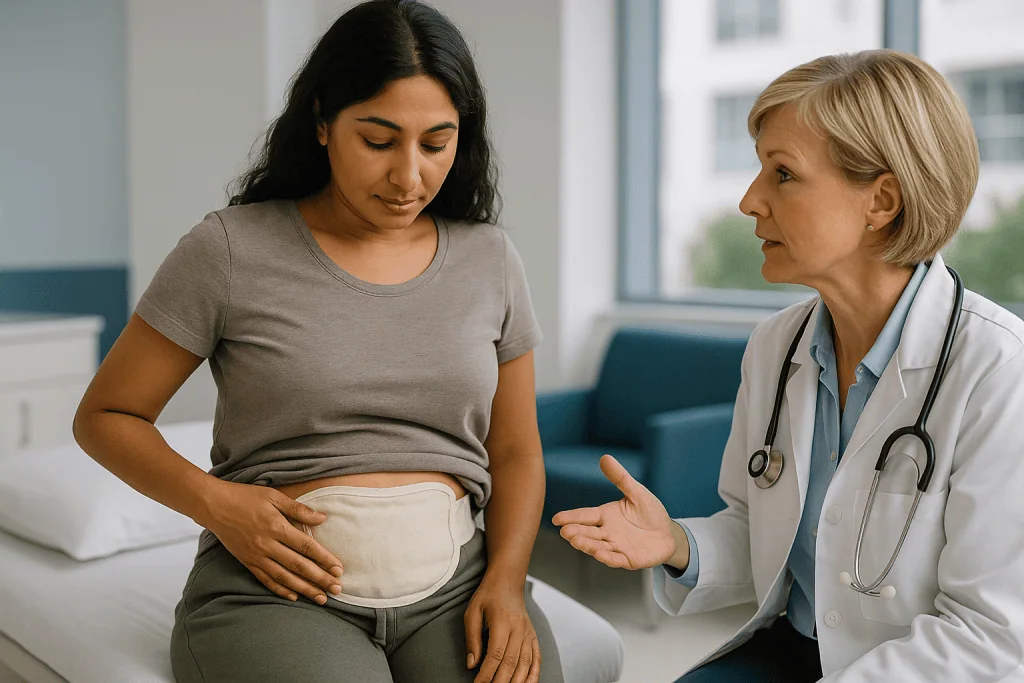
A traditional castor oil pack has three layers. A piece of cotton flannel or wool is saturated with the oil and placed on bare skin, most often over the right upper abdomen (the liver area), the lower abdomen or a sore joint. A sheet of plastic or a wrap goes over the cloth to stop the oil soaking into clothing. A heat source, usually a hot water bottle or electric pad, sits on top. The person then rests for a period of time, and the ritual is repeated over days or weeks.
The belly button version strips this down. A few drops of oil go directly into the navel, sometimes covered with a cotton ball, a bandage or a pre-made adhesive patch sold specifically for the trend, and left in place overnight. The marketing language often describes the navel as a “gateway” to internal organs, an idea we will examine shortly.
One reassurance up front: the seeds contain ricin, a highly toxic protein, but ricin is water-soluble and stays behind in the seed mash during pressing and processing. Commercially produced castor oil does not contain meaningful ricin and is regulated as safe for use on skin and, in its pharmaceutical form, by mouth. The safety questions around packs are about skin irritation, heat and false reassurance, not poisoning.
What changed recently
Nothing changed in the science. What changed is attention. There has been no new regulatory approval, no clinical guideline and no large trial of castor oil packs in the past several years. The dated facts worth holding onto are older and more modest than the trend suggests.
In 2012, researchers published a study in the Proceedings of the National Academy of Sciences showing, in mice and in isolated tissue, that ricinoleic acid triggers bowel movements and uterine contractions by activating a specific protein switch on muscle cells called the prostaglandin EP3 receptor. A receptor is a docking site on a cell that changes the cell’s behavior when the right molecule binds to it. That paper, indexed on PubMed, explained a laxative effect that physicians had used since antiquity, and it remains the best mechanistic evidence on castor oil in any form.
Castor oil taken by mouth is listed in the United States as an over-the-counter stimulant laxative, and MedlinePlus carries a standard drug monograph describing its use, cautions and side effects. That listing covers swallowed oil only. No regulator has evaluated packs or navel patches as treatments for anything.
Since roughly 2023, short-video platforms have carried a wave of navel-oil content, and by 2024 major academic medical centers, including Cleveland Clinic and Harvard Health, had published consumer explainers pointing out that the detox and organ-cleansing claims have no supporting trials. As of September 2026, that remains the position: a long-standing laxative, a plausible comfort measure, and a set of viral claims that have outrun the data.
What does a castor oil pack actually do on the skin?
Three things happen when you lay a warm, oily cloth on your abdomen, and only one of them is specific to castor oil.
The first is occlusion. Occlusion means sealing the skin surface so water cannot evaporate from it. Any thick oil under plastic does this, and the result is softer, more hydrated skin in the treated area within an hour. Dermatologists use the same principle with petroleum jelly under a dressing. It is real, it is temporary, and it has nothing to do with internal organs.
The second is heat. Warmth widens small blood vessels in the skin and the muscle just beneath it, relaxes muscle fibers and sends a flood of harmless sensory signals to the spinal cord that can partially crowd out pain signals, an effect pain scientists call gate control. Heat applied to the abdomen has been studied in randomized trials for menstrual cramps and low back pain and performs about as well as common over-the-counter pain relievers for short-term relief. If a castor oil pack eases cramping, this is the most likely reason.
The third is the oil itself. In laboratory and rodent studies, ricinoleic acid applied to tissue has shown anti-inflammatory activity, reducing swelling in induced skin inflammation. Those findings are preliminary and have not been reproduced in controlled human trials. There is also a practical limit: ricinoleic acid is a large, 18-carbon molecule, and skin is designed to keep large oily molecules out. Some may enter the outer layers, but there is no evidence that enough reaches the bloodstream, let alone the liver or uterus, to change how those organs work.
What does wrapping your belly with castor oil do?
The claims attached to abdominal wrapping are mostly digestive: relief from constipation, less bloating, calmer cramps. To judge them, it helps to understand why castor oil works when swallowed.

Oral castor oil passes through the stomach largely unchanged. In the small intestine, digestive enzymes split it into ricinoleic acid, which binds to EP3 receptors on the intestinal muscle wall and makes the gut contract more forcefully and move water into the bowel. The effect is strong, fast and sometimes uncomfortable, which is why clinicians treat it as an occasional rescue laxative rather than a routine one.
None of that chain of events requires skin. Wrapping the belly delivers the oil to the outside of the abdominal wall, several centimeters of skin, fat and muscle away from the intestine. There is no pathway by which ricinoleic acid applied externally reaches the gut lining in meaningful amounts. If bowel movements become easier during a week of nightly packs, the likelier explanations are heat relaxing the abdominal muscles, the enforced rest and slower breathing of lying still, and the simple fact that paying attention to a symptom often changes behavior around fluids, fiber and timing.
Bloating follows a similar logic. Bloating is the sensation of abdominal fullness or distension, often from gas or slowed gut movement. Warmth can ease the visceral discomfort, and anything that produces a bowel movement reduces distension. That is a comfort effect, worth having, but it does not mean the oil has treated the cause, which may be diet, a change in medication, constipation, irritable bowel syndrome or, less commonly, something that needs investigation.
Castor oil belly button: why the navel, and does oil absorb there?
The castor oil belly button trend rests on an anatomical story. Videos describe the navel as a direct channel to the digestive tract, the liver, the uterus or a gland called the “Pechoti gland” that supposedly fans out into thousands of veins. Searching medical anatomy texts for that gland comes up empty, because it does not exist.
The navel is a scar. During pregnancy the umbilical cord carried blood between the fetus and the placenta; after birth, the vessels close, shrivel into fibrous cords and the opening seals. In an adult, the belly button is a small, folded patch of ordinary skin sitting over the fibrous remnant of those vessels. It is not thinner in any clinically useful way, and it has no duct, pore or vessel that opens into the abdominal cavity. Skin absorption at the navel follows the same rules as skin absorption anywhere else: small, fat-soluble molecules pass more easily than large ones, and the amount is tiny.
Why, then, do people report effects? Oil in a warm, enclosed fold of skin will soften the skin, which some people notice. Lying down with a bandage over the abdomen is a cue to rest. A nightly ritual before sleep is a form of wind-down routine, and sleep research consistently shows that routines help sleep onset regardless of their content.
There is a practical downside unique to the navel. It is a deep, poorly ventilated fold, especially in people with a higher body weight or an “innie” shape. Sealing oil and moisture inside it overnight, repeatedly, creates warm, damp conditions that bacteria and yeast enjoy. Clinics do see navel irritation and infections from trapped lint, moisture and piercings, and adding occlusive patches to that environment is not a neutral act.
What the evidence actually says
Medical evidence comes in grades, and it is worth naming them. Randomized controlled trials, where participants are assigned by chance to a treatment or a comparison, give the strongest answers. Observational studies watch what happens to people who choose a treatment and are prone to bias. Laboratory and animal studies show what is possible, not what happens in people. Expert opinion and tradition sit at the bottom.
For oral castor oil as a laxative, the evidence is solid: decades of clinical use, a defined mechanism confirmed in the 2012 PNAS study, and formal recognition as an over-the-counter laxative in the United States. That is the only castor oil use that reaches the top of the ladder.
For castor oil packs, the picture is thin. The most-cited human study is a small randomized trial from 2011 in which 35 older adults with chronic constipation used abdominal castor oil packs for three days and reported fewer straining symptoms and softer stools. It had no placebo pack, no blinding and a tiny sample, so it cannot separate oil from heat, rest or expectation. A frequently quoted 1999 report on castor oil packs and immune cell counts involved a handful of volunteers, was never followed up and does not show any health outcome.
For the headline claims, detoxification, liver support, lymphatic drainage, shrinking fibroids or ovarian cysts, improving fertility, weight loss and better sleep, there are no randomized trials at all. The support consists of testimonials, mechanistic speculation and tradition. In evidence-grading language, that is expert opinion at best.
On safety, the evidence is observational but consistent: castor oil is generally well tolerated on intact skin, with documented cases of allergic contact dermatitis, especially around the lips from cosmetics, and heat-related burns when pads are used carelessly.
Claim by claim: what is known and how strong the evidence is
The table below sorts the most common castor oil pack claims by the quality of evidence behind them and the most plausible explanation for any effect people notice. “Likely driver” is a judgment grounded in known physiology, not a finding from trials of packs themselves.
| Claim | Best available evidence | Evidence grade | Likely driver of any felt benefit |
|---|---|---|---|
| Relieves constipation (oral oil) | Long clinical use; mechanism confirmed in 2012 lab study | Strong | Ricinoleic acid activating EP3 receptors in the gut |
| Relieves constipation (abdominal pack) | One 35-person randomized study, no placebo, no blinding | Very weak | Heat, rest, attention to bowel habits |
| Eases menstrual or abdominal cramps | Randomized trials of heat wraps, not of castor oil | Moderate for heat; none for oil | Warmth relaxing muscle, gate-control pain relief |
| Detoxifies liver or lymph | No human studies | None | Expectation; normal liver and kidney function continuing as usual |
| Shrinks fibroids or ovarian cysts | No human studies | None | Natural resolution of functional cysts; symptom relief from heat |
| Improves fertility | No human studies | None | Chance; underlying variability in conception |
| Causes weight loss | No human studies | None | Water shifts, bowel movements, concurrent diet changes |
| Improves sleep (navel oil) | No human studies | None | Bedtime routine and relaxation |
| Softens, hydrates skin | Established occlusion physiology | Moderate | Oil preventing water loss from skin surface |
Read down the middle column and the pattern is plain. The one claim with strong evidence is the one nobody is posting videos about, and the claims going viral are the ones with none.
Does castor oil pull toxins out of your body?
No, and the reasons are worth spelling out because the “detox” idea underpins most of the other claims.
Start with the word itself. In medicine, a toxin is a specific harmful substance: alcohol, a drug metabolite, a bacterial poison, lead. Detox content almost never names one. Ask which toxin a castor oil pack removes, how much, and how that was measured, and the conversation usually ends. Harvard Health has described commercial detox practices in exactly these terms: appealing, lucrative and unsupported by evidence that they remove anything the body was not already removing.
Then consider the body’s actual waste system. The liver chemically modifies drugs, hormones and metabolic byproducts so they become water-soluble; the kidneys filter them from the blood into urine; the bowel carries out what the liver sends into bile. The lungs exhale carbon dioxide and volatile compounds. These organs work continuously, and in a healthy person they are not “backed up” waiting for a cloth to release them. When they genuinely fail, as in liver cirrhosis or kidney failure, the treatment is medical and sometimes life-saving, and no topical oil features in it.
Skin is not an exit route for the kinds of substances detox content worries about. Sweat is more than 99 percent water with small amounts of salt, and skin oil is made by the skin, not pulled from the blood. Nothing drains out through the navel; it is sealed.
What people often notice after a pack, warmth, looseness, a bowel movement, a sense of calm, gets interpreted as toxins leaving. Those sensations are real. The interpretation is not. Recognizing the difference protects you from a more serious risk: using a pack to manage symptoms that are actually signals of a condition that deserves a diagnosis.
Castor oil packs for period pain, fibroids, cysts and fertility
This cluster of claims is the most emotionally loaded, so it deserves the most care.
Period pain has the best footing, indirectly. Primary dysmenorrhea, cramping caused by prostaglandins released from the uterine lining, responds in randomized trials to continuous low-level heat applied to the lower abdomen. A warmed castor oil pack delivers heat. So a person with cramps who feels better under a pack is probably experiencing a genuine, trial-supported effect of warmth. That is a fair reason to use a heat source; it is not evidence that the oil adds anything.
Fibroids are benign growths of uterine muscle, extremely common and often symptom-free. Ovarian cysts are fluid-filled sacs on the ovary; the most common type, the functional cyst, forms as part of the normal menstrual cycle and disappears on its own within a few cycles in most cases. That natural history is the engine behind many testimonials. Someone has a cyst found on a scan, applies packs for six weeks, has a repeat scan showing it gone, and credits the oil. The cyst would very likely have resolved anyway. There are no trials, randomized or otherwise, showing castor oil packs change the size of fibroids or cysts, and no plausible route for the oil to reach them.
Fertility claims follow the same logic with higher stakes. Conception depends on ovulation, sperm, open fallopian tubes and timing. Packs address none of these. Delaying a fertility evaluation to try a remedy for months matters most for people in their late thirties and beyond, when time is the scarcest resource.
One safety point is specific to this area. Oral castor oil has historically been used to try to start labor because ricinoleic acid also stimulates uterine muscle through the same EP3 receptors. Because of that, pregnancy is a reason to avoid castor oil in any form unless a clinician advises otherwise.
Castor oil packs for sleep, bloating and weight loss
These three claims drive most of the belly button content, and they share a feature: each describes a change that happens anyway for ordinary reasons, which makes a nightly ritual look powerful.
Take sleep. Sleep medicine has a well-replicated finding that consistent pre-bed routines, dim lighting and a short wind-down period shorten the time it takes to fall asleep. The navel-oil ritual is a wind-down routine with a small physical cue attached. If it helps someone sleep, that is a legitimate behavioral effect. It would likely work as well with any oil or with none, and it should not be mistaken for a treatment for insomnia, which has its own evidence-based approaches that a clinician can discuss.
Bloating fluctuates hour to hour with meals, gas, fluid balance and the menstrual cycle. A person who checks their abdomen in the morning after a night of lying down will often find it flatter than it was after dinner, pack or no pack. Warmth can also ease the discomfort of trapped gas and encourage a bowel movement, both of which reduce the feeling of fullness without changing why it happened.
Weight loss is the claim with the least to stand on. Body fat is lost when energy use exceeds energy intake over time; nothing applied to the skin alters that balance. A kilogram that disappears after a few days of packs is water or stool, and it comes back. People who start packs often tighten up their eating at the same time, which is the real variable. Any product or video that promises fat loss from castor oil, in the navel or anywhere else, is making a claim no study supports and no physiology explains.
Can I put castor oil on my contact dermatitis?
Contact dermatitis is a skin rash caused by something touching the skin, either an irritant such as a detergent or an allergen that triggers an immune reaction, such as nickel or a fragrance. It shows up as redness, itching, dryness, cracking or small blisters where the contact happened.
Castor oil is not a recommended treatment for it, and in some people it is a cause. Ricinoleic acid is a documented, though uncommon, contact allergen. Most published cases involve lipsticks and lip balms, where castor oil is a common ingredient, producing a persistent itchy rash around the mouth that resolves only once the product is identified and stopped. Applying the oil to skin that is already inflamed and more permeable than usual raises the odds of sensitization, and covering it with plastic or an adhesive patch concentrates whatever is there.
The standard guidance from the NHS and similar bodies is straightforward. Identify and avoid the trigger. Use a plain, fragrance-free emollient, meaning a moisturizer designed to repair the skin barrier, frequently and generously. Short courses of topical steroid creams, when prescribed, settle flares. Patch testing by a dermatologist can pin down the allergen when the cause is unclear.
If you have used castor oil and developed a rash where it sat, treat that as information. Stop the product, wash the area gently and note which brand and which other ingredients were in it, since some products add fragrances or essential oils that are more common culprits than the castor oil itself. A pharmacist or clinician can advise from there. A rash that spreads beyond the contact area, weeps, crusts or comes with swelling of the face or breathing difficulty needs prompt medical attention.
Common myths about castor oil packs
Several claims recur so often that they deserve a direct answer each.
“The navel absorbs oil straight into your organs.” The navel is sealed scar tissue over closed vessels. It absorbs like any other patch of skin, which is to say minimally, and nothing passes through it into the abdomen.
“Castor oil packs detox the liver.” The liver processes waste on its own, continuously. No study has measured any marker of liver function changing with packs, and there is no mechanism by which oil on the skin would alter liver enzymes or bile flow.
“Packs move the lymph.” The lymphatic system is a network of vessels that returns fluid from tissues to the blood and carries immune cells. It is moved by muscle activity, breathing and gentle pressure. Lying still under a warm cloth does not stimulate it; a walk does.
“Castor oil contains ricin, so it is dangerous.” The opposite error. Ricin stays in the seed waste during processing; commercial oil is not a ricin hazard. The real risks are skin irritation, allergy and burns from heat sources.
“It shrank my cyst.” Functional ovarian cysts resolve on their own in most cases within a few menstrual cycles. A cyst that disappeared during pack use most likely disappeared regardless of it.
“It is natural, so it cannot hurt.” Poison ivy is natural. Natural describes origin, not safety. Castor oil is low-risk on intact skin, but allergic reactions, navel infections from trapped moisture and burns from heating pads are all reported.
“If I feel better, it works.” Feeling better is real and valuable. The question is what produced it. Heat, rest, routine and expectation are powerful and well documented. The oil, so far, is a bystander.
Who should skip castor oil packs, and how to lower the risks if you try one
For a healthy adult with intact skin and no undiagnosed symptoms, a warm pack used as a comfort measure is low-risk. That is a long list of conditions, and each one excludes someone.
Pregnant people should avoid castor oil in any form unless their obstetric clinician says otherwise, because ricinoleic acid stimulates uterine muscle. People with broken, inflamed, infected or recently operated skin should keep oil and occlusive wraps away from it. Anyone with a known allergy to castor oil or to products containing it, including a history of unexplained lip rashes from cosmetics, should not use it on larger areas. Reduced sensation in the skin, which can occur with diabetes-related nerve damage, spinal cord conditions or after some surgeries, makes burns from heating pads more likely because the warning signal is blunted. Infants and young children have thinner skin, a higher ratio of surface area to body weight and no reliable way to report discomfort; this trend is not for them.
The most important exclusion is symptomatic: new, persistent or worsening abdominal or pelvic pain, changes in bowel habit, abnormal bleeding or a lump are reasons to see a clinician first, not to begin a home remedy that might soften the signal.
If you decide to try a pack anyway, a few habits reduce the small risks. Test a drop of the oil on the inner forearm and wait a day before using it more widely. Choose warm over hot, and never fall asleep on an electric heating pad. Do not seal oil in the navel night after night; if you use it there, keep it brief and let the area dry fully. Stop at the first sign of a rash. Treat the pack as a pleasant ritual, not as a treatment, and keep taking any prescribed medicine exactly as directed. Swallowing castor oil is a separate decision with real side effects and belongs in a conversation with a pharmacist or doctor.
When to see a doctor
The greatest harm from a harmless-seeming remedy is the appointment it postpones. Castor oil packs are typically used for symptoms that are usually benign and occasionally are not. Knowing which signs mean “stop self-managing and get checked” matters more than anything else in this article.
See a clinician promptly for abdominal or pelvic pain that is severe, persistent for more than a few days, worsening or waking you from sleep. Do the same for constipation that lasts more than three weeks, that is new in someone over 50, or that alternates with diarrhea; for blood in the stool or stools that are black and tarry; for unexplained weight loss; for persistent bloating that does not come and go with meals, especially alongside feeling full quickly or needing to urinate more often; for vomiting that will not settle; and for a fever with abdominal pain.
Gynecologic red flags include periods heavy enough to soak through protection hourly, bleeding between periods or after menopause, pelvic pain during intercourse, and a lump or swelling you can feel. Anyone who has been trying to conceive for a year, or six months if over 35, should ask for a fertility assessment rather than extending a home regimen.
Skin signals need attention too: a rash that spreads beyond where the oil was applied, blistering, oozing or crusting, a burn from a heating pad that is larger than a coin or blisters, or navel discharge, odor, redness or pain, which can indicate infection.
Seek emergency care for sudden severe abdominal pain, a rigid or very tender abdomen, chest pain, fainting, heavy bleeding, or any swelling of the lips, tongue or throat after using a product.
If you take prescribed medicines, including laxatives, hormonal treatments or anything for a chronic condition, do not stop, reduce or replace them because of something a video suggested. Bring the question to the clinician who prescribed them; the decision belongs there.
Frequently asked questions
What does a castor oil pack actually do?
A castor oil pack mainly delivers two things: occlusion, which traps moisture and softens the skin under it, and heat, which relaxes muscle and dampens pain signals. Both are real, short-lived and not specific to castor oil. Laboratory studies suggest ricinoleic acid has anti-inflammatory activity, but there is no controlled human evidence that enough penetrates the skin to affect internal organs or any disease.
What does putting castor oil in your belly button do?
Physiologically, very little. The navel is a sealed scar, not an opening, so oil placed there is absorbed only as it would be on any other skin, in tiny amounts. Any benefit people notice, such as calmer sleep or less bloating by morning, is best explained by the bedtime routine, lying down and overnight changes in fluid and gas. Trapping oil in a deep navel repeatedly can also cause irritation or infection.
Does castor oil pull toxins out of your body?
No. The liver, kidneys, bowel and lungs remove waste continuously, and no study has shown a castor oil pack changes any measurable marker of that process. Skin does not excrete the substances detox claims refer to; sweat is mostly water. Sensations after a pack, such as warmth, looseness or a bowel movement, are often interpreted as toxins leaving, but that interpretation has no scientific basis.
Can I put castor oil on my contact dermatitis?
It is not recommended. Castor oil is a recognized, if uncommon, contact allergen, and applying it to inflamed skin under a wrap or patch increases the chance of a reaction. Standard care for contact dermatitis is to identify and avoid the trigger, use a plain fragrance-free emollient generously, and see a clinician if the rash is severe, spreading or not settling, since prescription creams or patch testing may be needed.
Can a castor oil pack shrink fibroids or ovarian cysts?
There is no evidence that it can. No randomized or observational studies show castor oil packs change the size of fibroids or cysts, and there is no route by which oil on the skin reaches the uterus or ovaries. Functional ovarian cysts usually resolve on their own within a few menstrual cycles, which is why packs often seem to work. Changes in pelvic symptoms should be assessed by a clinician.
Is a castor oil pack safe during pregnancy?
Castor oil in any form is generally advised against in pregnancy unless an obstetric clinician specifically recommends it. Ricinoleic acid stimulates uterine muscle through the same receptors it acts on in the bowel, which is why oral castor oil has historically been used to try to start labor. While skin absorption is minimal, the cautious position is to avoid it and ask your maternity care provider.
Do castor oil packs help constipation?
Swallowed castor oil is an established stimulant laxative; packs on the skin are a different matter. A single small randomized study of 35 older adults reported softer stools after three days of abdominal packs, but it had no placebo and no blinding, so heat and rest could explain the result. Persistent constipation, especially lasting more than three weeks or with bleeding or weight loss, needs medical assessment rather than home remedies.
Can castor oil packs help you lose weight?
No study supports this, and no mechanism explains it. Fat loss requires using more energy than you take in over time; nothing applied to the skin alters that balance. A rapid drop on the scale after a few days of packs reflects water shifts or a bowel movement and returns quickly. People who start packs often change their eating at the same time, which is the variable actually doing the work.
What are the side effects of a castor oil pack?
On intact skin, side effects are uncommon and mostly minor: greasy residue, mild redness and occasional itching. Less common but documented problems include allergic contact dermatitis, burns from heating pads left on too long or at too high a setting, and navel irritation or infection when oil and moisture are sealed into the belly button repeatedly. Stop use and seek advice if a rash spreads, blisters or weeps.
Is castor oil dangerous because the seeds contain ricin?
No. Ricin is a toxic protein in castor seeds, but it is water-soluble and stays in the seed waste during pressing and processing, so commercially produced castor oil does not pose a ricin risk. The oil is approved for use in cosmetics and, in pharmaceutical form, as an oral laxative. The genuine cautions with castor oil are skin allergy, heat-related burns and the uterine-stimulating effect in pregnancy.
References
This article is for general information only and is not a substitute for professional medical advice. Please consult a qualified doctor about your individual situation.

More from the Blog

Quercetin and Fisetin: The Senolytic Flavonoids: What Trials Show
Quercetin and fisetin are plant flavonoids that kill or quiet aging "senescent" cells in laboratory and animal studies, which is why they are called…

L-Theanine: What It Does With Caffeine, for Focus and for Sleep
L-theanine is an amino acid found naturally in tea leaves that appears to promote a calm, alert state. Small randomized trials suggest that pairing…

Spermidine: The Autophagy Supplement: Evidence From Cells, Mice and (Few) Humans
Spermidine is a natural polyamine found in wheat germ, aged cheese, soybeans and mushrooms, and the body also makes it. In yeast, worms, flies…

Vitamin D3 and K2 Together: Why the Pairing Is Popular and What the Evidence Says
Vitamin D3 and K2 are sold together on the theory that D3 raises calcium absorption while K2 activates proteins that help deposit calcium in…
Reishi and Cordyceps: Functional Mushrooms Under the Evidence Lens
Reishi and cordyceps are edible fungi sold as supplements for immunity, sleep, stress and stamina. The research behind those claims is mostly small, short…

Reishi and Cordyceps: Functional Mushrooms Under the Evidence Lens
Reishi mushroom benefits are mostly supported by laboratory and small human studies, not by large randomized trials. Modest, uncertain effects have been reported on…