

Low Blood Pressure Symptoms: When Dizziness Means Something, and When It Doesn’t
Key Takeaways
- A reading below 90/60 mm Hg is generally labeled low, but doctors treat symptoms and underlying causes, not the number by itself.
- 110/60 falls within the American Heart Association's normal range and needs no action if you feel well and it matches your usual baseline.
- A drop of at least 20 mm Hg systolic or 10 mm Hg diastolic within three minutes of standing defines orthostatic hypotension and merits evaluation if it recurs.
- Post-meal dizziness (postprandial hypotension) peaks 30–90 minutes after eating, hits hardest after large carbohydrate-heavy meals, and improves with smaller meals and pre-meal water.
- Spinning sensations usually point to the inner ear rather than blood pressure: the faint-versus-spin distinction is the single most useful detail to give your doctor.
- Confusion, cold clammy skin, rapid shallow breathing, and a weak fast pulse alongside low pressure can signal shock, call emergency services immediately.
Quick Answer
Low blood pressure, generally a reading below 90/60 mm Hg, only matters when it causes symptoms. A brief moment of lightheadedness after standing up quickly is usually harmless. However, repeated dizziness on standing, fainting, blurred vision, unusual fatigue, or dizziness after meals or starting a new medication can signal an underlying problem and warrants a medical checkup, since doctors treat the symptoms and cause rather than the number itself.
You stand up from the couch to answer the door, and for two seconds the room dissolves into gray static. Then it clears, you feel faintly foolish, and life goes on. Was that a warning, or just gravity doing what gravity does?
Most of the time, it’s gravity. A blood pressure reading below 90/60 mm Hg is generally called low, but doctors are far less interested in the number than in what it does to you. Plenty of healthy people, especially athletes and younger adults, live comfortably below that line their whole lives.
Low blood pressure symptoms deserve attention when they follow a pattern: repeated lightheadedness on standing, fainting, blurred vision, unusual fatigue, or dizziness that arrives after meals or a new medication. This guide walks through what the evidence actually says, which moments of dizziness are ordinary physiology, and which ones are your body asking for a checkup.
Why ‘low’ blood pressure is defined by symptoms, not a magic number
High blood pressure has crisp diagnostic cutoffs. Low blood pressure doesn’t, and that’s not an oversight: it reflects how the condition works. The American Heart Association notes that within limits, a lower reading is generally better, and most clinicians only treat hypotension when it causes symptoms or signals an underlying problem.
The commonly cited threshold is 90/60 mm Hg. Below that, some people feel dizzy, foggy, or faint. Others feel nothing at all, because their organs are getting all the blood flow they need. That’s the real question behind every reading: is enough oxygen-rich blood reaching your brain, heart, and kidneys? A marathon runner at 88/58 who feels sharp is in a very different situation from a 78-year-old at the same number who keeps nearly fainting in the shower.
What matters more than any single reading is change. A person whose pressure normally runs 135/85 and suddenly drops to 100/65 may feel genuinely unwell at a number that would be unremarkable for someone else, because their body regulates blood flow around its own baseline. Mayo Clinic and the NHS both frame hypotension this way: symptoms first, numbers second.
So if you’re staring at a home monitor wondering whether your reading is ‘too low,’ start with a different question: how do you feel when you stand up, after meals, in the heat? Your answers tell your doctor more than the display does.
Is 110 over 60 too low for blood pressure?
No: 110/60 sits comfortably inside the normal range. The American Heart Association defines normal blood pressure as a systolic (top) number below 120 and a diastolic (bottom) number below 80. A systolic of 110 is textbook healthy. A diastolic of 60 is at the lower edge of typical, but it only becomes meaningful if it comes with symptoms.

Context does the deciding here:
- If 110/60 is your usual reading and you feel fine, there’s nothing to fix. Many fit, younger, or smaller-framed people run these numbers for decades.
- If your pressure used to run 130/80 and has drifted down, mention it at your next appointment: a shift from baseline can reflect a medication effect, fluid loss, or something else worth a look.
- If 110/60 comes with dizziness, fainting, or unusual tiredness, the number matters less than the symptoms, and both belong in a conversation with your doctor.
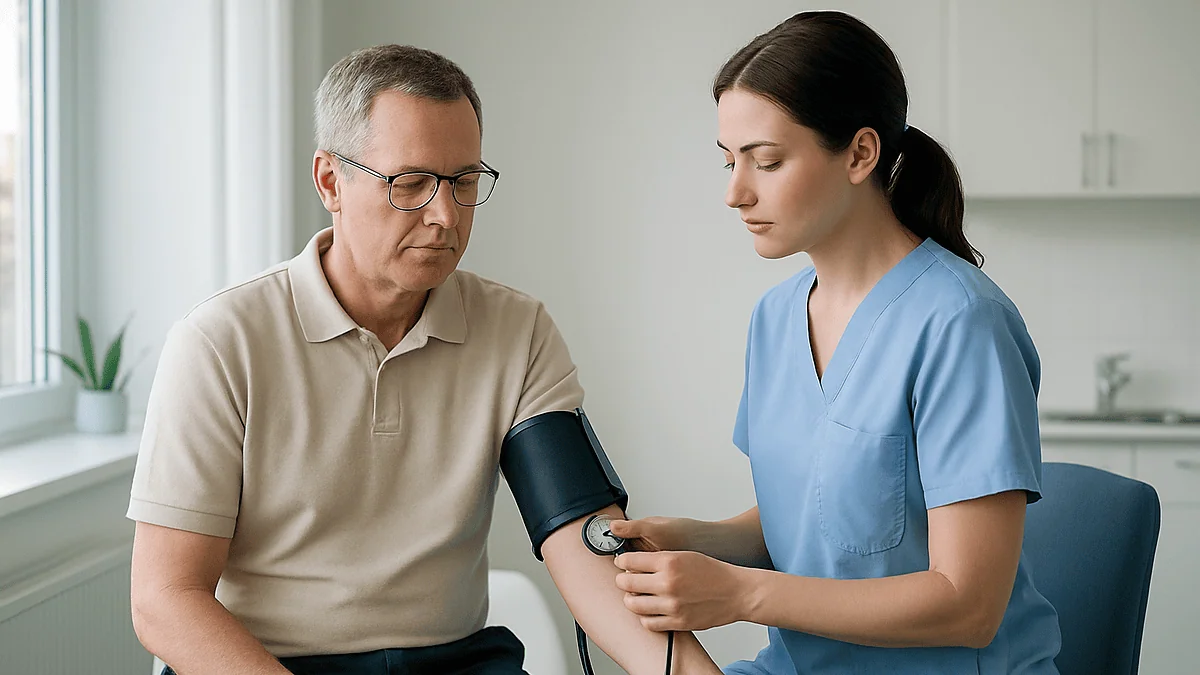
One practical note: home readings are only as good as the technique behind them. Sit quietly for five minutes first, keep both feet flat on the floor, support your arm at heart level, and don’t measure right after caffeine, exercise, or a stressful phone call. A single low reading taken while perched on the arm of a sofa proves very little. Two weeks of consistent morning readings tells a real story.
What do low blood pressure symptoms actually feel like?
The signature symptom is lightheadedness: a woozy, about-to-faint feeling, often with vision that dims or narrows at the edges. But the full picture, drawn from Mayo Clinic and Cleveland Clinic, is broader than most people expect:
- Dizziness or lightheadedness, especially on standing
- Fainting (what clinicians call syncope)
- Blurred, dimming, or tunneling vision
- Nausea
- Fatigue that doesn’t match your activity level
- Trouble concentrating: a foggy, distracted feeling
- Cold, clammy, pale skin
- Rapid, shallow breathing or a weak, quick pulse (in severe drops)
Notice what’s not on that list: the room spinning. True vertigothe sensation that the world is rotating around you, usually points to the inner ear, not blood pressure. More on that distinction later, because it changes what kind of help you need.
The pattern matters as much as the sensations. Low-pressure symptoms tend to cluster around predictable triggers: standing after lying down, hot showers, long stretches on your feet, big meals, dehydration, alcohol, or the first weeks of a new medication. Symptoms that strike randomly at rest, or that come with chest pain or a pounding irregular heartbeat, deserve a different and faster kind of attention.
Keep a simple log for a week, when the dizziness hits, what you were doing, what you’d eaten, how long it lasted. That one page of notes routinely does more diagnostic work than a dozen scattered blood pressure readings.
Why low blood pressure makes you dizzy: your brain sits above your heart
Here’s the engineering problem your body solves every time you stand: your brain sits roughly a foot above your heart, and blood, like any fluid, would rather obey gravity than climb.

When you rise from lying down, somewhere between a half liter and a full liter of blood shifts downward into your legs and abdomen. For a moment, less blood returns to the heart, so less gets pumped upward. Pressure sensors in your neck and chest, baroreceptors, detect the dip almost instantly and fire off corrections: the heart beats a little faster and harder, and blood vessels in the lower body tighten to push blood back up. In a healthy young adult, the whole adjustment takes a couple of seconds. You never notice it happening.
Dizziness is what it feels like when that reflex runs slow or falls short. The brain is exquisitely sensitive to even brief drops in blood flow: a few seconds of underperfusion is enough to gray out vision, mute hearing, and make your legs feel untrustworthy. If the shortfall lasts longer, you faint, which is actually the body’s blunt but effective fix: horizontal, the brain and heart are level again, and blood flow recovers.
Understanding the mechanism explains why the classic remedies work. Rising slowly gives sluggish baroreceptors time to catch up. Tensing your leg muscles or crossing your thighs squeezes pooled blood back toward the heart. Hydration keeps overall blood volume up, so there’s more fluid in the system to begin with.
Dizzy when you stand up? That’s orthostatic hypotension
There’s a precise definition for stand-up dizziness: orthostatic (or postural) hypotension means your systolic pressure falls at least 20 mm Hg, or your diastolic falls at least 10 mm Hg, within three minutes of standing. Mayo Clinic calls occasional, mild episodes common, nearly everyone has felt a brief head rush after jumping up too fast.
Certain situations make it far more likely:
- Dehydrationeven mild fluid loss from heat, exercise, vomiting, or simply not drinking enough shrinks blood volume.
- Long periods lying down or sittingbed rest deconditions the reflexes that fight gravity.
- Hot showers, baths, and saunasheat dilates blood vessels, so more blood pools in the skin and legs.
- Large meals and alcoholboth divert or dilate.
- Agethe baroreceptor reflex slows over the decades, which is one reason orthostatic hypotension becomes common in adults over 65.
- Medicationsseveral categories, including some prescribed for blood pressure, heart conditions, depression, prostate symptoms, and Parkinson’s disease, can exaggerate the drop. Never stop a prescription on your own; flag the symptom to your prescriber instead.
Occasional episodes with an obvious trigger, you leapt off the couch after a hot bath on a summer day, rarely need investigation. Frequent episodes, episodes without a clear trigger, or any episode that ends in fainting warrant a medical visit, because persistent orthostatic hypotension can point to fluid, heart, hormonal, or nervous-system causes that are worth finding.
Feeling faint after meals? Postprandial hypotension is real
An hour after Sunday lunch, your grandfather stands up from the table and sways. It’s a scene many families recognize, and it has a name: postprandial hypotension: a blood pressure drop within one to two hours of eating.
The mechanism is straightforward plumbing. Digestion is demanding work, and after a meal the body routes a substantial share of blood flow to the stomach and intestines. In younger people, the heart and blood vessels compensate, a quicker heartbeat here, tighter vessels there, and pressure holds steady. In older adults, and in people with certain nervous-system conditions, that compensation lags, and the pressure everywhere else in the body dips.
A few characteristics make it recognizable:
- It follows meals, typically peaking 30 to 90 minutes after eating.
- Large meals hit harder than small ones, and carbohydrate-heavy meals tend to be the worst offenders, because carbohydrates trigger the strongest surge in gut blood flow.
- It’s far more common after 65, and in people who also have high blood pressure or Parkinson’s disease.
Practical adjustments help more than you’d guess: smaller, more frequent meals instead of one large plate; drinking a glass of water before eating; going easy on refined carbohydrates at the meals that trigger you; skipping alcohol with food; and staying seated for a while afterward rather than standing straight up to clear the table. If post-meal faintness is new or frequent, tell your doctor: it’s measurable, and worth measuring.
What causes low blood pressure in the first place?
Blood pressure is the product of three things: how much fluid is in the system, how hard the heart pumps, and how tightly the blood vessels squeeze. Every cause of hypotension traces back to one of those levers.
- Not enough fluid. Dehydration is the most common reversible culprit, from heat, illness, exercise, or simply drinking too little. Blood loss, whether obvious or slow and hidden, does the same thing more seriously.
- Heart problems. A very slow heart rate, valve disease, or a weakened heart muscle can all reduce the output pushing blood around the body.
- Hormonal shifts. Thyroid disorders, adrenal insufficiency, and low blood sugar can each lower pressure. Pregnancy typically brings a natural dip during roughly the first 24 weeks as blood vessels relax and circulation expands, usually harmless, always worth mentioning at prenatal visits if it causes faintness.
- Medications. Several categories, including some used for blood pressure, heart rhythm, depression, erectile dysfunction, and Parkinson’s disease, can lower pressure as an effect or side effect. New dizziness after a new prescription is a pattern your prescriber wants to hear about.
- Nervous-system conditions. Parkinson’s disease and some forms of nerve damage (including from long-standing diabetes) blunt the reflexes that keep pressure steady when you change position.
- Nutritional gaps. Too little vitamin B12 or folate can cause anemia, which lowers pressure and amplifies fatigue and lightheadedness.
- Severe, sudden causes. Overwhelming infection (septic shock) and severe allergic reactions (anaphylaxis) crash blood pressure abruptly. These are emergencies, not mysteries.
For most people reading this, the answer sits near the top of the list, fluid, heat, meals, or a medication adjustment, not the bottom.
What are the potential dangers of low blood pressure?
Honest answer: for most people, low blood pressure itself isn’t the danger: the fall is. When pressure dips enough to cause fainting or a stumble, the injuries that follow are the real medical problem, especially for older adults, where a fall can mean a hip fracture or head injury. That’s why doctors take recurrent lightheadedness seriously even when every individual episode seems minor.
Beyond falls, three concerns come up in the medical literature:
- Injury in the wrong moment. A gray-out while driving, climbing a ladder, or standing at the top of stairs turns a benign physiological blip into a genuine hazard. Until recurrent dizziness is sorted out, treat those situations with respect.
- Underlying causes. A new or worsening pattern of hypotension can be the visible edge of something else, bleeding, a heart rhythm problem, a hormonal disorder, or a medication interaction. The pressure reading is the messenger, not the disease.
- Shock. This is the rare, severe end of the spectrum: pressure so low that organs are starved of blood. The warning signs are unmistakable in combination, confusion, cold and clammy pale skin, rapid shallow breathing, and a weak, fast pulse. Shock is a medical emergency; call emergency services immediately.
What chronic low pressure generally does not do is quietly damage arteries and organs the way chronic high pressure does. If your readings run low, you feel well, and your doctor has ruled out a cause, the evidence supports leaving it alone.
When dizziness isn’t your blood pressure at all
Here’s the myth worth busting: not every dizzy spell is a blood pressure problem, and treating it like one can send you down the wrong path for months.
The most useful question you can answer for your doctor is this: does the world spin, or do you feel faint? They point in different directions.
- Spinning (vertigo) usually means the inner ear. Benign paroxysmal positional vertigobrief, intense spinning triggered by rolling over in bed or tipping your head back, is one of the most common causes of dizziness, and it has nothing to do with circulation. It’s also very treatable with specific head-positioning maneuvers performed by a clinician.
- Faintness or lightheadednessgraying vision, wooziness, legs going distant, is the circulation-and-pressure family: orthostatic drops, dehydration, heart rhythm issues.
Other impostors are common too. Anemia can produce fatigue and lightheadedness with perfectly normal pressure. Low blood sugar brings shakiness, sweating, and wooziness that food fixes within minutes. Anxiety and hyperventilation cause genuine, physical lightheadedness by changing blood chemistry: it isn’t imaginary, but it isn’t hypotension either. And some medications cause dizziness directly, independent of any pressure effect.
This is why a home blood pressure monitor, used well, earns its keep: if you feel dizzy and your reading at that moment is normal, that’s not a failed experiment: it’s a genuinely useful clue that steers the investigation somewhere more productive.
When to see a doctor about low blood pressure symptoms
Most brief head rushes need no appointment. But some situations do, and a few need an ambulance rather than a calendar.
Call emergency services now if low blood pressure symptoms come with any of these:
- Signs of shock: confusion, cold clammy pale skin, rapid shallow breathing, a weak and rapid pulse
- Chest pain, pressure, or severe shortness of breath
- Fainting that caused injury, happened without warning, or occurred during exercise
- Black or bloody stools, or vomiting blood, possible internal bleeding
- A severe allergic reaction: sudden swelling, hives, and trouble breathing
Book a medical visit soon if:
- You repeatedly feel dizzy or faint when standing, even briefly
- You’ve fainted, even once, without an obvious explanation
- Dizziness began after starting or changing a medication
- You’re over 65 and lightheadedness is affecting your confidence on your feet
- You’re pregnant and faintness is frequent or worsening
- Fatigue, brain fog, or blurred vision accompany low readings on a home monitor
Come prepared, because preparation shortens the diagnostic road. Bring a week or two of home readings taken with consistent technique, a note of when symptoms strike and what preceded them, and a complete list of everything you take, prescriptions, over-the-counter products, and supplements. Fainting without warning is the symptom doctors weigh most heavily; never file that one under ‘probably nothing.’
What do you do for low blood pressure? Everyday measures that hold up
If a cause is found, a medication effect, a hormonal issue, anemia, treating the cause is the real fix. Around that, a set of everyday measures has genuine evidence behind it, and most cost nothing.
- Drink more water, consistently. Blood volume is mostly water. Mild dehydration is among the most common and most fixable contributors to lightheadedness, particularly in hot weather and after exercise or illness.
- Stand up in stages. From lying down: sit first, pause, pump your ankles a few times, then rise. Those extra fifteen seconds give the baroreflex a head start.
- Use counter-maneuvers. When you feel a spell starting, cross your legs and squeeze, clench your buttocks and thighs, or grip one hand with the other and tense your arms. These moves push pooled blood back toward the heart within seconds, and they’ve been studied enough to earn a place in clinical guidance for orthostatic symptoms.
- Consider waist-high compression stockings if a clinician recommends them; they limit blood pooling in the legs.
- Eat smaller, more frequent meals if post-meal dips are your pattern, and sit for a while after eating.
- Respect heat. Long hot showers, baths, and saunas dilate blood vessels; keep them shorter and cooler if they trigger you.
- Ask before adding salt. Extra sodium can raise blood pressure, but it’s a double-edged tool, for some people, especially with heart or kidney conditions, it causes harm. This one belongs in a conversation with your doctor, not a solo experiment.
And if a medication is the suspect, let the prescriber adjust it. Stopping on your own trades one problem for a potentially bigger one.
What not to eat (or drink) when BP is low
The list of foods that genuinely lower blood pressure in the moment is shorter than the internet suggests, but a few items have real evidence behind them.
- Alcohol is the clearest offender. It dilates blood vessels and promotes fluid loss: a double hit on pressure. If you’re prone to dizziness, alcohol with a big dinner is the single most predictable trigger combination.
- Large, carbohydrate-heavy meals drive the post-meal dip described earlier. The issue isn’t carbohydrates as a food group: it’s the size and concentration of a single sitting. A heaping plate of white rice or pasta pulls more blood to the gut, faster, than the same calories spread across smaller meals with protein and vegetables.
- Skipping fluids counts as a dietary mistake here. Going hours without drinking, then eating a big salty-sweet meal, sets up exactly the volume shortfall your circulation doesn’t need.
What about caffeine? The honest reading of the evidence: caffeine raises blood pressure modestly and briefly, and some clinicians suggest a morning cup for people with orthostatic symptoms, but it hasn’t proven itself as a reliable treatment, and it can disturb sleep and interact with other conditions. Treat it as a small, uncertain lever, not a remedy.
One reassuring note: there’s no evidence that people with low blood pressure need restrictive diets. The goal is pattern management, steady fluids, moderate meal sizes, alcohol in genuine moderation, not a list of forbidden foods taped to the refrigerator.
Blood pressure numbers at a glance
Numbers are only half the story, but they’re a useful half. Here’s how commonly discussed readings translate, drawing on American Heart Association categories and standard clinical definitions of hypotension.
| Reading (mm Hg) | What it generally means | Sensible next step |
|---|---|---|
| Below 90/60 with symptoms | Symptomatic hypotension | See a doctor; bring a symptom log and medication list |
| Below 90/60, no symptoms | Often normal for that person | Mention at a routine visit; usually no treatment needed |
| 90–119 over 60–79 | Normal range (includes 110/60) | Nothing, maintain the habits that got you here |
| Drop of ≥20 systolic or ≥10 diastolic within 3 minutes of standing | Orthostatic hypotension | Worth a medical evaluation, especially if recurrent |
| Very low reading plus confusion, cold clammy skin, weak rapid pulse | Possible shock | Call emergency services immediately |
Two caveats keep this table honest. First, a single reading is nearly meaningless, pressure swings naturally through the day, and a stressful moment or a full bladder can move the numbers. Trends over days and weeks are what matter. Second, technique matters: rest seated for five minutes, feet flat, back supported, arm at heart level, cuff on bare skin. If your doctor suspects orthostatic hypotension, they may ask you to measure lying down and again after standing: the comparison, not either number alone, makes the diagnosis.
Athletes, older adults, and pregnancy: the same number, three different stories
A reading of 92/58 can be a badge of fitness, a fall risk, or an expected phase of pregnancy, depending entirely on whose arm the cuff is on.
In endurance athletes, low resting blood pressure often reflects a heart that has become remarkably efficient: it moves more blood per beat, so it can maintain circulation with less force and a slower rate. Paired with no symptoms, low numbers in a fit person are generally a sign of health, not a problem to solve.
In older adults, the same numbers deserve more respect. The baroreceptor reflex slows with age, blood vessels stiffen, thirst signals weaken, and medication lists grow: a combination that makes orthostatic and post-meal pressure drops both more common and more consequential. Because a fall at 78 carries stakes a fall at 28 doesn’t, recurrent lightheadedness in later life should always prompt a medication review and a proper evaluation, not a shrug.
In pregnancy, blood pressure typically drifts downward during roughly the first 24 weeks as hormones relax blood vessels and circulation expands to serve two. It usually returns to baseline later in pregnancy. Mild lightheadedness is common; frequent faintness, or dizziness with bleeding or abdominal pain, is a call-your-prenatal-team symptom, not a wait-and-see one.
The through-line across all three: identical numbers, wildly different meanings. Which is exactly why guidelines resist naming a universal ‘too low’, and why your own baseline, symptoms, and circumstances always outrank the chart.
Frequently asked questions
What do you do for low blood pressure?
Start by treating the cause if one exists, often dehydration, a medication effect, or a hormonal issue your doctor can identify. Day to day, drink water consistently, stand up in stages, tense your leg muscles when dizziness starts, eat smaller meals if symptoms follow eating, and limit alcohol and long hot showers. Ask your doctor before adding salt, and never stop a prescribed medication on your own.
Is 110 over 60 too low for blood pressure?
No. A systolic of 110 sits well within the normal range, and a diastolic of 60 is at the low end of typical but healthy. It only warrants attention if it represents a sudden drop from your usual baseline or comes with symptoms like dizziness, fainting, or unusual fatigue. Many fit and younger adults run these numbers for life without any problem.
What are the potential dangers of low blood pressure?
The main everyday danger is injury from fainting or falling, which is why recurrent lightheadedness matters even when episodes seem minor. New or worsening low pressure can also signal an underlying issue, bleeding, a heart rhythm problem, or a hormonal disorder. The severe extreme is shock, where organs are starved of blood; its signs, confusion, cold clammy skin, weak rapid pulse, are a medical emergency.
What should you not eat when blood pressure is low?
Limit alcohol, which dilates blood vessels and promotes fluid loss, and avoid very large carbohydrate-heavy meals if you get dizzy after eating, since they intensify the post-meal pressure dip. Skipping fluids for long stretches is the other common mistake. No restrictive diet is needed: the evidence supports pattern changes like smaller meals and steady hydration rather than a forbidden-foods list.
Can drinking water raise low blood pressure?
Yes, meaningfully. Blood pressure depends partly on blood volume, and blood is mostly water, so dehydration is one of the most common reversible causes of lightheadedness. Consistent fluid intake through the day, with extra during heat, exercise, or illness, helps maintain volume. A glass of water before meals can also blunt the post-meal pressure dip that affects many older adults.
Why do I get dizzy when I stand up quickly?
Standing shifts a half liter or more of blood into your legs and abdomen, briefly reducing flow to the brain. Pressure sensors normally correct this within seconds; when the reflex runs slow, due to dehydration, heat, age, or medications, you feel a head rush or graying vision. Occasional episodes with obvious triggers are common; frequent or trigger-free episodes should be evaluated by a doctor.
Is low blood pressure a sign of a heart problem?
It can be, though usually it isn’t. A very slow heart rate, valve disease, or a weakened heart muscle can all lower blood pressure, so new hypotension with chest discomfort, breathlessness, palpitations, or fainting during exertion needs prompt evaluation. But most low readings trace to fluid status, medications, meals, heat, or simply an individual’s healthy baseline rather than heart disease.
Does low blood pressure cause tiredness?
It can. When pressure runs low enough that tissues receive slightly less blood flow, fatigue, weakness, and trouble concentrating are recognized symptoms. That said, tiredness has many more common causes, poor sleep, anemia, thyroid issues, depressionso don’t assume a low reading explains it. If fatigue persists alongside low readings, a doctor can check whether the two are actually connected.
What blood pressure is dangerously low?
There’s no single dangerous number, danger is defined by symptoms and speed. A sudden large drop is riskier than chronically low readings someone has lived with for years. Seek emergency care when low pressure comes with confusion, cold clammy skin, rapid shallow breathing, a weak fast pulse, chest pain, or fainting without warning. Those signs suggest organs aren’t getting adequate blood flow.
Should I lie down if my blood pressure drops and I feel faint?
Yes, lying down with your legs elevated is the fastest safe response, because it puts your brain level with your heart and returns pooled blood to circulation. If you can’t lie down, sit and put your head toward your knees, or cross and squeeze your legs. Rise slowly afterward. If faintness recurs, causes a fall, or arrives without warning, contact a doctor.
References
- Low blood pressure (hypotension), NHS
- Low Blood Pressure (Hypotension), Cleveland Clinic
- Low Blood Pressure, MedlinePlus
This article is for general information only and is not a substitute for professional medical advice. Please consult a qualified doctor about your individual situation.

More from the Blog
Bowel Changes That Are (and Are Not) Signs of Colon Cancer
Colon spasms by themselves are not a typical sign of colon cancer. Cramping that comes in waves and eases after passing gas or stool…

What IBS Feels Like: Back Pain, Nausea and Blood in the Stool
IBS usually feels like recurring cramping or aching in the belly that changes with a bowel movement, paired with bloating and a shift in…

Is Epilepsy Hereditary? Genetics, Family Risk and What It Means for Planning a Family
Epilepsy can be hereditary, but rarely in a simple, predictable way. Genes contribute to many forms of the condition, and a few rare types…

What an Asthma Attack Feels Like, and How Dangerous It Is
An asthma attack usually feels like a tightening band around the chest, breathlessness that makes finishing a sentence hard, a whistling wheeze on the…

Can Sinusitis Cause Dizziness? Why It Happens, What Helps and When to See a Doctor
Yes, sinusitis can cause dizziness, though usually the light-headed, foggy, slightly-off-balance kind rather than a true spinning sensation. Swollen sinus and nasal linings can…

How Long Pneumonia Lasts, and How Long Recovery Takes
Most people with pneumonia start to feel better within a few days of beginning treatment, and fever usually settles within about a week. Full…