

Ozempic Feet: What Rapid Weight Loss Does to the Fat Pads of the Feet

Key Takeaways
- In the STEP 1 trial, adults on semaglutide lost a mean 14.9 percent of body weight over 68 weeks, and a body-composition substudy found roughly 40 percent of that loss was lean tissue rather than fat.
- The heel absorbs about 1.2 times body weight per walking step and two to three times during running, which is why a thinner plantar fat pad is felt so quickly.
- Fat pad thinning hurts more barefoot, on hard floors and later in the day, whereas plantar fasciitis classically hurts most with the first steps in the morning.
- No randomized trial has measured foot fat pad thickness in people taking GLP-1 medicines; the link rests on a plausible mechanism, observational data on weight and heel pads, and case reports.
- Foot volume and width shrink with weight loss even though length barely changes, so a shoe refit is often the single most effective step.
- New numbness or tingling in the feet is not an expected effect of semaglutide and should prompt testing for diabetic neuropathy and vitamin B12 deficiency.
Ozempic feet is a social-media term, not a medical diagnosis. It describes feet that look bonier or feel sore under the heel or ball after rapid weight loss on GLP-1 medicines such as semaglutide, most likely because the protective plantar fat pads thin along with fat elsewhere. The evidence is limited to case observations and expert opinion. Anyone with persistent foot pain or new numbness should talk with their prescribing clinician.
The video is always the same. A pair of feet on a bathroom floor, filmed from above, then a swipe to an older photo of the same feet a year earlier. The new ones are narrower, the veins clearer, the knuckles of the forefoot standing proud like piano keys. The caption asks whether anyone else has “Ozempic feet.”
As of September 2026, that question is being typed into search engines in volumes that would have seemed odd when “Ozempic face” first made headlines in 2023. The trigger is not a new trial or a regulatory change but a demographic one: millions of people are now a year or more into GLP-1 medicines, long enough for large weight loss to reshape the parts of the body that were never the point.
Podiatrists have noticed. So have shoe fitters. What the research actually says is a more complicated story, and a more useful one.
What people mean by “Ozempic feet” (and what the term is not)
Strip away the hashtag and “Ozempic feet” describes two separate things that often arrive together. The first is cosmetic: feet that look thinner, with veins, tendons and the knuckle-like heads of the metatarsal bones standing out more sharply than before. The second is physical: a new soreness under the heel or the ball of the foot, a sensation some people describe as walking on a pebble, and shoes that suddenly slip at the heel.
The name borrows from Ozempic, the brand of semaglutide approved for type 2 diabetes, although the same complaint is reported by people using Wegovy (semaglutide for weight management) and tirzepatide (sold as Mounjaro and Zepbound). All of these belong to a class called GLP-1 receptor agonists: medicines that mimic a gut hormone to curb appetite and slow how fast the stomach empties. In plain terms, they help people eat less, and the weight comes off faster than most diets achieve.
What the term is not matters just as much. It does not appear in any prescribing information, it is not a diagnosis a clinician can code, and no regulator lists thinning of the foot’s fat pads as a recognized side effect. The closest medical concept is plantar fat pad atrophy, the thinning of the specialized cushion under the sole, a condition podiatrists have described for decades in older adults and in people who have lost weight for any reason.
So the honest framing is this: a real set of symptoms, a plausible mechanism, and a catchy label that outruns the evidence. The rest of this piece separates those three threads.
What changed recently
The medicines are not new; the attention to feet is. A few dated markers explain the arc.
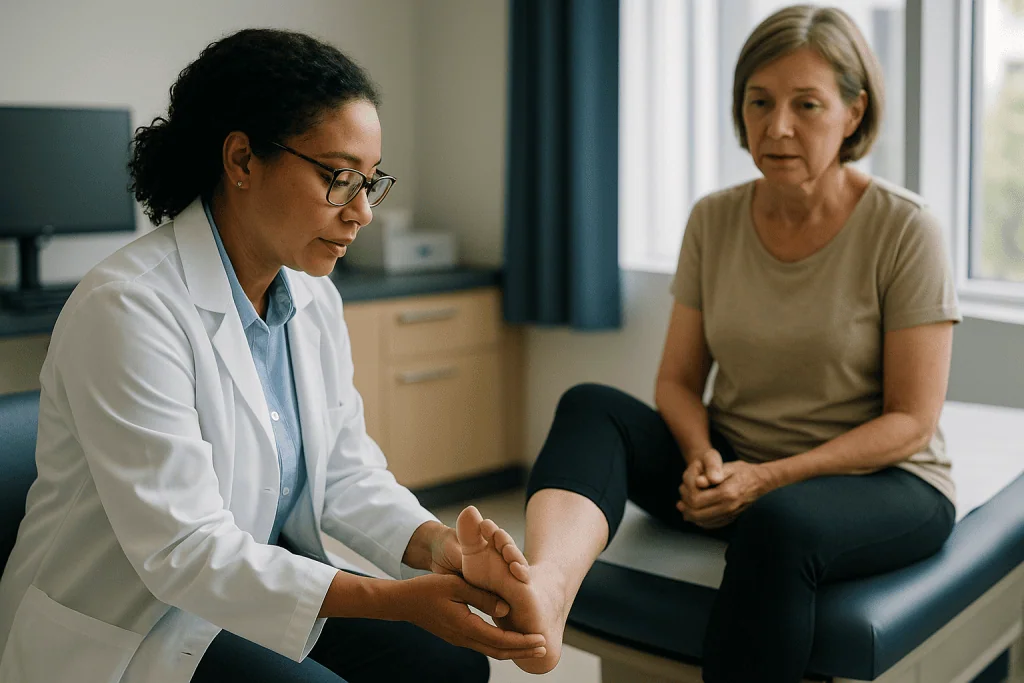
In February 2021, the STEP 1 trial published in the New England Journal of Medicine reported that adults with obesity using semaglutide lost a mean of 14.9 percent of body weight over 68 weeks, against 2.4 percent with placebo. A substudy that measured body composition with DEXA, a low-dose X-ray scan that separates fat from lean tissue, found that roughly 40 percent of the weight lost was lean mass rather than fat. Semaglutide was approved for chronic weight management in the United States later in 2021, and tirzepatide followed for the same purpose in November 2023.
By 2023 and 2024, mainstream academic health publishers had explained “Ozempic face,” the gaunt look that follows rapid loss of facial fat. Once that idea took hold, the feet were a predictable next stop: they are easy to film, and they change shape visibly.
Through 2025 and into 2026, short videos comparing before-and-after feet, along with podiatrists describing patients whose shoes no longer fit, pushed “Ozempic feet” into search. As of September 2026, the term remains a lay description. The consumer medication guide on MedlinePlus lists nausea, vomiting, diarrhea, constipation and abdominal pain among common effects, and warns about pancreatitis, gallbladder disease and vision changes in people with diabetic eye disease. Foot fat pad thinning is not on that list, and no large study has set out to measure it.
That gap between what people report and what has been formally studied is the whole story of this trend.
What the fat pads of the feet actually do
Flip a running shoe over and the thickest foam sits under the heel and the ball of the foot. The body arrived at the same design first. Beneath the heel bone sits the plantar heel pad, and beneath the five metatarsal heads, the bones that form the ball of the foot, sits the forefoot fat pad. Both are made of a special kind of fat: small lobules of adipose tissue packed into a honeycomb of tough fibrous walls called septa, anchored to the skin above and the bone below.
That architecture is the point. Ordinary belly fat spreads when you press it. Plantar fat is compartmentalized so it bulges only slightly and springs back, turning a hard landing into a softened one. Walking loads the heel with a force in the region of 1.2 times body weight on every step, and running can push that to two to three times body weight. Across several thousand steps a day, these pads absorb a staggering cumulative load.
They also thin naturally. Ultrasound studies in older adults, which are observational, show that heel pad thickness and elasticity decline with age, and that thinner pads are associated with heel pain. Repeated corticosteroid injections into the heel are another recognized cause of local fat pad loss.
When the pad under the forefoot thins, the condition is called metatarsalgia: pain and inflammation in the ball of the foot, often described as a bruised feeling or a sense that a sock is bunched beneath the toes. Standard clinical references list excess weight, high-impact activity, poorly fitting shoes and foot shape among its causes. Fat pad atrophy sits on that list too, which is where rapid weight loss enters the picture.
How rapid weight loss affects the fat pads of the feet
Fat does not leave the body in a tidy order. When energy intake falls well below what the body spends, which is exactly what GLP-1 medicines help achieve, fat stores shrink everywhere, though not at the same pace. Visceral fat deep in the abdomen tends to go early. Subcutaneous fat under the skin of the face, hands, buttocks and feet follows, and because those areas have little depth to spare, a modest absolute loss produces a dramatic visible change.
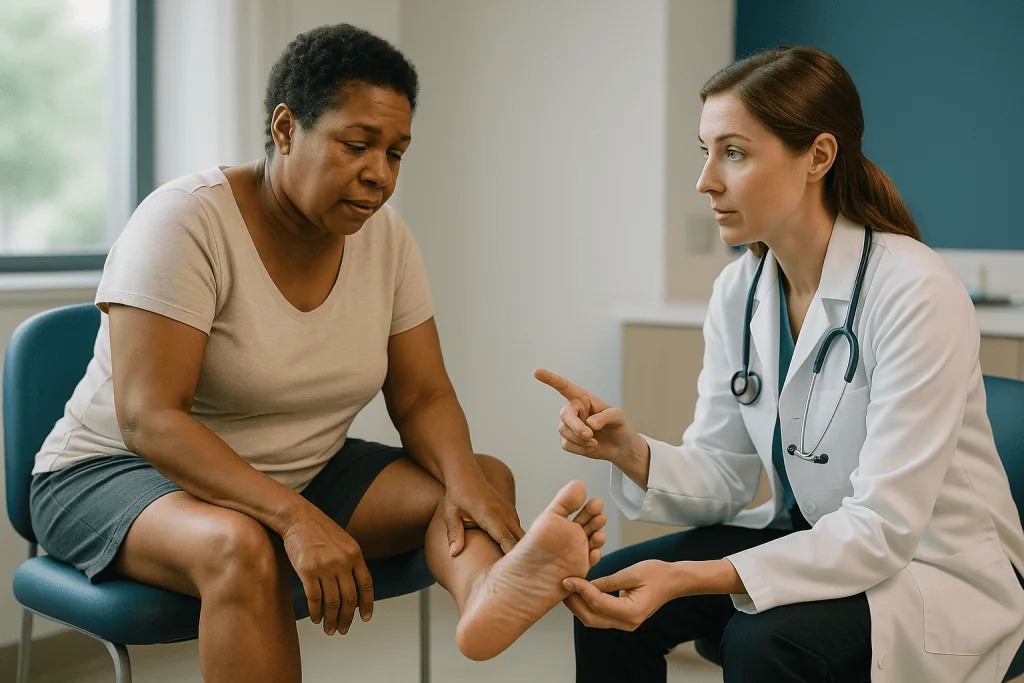
The plantar pads are not exempt. Their fat lobules are structural rather than a fuel depot, and they are thought to be less metabolically active than abdominal fat, but they still respond to a prolonged energy deficit. A thinner pad under the heel means the bone sits closer to the ground; a thinner forefoot pad exposes the metatarsal heads to direct pressure, the classic setup for metatarsalgia.
Speed is the variable that separates GLP-1 weight loss from most diets. Losing 15 percent of body weight in a little over a year, as the STEP 1 participants did on average, gives skin, connective tissue and the fibrous septa in the fat pads less time to remodel around the smaller volume. The result can be a pad that is not only thinner but also looser, so it slides and bottoms out under load.
Lean tissue is the quieter half of the equation. If close to 40 percent of lost weight is lean mass, some of that comes from the small intrinsic muscles of the foot that support the arch and spread load across the forefoot. Weaker intrinsic muscles plus a thinner pad is a plausible recipe for new soreness, even though no trial has measured it directly in people using these medicines.
Why foot pain after weight loss can feel worse, not better
The paradox is real and people feel cheated by it. Losing weight should spare the feet, and in several ways it does. Observational studies consistently link higher body weight to plantar heel pain, and biomechanics research suggests that each pound shed removes roughly four pounds of force from the knee with every step; the feet enjoy a similar relief. Yet clinic visits for sore feet after large weight loss are common enough that podiatrists talk about them.
Several things happen at once. Activity jumps: someone who could not comfortably walk a mile starts walking three, often in the shoes they already owned. Those shoes no longer fit, because foot volume shrinks along with the rest of the body, so the heel slips and the forefoot slides forward against the toe box. Gait changes too, as the pelvis and knees realign to a lighter frame, and the plantar fascia, the thick band of tissue running from heel to toes, has to adapt to a different pull.
Layer a thinner fat pad over all of that and the arithmetic tips. Less total force, yes, but concentrated on a smaller cushion with weaker supporting muscles, delivered over far more steps than before. The net load per square centimeter of heel can rise even as body weight falls.
Timing offers a clue to the cause. Soreness that appears in the weeks after a sharp increase in walking or a new exercise routine points toward overuse. Pain that creeps in gradually, feels like standing on a hard knot under the ball of the foot, and eases when you shift weight to the heel is more typical of forefoot pad thinning. Neither pattern is dangerous on its own, but both deserve a proper look if they persist.
Is it the medicine or the weight loss? Sorting out GLP-1 foot pain
No. That is the short answer to whether semaglutide or tirzepatide act directly on the fat pads of the feet, at least on anything shown so far. GLP-1 receptors are found in the pancreas, gut, brain and a few other tissues, and the medicines exert their weight effects through appetite and digestion. There is no published evidence that they shrink plantar fat by a mechanism separate from the energy deficit they create.
The strongest argument comes from people who lost weight another way. Patients after bariatric surgery describe the same loose shoes, bonier feet and new forefoot soreness, and fat pad thinning is recognized in older adults who never took a weight-loss medicine at all. The common denominator is large, fast fat loss, not a particular drug.
A few indirect routes deserve mention, and they are honest uncertainties rather than established effects. The gastrointestinal side effects of these medicines can lead to lower fluid and electrolyte intake, which some people report as leg or foot cramps. Reduced protein intake during months of suppressed appetite can accelerate loss of lean mass. And the very people most likely to be prescribed semaglutide for type 2 diabetes may already have early peripheral neuropathy, nerve damage that dulls or distorts sensation in the feet, which can make a thinning pad feel strange sooner.
What this means in practice: foot discomfort during GLP-1 treatment is worth reporting, but it is not by itself a signal that the medicine is harming the feet. The prescribing clinician is the right person to weigh it alongside the reasons the medicine was started.
What the evidence actually says
Grading the evidence here is humbling, because the pyramid is top-heavy with anecdote.
Randomized controlled trials, the strongest form of evidence, exist in abundance for semaglutide and tirzepatide. STEP 1 enrolled 1,961 adults; the SELECT cardiovascular outcomes trial followed more than 17,000. These studies tracked weight, waist size, blood pressure, lipids and a predefined list of adverse events. None measured plantar fat pad thickness, foot pressure or the incidence of metatarsalgia. Absence of evidence in this case reflects that nobody looked, not that nothing happened.
Body-composition data from the trials is the nearest thing to a supportive mechanism. The STEP 1 DEXA substudy, involving around 140 participants, is observational within a trial and shows lean mass fell alongside fat. It does not isolate the foot.
Observational studies of the foot itself are moderate in quality and mostly about aging. Ultrasound measurements show heel pad thickness decreases with age, that pads lose elasticity, and that thinner or stiffer pads correlate with plantar pain. Cross-sectional work has linked higher body mass to thicker heel pads, which implies loss of mass could go the other way, but before-and-after studies in people losing weight rapidly are scarce.
Expert opinion and case reports from podiatrists and dermatologists make up the rest, and they are consistent: patients on GLP-1 medicines turning up with loose shoes, prominent metatarsal heads and forefoot soreness. Consistent is not the same as proven.
So the verdict: the phenomenon is biologically plausible and clinically observed, the connection to rapid fat loss is well grounded, and the specific claim that GLP-1 medicines cause foot fat pad atrophy remains at the level of expert opinion. Anyone promising certainty in either direction is ahead of the data.
Fat pad atrophy of the feet: how doctors recognize it
Fat pad atrophy is the medical phrase for a plantar cushion that has thinned enough to lose its protective function. Recognizing it is mostly a matter of hands and history.
The story usually comes first. A clinician will ask when the discomfort started, how quickly weight came off, whether activity changed, which shoes are worn most, and whether there is diabetes or a history of corticosteroid injections to the foot. Pain under the ball of the foot that worsens on hard floors, in thin-soled or barefoot conditions, and improves in cushioned shoes is a typical pattern.
Then comes the examination. With the toes gently lifted, the metatarsal heads should feel padded; in atrophy they are easy to palpate, sometimes visibly prominent, and pressing directly on them reproduces the pain. Calluses often form over the second and third metatarsal heads where pressure concentrates. At the heel, the clinician may compare the compressibility of the pad on each side and look for tenderness centered on the bone rather than along the arch.
Imaging is optional and usually reserved for unclear cases. Ultrasound can measure pad thickness in millimeters and is the most practical tool. Plain X-rays rule out stress fractures or arthritis in the small joints of the forefoot. MRI is occasionally used when a Morton’s neuroma, a thickened nerve between the metatarsal heads, is suspected instead.
What a good assessment does above all is distinguish between conditions that share territory. Plantar fasciitis, the most common cause of heel pain, is inflammation where the plantar fascia attaches to the heel bone and classically hurts most with the first steps in the morning. Fat pad thinning hurts more as the day goes on and with impact. The two can coexist, and treating one while missing the other is a frequent frustration.
Ozempic feet compared with other causes of foot pain
Because the symptoms overlap, a side-by-side view helps. None of these entries is a self-diagnosis tool; a clinician makes the call.
| Condition | Where it hurts | Typical pattern | Helpful clue | Strength of link to rapid weight loss |
|---|---|---|---|---|
| Plantar fat pad thinning (“Ozempic feet”) | Center of heel or ball of the foot | Worse barefoot, on hard floors, later in the day | Metatarsal heads easy to feel; shoes feel loose | Plausible mechanism; case reports and expert opinion |
| Plantar fasciitis | Underside of heel toward the arch | Sharp with first morning steps, eases with movement | Tender where the fascia meets the heel bone | Linked to higher weight and sudden activity change (observational) |
| Metatarsalgia from other causes | Ball of the foot | Burning or aching with standing and walking | High-impact sport, tight shoes, foot shape | Linked to excess weight and rising activity (observational) |
| Stress fracture | One localized spot on a metatarsal or heel | Builds over days, hurts every step, may swell | Point tenderness, recent jump in mileage | Linked to rapid activity increase and low bone density (observational) |
| Peripheral neuropathy | Both feet, often starting at the toes | Numbness, tingling, burning, worse at night | Reduced sensation on testing; diabetes history | Caused by diabetes and other conditions, not weight loss (established) |
The pattern in the right-hand column is deliberate. Of the five, only neuropathy has a firmly established cause, and it is not weight loss. The others are connected to body weight and activity through observational data, and the specific “Ozempic feet” presentation rests on clinical observation rather than measurement. If one lesson comes from the table, it is that a jump in activity appears in nearly every row. Pacing matters more than most people expect.
Who is more likely to notice thinner fat pads after weight loss
Not everyone who loses a large amount of weight ends up with sore feet, and the people who do tend to share a few features. None is a reason to avoid treatment; each is a reason to pay closer attention.
Age comes first. Heel and forefoot pads are already thinner and stiffer in people past 60 according to ultrasound studies, so the same percentage loss leaves less in reserve. The amount and speed of weight loss matter next: someone losing 20 percent of body weight in a year is reshaping their feet far faster than someone losing 5 percent over two.
Diabetes adds two risks at once. Peripheral neuropathy can mask early discomfort, so the first sign may be a callus or a blister rather than pain, and the skin of the foot heals more slowly. Standard guidance from the NHS and CDC already asks people with diabetes to look at their feet every day; that advice carries extra weight during rapid weight change.
Foot shape plays a part. A high arch concentrates pressure on the heel and the ball; a flat foot tends to overload the inner forefoot. People who spend their day on concrete, who favor minimalist or thin-soled shoes, or who go barefoot on tile and hardwood at home give a thinning pad no help at all.
History matters too. Previous corticosteroid injections into the heel, earlier episodes of metatarsalgia, or a past stress fracture all suggest a foot with less margin.
Then there are the enthusiasts. The most common story podiatrists describe is not the sedentary patient but the one who, delighted at feeling lighter, doubles their step count in a month. Their feet are coping with less padding and more impact at the same time.
Common myths about Ozempic feet
Viral claims travel faster than footnotes. Here are the ones worth correcting.
“The fat pads are gone for good.” Unknown, and probably overstated. Plantar fat pads thin with age in a way that does not reverse, but the fat lost during a diet is ordinary adipose tissue that can be regained if weight returns. How much plantar fat comes back if weight stabilizes or rises after GLP-1 treatment has not been studied. Honest answer: nobody has measured it.
“It means the medicine is damaging my nerves.” No evidence supports this. Numbness and tingling in the feet have well-known causes, chiefly diabetic neuropathy and vitamin B12 deficiency, and both deserve testing. Neither has been shown to result from semaglutide or tirzepatide acting on nerves.
“Stopping the medicine will fix my feet.” Stopping would likely slow further fat loss, but it would not rebuild a thinned pad, and it carries its own consequences for weight, blood sugar and cardiovascular risk. Any change to a prescribed medicine belongs in a conversation with the prescriber, not a comment thread.
“Everyone drops two shoe sizes.” Foot length barely changes; volume and width do. Some people move down half a size or need a narrower fit, others simply need different lacing or an insole. The range is wide.
“Fillers in the feet are the standard fix.” Injecting dermal fillers or fat into the plantar pads has been described in small case series for fat pad atrophy of any cause. It is not an approved indication, long-term data are limited, and whether it suits a given person is a specialist’s decision.
“Only Ozempic does this.” The pattern follows rapid weight loss of any cause, including surgery and strict diets. The brand name is a label of convenience.
What helps sore feet during and after weight loss
Most of what eases a thinning fat pad is unglamorous, and none of it requires a prescription. These are general measures a podiatrist or primary care clinician commonly recommends; they are not a substitute for an assessment if pain persists.
Start with the shoes, because they are the easiest variable to change. Get both feet measured again once weight has dropped noticeably, since width and volume shrink even when length does not. Look for a cushioned midsole, a firm heel counter that stops the heel slipping, and a toe box that lets the forefoot spread. Replace running shoes whose foam has compressed; a sole that looks fine can have lost much of its shock absorption.
Insoles do real work. A soft cushioned insert spreads pressure across the heel, and a metatarsal pad, a small dome placed just behind the ball of the foot, lifts and separates the metatarsal heads so weight lands on the shaft of the bones rather than the thinned pad. Over-the-counter versions suit many people; a custom orthotic is an option when pain is stubborn or foot shape is unusual.
Stop going barefoot on hard floors at home. Slippers with a proper sole are an undervalued intervention.
Build the feet back. Simple exercises such as towel scrunches, short-foot holds and controlled calf raises strengthen the intrinsic foot muscles that lost ground during rapid weight loss, and they take five minutes a day.
Pace the activity. Increase weekly walking or running volume gradually rather than doubling it, favor softer surfaces while the feet adapt, and alternate high-impact days with cycling or swimming. Keep calluses managed, and never cut them at home if you have diabetes.
Protecting muscle and bone while losing weight on a GLP-1 medicine
Thinner fat pads are one visible marker of a broader question: what else is coming off along with the fat? The STEP 1 body-composition data suggest a substantial share of lost weight is lean tissue. That matters for the feet, because the muscles that support the arch and the bones that bear the load are both part of it.
Two measures have the best evidence for preserving lean mass during weight loss in general, from randomized trials in dieting adults rather than specifically in GLP-1 users. The first is resistance training. Current CDC and WHO physical activity guidance recommends muscle-strengthening activity on at least two days a week for all adults, and that recommendation becomes more rather than less relevant when appetite is suppressed. Squats, step-ups and calf raises load the lower limb bones as well as the muscles.
The second is adequate protein. Suppressed appetite tends to crowd protein out first, because it is filling and people eat less overall. Prioritizing a protein source at each meal is a reasonable general goal; specific targets depend on kidney function, age and other conditions, and are best set with a clinician or dietitian.
Bone deserves its own mention. Rapid weight loss is associated with reduced bone mineral density in observational studies and some trials, which raises the question of stress fractures in feet that are suddenly doing more work with less cushioning. Weight-bearing exercise helps; so does adequate calcium and vitamin D intake, assessed rather than guessed.
Speed sits underneath all of it. The pace of weight loss on these medicines is shaped by the prescription and by what a person eats. Anyone worried about losing weight too quickly, or noticing weakness alongside the loss, should raise it with the prescriber, who can weigh trade-offs that no magazine article can.
When to see a doctor about Ozempic feet
Mild soreness that eases with better shoes and a slower ramp in activity does not need an urgent appointment. Some signs do, and anyone using a GLP-1 medicine should mention foot changes at every scheduled review rather than waiting.
Book a prompt appointment if:
- Pain in the heel or ball of the foot lasts more than two to three weeks despite cushioning and reduced impact.
- You notice new numbness, tingling, burning or loss of sensation in the feet, which calls for testing for neuropathy and vitamin B12 levels.
- You have diabetes and spot any break in the skin, a blister, a cracking callus or discoloration; a non-healing sore on a diabetic foot is a medical priority.
- A single tender spot on the top or side of the foot hurts with every step and may be swollen, which can indicate a stress fracture.
- Pain wakes you at night or does not settle with rest.
Seek same-day care if a foot becomes red, hot and swollen with fever, if you suddenly cannot bear weight, if the skin turns pale, blue or black, or if a wound is draining.
Separately, report general symptoms that may relate to the medicine itself, as described in the MedlinePlus guide and prescribing information: severe or persistent abdominal pain, repeated vomiting, yellowing of the skin or eyes, a lump or swelling in the neck, or changes in vision.
Two final points. Never stop, skip or adjust a prescribed GLP-1 medicine because of foot symptoms without talking to the prescriber; the reasons it was started still apply. And ask for a referral to a podiatrist if foot pain is changing how you walk. Preserving the ability to move comfortably is, after all, much of what the weight loss was for.
Frequently asked questions
What are Ozempic feet?
Ozempic feet is an informal term for feet that look thinner and bonier, or feel sore under the heel and ball, after rapid weight loss on GLP-1 medicines such as semaglutide. It is not a diagnosis. The nearest medical concept is plantar fat pad atrophy, the thinning of the natural cushion under the sole, which can follow fast fat loss from any cause.
Does weight loss cause foot pain?
It can, although losing weight usually reduces load on the feet overall. Observational data link higher body weight to heel pain, yet rapid loss can thin the plantar fat pads, weaken small foot muscles, change gait and leave shoes fitting poorly, all while activity rises. That combination explains why some people feel more foot soreness in the months after large weight loss.
Is fat pad atrophy of the feet reversible?
Nobody knows for certain. Age-related thinning does not reverse, but fat lost through an energy deficit is ordinary adipose tissue that returns if weight is regained. Whether the plantar pads specifically recover after weight stabilizes on a GLP-1 medicine has not been measured. Cushioning, strengthening and footwear changes can improve comfort regardless of whether the pad regrows.
Can GLP-1 foot pain be a sign of something serious?
Usually it is not, but certain features need prompt attention. New numbness, tingling or burning should be tested for neuropathy and vitamin B12 deficiency. A single tender, swollen spot that hurts with every step may be a stress fracture. For anyone with diabetes, any break in the skin of the foot is a priority. A red, hot, swollen foot with fever needs same-day care.
Will my shoe size change after losing weight on semaglutide?
Often, yes, though mostly in width and volume rather than length. As fat under the skin of the foot and around the ankle shrinks, shoes can slip at the heel and feel loose across the forefoot. Some people drop half a size or move to a narrower fit; others simply need firmer lacing or an insole. A fresh measurement of both feet is the practical answer.
Is Ozempic feet different from Ozempic face?
They are the same process in different places. Both describe the visible loss of subcutaneous fat after rapid weight reduction, which makes the face look gaunt and the feet look veiny and bony. The feet add a functional dimension, because the fat pads under the heel and forefoot also act as shock absorbers, so thinning there can cause pain as well as a change in appearance.
Does tirzepatide cause the same foot changes?
The same complaints are reported with tirzepatide, which is sold as Mounjaro and Zepbound and produces weight loss of similar or greater magnitude. No study has compared foot fat pad changes between medicines. Because the mechanism appears to be rapid fat loss rather than a direct drug effect, any medicine or procedure that produces fast, substantial weight loss is likely to produce a similar picture.
Should I stop my medicine if my feet hurt?
Not on your own. Stopping a prescribed GLP-1 medicine would not rebuild a thinned fat pad and could affect blood sugar, weight and cardiovascular risk, which are the reasons it was prescribed. Report foot pain to the prescribing clinician, who can assess the cause, refer you to a podiatrist if needed and decide whether anything about the treatment plan should change.
What is the best shoe for foot pain after weight loss?
There is no single best shoe, but useful features are consistent: a cushioned midsole, a firm heel counter that stops heel slip, and a roomy toe box. A soft insole or a small metatarsal pad placed just behind the ball of the foot can offload the exposed metatarsal heads. Replace shoes whose foam has compressed, and avoid walking barefoot on hard floors while the feet adapt.
How do doctors diagnose fat pad atrophy in the feet?
Mainly by history and examination. A clinician asks how fast weight came off, what changed in activity and footwear, and whether diabetes or past steroid injections are present, then feels for prominent metatarsal heads and tenderness directly over bone. Ultrasound can measure pad thickness, and X-rays or MRI are used only to rule out stress fracture, arthritis or a Morton’s neuroma.
References
This article is for general information only and is not a substitute for professional medical advice. Please consult a qualified doctor about your individual situation.

More from the Blog

Survodutide: The Glucagon-GLP-1 Dual Agonist Being Studied for Obesity and Liver Disease
Survodutide is an investigational injectable peptide that activates both the glucagon receptor and the GLP-1 receptor. In phase 2 trials it produced average weight…

Is Ozempic Safe? What Years of Semaglutide Data Say About Risks and Benefits
Ozempic (semaglutide) is considered safe for most adults with type 2 diabetes when prescribed and monitored by a clinician. Large randomized trials covering tens…

Food Noise: Why GLP-1 Medicines Quiet It, and What Helps When You Are Not on Them
Food noise is the persistent, intrusive stream of thoughts about food that continues when the body does not need fuel. GLP-1 medicines such as…

Weight Loss Injections Explained: The Approved Medicines, How They Differ and Who Qualifies
Weight loss injections are prescription medicines that mimic gut hormones to reduce appetite and slow digestion. Three are FDA-approved for chronic weight management: semaglutide…

Zepbound Side Effects: What the Trials Recorded, What Is Common and What Needs a Call to Your Doctor
Zepbound (tirzepatide) most often causes digestive side effects: nausea, diarrhea, constipation, vomiting, indigestion and reduced appetite, which in trials were usually mild to moderate…

Compounded Tirzepatide: Why It Exists, Why Regulators Warn and What ‘Compounded’ Really Means
Compounded tirzepatide is a pharmacy-made version of the prescription medicine tirzepatide that has not been reviewed or approved by the US Food and Drug…