

Preparing for Urethritis Testing: Why You May Be Asked Not to Urinate Before the Sample
Key Takeaways
- The first 20 to 30 milliliters of urine, not the middle of the stream, is the sample used to detect urethritis because it carries cells and organisms rinsed from the urethral lining.
- MedlinePlus advises not urinating for at least one hour before a urethral specimen; urinating shortly beforehand can produce a false negative.
- The CDC documents urethral inflammation by visible discharge, two or more white cells per oil-immersion field on Gram stain, or a positive leukocyte esterase or ten or more white cells per high-power field in first-void urine.
- Urine NAAT is as sensitive as a swab for chlamydia and gonorrhea in men, so a urethral swab is now reserved mainly for Gram stain, culture and persistent symptoms.
- Urethritis can occur without any sexually transmitted infection, through mechanical or chemical irritation, catheters, viruses, or organisms not on standard panels.
- The CDC recommends retesting about three months after treatment for chlamydia or gonorrhea because reinfection is common, and advises against a chlamydia NAAT test of cure sooner than about four weeks.
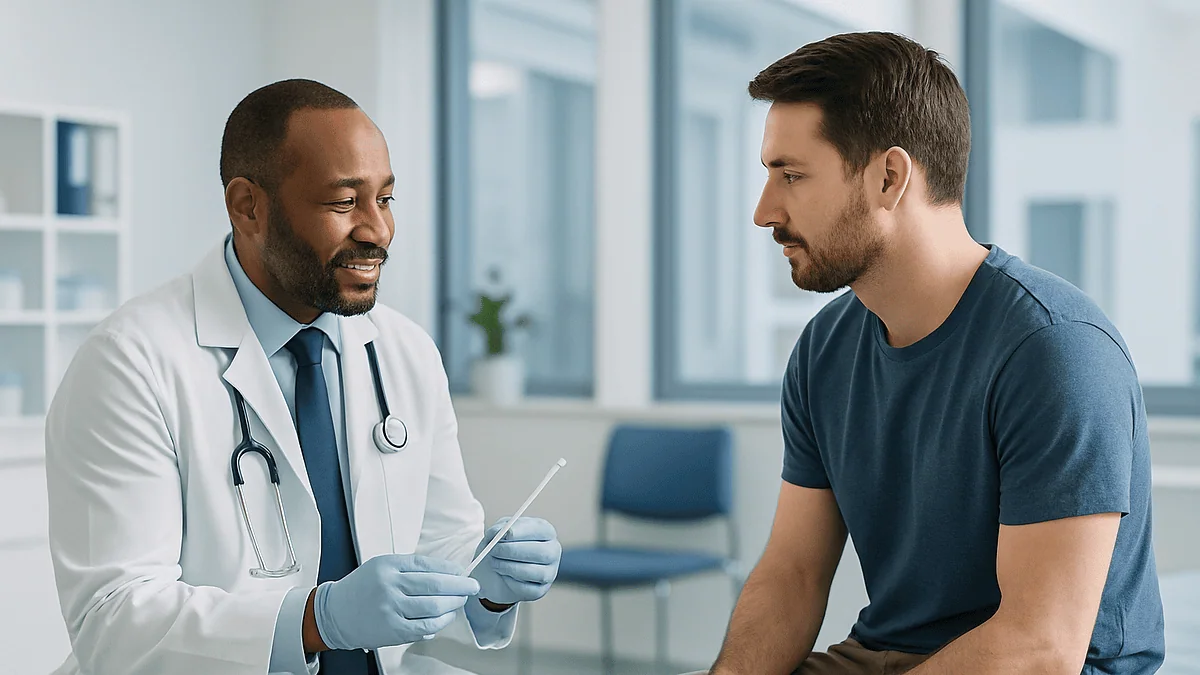
Before a urethritis test, you are usually asked not to urinate for at least one hour, because the first part of the urine stream carries cells and any bacteria that have gathered in the urethra. Urinating shortly before the visit flushes that material away and can produce a false negative. Follow the specific instructions given by the clinic, since some also request a urethral swab.
He arrives ten minutes early, reads the sign on the clinic door, and realizes he stopped at a gas station restroom on the way. Now the nurse is explaining, kindly but firmly, that the sample may need to wait. It is one of the more common small frustrations in a urology or sexual health clinic, and it comes from a piece of advice that sounds like superstition until you understand the biology behind it.
Urethritis test preparation is genuinely simple, but the one rule people forget is the one that matters most: hold your urine. The urethra is the tube that carries urine from the bladder out of the body, and when it is inflamed, the evidence of that inflammation collects in the first few milliliters that leave it. Empty the tube too soon and the test is examining plain bladder urine, which may look reassuringly normal while the problem sits upstream.
This explainer walks through why that instruction exists, what the tests actually measure, what a swab feels like, and what the following weeks usually involve.
Why am I asked not to urinate before a urethritis test?
The instruction is about geography, not discipline. Urethritis means inflammation of the urethra, and the organisms that most often cause it, chiefly Chlamydia trachomatis and Neisseria gonorrhoeae, live on the lining of that tube rather than floating in the bladder. Between trips to the bathroom, infected cells, white blood cells and bacteria accumulate along the urethral wall. The next stream of urine rinses them out, and the first portion of that stream is where they concentrate.
This is why laboratories ask for a first-catch urine sample, sometimes called first-void, meaning the initial part of the stream rather than the middle portion collected for a standard infection check. If you urinated twenty minutes earlier, that reservoir has been flushed and has not yet rebuilt. The sample can come back negative even when an infection is present. MedlinePlus, the National Library of Medicine’s patient information service, states plainly that you will be asked not to urinate for one hour before a urethral discharge culture, and the same logic applies to urine-based testing.
Clinics differ slightly. Some ask for one hour, some prefer two, and a few sexual health services ask you to arrive without having urinated that morning if the appointment is early. None of these are arbitrary; each is a compromise between test sensitivity and what a person with an irritated urethra can comfortably manage. A urethra that is inflamed often produces urgency, so holding for hours can be difficult. Tell the staff if you are struggling. A shorter wait with a well-collected sample is far better than an uncomfortable patient who then rushes and collects midstream urine by mistake.
Understanding the reason tends to make compliance easier. The test is not looking for urine. It is looking for what the urine carries out on its way past the inflamed lining.
What test confirms urethritis? How the diagnosis is actually made
Two questions are being answered at once: is the urethra inflamed, and if so, what is causing it? Different tests handle each.
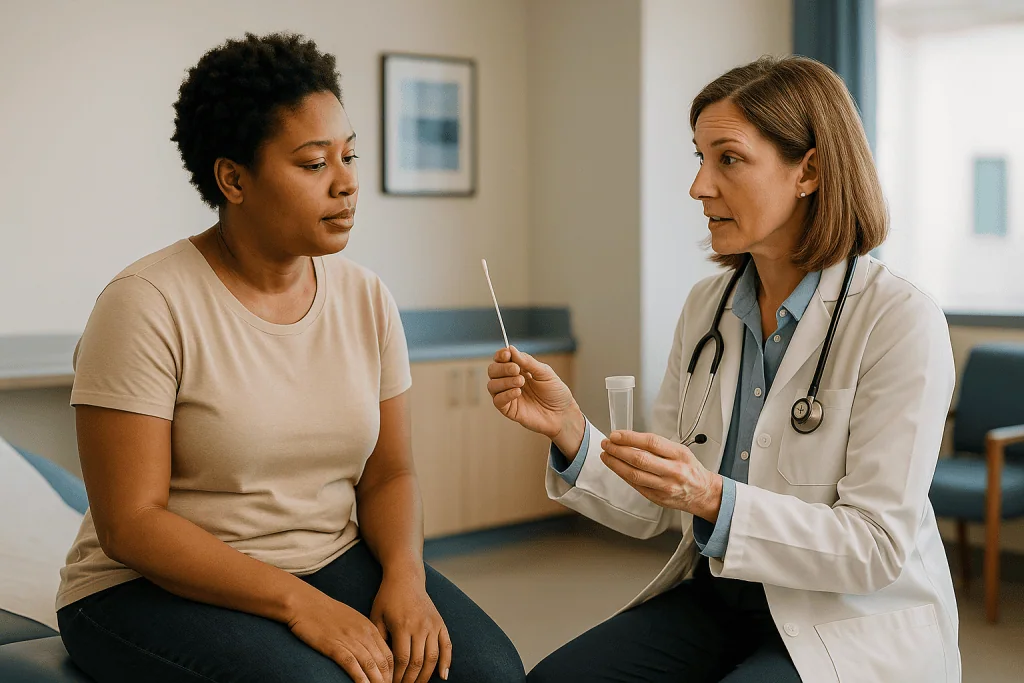
Inflammation is usually confirmed by looking for white blood cells, the immune cells that gather wherever tissue is irritated or infected. According to the CDC’s sexually transmitted infection treatment guidelines, clinicians can document urethritis in any of three ways: visible mucopurulent or purulent discharge on examination; a Gram stain of urethral secretions showing two or more white blood cells per oil-immersion microscope field; or a first-void urine that is positive for leukocyte esterase on a dipstick, or shows ten or more white blood cells per high-power field when the sediment is examined under a microscope. Leukocyte esterase is simply an enzyme released by white blood cells, and the dipstick detects it within minutes.
The cause is identified separately, most often with a nucleic acid amplification test, usually shortened to NAAT. A NAAT detects the genetic material of a specific organism rather than trying to grow it, which makes it both sensitive and fast. The CDC recommends NAAT for chlamydia and gonorrhea in all people with urethritis, and notes that testing for Trichomonas vaginalis and Mycoplasma genitalium may be considered in particular circumstances, such as persistent or recurrent symptoms.
Culture, in which secretions are placed on a nutrient plate to see what grows, still has a role. It is the test used when a clinician needs to know which antibiotics an organism is sensitive to, which matters increasingly for gonorrhea. Culture requires a swab rather than urine and takes longer.
So the honest answer to the search query is that no single test confirms urethritis. A microscope or dipstick confirms inflammation; a NAAT or culture names the organism; the clinician puts the two together with the examination. That combination, not one result in isolation, is what leads to a diagnosis.
First catch urine sample: what actually happens step by step
The mechanics are less mysterious than the name suggests, and getting them right is most of what preparation means.
You will be given a sterile container and directed to a bathroom. The instruction is to begin urinating directly into the cup and collect the very first portion, then finish in the toilet. The CDC describes first-void urine as roughly the first 20 to 30 milliliters of the stream, which is about the volume of a shot glass or a little more. Many containers have a fill line; if yours does, aim for it rather than filling the cup. A brimming sample is not more useful, and diluting the first catch with the rest of the stream actually reduces the concentration of what the lab is searching for.
You do not need to clean the genital area first. This surprises people who have collected midstream samples for a suspected bladder infection, where cleaning and discarding the first part of the stream are standard. For urethritis testing the aim is the opposite: whatever is sitting at the opening of the urethra is exactly what the laboratory wants.
Once collected, secure the lid, wipe the outside if needed, and hand the container to staff or place it where directed. Samples for NAAT are stable for transport, so a short delay between collection and processing does not usually matter, though the clinic handles that.
If the clinician also wants a Gram stain or a culture, a swab may be taken before you urinate, because urinating first would wash away the secretions the swab needs. This is the second reason for the hold-your-urine rule, and it is why staff usually ask you to wait until they have decided which samples are required. Ask them the order of events if it is not explained; it removes most of the anxiety from the visit.
How painful is a urethral swab for men?
This is one of the most searched questions on the topic, and the frank answer is: briefly uncomfortable for most, sharply so for a few, and over in seconds.
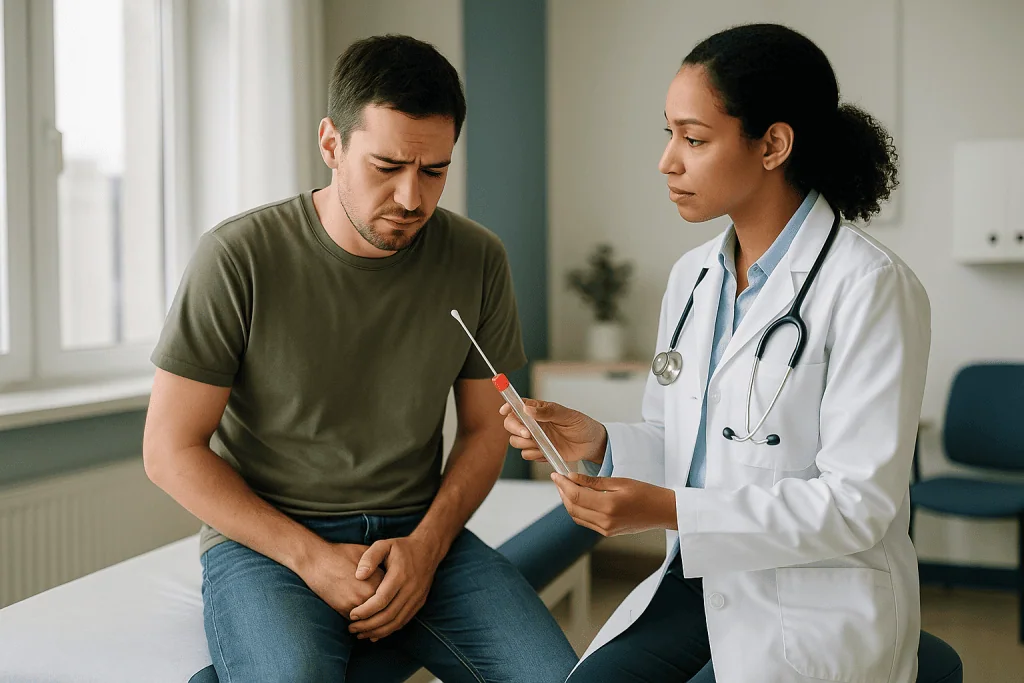
A urethral swab test involves a thin, flexible swab, considerably narrower than a cotton bud, inserted a short distance into the opening of the penis. MedlinePlus describes the swab being placed about three-quarters of an inch, roughly two centimeters, into the urethra and rotated gently to collect secretions. The rotation is what people remember. The sensation is commonly described as a stinging or scraping feeling, occasionally followed by a strong urge to urinate. An already inflamed urethra is more sensitive, which is part of why the test can feel worse when there are symptoms than it would in a healthy urethra.
A few points help. Breathing out slowly during insertion relaxes the pelvic floor. Warning the clinician if you have had a painful swab before lets them adjust technique. Mild stinging when you next urinate is common and normally settles within a day; MedlinePlus notes that some men feel faint or lightheaded during or after the procedure, so mention it if you feel unwell, and sit for a moment before standing.
Equally important is knowing that swabs are less routine than they used to be. Because urine NAAT is as sensitive as a swab for chlamydia and gonorrhea in men, the CDC guidance means many clinics now diagnose urethritis from first-catch urine alone. A swab is generally reserved for situations where a Gram stain is wanted immediately, where culture is needed for antibiotic sensitivity, or where symptoms persist after treatment. If you are anxious about the swab, it is reasonable to ask whether urine testing alone would answer the clinical question in your case. The decision remains with the clinician, but the conversation is a fair one to have.
Urethritis test preparation: the night before and the morning of your appointment
Preparation for this test is short enough to fit on an index card, but each item has a reason.
- Time your last bathroom trip. Aim to have not urinated for at least one hour before the sample is taken, as MedlinePlus advises for urethral testing, and longer if your clinic has asked for it. If your appointment is first thing in the morning, that may simply mean not urinating after waking.
- Drink normally, not excessively. Loading up on water beforehand dilutes urine and makes the wait harder. Ordinary intake is fine.
- Skip washing the genital area immediately beforehand. Antiseptic wipes or soap at the urethral opening can remove secretions and potentially interfere with results. A normal shower earlier is not a problem.
- Avoid ejaculation for the period your clinic specifies. Semen passing through the urethra can flush it much as urine does, and some services ask you to avoid sex or masturbation beforehand. Follow the local instruction rather than a general rule.
- Bring a medication list. Recent antibiotics, taken for any reason, can suppress organisms and lead to a negative result; the clinician needs to know. Never stop or start a prescribed medicine to prepare for a test.
- Bring a timeline. When symptoms began, when you last had sex, whether a partner has been diagnosed with anything, and whether condoms were used. This information shapes which tests are ordered.
One thing you do not need to do is fast. Unlike many blood tests, urethral and urine testing is unaffected by food. Nor do you need to hold urine for so long that you are in pain; an hour or two of accumulated secretions is the target, not a full bladder.
If you turn up having already urinated, say so. Staff will usually either have you wait, offer a swab instead, or reschedule the urine portion. Being honest about it is not an inconvenience to them; a falsely negative test is.
Who is usually tested this way, and who is usually asked to wait
First-catch urine testing for urethritis is used across a wide range of people, but the groups who encounter it most often, and the groups who are sometimes redirected to a different sample, are worth spelling out.
Men and people with a penis who report discharge, burning during urination, or irritation at the tip are the classic candidates. The CDC guidance frames urethritis largely in this population because the urethra is long, the symptoms are noticeable, and urine reliably reflects what is happening inside it. Asymptomatic people being screened for chlamydia or gonorrhea after a new partner or a partner’s diagnosis are also tested with first-catch urine, and here the hold-your-urine rule matters just as much even though nothing feels wrong.
Women and people with a vagina present differently. Urethritis can occur, but the symptoms overlap heavily with bladder infection and with cervicitis, inflammation of the cervix. For chlamydia and gonorrhea in this group, the CDC notes that a vaginal swab, either clinician-collected or self-collected, is the preferred specimen, with first-catch urine as an acceptable alternative. So a woman with urinary burning may be asked for a midstream sample to check for a bladder infection and a vaginal swab for sexually transmitted organisms, rather than a first catch.
Who is asked to wait? Anyone who has urinated within the past hour, in the literal sense. In a broader sense, people who have just finished antibiotics may be advised to wait before a test of cure or retest, because organisms may be undetectable while no longer being a problem, or, conversely, dead genetic material can linger and produce a positive NAAT for a period after successful treatment. The CDC advises against test-of-cure NAAT for chlamydia sooner than about four weeks after treatment for this reason. Your clinician will decide the timing.
Children with urethral symptoms follow a different pathway entirely and are assessed by pediatric teams; this article does not address that setting.
First-catch urine vs midstream urine vs urethral swab: which sample answers which question
People often arrive having collected the wrong kind of urine because a previous test taught them a habit. This table summarizes what each specimen is for and how it is prepared, based on MedlinePlus and CDC descriptions.
| Sample | Main purpose | Collection | Hold urine first? |
|---|---|---|---|
| First-catch urine | NAAT for chlamydia, gonorrhea and related organisms; leukocyte esterase and white cells to document urethral inflammation | First portion of the stream, roughly the first 20 to 30 milliliters, no cleaning beforehand | Yes, generally at least one hour |
| Midstream urine | Urinalysis and culture for bladder or kidney infection | Clean the area, discard the first portion, collect the middle of the stream | Not required; some labs prefer a morning sample |
| Urethral swab | Gram stain for immediate microscopy; culture for gonorrhea antibiotic sensitivity; testing when urine is inconclusive | Thin swab inserted about two centimeters and rotated by a clinician | Yes, taken before urinating |
| Vaginal swab | Preferred NAAT specimen for chlamydia and gonorrhea in women | Self- or clinician-collected; independent of urination | No |
The confusion between the first two rows is the single most common preparation error. Midstream technique deliberately removes the material that first-catch technique deliberately keeps. If you have been told you have a urine infection before and are now being tested for urethritis, assume the instructions have changed and ask.
The swab row is worth a second look too. Its place is narrower than many people fear, but it is not obsolete. Antibiotic resistance in gonorrhea is a live concern in the CDC guidance, and culture from a swab is currently the only routine way to measure which drugs an isolate responds to. A swab is therefore sometimes requested precisely when a clinician is being thorough, not because urine testing failed.
What are the first signs of urethritis, and why they are easy to misread
Clinicians describe the early picture of urethritis in fairly consistent terms, and understanding it helps you give a useful history rather than helps you diagnose yourself; only testing can do that.
MedlinePlus lists discharge from the penis, burning or pain during urination, and itching, tenderness or swelling near the urethral opening as the features that bring most men to a clinic. The discharge may be clear, cloudy, white or yellow, and is often most noticeable in the morning or as a stain on underwear. Frequency and urgency, the feeling of needing to go often and soon, can accompany these because the inflamed urethra sends the same signals a full bladder does.
Timing varies by organism. The NHS notes that symptoms of non-gonococcal urethritis, meaning urethritis not caused by gonorrhea, often appear within a few weeks of infection, and the NHS chlamydia page describes most people with symptoms noticing them one to three weeks after exposure, while gonorrhea tends to declare itself sooner and more dramatically, with thicker discharge. Many infections, however, produce no symptoms at all, which is why screening exists.
The features are easily misread in two directions. Burning on urination is frequently assumed to be a bladder infection, prompting a midstream sample that misses the urethral cause. Conversely, an irritated urethra after vigorous sex, a new soap, or a period of dehydration can mimic infection and settle on its own. Neither assumption should replace a test, but both are reasons the clinician will ask detailed questions about sexual history, products used, and timing.
In women, urethral symptoms overlap with cervicitis and vaginal infections, and may present as pelvic discomfort or bleeding between periods rather than discharge from the urethra itself, according to the CDC. The workup reflects that broader picture.
Can you have urethritis and no STD?
Yes, and this is one of the more reassuring facts in the whole topic, though it does not remove the need for testing.
Urethritis is a description of inflammation, not a verdict on its cause. The StatPearls review of urethritis hosted by the NIH divides causes into infectious and non-infectious, and within infectious, into gonococcal and non-gonococcal. Non-gonococcal urethritis, abbreviated NGU, is the more common category, and while chlamydia is its leading identifiable cause, the NHS notes that in a substantial share of NGU cases no specific organism is found even after thorough testing. Some of those cases are due to organisms that routine panels do not include; others are likely irritation rather than infection.
Non-infectious triggers listed across MedlinePlus and StatPearls include mechanical irritation from a urinary catheter or from vigorous sexual activity, chemical irritation from spermicides, soaps, bubble bath or lubricants, and, less often, reactive inflammation associated with certain autoimmune conditions. Urethral strictures, meaning narrowing of the tube from scar tissue, can produce similar symptoms. A urinary tract infection with ordinary bowel bacteria can also involve the urethra without any sexual transmission at all.
Not all sexually transmitted organisms that cause urethritis are the ones people think of, either. Adenovirus and herpes simplex virus can inflame the urethra, and Mycoplasma genitalium, which the CDC now discusses as a cause of persistent NGU, is not on every standard panel.
Two practical consequences follow. First, a negative chlamydia and gonorrhea result does not mean the symptoms were imaginary; the clinician will consider these other explanations. Second, a positive result does not by itself indicate infidelity in a relationship, because infections can remain silent for long periods before being detected. The purpose of testing is to name the cause so it can be treated appropriately, and to protect partners where an infection is transmissible.
How long to hold urine before an STI test, and other timing questions
Timing is where most of the practical questions cluster, so it deserves a section of its own.
Holding urine. The consistent published figure is at least one hour without urinating before a urethral specimen, from MedlinePlus. Some services extend this to two hours or ask for the first urine of the day. There is no advantage in holding for many hours; secretions accumulate quickly, and a painfully full bladder makes it harder to stop the stream after the first catch. Follow your clinic’s figure.
Window after exposure. Testing too early can miss an infection that has not yet multiplied to detectable levels. The NHS advises that chlamydia testing is generally reliable from about two weeks after a possible exposure, and that anyone with symptoms should be tested regardless of timing. If you are tested very soon after exposure and the result is negative, the clinician may suggest a repeat.
Results. NAAT results are typically returned in days rather than weeks, and dipstick and Gram stain results can be available during the visit itself, according to the CDC’s description of point-of-care evaluation. Culture takes longer because bacteria need time to grow. Your clinic will tell you how and when results are delivered; ask before you leave.
Retesting. Because reinfection is common, the CDC recommends that people diagnosed with chlamydia or gonorrhea be retested about three months after treatment, or at the next visit if that is later. This is separate from a test of cure and does not imply that treatment failed.
Test of cure. The CDC advises against a chlamydia test of cure by NAAT sooner than roughly four weeks after treatment, because fragments of genetic material from dead organisms can produce a positive result. Whether any test of cure is needed depends on the organism, the treatment used and whether symptoms have resolved; that call sits with the treating team.
What the days and weeks after urethritis testing usually look like
The sample is the short part. What follows is a sequence that is fairly predictable once you know its shape.
In the first day or two, mild soreness after a swab is expected and settles on its own. If a Gram stain or dipstick showed inflammation during the visit, the CDC guidance supports clinicians starting treatment for the likely causes before the NAAT result returns, particularly if follow-up is uncertain. The medicines involved are antibiotics chosen according to the suspected organism and current resistance patterns, and the specific choice, duration and any adjustments belong entirely to the prescribing clinician. Do not adjust or stop them without that conversation, even if symptoms improve early.
During this period you will usually be asked to avoid sexual contact. The NHS advises people treated for non-gonococcal urethritis not to have sex, including oral sex and sex with a condom, until treatment is completed and symptoms have gone, and until partners have been treated. The CDC gives similar advice and adds that partners from the previous 60 days should be notified and evaluated. Many clinics offer partner notification support; it is acceptable to ask for it.
When results arrive, the conversation depends on what they show. A named organism leads to confirmation that treatment was appropriate or to a change if it was not. A negative panel with confirmed inflammation opens the discussion of other causes, and the CDC suggests testing for Mycoplasma genitalium and Trichomonas when symptoms persist after initial treatment. No inflammation and no organism usually means reassurance and a plan to return if anything changes.
Symptoms in most people improve within days of appropriate treatment, though the exact course varies by organism, and the NHS notes that some people need a second course if the first does not resolve things. A follow-up visit is commonly arranged if symptoms persist, and the three-month retest described earlier is scheduled for anyone with a confirmed sexually transmitted infection.
What people often get wrong about urethritis test preparation
A handful of misunderstandings account for most spoiled samples and unnecessary worry. Correcting them is the most useful thing this article can do.
Myth: drinking lots of water helps the test. It does the opposite. Extra fluid dilutes the concentration of cells and organisms in the first catch and makes holding urine harder. Drink as you normally would.
Myth: you should clean yourself thoroughly first. That instruction belongs to midstream samples for bladder infection. For urethritis, the material at the urethral opening is the point of the test.
Myth: the more urine, the better. The lab wants the first 20 to 30 milliliters, in the CDC’s description. Filling the cup means most of the sample is ordinary bladder urine that dilutes the useful portion.
Myth: a negative result means nothing is wrong. A negative NAAT for chlamydia and gonorrhea rules those out with good confidence when the sample was collected properly, but it does not rule out other organisms or non-infectious irritation, and it does not rule out an infection acquired too recently to detect.
Myth: a swab is always required for men. Urine NAAT has largely replaced routine swabbing for men in the CDC guidance. Swabs are used for specific purposes rather than by default.
Myth: finishing a leftover antibiotic before the appointment is helpful. Taking antibiotics before testing can suppress organisms enough to cause a false negative while leaving the infection incompletely treated. It also removes the chance to check antibiotic sensitivity. Never take medicine intended for someone else or left over from another illness, and tell the clinician about anything taken recently.
Myth: symptoms that fade mean testing is unnecessary. Chlamydia in particular is frequently silent, and untreated infection can be passed to partners and, over time, contribute to complications such as epididymitis or pelvic inflammatory disease described by MedlinePlus and the CDC. Fading symptoms are a reason to test, not a reason to skip it.
Questions to ask your care team before and after the sample
People often leave clinics with a container and a vague sense of having missed something. These questions cover the gaps that come up most, and none of them will surprise an experienced clinician.
Before the sample:
- How long do you want me to have gone without urinating, and does it matter if I have just missed that window?
- Are you collecting urine, a swab, or both, and in what order?
- Which organisms does this panel test for, and is there anything it does not cover that I should know about given my history?
- Is it too early after my possible exposure for this test to be reliable, and should I plan a repeat?
- I recently took an antibiotic for another reason; does that change what you can test for today?
About results:
- How and when will results reach me, and who do I contact if I have not heard?
- If the microscopy shows inflammation today, will you start treatment now or wait for the full result?
- If everything comes back negative but my symptoms continue, what is the next step?
About the weeks after:
- How long should I avoid sex, and does that include sex with a condom?
- Which partners need to be told, and can the clinic help with notification?
- Do I need a test of cure, a retest in a few months, or both, and when?
- Are there any symptoms that should bring me back sooner than planned?
Write the answers down or ask for them in writing. Clinic visits for intimate symptoms are stressful, and stress is unkind to memory. Asking about the panel’s coverage in particular can save a second round of anxiety later: knowing in advance that Mycoplasma genitalium is not included, for example, frames a negative result correctly.
Every decision about testing sequence, treatment and follow-up belongs with the clinician who has examined you. The purpose of these questions is to make sure that decision is one you understand, not to redirect it.
When to call your doctor: red-flag signs during and after urethritis testing
Urethritis itself is rarely dangerous, and the tests described here are low-risk. A small number of situations, however, should prompt a call to your clinician or urgent care rather than waiting for a scheduled result.
Contact your care team promptly, or seek urgent care, if you notice any of the following:
- Fever, chills or feeling generally unwell alongside urinary symptoms, which can indicate that infection has spread beyond the urethra to the epididymis, prostate, or kidneys.
- Pain, swelling or tenderness in one or both testicles. MedlinePlus and the CDC both list epididymitis, inflammation of the tube behind the testicle, as a complication of untreated urethritis, and sudden testicular pain also needs assessment to exclude torsion, which is an emergency.
- Inability to pass urine, or passing only small amounts with a painfully full bladder.
- Visible blood in the urine that persists beyond the mild pink tinge that can follow a swab.
- In women, lower abdominal or pelvic pain, pain during sex, or bleeding between periods, which the CDC associates with pelvic inflammatory disease.
- Joint pain, eye redness or a rash appearing around the same time as urinary symptoms, which can point to disseminated gonococcal infection or a reactive inflammatory condition.
- Symptoms that persist or return after completing prescribed treatment, since the CDC describes persistent urethritis as needing further evaluation for organisms not covered initially.
- Feeling faint, lightheaded or unwell after a swab that does not settle within a short rest.
Call if you are worried even when your symptoms are not on this list. Clinicians would far rather field an unnecessary call than miss an early complication, and reassurance is a legitimate reason to make contact. If you develop severe pain, high fever, or cannot urinate, treat it as urgent and seek same-day care rather than waiting for a callback.
Frequently asked questions
What test confirms urethritis?
No single test does; inflammation and cause are confirmed separately. A dipstick or microscope on first-catch urine, or a Gram stain of a urethral swab, shows the white blood cells that indicate inflammation. A nucleic acid amplification test on the same urine identifies chlamydia, gonorrhea and sometimes other organisms. The clinician combines these with the examination to reach a diagnosis.
How painful is a urethral swab for men?
Most men describe a brief stinging or scraping sensation lasting a few seconds, sometimes followed by a strong urge to urinate and mild burning the next time they go. An already inflamed urethra feels it more. The swab is thin and inserted only about two centimeters. Breathing out slowly helps, and swabs are now used less often because urine testing is equally sensitive for the common causes.
How long to hold urine before an STI test?
At least one hour is the figure given by MedlinePlus for urethral specimens, and some clinics ask for two hours or the first urine of the morning. Holding longer than requested offers no advantage and makes collecting only the first portion harder. If you have urinated recently, tell the staff so they can time the sample or use a swab instead.
What are the first signs of urethritis?
Clinicians most often see discharge from the penis, burning or pain when urinating, and itching or irritation at the urethral opening, according to MedlinePlus. Some people notice frequency or urgency. Many infections cause no symptoms at all, especially chlamydia, which is why testing after a possible exposure matters regardless of how you feel. Only a test, not a symptom pattern, can confirm the diagnosis.
Can you have urethritis and no STD?
Yes. Urethritis simply means inflammation of the urethra, and causes include mechanical irritation from catheters or vigorous sex, chemical irritation from soaps or spermicides, ordinary urinary tract bacteria, viruses such as adenovirus, and organisms not included on standard panels. The NHS notes that in many cases of non-gonococcal urethritis no specific cause is identified even after thorough testing.
Do I need a first catch urine sample or a midstream sample?
For urethritis and sexually transmitted infection testing you need a first-catch sample: the very first part of the stream, collected without cleaning beforehand. A midstream sample, where you clean, discard the first portion and catch the middle, is for bladder infection testing and deliberately removes the material urethritis testing relies on. If in doubt, ask before you go into the bathroom.
What are non gonococcal urethritis symptoms and how are they different from gonorrhea?
Non-gonococcal urethritis tends to cause a clearer or whitish discharge and milder burning, often appearing within a few weeks of infection according to the NHS, and is frequently symptom-free. Gonorrhea more often produces thicker yellow or green discharge and more pronounced pain, usually sooner after exposure. The overlap is large, however, so laboratory testing rather than the appearance of discharge determines the cause.
Should I avoid sex before a urethritis test?
Some clinics ask you to avoid sex or ejaculation for a period beforehand because semen passing through the urethra can flush away secretions, much as urinating does. Follow your clinic’s specific instruction. After testing, both the NHS and the CDC advise avoiding sexual contact until treatment is complete, symptoms have resolved and partners have been treated, if an infection is found.
Will taking antibiotics before the test affect the result?
It can. Antibiotics taken for any reason may suppress organisms enough to produce a false negative while leaving the infection incompletely treated, and they prevent culture from measuring antibiotic sensitivity. Never take leftover or borrowed antibiotics before a test, and never stop a prescribed medicine to prepare for one. Tell the clinician about anything you have taken recently so results can be interpreted correctly.
How long after treatment should I be retested for urethritis?
The CDC recommends retesting about three months after treatment for chlamydia or gonorrhea because reinfection from untreated partners is common. This is different from a test of cure, which for chlamydia should not be done by NAAT sooner than about four weeks because dead genetic material can still register. Whether you need a test of cure depends on the organism and your symptoms; your clinician decides.
References
- MedlinePlus Medical Encyclopedia: Urethral discharge culture
- MedlinePlus Medical Encyclopedia: Urethritis
- CDC Sexually Transmitted Infections Treatment Guidelines: Urethritis and Cervicitis
- NHS: Non-gonococcal urethritis
This article is for general information only and is not a substitute for professional medical advice. Please consult a qualified doctor about your individual situation.

More from the Blog

The Urgent Tests Behind a Uremic Syndrome Diagnosis and What Imaging Adds
Uremic syndrome tests start with blood work: creatinine, urea (BUN), electrolytes and bicarbonate to gauge kidney function, plus a complete blood count, blood smear…
Is Laser Lithotripsy Painful? Anesthesia Choices and Comfort After the Stone Is Fragmented
Laser lithotripsy is not usually painful while it is happening, because the procedure is performed under general or spinal anesthesia, so you are asleep…
How Fluid Management Works: Assessing Dehydration or Overload and Choosing IV or Oral Plans
Doctors assess dehydration and fluid overload by combining a history of intake and losses with examination findings such as pulse, blood pressure lying and…
Is Doppler Ultrasound Needed for Suspected Torsion, and Why Must It Never Delay Surgery?
Doppler ultrasound is useful when the diagnosis of testicular torsion is genuinely uncertain, but it is not required before surgery. When the history and…

What Happens After a Positive Urinary Biomarker Result? Cystoscopy, Imaging and Repeat Testing
A positive urinary biomarker result is a signal that needs checking, not a diagnosis. The usual next steps are a cystoscopy (a thin camera…

When PKD Advances: How Dialysis or Kidney Transplant Planning Begins Before It Is Urgent
As polycystic kidney disease advances, planning for dialysis or a kidney transplant usually begins when kidney function falls into the later stages of chronic…