

Quercetin and Fisetin: The Senolytic Flavonoids: What Trials Show
Key Takeaways
- The only published human senolytic studies involving quercetin enrolled 23 people in total, had no placebo group, and always combined it with the prescription leukemia drug dasatinib.
- Fisetin outperformed quercetin as a senolytic in mouse and cell studies, yet as of this writing it has no peer-reviewed human efficacy trial results at all.
- A meta-analysis of seven randomized trials found quercetin lowered systolic blood pressure by roughly 3 mmHg, a real but modest effect comparable to small dietary changes.
- Quercetin inhibits the liver enzymes CYP3A4 and CYP2C9 and the P-glycoprotein transporter, which can raise blood levels of transplant drugs, some statins, warfarin and chemotherapy agents.
- Research senolytic protocols use brief intermittent courses on the theory that senescent cells take weeks to return; daily indefinite supplementation has never been tested for this purpose.
- The NIH National Institute on Aging describes senolytics as promising but explicitly not ready for widespread use, and no guideline recommends them for healthy adults.
Quercetin and fisetin are plant flavonoids that kill or quiet aging "senescent" cells in laboratory and animal studies, which is why they are called senolytics. In people, the evidence is early: two small open-label pilot trials paired quercetin with a prescription leukemia drug, and fisetin trials are still under way. Neither supplement is approved to treat aging or any disease; anyone considering them should talk with their clinician first.
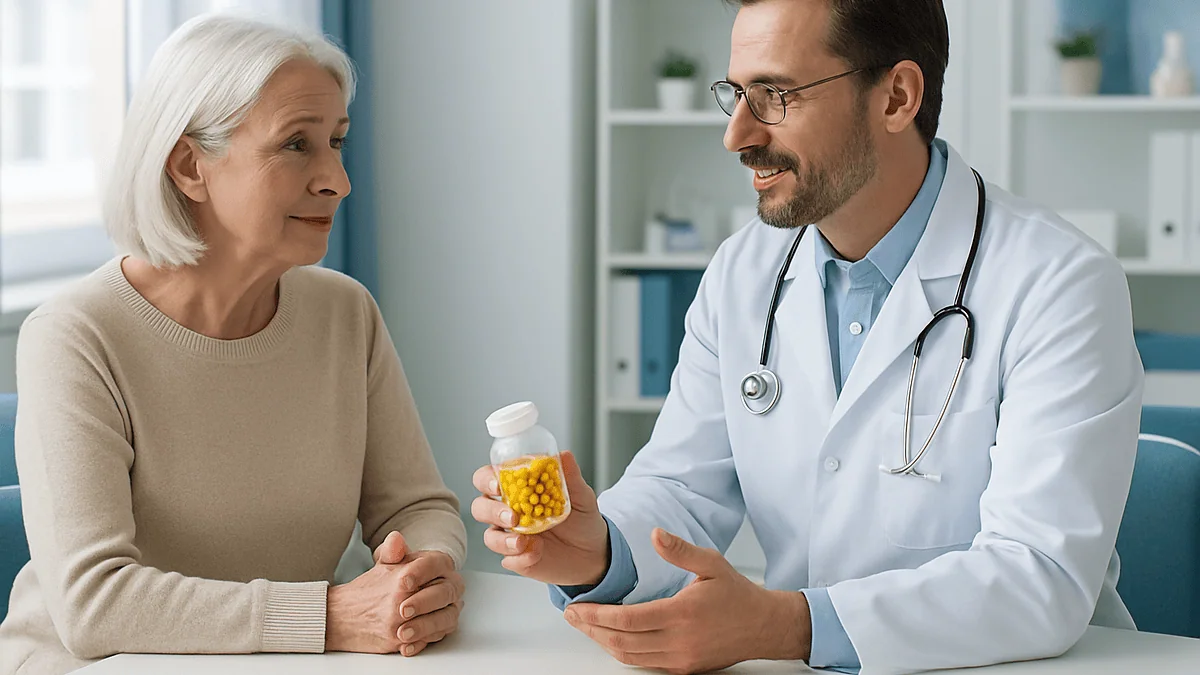
A retired schoolteacher in her seventies recently showed her physician a screenshot from a longevity podcast. Two words were circled: quercetin and fisetin. “They said these clear out zombie cells,” she explained. “Is that real?” Her doctor’s answer, roughly, was: partly real, mostly unfinished. That exchange is happening in exam rooms across the country as of this writing in mid-2025, because the phrase senolytic has jumped from mouse laboratories to social media in the space of about six years.
The spark was legitimate science. In 2018, fisetin extended the lifespan of old mice. In 2019, two small pilot studies gave quercetin, combined with a leukemia medicine, to adults with lung and kidney disease and found hints that aged cells shrank in number. Those findings were cautious and preliminary. The online retelling was not.
What follows is the version a careful clinician would give you: what these flavonoids are, what the trials actually measured, how strong each strand of evidence is, and where the story turns from biology into marketing.
Why is quercetin trending right now?
Search interest in quercetin tends to spike in pulses. There was a wave in 2020, when laboratory papers speculated about antiviral properties. The current wave is different. It is driven by the longevity conversation, and specifically by the idea that a compound you can buy in a supplement aisle might do something that, until recently, only experimental drugs did in mice.
Three ingredients feed the trend. First, a genuinely exciting field: cellular senescence, the state in which a damaged cell stops dividing but refuses to die, sitting in tissue and leaking inflammatory signals. Scientists call that leak the senescence-associated secretory phenotype, or SASP, which is simply the cocktail of proteins these cells release. Second, a small number of human studies, mostly from a single US academic research group, that used quercetin as half of a two-drug senolytic combination. Third, an audience of adults over fifty who are healthy enough to think about the next thirty years and worried enough to try to steer them.
Layered on top is fisetin, a cousin flavonoid found in strawberries. Because a 2018 mouse study ranked fisetin as the most potent senolytic among ten flavonoids tested, it now appears in the same sentence as quercetin almost everywhere online, often with the implication that the human data for one transfers to the other. It does not, and that distinction will matter throughout this piece.
The trend, in short, is a real scientific hypothesis wearing a consumer-product costume. The hypothesis deserves respect. The costume deserves scrutiny.
What is quercetin, and what does senolytic mean?
Quercetin is a flavonoid, a class of plant pigments that give onions, apples, capers and kale part of their color and their bitterness. Most Americans eat somewhere between ten and thirty milligrams’ worth a day through food, according to dietary surveys cited by the NIH, largely from onions, tea and apples. In plants it protects against ultraviolet light and microbes. In humans, it is absorbed poorly, changed by gut bacteria and the liver into a family of related molecules, and cleared within a day or two.
Fisetin is structurally similar, with one fewer hydroxyl group, and it appears in far smaller amounts in food. Strawberries are the richest common source, followed by apples and persimmons, but even a generous bowl of berries delivers only a few milligrams.
A senolytic is any agent that selectively kills senescent cells while sparing healthy ones. The word was coined in 2015 by researchers who screened existing drugs for that property. Senescent cells resist their own death by switching on survival pathways; senolytics work by briefly switching those pathways off. A related term, senomorphic, describes agents that leave the cells alive but dampen what they secrete.
Why would anyone want to kill these cells? In mice, senescent cells accumulate with age in fat, joints, lungs and blood vessels. Genetically clearing them improved kidney function, heart function and endurance in aged animals. Transplanting a small number of senescent cells into young mice was enough to cause frailty. That is the biological case, and it is persuasive in rodents.
The leap this article examines is whether a flavonoid taken by mouth does anything comparable in a human body, which is roughly three thousand times heavier than a mouse and metabolizes these compounds very differently.
What changed recently
Dated facts help separate what is established from what is anticipated. Here is the timeline that matters, tied to the references at the end of this article.
October 2018. A study in EBioMedicine screened ten flavonoids for senolytic activity in mouse and human cells. Fisetin outperformed quercetin in the dish. When fed to old mice, it reduced markers of senescence in several tissues and extended median remaining lifespan. This is the foundational animal paper for fisetin, and it remains animal data.
January 2019. The first human senolytic pilot was published: 14 adults with idiopathic pulmonary fibrosis, a progressive scarring lung disease, received dasatinib plus quercetin in short intermittent courses over three weeks. Walking distance, gait speed and chair-rise ability improved modestly. Lung function did not change. There was no placebo group.
September 2019. A second pilot, in nine adults with diabetic kidney disease, reported that a brief course of the same combination reduced the number of senescent cells in fat and skin biopsies taken eleven days later, alongside lower blood levels of several SASP proteins. Again, open-label, again very small.
2019 onward. Randomized, placebo-controlled trials of fisetin in frail older adults and in other conditions were registered on ClinicalTrials.gov. As of this writing, peer-reviewed efficacy results from those trials have not been published. That absence is the single most important fact for anyone reading fisetin marketing.
2021. The NIH National Institute on Aging published a public explainer on cellular senescence, describing senolytics as promising but explicitly “not ready for widespread use.” That language has not been revised.
Nothing in this timeline is a drug approval, a guideline change, or a completed randomized trial of a flavonoid alone in humans.
How are quercetin and fisetin supposed to clear senescent cells?
Picture a senescent cell as a building with its demolition order taped to the door but the sprinklers permanently jammed on. The cell has accumulated enough damage that it should trigger apoptosis, the orderly self-destruct program healthy tissue uses to remove faulty cells. Instead, it props itself up with a network of anti-death proteins. Researchers refer to these as senescent-cell anti-apoptotic pathways, or SCAPs.

Quercetin and fisetin appear to work by interfering with several SCAP nodes at once. In cell culture they inhibit a signaling protein called PI3K and downstream partners, nudge the balance of BCL-2 family proteins toward death, and interfere with a stress-response protein called HIF-1α. Because healthy cells do not lean on these pathways the same way, the theory holds that a brief exposure tips only the senescent cells over the edge.
That mechanism has a practical consequence that the supplement market tends to ignore. Senolytics in research are given as short pulses, sometimes described as “hit-and-run” dosing, on the logic that senescent cells take weeks to reaccumulate and that continuous exposure gains nothing while adding risk. Daily, indefinite supplementation is a fundamentally different strategy from what the pilot trials tested, and no one has shown it delivers the same effect.
There is also the bioavailability problem. Quercetin absorbed from the gut is rapidly attached to sugar or sulfate groups, and the resulting metabolites are far less active against senescent cells in laboratory tests than the parent molecule. Blood concentrations achieved by oral supplements in humans are typically well below the concentrations used in those cell experiments. Fisetin has a similar profile with even less human pharmacokinetic data behind it.
The mechanism, then, is plausible and well described. Whether it operates at the concentrations a swallowed capsule produces in a human tissue is exactly the question the ongoing trials exist to answer.
What the evidence actually says, graded by strength
Medical evidence comes in tiers, and honesty requires labeling each claim with its tier. Randomized controlled trials, in which participants are assigned by chance to treatment or placebo, sit at the top. Observational studies, which watch what people already do, sit below. Animal and cell studies generate hypotheses. Expert opinion fills the gaps.
Senolytic effects of quercetin in humans: very low certainty. Two open-label pilot studies totaling 23 participants used quercetin combined with dasatinib. Neither had a placebo arm. Both measured biomarkers or functional tests, not disease outcomes. Because dasatinib is itself a potent senolytic in the laboratory, the trials cannot attribute any effect to quercetin specifically.
Senolytic effects of fisetin in humans: no published efficacy data. Everything about fisetin’s anti-aging potential rests on rodent and cell studies. Randomized trials are registered and recruiting or completed, but results have not appeared in peer-reviewed journals as of this writing.
Quercetin and blood pressure: moderate certainty for a small effect. A 2016 meta-analysis of seven randomized trials with 587 participants found systolic pressure fell by about 3 mmHg and diastolic by about 2.6 mmHg compared with placebo. That is a real but modest change, similar in size to a few weeks of reduced sodium intake, and the trials were short.
Quercetin and respiratory infections, allergies, exercise performance: low certainty. Scattered randomized trials report inconsistent results, with the largest finding fewer sick days in a subgroup of physically fit adults but no effect overall.
Quercetin and cancer, dementia or longevity in humans: no direct evidence. Observational studies linking flavonoid-rich diets to lower disease rates cannot isolate quercetin from everything else in a vegetable.
A reader who takes one thing from this article should take this grading. The senolytic story is a hypothesis under active testing, not a result.
Quercetin vs. fisetin: a side-by-side comparison
The two flavonoids travel together in headlines, but their evidence trails diverge sharply. This table separates them.
| Feature | Quercetin | Fisetin |
|---|---|---|
| Main food sources | Onions, capers, apples, kale, tea | Strawberries, apples, persimmons |
| Typical dietary intake | Tens of milligrams daily in most diets | A few milligrams or less |
| Senolytic potency in cell studies | Moderate; strongest when paired with dasatinib | Highest of ten flavonoids screened in 2018 |
| Animal senolytic data | Extensive, mostly in combination | Extended lifespan and reduced senescence markers in old mice |
| Human senolytic trials published | Two open-label pilots, 23 people total, always combined with dasatinib | None with published efficacy results |
| Other human randomized data | Small blood pressure effect; mixed data on infections and allergies | Very limited |
| Known human safety profile | Generally well tolerated short-term; drug interactions documented | Sparse; short-term tolerability only |
| US regulatory status | Dietary supplement; not approved to treat any disease | Dietary supplement; not approved to treat any disease |
Two patterns stand out. Fisetin looks more powerful in a petri dish yet has less human evidence than quercetin; strength in the laboratory does not translate into a shorter path to the clinic. And quercetin’s only human senolytic data comes bundled with a prescription cancer drug, so the flavonoid’s solo contribution remains unknown.
Neither compound has data on the outcomes people actually care about, such as fewer fractures, less dementia, or more years of independent living. Those trials would take a decade and thousands of participants, and none of that size has begun.
What is the main use of quercetin in everyday practice?
Set the longevity story aside for a moment and ask what quercetin has been used for in the decades before anyone said senolytic. The honest answer is that it has never had a clearly established medical use, but a handful of applications recur in the research literature and in the reasons patients give for taking it.
Blood pressure has the firmest footing. Multiple short randomized trials, pooled in a 2016 meta-analysis, show a small reduction in both systolic and diastolic readings. The proposed mechanism involves relaxation of blood vessel walls through nitric oxide signaling and a mild effect on angiotensin-converting enzyme, the same enzyme targeted by a common class of prescription blood pressure medicines. The effect is far too small to replace medication and has not been tested for long enough to know whether it prevents strokes or heart attacks.
Seasonal allergies are the second common reason. In laboratory studies quercetin stabilizes mast cells, the immune cells that release histamine, which is why it is sometimes described as a natural antihistamine. Human trials are few, small and inconsistent, and none compares it head-to-head against a standard allergy medicine.
Immune support and colds round out the list. One well-designed trial of over a thousand adults found no overall reduction in upper respiratory illness, though a subgroup of older, physically fit participants reported fewer sick days. That kind of subgroup finding is a hypothesis, not a result.
People also take it for exercise recovery, inflammatory conditions and, increasingly, for aging itself. Evidence for each of these ranges from thin to absent.
The practical summary a clinician might offer: quercetin is a food component with mild, measurable effects on blood vessels, a plausible but unproven role in allergic symptoms, and a research profile that outruns its proven uses.
Why does quercetin make me feel better?
This question appears in search boxes often enough to deserve a serious answer rather than a dismissive one. People do report feeling better after starting quercetin: fewer sniffles, less joint stiffness, more energy. Several explanations can be true at once.
Expectation is powerful and real. In randomized supplement trials, the placebo group routinely reports improvement in symptoms like fatigue, congestion and aches, often in a third or more of participants. This is not imagination. Expecting relief changes how the brain processes discomfort, and that change is measurable. Anyone who starts a supplement believing it will help has recruited this effect.
Regression to the mean does quiet work. People tend to start a new remedy when symptoms are at their worst. Allergies, colds and flare-ups of stiffness wax and wane on their own, so whatever you began during the bad week gets credit for the natural recovery that follows.
Co-interventions travel in packs. Someone motivated enough to add quercetin is often also sleeping more, drinking less alcohol, walking more or eating more vegetables. The capsule is the visible change; the lifestyle is the likely driver.
There may be a small pharmacological contribution. The mast-cell stabilizing effect seen in the laboratory could plausibly soften mild allergic symptoms. The blood pressure effect, though small, is real. Neither would explain a dramatic transformation, but a modest one is not impossible.
None of this means the improvement is fake. It means the improvement is not, on current evidence, proof that senescent cells are being cleared. A useful test is to notice whether the benefit persists over months, whether it survives a break from the supplement, and whether anything objective, such as a home blood pressure reading, has actually moved.
Is quercetin hard on the liver?
Quercetin is processed by the liver, so the worry is reasonable. The reassuring part of the answer is that oral quercetin has not produced a consistent signal of liver injury in clinical trials, most of which followed participants for up to twelve weeks. Reported side effects cluster around headache, tingling in the hands and feet, and mild stomach upset. Liver enzyme elevations have been rare and not clearly attributable to the supplement.
The less reassuring part concerns what the liver does with quercetin and how that affects other medicines. Quercetin inhibits several cytochrome P450 enzymes, the liver’s main drug-processing machinery, particularly CYP3A4 and CYP2C9, and it also blocks a transporter called P-glycoprotein that pumps drugs out of cells. In practical terms, quercetin can raise blood levels of medicines that rely on those pathways. Documented or strongly suspected interactions include cyclosporine and tacrolimus (transplant anti-rejection drugs), certain statins, warfarin, some blood pressure medicines, and a range of chemotherapy agents. The concern is not that quercetin damages the liver but that it changes how much of another drug reaches your bloodstream.
Kidneys deserve a mention too. In a 1990s cancer study that gave quercetin intravenously at research concentrations, some participants developed kidney injury. That route and those concentrations bear no resemblance to oral supplements, but the finding is why people with existing kidney disease are usually counseled to be cautious.
For fisetin, human safety data are far thinner. Short-term tolerability has been reported in early-phase studies, but there is no body of trials large enough to detect uncommon harms.
The pattern that emerges is typical of bioactive plant compounds: modest direct toxicity, meaningful interaction potential. Anyone taking a prescription medicine metabolized by the liver should mention quercetin to the prescribing clinician before, not after, starting it.
Who should avoid quercetin?
Because quercetin is sold as a supplement, there is no official contraindication list of the kind that accompanies a prescription drug. The groups below are drawn from interaction data, trial exclusion criteria and mainstream clinical references, and they represent situations where the conversation with a clinician becomes non-negotiable rather than optional.
- Anyone taking transplant anti-rejection medicines. Quercetin can raise cyclosporine and tacrolimus levels through liver enzyme and transporter effects. The margin between an effective dose and a toxic one for these drugs is narrow.
- People on blood thinners or antiplatelet drugs. Quercetin has mild antiplatelet activity in laboratory studies and may interact with warfarin metabolism. Bleeding risk is a theoretical concern, not a documented epidemic, but it belongs in the discussion.
- Patients receiving chemotherapy or targeted cancer therapy. Many of these agents are handled by the same enzymes quercetin inhibits. Oncology teams generally ask patients to disclose every supplement for this reason.
- People with chronic kidney disease. The intravenous kidney injury reports and the kidney’s role in clearing quercetin metabolites justify caution.
- Pregnant or breastfeeding women. There are no adequate safety studies. Food sources are fine; concentrated supplements have not been tested.
- Children. Same reasoning; no pediatric data.
- People on thyroid medicine or certain antibiotics. Laboratory work suggests quercetin may interfere with thyroid hormone production pathways and with fluoroquinolone antibiotic activity. These are cell-culture findings, but they are enough to warrant a question.
Fisetin’s list is shorter only because it is less studied. It shares the same enzyme-inhibiting family traits and should be assumed to carry similar interaction potential until shown otherwise.
One more category: anyone hoping quercetin will substitute for a prescribed medicine. No trial supports stopping or reducing a blood pressure drug, an allergy medicine or anything else in favor of a flavonoid. That decision, if it ever arises, rests with the prescriber.
Common myths about quercetin and fisetin senolytics
Viral claims about these flavonoids tend to share a shape: a real laboratory finding, stretched until it snaps. Here are the ones clinicians hear most, and what the evidence actually supports.
Myth: “Quercetin has been proven to clear zombie cells in humans.” Two open-label pilot studies with 23 participants combined quercetin with dasatinib and measured biomarkers. There was no placebo group, no quercetin-only arm, and no disease outcome. Proven is the wrong word; suggested is closer.
Myth: “Fisetin is the strongest natural senolytic, so it must work better in people.” Fisetin did outperform quercetin in cells and old mice. In humans, it has zero published efficacy trials. Potency in a dish tells you where to look next, not what to swallow now.
Myth: “Taking it daily keeps senescent cells from building up.” Research protocols used brief intermittent courses precisely because continuous exposure was thought to add risk without benefit. Daily long-term use has never been tested for senolytic effect.
Myth: “It’s just a plant compound, so it can’t interact with medicines.” Quercetin inhibits key liver enzymes and drug transporters. Grapefruit is also just a plant, and it carries a warning on dozens of prescription labels for the same reason.
Myth: “Eating strawberries and onions gives you a senolytic dose.” Food provides these flavonoids at amounts far below research concentrations, and the metabolites your body produces from them are less active. Food is wonderful for other, well-documented reasons.
Myth: “Anti-aging clinics offer the trial protocol.” The pilot protocol included dasatinib, a prescription leukemia drug. Using it for aging is off-label, investigational and not endorsed by any guideline. It is not a product for self-use, and any decision about it belongs with a treating physician inside a research setting.
Each myth contains a true seed. The corrections above are meant to keep the seed and discard the exaggeration.
Quercetin and fisetin foods: can you eat your way there?
The short answer is that you cannot eat your way to a research-grade senolytic exposure, and you should stop worrying about that, because eating flavonoid-rich plants is one of the few things in this entire topic backed by decades of consistent evidence.
Capers are the densest common source of quercetin by weight, followed by red and yellow onions, especially the outer layers. Apples with skin, kale, red grapes, cherries, broccoli and black or green tea all contribute. Cooking matters less than people assume: quercetin is fairly heat-stable, though boiling leaches some into the water. Onions sautéed in a pan keep most of theirs.
Fisetin is scarcer. Strawberries lead the list, then apples, persimmons, grapes and cucumbers. Even so, a large serving of strawberries delivers only a few milligrams, and estimates of what an adult would need to approach the exposures used in mice run to quantities no one could eat.
Here is why the food route still wins on evidence. Large observational cohorts, including analyses drawing on Harvard’s long-running nurses’ and health professionals’ studies, associate higher total flavonoid intake with lower rates of cardiovascular death, and some with slower cognitive decline. Randomized trials of whole foods rich in flavonoids, such as cocoa and berries, show small improvements in blood vessel function. These effects almost certainly come from the combined package of fiber, potassium, vitamin C and hundreds of plant compounds acting together, which is exactly why isolating one molecule into a capsule has repeatedly disappointed in nutrition science.
A plate that includes onions, an apple and a cup of tea most days is not a senolytic protocol. It is, however, the dietary pattern that the strongest available evidence links to longer, healthier life, and it comes with no interaction warnings.
Why did the trials pair quercetin with a leukemia drug?
Readers who look up the pilot studies discover something the podcast version usually skips: quercetin was not tested alone. It was paired with dasatinib, a prescription tyrosine kinase inhibitor approved for certain leukemias. Understanding why explains a great deal about what the trials can and cannot tell us.
Senescent cells are not a single type. A senescent fat-cell precursor, a senescent lung fibroblast and a senescent endothelial cell each rely on slightly different survival pathways. In the original 2015 screen, dasatinib killed some senescent cell types and quercetin killed others. Together they covered more ground than either alone, which is why the combination, abbreviated D+Q, became the workhorse of animal senolytic research.
That history creates a problem for anyone wanting to credit quercetin. In the 14-person lung fibrosis pilot and the 9-person kidney disease pilot, every participant received both agents. Any change in senescent cell counts, walking distance or blood SASP markers could reflect dasatinib, quercetin, their interaction, or the natural fluctuation of biomarkers in a group with no placebo comparison. The investigators said as much in their papers.
Dasatinib carries meaningful risks, including low blood counts, fluid around the lungs and bleeding. It is prescribed for cancer under specialist monitoring. Its use for aging is off-label and investigational, which is why the pilot studies were conducted under institutional oversight with intensive safety follow-up.
The practical upshot is straightforward. The only human senolytic data attached to quercetin cannot be reproduced by taking quercetin, and the full protocol is not something to obtain or attempt outside a registered trial. Whether D+Q or any senolytic ever earns a clinical role is a question for randomized trials and, eventually, for prescribing physicians, not for a shopping cart.
What would it take to convince doctors about fisetin and quercetin?
Physicians are not skeptical of senolytics because the biology is weak. They are skeptical because the field is at the stage where every promising anti-aging idea has looked good, and most have failed when tested properly. Antioxidant vitamins, hormone replacement for longevity, and resveratrol all had compelling mechanisms and mouse data before randomized trials deflated them.
Several things would move the needle.
A completed, placebo-controlled trial of a flavonoid alone. The registered fisetin studies in frail older adults are designed to do this, measuring physical function, inflammatory markers and senescent cell burden against placebo. Publication of those results, positive or negative, will be the most important event in this topic since 2019.
A validated biomarker. Right now, counting senescent cells requires tissue biopsies, and blood SASP proteins fluctuate for many reasons. Until a reliable, minimally invasive measure exists, trials cannot easily confirm that the drug did what it was supposed to do.
Outcomes that matter. Grip strength and six-minute walk distance are reasonable early signals. Fewer hospitalizations, fewer falls, preserved cognition and longer independence are what would justify recommending anything to healthy adults. Trials measuring those take years and large numbers.
Safety at scale. Killing cells on purpose is not trivial. Senescent cells play useful roles in wound healing and in blocking the growth of damaged cells that could become cancerous. Whether removing them repeatedly over years carries hidden costs is unknown, and only long follow-up will reveal it.
The NIH National Institute on Aging frames the current moment accurately: senolytics are a promising area of research that is not ready for widespread use. That is not hedging. It is a precise description of where the evidence sits, and it is the standard any clinician will apply when asked.
When to see a doctor
Supplements marketed for aging occupy a gray zone in which people often skip the conversation they would have before starting a prescription. With quercetin and fisetin, that conversation is the most evidence-based step available.
Talk with your clinician before starting if you take any regular medication, particularly anti-rejection drugs, blood thinners, statins, chemotherapy, thyroid medicine or blood pressure treatment; if you have kidney or liver disease; if you are pregnant, breastfeeding or planning pregnancy; or if you are considering these flavonoids as a substitute for something already prescribed. Bring the actual product so the interaction check is accurate.
Stop and seek prompt medical attention if you develop any of the following after starting a supplement:
- Unusual bruising, nosebleeds, blood in urine or stool, or bleeding that is slow to stop
- Yellowing of the skin or eyes, dark urine, pale stools, or pain under the right ribs
- Sharp reduction in urination, swelling of the ankles or face, or sudden fatigue with nausea
- Hives, facial swelling, wheezing or difficulty breathing
- Persistent severe headache, confusion or vision changes, especially if you also take blood pressure medicine
- Signs that a prescribed drug may be reaching abnormal levels, such as tremor, palpitations or unusual drowsiness
Do not adjust or stop a prescribed medicine because a supplement seems to be helping or because a source online suggests one can replace the other. Any change to a prescription belongs with the clinician who wrote it.
If your interest is in senolytic therapy specifically, ask about registered clinical trials in your region. Enrolling in a properly monitored study is the only route through which the combination protocols described in this article are appropriately accessed, and it is the route that will ultimately answer the question the retired teacher asked her doctor.
Frequently asked questions
What is the main use of quercetin?
Quercetin has no established medical use, but its best-supported effect is a small reduction in blood pressure shown in short randomized trials. People also take it for seasonal allergies, based on laboratory evidence that it stabilizes histamine-releasing mast cells, and for immune support, where trial results are mixed. Its use as a senolytic remains investigational and has only been studied in humans alongside a prescription drug.
Who should avoid quercetin?
People taking transplant anti-rejection medicines, blood thinners, chemotherapy, certain statins or thyroid medication should not start quercetin without their prescriber’s input, because it can change how those drugs are processed. Those with kidney or liver disease, pregnant or breastfeeding women, and children should also avoid supplemental doses, since safety data are lacking. Quercetin from ordinary foods is not a concern for these groups.
Is quercetin hard on the liver?
Oral quercetin has not shown a consistent pattern of liver injury in clinical trials lasting up to twelve weeks. The liver-related concern is different: quercetin inhibits enzymes the liver uses to break down many medicines, which can raise their blood levels. Rare kidney injury was reported with intravenous quercetin at research concentrations, a route unrelated to supplements. Fisetin’s human safety record is far thinner.
Why does quercetin make me feel better?
Several explanations usually operate together: expectation effects that measurably reduce symptoms in a third or more of placebo-group participants, the natural ebb of allergies or aches that people happen to start a remedy during, lifestyle changes made at the same time, and a possible small pharmacological effect on histamine release and blood vessels. Feeling better is real; it is not evidence that senescent cells are being cleared.
Is fisetin a proven senolytic in humans?
No. Fisetin’s senolytic reputation rests on a 2018 study showing it reduced senescence markers and extended lifespan in old mice, plus cell-culture screens where it outperformed quercetin. Randomized, placebo-controlled human trials in frail older adults have been registered, but their efficacy results had not been published in peer-reviewed form as of this writing. Until then, fisetin remains a promising hypothesis, not a demonstrated therapy.
What did the quercetin senolytic trials actually find?
Two small open-label pilots in 2019 gave dasatinib plus quercetin to 14 adults with pulmonary fibrosis and 9 with diabetic kidney disease. The first reported modest gains in walking distance and chair-rise ability without lung function change. The second found fewer senescent cells in fat and skin biopsies and lower inflammatory markers in blood. Neither had a placebo group, and neither could separate quercetin’s effect from dasatinib’s.
Can I get enough quercetin and fisetin from food?
Food provides quercetin in tens of milligrams daily from onions, capers, apples, kale and tea, and fisetin in only a few milligrams from strawberries. These amounts are far below research concentrations and are metabolized into less active forms. That said, diets rich in flavonoid-containing plants are consistently associated with lower cardiovascular mortality in large cohort studies, a benefit no isolated capsule has matched.
Does quercetin interact with medications?
Yes. Quercetin inhibits the liver enzymes CYP3A4 and CYP2C9 and the P-glycoprotein transporter, which can increase blood levels of drugs such as cyclosporine, tacrolimus, some statins, warfarin and various chemotherapy agents. It also has mild antiplatelet activity. These effects resemble the well-known grapefruit interaction. Anyone on regular medication should discuss quercetin with the prescribing clinician before starting.
Is quercetin approved by the FDA for anti-aging?
No. In the United States quercetin and fisetin are regulated as dietary supplements, which means they are not evaluated or approved to treat, prevent or slow any disease, including aging. The senolytic protocols studied in trials included dasatinib, a prescription cancer drug whose use for aging is off-label and investigational. No medical guideline currently recommends senolytic supplements for healthy adults.
Should I take quercetin daily or in cycles like the studies?
Neither approach has been shown to clear senescent cells in humans, so the honest answer is that no schedule is evidence-based for that goal. Research protocols used brief intermittent courses on the theory that continuous exposure adds risk without benefit, but those protocols always included a prescription drug and were run under trial supervision. Any decision about using quercetin, and how, belongs in a conversation with your clinician.
This article is for general information only and is not a substitute for professional medical advice. Please consult a qualified doctor about your individual situation.

More from the Blog

L-Theanine: What It Does With Caffeine, for Focus and for Sleep
L-theanine is an amino acid found naturally in tea leaves that appears to promote a calm, alert state. Small randomized trials suggest that pairing…

Spermidine: The Autophagy Supplement: Evidence From Cells, Mice and (Few) Humans
Spermidine is a natural polyamine found in wheat germ, aged cheese, soybeans and mushrooms, and the body also makes it. In yeast, worms, flies…

Vitamin D3 and K2 Together: Why the Pairing Is Popular and What the Evidence Says
Vitamin D3 and K2 are sold together on the theory that D3 raises calcium absorption while K2 activates proteins that help deposit calcium in…
Reishi and Cordyceps: Functional Mushrooms Under the Evidence Lens
Reishi and cordyceps are edible fungi sold as supplements for immunity, sleep, stress and stamina. The research behind those claims is mostly small, short…
Reishi and Cordyceps: Functional Mushrooms Under the Evidence Lens
Reishi mushroom benefits are mostly supported by laboratory and small human studies, not by large randomized trials. Modest, uncertain effects have been reported on…

Lion’s Mane: What Human Trials Show for Memory and Focus, and the Side Effects Reported
Lion's mane benefits for memory and focus rest on a handful of small, short randomized trials: older adults with mild cognitive impairment scored better…