

The GLP-1 Diet: What to Eat to Support (or Naturally Boost) Your Own Gut Hormones

Key Takeaways
- Natural GLP-1 released after a meal is broken down within about two minutes, which is why food-driven effects last an hour or so while medicines act for days.
- Protein, soluble fiber and unsaturated fats are the three nutrient groups shown in small randomised trials to raise GLP-1 and prolong fullness.
- In pivotal trials, GLP-1 and dual GLP-1/GIP medicines produced average losses of roughly 15 to 20 percent of body weight over about 68 weeks, far beyond any food-based approach.
- Around a quarter to two-fifths of weight lost on these medicines can be lean mass, which is why protein at every meal plus resistance training is the core of a GLP-1 diet.
- Most US adults eat well below the 25 to 38 grams of daily fiber recommended, and the gap widens on a medicine that halves food intake, making constipation the most persistent side effect.
- No vitamin is mandated for GLP-1 users, but people also taking metformin have a known higher risk of B12 deficiency and may warrant a blood test.
A GLP-1 diet is not an official eating plan. It describes two things: foods that modestly stimulate your own glucagon-like peptide-1, mainly protein, fiber-rich plants, legumes, oats and unsaturated fats, and a practical way of eating for people taking GLP-1 receptor agonist medicines, built around protein at every meal, high fiber, small portions and fluids. Food raises GLP-1 briefly; medicines raise it continuously. Talk with your clinician before changing treatment.
A nutrition clinic I visited this year keeps a jar on the reception desk labeled “Oatzempic questions: drop one in.” It fills by lunchtime. Rolled oats blended with lime and water, psyllium capsules, bitter melon, apple cider vinegar: every month a new ingredient is crowned “nature’s GLP-1” on social media, and every month people arrive asking whether a smoothie can do what a weekly injection does.
The timing is not random. As of September 2026, GLP-1 receptor agonists sit on the World Health Organization’s Model List of Essential Medicines, pill versions are moving through regulators, and millions of people are eating differently because a medicine has changed their appetite. Searches for a “glp-1 diet” have surged alongside that, pulled in two directions at once: people on the medicine who want to know what to eat when nothing sounds appealing, and people not on it who hope food alone can nudge the same hormone.
Both groups deserve a straight answer, graded by the strength of the evidence rather than the volume of the hashtag.
What is GLP-1, and why does the GLP-1 diet keep coming up?
Glucagon-like peptide-1, or GLP-1, is a hormone made by specialized cells in the lining of your small intestine and colon. These are called L-cells, and they behave like taste buds for the gut: when nutrients from a meal reach them, they release GLP-1 into the bloodstream within minutes.
The hormone then does four useful things. It tells the pancreas to release insulin only when blood sugar is rising, it dampens glucagon (a hormone that pushes sugar out of the liver), it slows the rate at which the stomach empties, and it signals the brain that you have had enough. That last effect is the one that made it famous. GLP-1 belongs to a family of gut hormones called incretins, which simply means hormones released by the intestine that amplify insulin after eating.
Here is the detail that explains almost everything else in this article. Natural GLP-1 is fragile. An enzyme called DPP-4 breaks it down, so the hormone your gut releases survives in the blood for roughly two minutes before most of it is gone. Your body produces it in short bursts timed to meals, which is exactly what a healthy digestive system should do.
GLP-1 receptor agonist medicines, as Cleveland Clinic and Mayo Clinic describe them, are laboratory-modified versions of the hormone built to resist DPP-4. A single dose keeps acting on the same receptors for days. The difference between a meal-triggered burst and a week-long signal is the difference between a tap on the shoulder and a hand that stays there.
So the phrase “glp-1 diet” covers two separate ideas: eating to encourage your own brief bursts, and eating well while a medicine supplies the sustained signal. They overlap more than you might think, and the overlap is the practical heart of this piece.
What changed recently to make this trend?
The first GLP-1 receptor agonist reached patients in 2005 as a twice-daily injection for type 2 diabetes. For fifteen years the class stayed inside diabetes clinics. Three shifts moved it into kitchens.
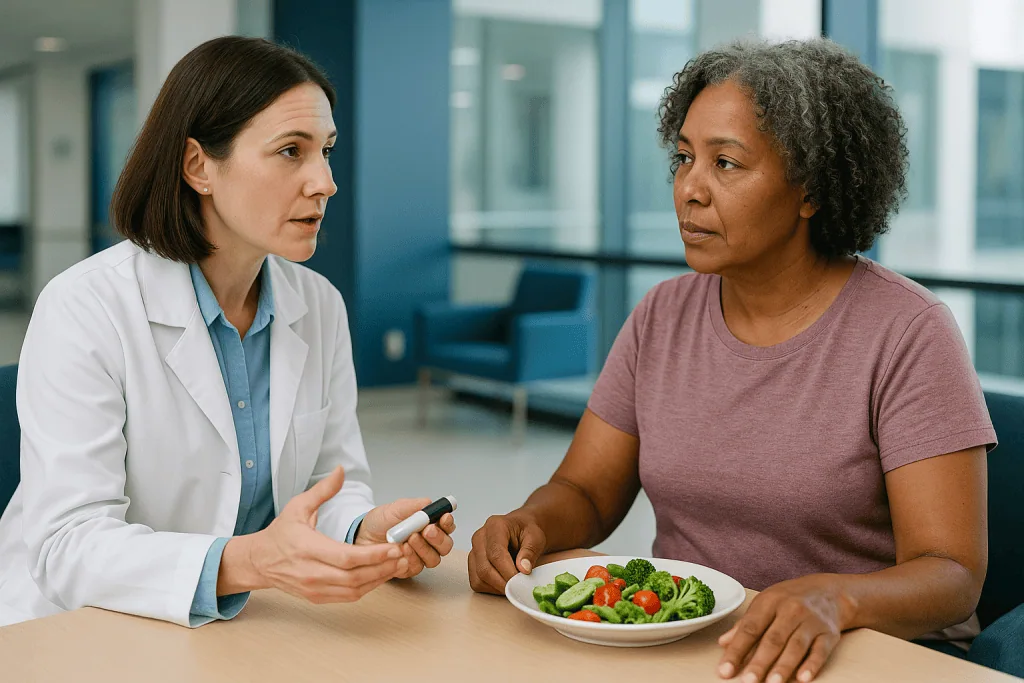
The first was regulatory. In 2021 US regulators approved a once-weekly GLP-1 receptor agonist specifically for chronic weight management in adults with obesity or overweight plus a related condition, and in 2023 a dual-acting medicine that works on GLP-1 and a second incretin receptor, GIP, followed. Mayo Clinic and Cleveland Clinic both now list these as standard tools alongside lifestyle change, not as replacements for it.
The second was cultural. In early 2024 a blended drink of oats, lime juice and water nicknamed “Oatzempic” spread across short-video platforms with claims of dramatic weight loss. No trial has tested it. The claim was built on a real observation, that oat fiber nudges GLP-1 release, stretched past what the data can hold.
The third was global. In September 2025 the World Health Organization added GLP-1 receptor agonists to its Model List of Essential Medicines for type 2 diabetes in adults with obesity and related risk, a signal that the class is now considered core therapy rather than a luxury.
Through all of this, one piece of guidance has not changed. Harvard Health, Mayo Clinic and Cleveland Clinic each describe the medicines as working best with, and depending on, a nutrition plan built around adequate protein, fiber and fluids. Appetite falls fast on these medicines; the body’s need for nutrients does not. That gap is why the “glp-1 diet” is trending, and why it matters more than the smoothie recipes suggest.
Is the GLP-1 diet a real diet or a marketing phrase?
It is a phrase, not a protocol. No professional body has published a diet called the GLP-1 diet. What exists instead is a loose consensus from dietitians, endocrinology groups and hospital nutrition teams on how to eat when a medicine has shrunk your appetite, plus a smaller body of research on which foods trigger the hormone naturally. Books and apps have bundled those two threads together and given them a name.
Strip away the branding and the core is unremarkable, which is a compliment. The eating pattern looks very much like the Mediterranean-style guidance Mayo Clinic has recommended for years and the balanced plate in the NHS Eatwell Guide: lean and plant proteins, legumes, vegetables, whole grains, nuts, olive oil, fish, with sugary drinks and ultra-processed snacks pushed to the margins.
What makes it specific to GLP-1 are the priorities. On a medicine that quiets hunger, you cannot rely on appetite to tell you when you have eaten enough protein, because appetite is the very thing being suppressed. So protein moves to the front of every meal. Fiber and fluids rise in importance because constipation is one of the most common complaints. Portions shrink because the stomach empties slowly and overfilling it triggers nausea. Alcohol drops because it irritates a stomach that is already sluggish and adds calories that displace food you need.
If you are not taking a medicine, the same pattern still applies, with a different reason attached. Protein, fiber and unsaturated fats are the nutrients your L-cells respond to most strongly. The diet does not change; the explanation does.
Which GLP-1 foods actually trigger your gut hormones?
Your L-cells respond to what reaches them, and three categories of nutrient reliably make them release GLP-1 in human studies.
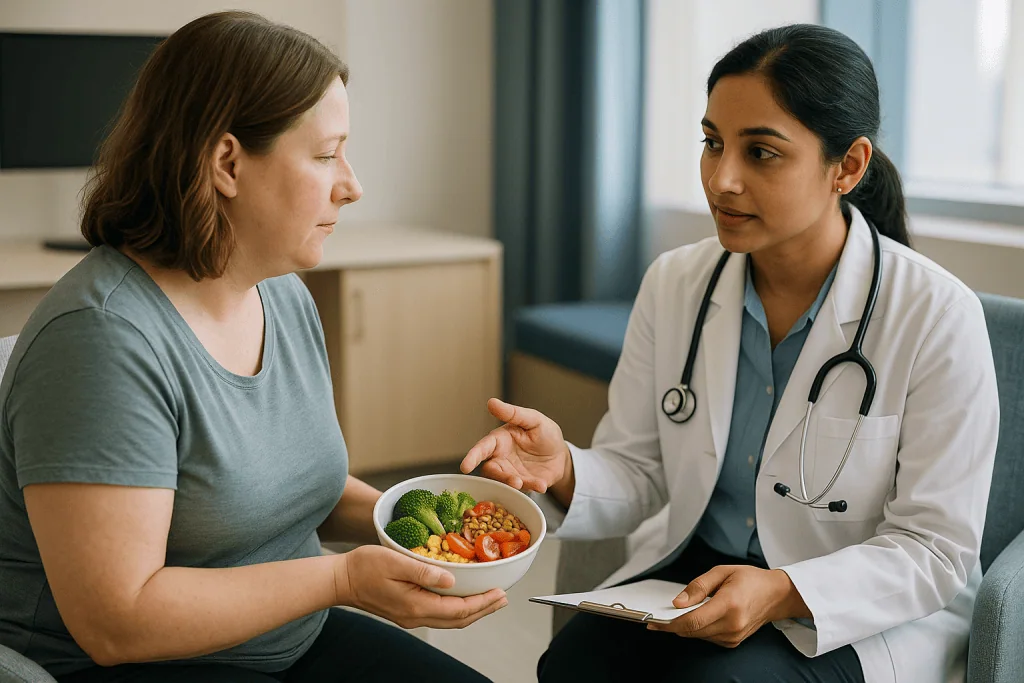
Protein comes first. Meals containing eggs, fish, poultry, dairy, soy or legumes produce a larger and longer GLP-1 response than carbohydrate-heavy meals of equal calories in small crossover trials. Whey protein, the liquid fraction of milk, has been studied most. The mechanism is partly direct, through amino acids touching L-cell receptors, and partly indirect, because protein slows digestion so nutrients travel further down the gut where L-cells are densest.
Fiber comes second, and here the route is longer. Soluble fibers such as the beta-glucan in oats and barley, pectin in apples and citrus, and the resistant starch in cooled potatoes, lentils and green bananas are not digested in the small intestine. Bacteria in the colon ferment them into short-chain fatty acids, mainly butyrate, propionate and acetate, which stimulate L-cells in the colon. This is why MedlinePlus and Mayo Clinic frame fiber as a gut-health nutrient rather than a filler.
Unsaturated fats come third. Olive oil, avocado, nuts and oily fish raise GLP-1 more than saturated fats in several small feeding studies, likely because fat triggers a chain of gut signals that delay emptying and increase L-cell contact.
Two curiosities round out the list. Bitter compounds in foods such as leafy greens and coffee activate taste receptors in the gut that may trigger GLP-1, though the human data are thin. And the order you eat in matters: in small randomised crossover trials, eating vegetables and protein before bread or rice produced a higher GLP-1 response and a lower blood sugar peak than eating the same foods in reverse.
Can you naturally boost GLP-1 enough to matter?
Yes, measurably. No, not to the degree a medicine does. Both halves of that answer are important.
When researchers feed volunteers a high-protein, high-fiber meal and sample their blood, GLP-1 rises perhaps two- to three-fold above fasting levels and returns toward baseline within an hour or two. That is a genuine physiological effect, and it is one reason such meals leave people fuller for longer. The problem is scale and duration. A GLP-1 receptor agonist produces receptor activation far beyond what any meal reaches, and sustains it around the clock, including between meals and overnight, when natural GLP-1 is at its lowest.
This is why the “natural GLP-1” framing is both true and misleading. Food-driven GLP-1 is one of several reasons fiber- and protein-rich eating patterns help with weight management. In meta-analyses of randomised trials, adding fiber or increasing protein produces modest average weight loss, typically a few pounds over months, with wide individual variation. Medicines in their pivotal trials produced average losses of roughly 15 percent of body weight over 68 weeks for a weekly GLP-1 agonist and around 20 percent for the dual GLP-1/GIP agonist, alongside diet and activity support. Those are population averages from trials, not promises for any individual, but the gap in magnitude is not a rounding error.
Where the natural approach wins is in what it does besides GLP-1. Fiber feeds a diverse microbiome, lowers cholesterol and improves bowel regularity. Protein protects muscle. Unsaturated fats improve lipid profiles. None of that comes from a hormone level alone. Think of “natural glp-1” eating as a good diet with a fashionable explanation attached, not as a medicine substitute.
What the evidence actually says, graded by strength
Not all claims in this space rest on the same footing. Here is how the main ones stack up when you ask what kind of study supports them.
Strong evidence (large randomised controlled trials). GLP-1 receptor agonists reduce body weight and improve blood sugar in adults with type 2 diabetes or obesity; the trials behind the approvals enrolled thousands of participants and ran for over a year. Cleveland Clinic and Mayo Clinic summarise these outcomes. The same trials show that gastrointestinal side effects are common and usually ease over weeks. A randomised controlled trial, for clarity, is one where participants are assigned by chance to treatment or comparison, which is the fairest way to test whether something works.
Moderate evidence (smaller randomised trials and consistent physiology). Protein-rich and fiber-rich meals raise GLP-1 and increase satiety compared with refined-carbohydrate meals. Higher protein intake during weight loss helps preserve lean mass. Food order (vegetables and protein before carbohydrate) improves post-meal glucose. These studies are real but small, often fewer than 30 people, and measure hormone levels or hunger scores rather than long-term weight.
Weak evidence (observational data and mechanism). Specific foods such as oats, bitter greens, fermented foods or vinegar producing clinically meaningful appetite change on their own. Observational data means researchers watched what people ate and what happened, without assigning diets, so cause and effect cannot be separated.
Expert opinion only. Exact protein targets per meal for people on GLP-1 medicines, the ideal fiber source, and most “GLP-1 meal plans” sold online. Dietitians agree on the direction; the precise numbers are reasoned judgement, not trial results.
Knowing which tier a claim sits in tells you how much weight to put on it. The medicines earned their tier; the smoothies have not.
Food, lifestyle or medicine: a side-by-side summary
People searching for a glp-1 diet are often weighing three routes without seeing them laid out together. The table below is a summary of what mainstream evidence supports for each, not a recommendation for any individual.
| Approach | How it affects GLP-1 | Typical effect on weight | Evidence strength | Main trade-offs |
|---|---|---|---|---|
| Protein- and fiber-rich eating pattern | Brief meal-triggered rises, two to three times fasting level, lasting about an hour | Modest; a few pounds over months in trials, highly variable | Moderate for hormone response; moderate for weight | Requires sustained habit change; benefits extend to heart, bowel and muscle health |
| Regular physical activity and sleep | Indirect; improves insulin sensitivity and may blunt appetite hormones | Modest alone; important for keeping weight off | Strong for health outcomes; moderate for weight | Time and consistency; protects muscle during any weight loss |
| GLP-1 receptor agonist medicine (prescription) | Continuous receptor activation for days per dose | Roughly 15–20 percent average loss over about 68 weeks in pivotal trials | Strong (large randomised trials) | Common gastrointestinal effects; lean-mass loss without adequate protein; weight regain is common if stopped; needs medical supervision |
| “Natural GLP-1” supplements (berberine, bitter melon, psyllium capsules) | Small or unproven changes in humans | Small or unproven | Weak; mostly small studies or animal data | Sold as dietary supplements, not approved medicines; quality varies; not a substitute for treatment |
Two things stand out. The medicine row is the only one with large-trial support for substantial weight loss, and the food row is the only one that improves every other row. People taking a medicine still need the first two approaches to protect their muscle and gut. People not taking one gain real, if smaller, benefits from the same pattern. The supplement row is where most of the online noise lives and the least evidence sits.
What to eat on GLP-1 medicines when you are not hungry
The first weeks on a GLP-1 receptor agonist can feel strange. People describe forgetting lunch, leaving half a plate, or feeling full after a few bites. That is the medicine working, but it creates a quiet risk: when hunger disappears, so does the nudge to eat enough protein, fiber and fluid. Undereating leads to fatigue, hair shedding, constipation and muscle loss, and none of those feel like success for long.
A practical rule from hospital dietitians is to eat by the clock, not by appetite, at least until your intake settles. Three small meals plus one or two snacks, each anchored with protein, works for many people. Eating on a schedule also helps nausea, because an empty stomach and an overfilled one both make it worse.
Choose foods that deliver a lot in a small volume. Greek yogurt, cottage cheese, eggs, canned fish, tofu, edamame and lentil soup pack protein into a few spoonfuls. Smoothies made with milk or soy milk, berries and a spoon of nut butter are useful when solid food is unappealing, and they are easy to sip slowly. Chewing thoroughly and stopping at the first signal of fullness matters more now because the stomach empties slowly; a second helping can turn into hours of discomfort.
Some foods tend to sit badly during the adjustment period: fried or very fatty meals, large portions of anything, carbonated drinks, alcohol and strong-smelling foods. Bland, cool or room-temperature options are often easier. Crackers, toast, broth and ginger tea help many people through queasy days, but they should bridge to a protein-containing meal, not replace it.
If you cannot keep fluids down or your intake stays very low for more than a day or two, that moves out of diet territory and into the “when to see a doctor” section below.
Why protein is the non-negotiable on a GLP-1 diet
If one nutrient deserves top billing, it is protein. Rapid weight loss of any kind takes some muscle along with fat, and GLP-1 medicines produce rapid weight loss. In body-composition sub-studies of the pivotal trials, roughly a quarter to two-fifths of the total weight lost was lean mass, a proportion broadly similar to older diet-only studies but reached at a faster pace. Lean mass includes muscle, and muscle is what keeps you strong, stable on your feet and metabolically active.
Protein counters that in two ways. It supplies the amino acids muscles need to repair, and it is the most filling macronutrient per calorie, which helps when you are trying to make a small meal count. Expert nutrition groups generally suggest that adults losing weight eat more protein than the standard minimum, often spread evenly across meals rather than concentrated at dinner, because muscle protein building responds better to steady supply. The exact grams are expert opinion rather than trial-proven targets, so a registered dietitian who knows your weight, kidney function and other conditions is the right person to set them.
Variety protects you from boredom and from gaps. Rotate between fish, poultry, eggs, dairy, tofu and tempeh, beans and lentils, and lean red meat if you eat it. Plant proteins bring fiber, which solves a second problem at once. If appetite is very low, a dietitian may suggest a protein powder stirred into yogurt or oatmeal; that is a food-based bridge, not a supplement claim.
Pair protein with resistance exercise. Two or three sessions a week of bodyweight moves, bands or weights signal muscles to hold onto what they have. Harvard Health and Mayo Clinic both flag strength training as the companion habit that makes medicine-assisted weight loss healthier, not merely smaller.
Fiber, fluids and the gut side effects nobody enjoys discussing
Constipation, nausea, bloating and the occasional opposite problem are the most common reasons people struggle with GLP-1 medicines, and most are listed plainly by Harvard Health and Cleveland Clinic. Food cannot remove them, but it changes how hard they hit.
Constipation first, because it is the one that persists. Slowed stomach emptying and reduced food volume mean less bulk moving through the colon. Fiber supplies that bulk. MedlinePlus notes that most adults in the US eat well under the recommended 25 to 38 grams a day; on a medicine that halves your food intake, the shortfall grows. Beans, lentils, oats, berries, pears, chia seeds, broccoli and whole grains are the workhorses. Introduce them gradually, since a sudden jump in fiber on a slow gut can cause cramping and gas.
Fiber only works with water. Soluble fiber forms a gel; without enough fluid that gel becomes a plug. Aim to sip through the day rather than drink large volumes at once, which can trigger nausea. Water, herbal tea, milk and broth all count. Thirst is a less reliable signal on these medicines, so some people set reminders or keep a marked bottle in view.
Nausea responds to pacing. Smaller meals, slower eating and stopping before full are the three habits that matter most. Ginger, in tea or crystallised form, has modest trial support for nausea from other causes and is widely used here on the strength of that. Peppermint tea helps some people with bloating.
Diarrhea, when it occurs, tends to be early and short-lived. Keep fluids up and lean briefly on bland, lower-fiber foods before building back. If any of these symptoms are severe or persistent, your prescribing clinician needs to know; adjusting the plan is their decision, never a self-made one.
What vitamins are recommended for GLP-1 users?
There is no vitamin that everyone on a GLP-1 medicine must take, and no major guideline mandates a specific supplement for this class. What hospital dietitians watch for instead are predictable gaps that open when total food intake drops sharply.
Vitamin B12 heads the list, mainly for people who also take metformin, a common diabetes medicine that is known to lower B12 absorption over time. The NIH Office of Dietary Supplements describes B12 deficiency as a cause of fatigue, numbness and memory problems, and notes that older adults and people on long-term metformin are among those at higher risk. If you fall into those groups, asking your clinician about a blood test is reasonable; whether to supplement is their call.
Vitamin D and calcium matter because bone density can fall during rapid weight loss, and because dairy intake often drops when appetite does. Iron is worth attention in people who menstruate or who have cut back on red meat and legumes. Fiber-rich plant foods and fortified cereals cover some of these, but not reliably when portions are small.
A standard once-daily multivitamin is a common pragmatic suggestion from dietitians for people eating very little during the adjustment phase. That is expert opinion, not trial evidence, and it is cheap insurance rather than treatment. High-dose single nutrients are a different matter: more is not better, some interact with medicines, and NIH ODS fact sheets list upper limits for a reason.
The honest answer to the search question is this: get the nutrients from food where you can, ask for blood work if you have a risk factor, and let the person who prescribed your medicine decide what, if anything, to add. Supplements fill gaps; they do not build the diet.
Pros and cons of GLP-1 medication for weight loss, without the hype
People weighing these medicines deserve the full ledger, and the balanced summaries from Mayo Clinic, Cleveland Clinic and Harvard Health agree on its contents.
The benefits are substantial and well documented. In large randomised trials, GLP-1 receptor agonists produced average weight loss far beyond lifestyle programs alone and improved blood sugar, blood pressure and cholesterol markers. Some agents have shown reductions in major cardiovascular events in people with existing heart disease. Many people describe quieter “food noise,” the constant background pull toward eating, which makes the dietary changes above feel possible rather than punishing.
The downsides are equally real. Gastrointestinal side effects affect a large share of users, usually easing over weeks but sometimes forcing a stop. Rare but serious harms include pancreatitis, gallbladder disease, intestinal obstruction and, in people also using insulin or sulfonylureas, low blood sugar. The medicines carry a warning about thyroid C-cell tumors seen in rodent studies; the human relevance is uncertain, but people with a personal or family history of certain thyroid cancers are advised against them. Lean-mass loss is a concern without adequate protein and strength training. Weight regain after stopping is common, which means most people are looking at long-term use.
Beyond physiology, there is the question of what the medicine does to your relationship with food. For some it reduces shame around eating; for others the loss of appetite feels like the loss of a pleasure. Both reactions are legitimate.
None of this is an argument for or against. It is the information a good conversation with your clinician should contain, and it is their job, with you, to decide whether the balance fits your health, your history and your goals.
What is a healthy diet for people with type 1 diabetes?
This question travels alongside GLP-1 searches for a reason: people with type 1 diabetes hear about these medicines constantly and wonder where they fit. In the US, GLP-1 receptor agonists are not approved for type 1 diabetes. Some clinicians have studied them in that setting, and small trials suggest modest effects on weight and insulin needs with an increased risk of low blood sugar and diabetic ketoacidosis; that is an off-label question for the treating endocrinologist, not something to pursue alone.
The diet itself rests on a different foundation. In type 1, the pancreas makes little or no insulin, so the central skill is matching insulin to the carbohydrate eaten. MedlinePlus describes carbohydrate counting as the core method: knowing how many grams are in a meal so the insulin dose can be matched, a calculation set by the diabetes team. Consistency helps, but so does flexibility; modern insulin regimens let people eat a varied diet rather than a rigid one.
Within that framework, the healthiest pattern looks familiar. Non-starchy vegetables, whole grains, legumes, fruit, lean protein and unsaturated fats, with sugary drinks limited because they raise glucose faster than insulin can follow. High-fiber carbohydrates produce gentler rises than refined ones. Protein and fat slow absorption, which can shift the timing of a glucose peak; people using insulin pumps often adjust for this with their care team.
Two type 1-specific points matter. Fast-acting carbohydrate must always be at hand to treat low blood sugar, which means some sugar is medicine rather than indulgence. And any change in eating pattern, including the higher-protein, lower-portion approach described for GLP-1 medicines, changes insulin needs and should be planned with the diabetes team before it starts.
Common myths about the GLP-1 diet and natural GLP-1 foods
“Oatzempic works like the medicine.” Oats contain beta-glucan, a soluble fiber that modestly raises GLP-1 and slows digestion. A glass of blended oats, lime and water is a reasonable breakfast. No trial has tested the drink, and the hormone rise from any oat meal lasts about an hour, not a week. People who lose weight on it are mostly replacing a larger breakfast with a smaller one.
“Berberine is nature’s Ozempic.” Berberine is a plant compound sold as a dietary supplement, which means it is not reviewed or approved as a medicine. Small trials show minor effects on blood sugar; effects on weight are small and inconsistent. It interacts with several prescription medicines. It is not an alternative to treatment and should not be taken to replace or augment one without a clinician’s knowledge.
“On the medicine you can eat whatever you want.” You may be able to eat less of whatever you want, but calories still count, muscle still needs protein and the bowel still needs fiber. The medicine changes appetite, not nutrition.
“You must cut carbohydrates completely.” No trial supports this. Whole-food carbohydrates such as oats, beans, fruit and whole grains are among the strongest natural GLP-1 triggers and the best constipation remedies.
“If you eat GLP-1 foods you can stop the medicine.” Weight regain after stopping is common in trial follow-up, and no dietary pattern has been shown to prevent it on its own. Stopping or changing a prescribed medicine is a decision for the clinician who prescribed it.
“Research peptides online are the same thing.” Products sold as research chemicals or from unlicensed sellers are unapproved, untested for purity and not legal for human use. They are not an option.
When to see a doctor about symptoms on a GLP-1 medicine or diet
Most people on GLP-1 receptor agonists manage early side effects with the pacing and food choices above, and most people adjusting their diet without a medicine need no medical input at all. Some situations are different, and the sources behind this article, including Harvard Health and Cleveland Clinic, flag them clearly. Contact your prescribing clinician promptly, or seek urgent care, if you notice any of the following.
- Severe, persistent abdominal pain, especially pain that spreads to your back, with or without vomiting; this can signal pancreatitis.
- Repeated vomiting, inability to keep fluids down for more than a day, or signs of dehydration such as dizziness, dark urine or very little urine.
- No bowel movement for several days together with abdominal swelling, cramping and vomiting, which can indicate a blockage.
- Pain in the upper right abdomen, fever, yellowing of the skin or eyes, or pale stools, which can point to gallbladder problems.
- Shakiness, sweating, confusion or fainting, particularly if you also take insulin or a sulfonylurea; these are signs of low blood sugar.
- A lump or swelling in the neck, persistent hoarseness or trouble swallowing.
- Sudden changes in vision, which people with diabetes should always report.
- Rash, swelling of the face or throat, or difficulty breathing after a dose.
- New or worsening low mood or thoughts of self-harm.
Less urgent but still worth a scheduled conversation: ongoing fatigue, hair shedding, muscle weakness, feeling unable to eat enough, or any wish to pause or change the medicine. Bring a few days of food notes; it makes the appointment far more useful.
Every decision about dose, timing, continuing or stopping belongs to the clinician who prescribed the medicine. Diet is the part you own; the prescription is theirs, and the two work best when both people are talking.
Frequently asked questions
What are the best GLP-1 foods to eat every day?
Lean and plant proteins, legumes, oats, vegetables, fruit, nuts and olive oil are the foods most consistently shown to stimulate GLP-1 release in small human trials. Eggs, Greek yogurt, fish, tofu, lentils and beans combine protein with fiber, which hits two triggers at once. Eating vegetables and protein before bread or rice also raised GLP-1 in small crossover studies. These foods support the hormone; they do not replicate a medicine.
Can you boost GLP-1 naturally without medication?
You can raise your own GLP-1 modestly and briefly. A protein- and fiber-rich meal increases blood levels roughly two- to three-fold for about an hour, and that contributes to fullness. The effect is far smaller and shorter than a GLP-1 receptor agonist medicine, which keeps receptors active for days. Natural GLP-1 eating is a healthy pattern with wider benefits for heart, bowel and muscle, not an alternative to treatment.
What should I eat on GLP-1 medication when I am not hungry?
Eat small amounts on a schedule rather than waiting for appetite, and make each one protein-dense: Greek yogurt, cottage cheese, eggs, canned fish, tofu or lentil soup. Smoothies with milk, berries and nut butter help when solids feel unappealing. Sip fluids through the day and avoid fried, fatty or very large meals, which worsen nausea. If you cannot keep fluids down, contact your prescribing clinician.
Is there an official GLP-1 diet plan?
No professional body has published a diet by that name. The phrase describes dietitian consensus on eating while taking a GLP-1 medicine, built around protein at every meal, high fiber, small portions and fluids, plus research on foods that trigger the hormone naturally. The resulting pattern closely resembles Mediterranean-style eating and the NHS Eatwell Guide, with protein and fiber given higher priority than usual.
What vitamins do GLP-1 users need?
No specific vitamin is required by guidelines for everyone on a GLP-1 medicine. Dietitians watch for gaps caused by low food intake: vitamin B12 in people also taking metformin, vitamin D and calcium for bone health, and iron in those who menstruate. A standard multivitamin during the low-appetite phase is a common pragmatic suggestion. Any blood test or supplement decision belongs with your clinician.
What are the pros and cons of GLP-1 medication for weight loss?
The pros, from large randomised trials, include substantial average weight loss, better blood sugar, blood pressure and cholesterol, and in some agents fewer cardiovascular events. The cons include common gastrointestinal side effects, rare serious harms such as pancreatitis or gallbladder disease, possible muscle loss without enough protein, and frequent weight regain after stopping. Whether the balance fits you is a decision for your clinician.
Does Oatzempic really work like the medicine?
No. Blended oats, lime and water is a reasonable fiber-rich breakfast, and oat beta-glucan does modestly raise GLP-1 for about an hour. No trial has tested the drink, and the hormone effect is nowhere near the sustained action of a GLP-1 receptor agonist. People who lose weight with it are generally eating a smaller breakfast than before, which is the real mechanism.
Is berberine a natural GLP-1 alternative?
Berberine is a plant compound sold as a dietary supplement, not an approved medicine, so it has not been reviewed for safety or effectiveness in the way prescriptions are. Small trials show minor effects on blood sugar and small, inconsistent effects on weight. It interacts with several medicines. It should not be used to replace or add to a prescribed treatment without your clinician’s knowledge.
Should people on GLP-1 medicines avoid carbohydrates?
No trial supports cutting carbohydrates completely. Whole-food carbohydrates such as oats, beans, lentils, fruit and whole grains are among the strongest natural GLP-1 triggers and the best defence against constipation, the most persistent side effect. What helps is choosing high-fiber versions, keeping portions small, and eating protein first. People with diabetes who use insulin should plan carbohydrate changes with their diabetes team.
What is a healthy diet for type 1 diabetes, and do GLP-1 medicines fit?
A healthy type 1 diet centres on matching insulin to carbohydrate, with non-starchy vegetables, whole grains, legumes, fruit, lean protein and unsaturated fats, and fast-acting sugar kept on hand for low blood sugar. GLP-1 receptor agonists are not approved for type 1 diabetes in the US; small studies show modest benefits with added hypoglycemia and ketoacidosis risk. Any such use is an off-label decision for the treating endocrinologist.
References
This article is for general information only and is not a substitute for professional medical advice. Please consult a qualified doctor about your individual situation.

More from the Blog

Survodutide: The Glucagon-GLP-1 Dual Agonist Being Studied for Obesity and Liver Disease
Survodutide is an investigational injectable peptide that activates both the glucagon receptor and the GLP-1 receptor. In phase 2 trials it produced average weight…

Ozempic Feet: What Rapid Weight Loss Does to the Fat Pads of the Feet
Ozempic feet is a social-media term, not a medical diagnosis. It describes feet that look bonier or feel sore under the heel or ball…

Is Ozempic Safe? What Years of Semaglutide Data Say About Risks and Benefits
Ozempic (semaglutide) is considered safe for most adults with type 2 diabetes when prescribed and monitored by a clinician. Large randomized trials covering tens…

Food Noise: Why GLP-1 Medicines Quiet It, and What Helps When You Are Not on Them
Food noise is the persistent, intrusive stream of thoughts about food that continues when the body does not need fuel. GLP-1 medicines such as…

Weight Loss Injections Explained: The Approved Medicines, How They Differ and Who Qualifies
Weight loss injections are prescription medicines that mimic gut hormones to reduce appetite and slow digestion. Three are FDA-approved for chronic weight management: semaglutide…

Zepbound Side Effects: What the Trials Recorded, What Is Common and What Needs a Call to Your Doctor
Zepbound (tirzepatide) most often causes digestive side effects: nausea, diarrhea, constipation, vomiting, indigestion and reduced appetite, which in trials were usually mild to moderate…