

What Labiaplasty Results Usually Look Like Once Swelling Settles: Realistic Expectations

Key Takeaways
- Settled labiaplasty results usually show inner labia level with or inside the outer labia, not absent, and slight asymmetry between sides is normal rather than a complication.
- Swelling peaks in the first three days and most people need one to two weeks off work, while the NHS advises waiting at least six weeks before sex or tampon use.
- A trim technique leaves a scar along the new edge and often a paler border; a wedge technique preserves the natural edge but carries a small risk of the seam separating.
- Scars on the labia typically stay pink or dark for months and, like scars elsewhere, can keep fading and softening for up to two years according to NHS guidance.
- A BJOG measurement study of 50 women found labia minora width ranging from 7 to 50 millimeters, showing that wide variation is normal before any surgery is considered.
- Evidence on sexual sensation after labiaplasty comes mostly from small, short-term, self-reported studies, and reduced sensitivity remains a recognized risk listed by the NHS.
Once swelling settles, labiaplasty results usually show inner labia (labia minora) that sit level with or tucked inside the outer labia, with edges that are thinner and often slightly lighter in color. Mild asymmetry is common and considered normal. Most swelling eases over several weeks, but the final shape, texture and scar appearance typically continue to change for months, so early appearance is not the finished result.
Ten days after surgery, a woman angles a hand mirror under the bathroom light and feels her stomach drop. Everything is puffy, purple in places, and nothing looks like the neat outcome she pictured. She wonders whether something has gone wrong, or whether this is simply what healing looks like. Almost always, it is the second.
That mirror moment is where most anxiety about labiaplasty results begins, because the tissue of the vulva swells dramatically and heals on its own schedule. The first two weeks tell you very little about the final appearance. Months three to twelve tell you far more.
This explainer walks through what surgeons actually do, what the labia usually look like at each stage, what the evidence says about sensation and scarring, and which signs mean you should stop guessing and call your care team. It is written for the person holding that mirror, and for anyone still deciding whether surgery is the right question to be asking.
What labiaplasty results usually look like once swelling settles
Labiaplasty is surgery that reduces or reshapes the labia minora, the inner folds of skin on either side of the vaginal opening. When the swelling has gone, the most consistent visible change is proportion: the inner labia no longer extend past the labia majora, the outer lips, or extend only slightly. Many people describe the settled appearance as “tucked in” rather than dramatically different.
Edge texture changes too. Where a strip of the outer rim was removed, the new border tends to be thinner and smoother, and often paler, because the darker, more pigmented edge tissue has been taken away. Where a wedge of tissue was removed from the middle of the labium, the natural edge is preserved, so color and texture usually look much as they did before, just shorter.
Symmetry improves but rarely becomes perfect. Human labia are not mirror images before surgery, and the NHS notes that some asymmetry may remain afterward. Small differences of a few millimeters between sides are typical rather than a complication.
Two things surprise people. First, the tissue can stay slightly firm or thick along the healing line for months, so the labia may look fuller than the eventual result even after obvious swelling has gone. Second, the clitoral hood, the fold of skin over the clitoris, may look more prominent once the labia beneath it are smaller, unless it was also addressed. Neither is a sign of poor surgery; both are part of the ordinary settling process that your surgeon will assess at follow-up.
How labiaplasty actually works: trim, wedge and what is removed
The operation is usually performed under local anesthetic with sedation or under general anesthetic, and the NHS describes it as taking roughly one to two hours. The surgeon marks the tissue to be removed while the labia are gently stretched, cuts along the marks, controls small bleeding vessels, and closes the wound with dissolvable stitches.
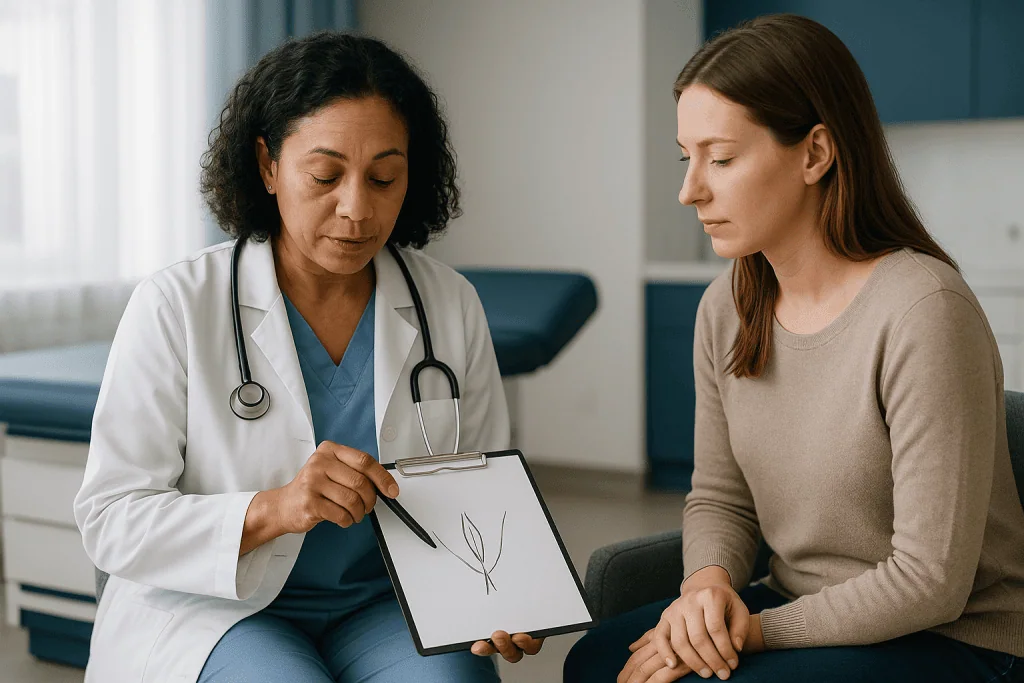
Two families of technique account for most procedures. In the edge, or trim, technique the surgeon removes the free outer margin of each labium along its length, creating a new border that heals into a fine line. In the wedge technique a V-shaped section is removed from the widest part of the labium and the two remaining edges are stitched together, shortening the fold while keeping its original rim. Variations exist, including combinations, and some surgeons also reduce excess skin around the clitoral hood at the same time.
Each approach trades one thing for another. Trimming reliably removes a darker or irregular edge and can take more tissue when the labia are long, at the cost of a scar along the entire border. Wedge techniques preserve natural color and contour but can be harder to apply when the tissue is very thin or very long, and the single seam carries a small risk of separating during healing.
Tissue removed is real and permanent. The labia minora contain nerve endings and small blood vessels, and they contribute to lubrication and comfort during sex. Thoughtful surgery removes enough to relieve the concern that brought someone to the consultation, and no more. The surgeon’s judgment about how much to leave is one of the most important determinants of how the final result looks and feels.
Who labiaplasty is usually for, and who is usually asked to wait
People seek this surgery for two broad reasons. Some have physical symptoms: labia that chafe against underwear or a bicycle seat, twist or pull during sex, catch on clothing, or make hygiene awkward. Others are troubled by appearance alone, often after comparing themselves to images that show a narrow range of anatomy. Both reasons are recognized in clinical guidance, and a careful consultation explores which applies.
Several groups are usually asked to wait or reconsider. The NHS advises that labiaplasty should not be carried out on anyone under 18, because the labia continue to develop through and beyond puberty and what looks prominent at 15 may look ordinary at 20. People planning pregnancy in the near future are often advised to defer, since delivery can alter the tissue. Active infection, uncontrolled diabetes, bleeding disorders and smoking each raise the chance of poor wound healing and are typically addressed first.
A different kind of pause applies when distress about appearance is out of proportion to what the clinician sees, or when someone hopes surgery will repair a relationship or a broader sense of self-worth. Body dysmorphic disorder, a condition in which a person becomes preoccupied with a perceived flaw that others barely notice, can present this way, and surgery does not relieve it. Screening questions or a referral to a psychologist are signs of a responsible team, not an obstacle.
The final decision about whether surgery is appropriate, and which technique to use, sits with the treating surgeon after examination and discussion. A good consultation is one where declining surgery remains an acceptable outcome for both people in the room.
What normal labia look like before you judge the after
Expectations about results rest on assumptions about what labia should look like, and those assumptions are often wrong. A frequently cited study of 50 women, published in the journal BJOG, measured genital dimensions and found labia minora width ranging from 7 to 50 millimeters and length from 20 to 100 millimeters. The authors concluded that variation in appearance was wide and that no single shape could be called abnormal.

Color varies as much as size. Labia can be pink, brown, purplish or darker than surrounding skin, and the edges are frequently darker than the rest. Asymmetry between the two sides is ordinary. The NHS makes the same point in plain language: vulvas come in many shapes and sizes, and inner lips that are longer than the outer lips are common and healthy.
Why does this matter for judging a surgical result? Because many people measure their outcome against an idealized image in which the inner labia are invisible, pale and perfectly matched. Surgery does not create that picture. It creates a shorter version of the anatomy someone already has, with the same skin type, the same tendency to pigment, and the same slight differences from side to side.
Knowing the normal range also helps during the decision itself. Some people who arrive at a consultation convinced they are unusual discover that their anatomy falls squarely within typical variation. That knowledge does not invalidate a wish for surgery when physical symptoms are real, but it can change the conversation. A clinician who shows you where you sit within the normal range is giving you information you need to weigh the trade-offs honestly.
Labiaplasty swelling and bruising: why the first two weeks look worse before they look better
The vulva has a rich blood supply and loose, stretchy tissue, which is exactly why it swells so impressively after surgery. Within the first two to three days the labia can double in apparent size, turn shiny and tight, and bruise in shades of purple and yellow. This can be alarming when you were expecting a reduction, and it is the single most common reason for a worried early phone call.
The NHS advises that most people need around one to two weeks off work and should expect soreness, swelling and some bruising during that time. Dissolvable stitches are usually used and begin to soften and fall away on their own. Light spotting or a small amount of oozing in the first days is common; a steady stream of bright red blood is not.
Comfort measures are simple and mostly about reducing friction and pressure. Loose cotton underwear or none at all, sitting on a soft surface, brief cold compresses wrapped in cloth during the first couple of days, and rinsing the area gently with water after using the toilet are the everyday basics. Your team will give specific wound-care instructions and will decide whether any pain relief or antibiotic is appropriate; follow their plan rather than a general one.
Bruising fades on the timetable you would expect elsewhere on the body, generally clearing within about two weeks. Swelling is slower and uneven: one side often stays puffier than the other for a while, and the tissue nearest the stitches is the last to soften. None of this predicts the final appearance. Judging the result at day ten is like judging a cake while it is still rising.
Weeks three to twelve: when the shape starts to settle
Somewhere around the third week, most people notice the first real change. The tight, glossy look eases, sitting becomes comfortable, and the labia begin to look like a smaller version of themselves rather than an injured version. Dissolvable stitches have usually gone by now, though small fragments can persist and may be trimmed at a follow-up visit.
Activity returns in stages. Walking and desk work are typically fine within the first two weeks, while anything that puts pressure or friction on the area, such as cycling, horse riding, vigorous exercise or tight leggings, is usually held back longer. The NHS advises waiting at least six weeks before having sex or using tampons, and your surgeon may adjust that based on how the wound has healed.
Between weeks six and twelve, the residual swelling that made one side look larger tends to even out. The healing line, whether along the edge or across the labium, may still feel firmer than the surrounding tissue, and it can look slightly raised or pinker than its final color. A faint ridge or a small notch where two edges meet is common at this stage and often smooths out further over the following months.
Sensation during this window is frequently altered. Some people describe numbness along the incision line, others describe heightened sensitivity or occasional shooting sensations as small nerves recover. Both usually improve gradually, though the pace differs from person to person, and lasting change is discussed further below.
The three-month check is the point at which most surgeons will first talk about how the result is shaping up, while making clear that it is not yet finished. Photographs taken at this visit are useful because they give you something to compare against later, when memory of the early appearance has faded.
Labiaplasty recovery timeline at a glance
Healing does not follow a single fixed schedule, and the ranges below are typical rather than promised. They are drawn from NHS guidance on labiaplasty and general wound and scar healing, and your own surgeon may give different advice based on your technique and how your tissue is behaving.
| Stage | What is usually happening | What it often looks like |
|---|---|---|
| Days 1 to 3 | Peak swelling and bruising; light oozing possible | Labia enlarged, shiny, discolored; little resemblance to final result |
| Days 4 to 14 | Bruising fading; stitches softening; most people off work (NHS: one to two weeks) | Still swollen but softer; soreness easing; wound edges visibly knitting |
| Weeks 3 to 6 | Stitches largely dissolved; return to most daily activity; sex and tampons still on hold (NHS: at least six weeks) | Shape emerging; one side may lag; healing line pink and firm |
| Weeks 6 to 12 | Deeper swelling resolving; nerve recovery under way | Closer to final proportion; scar still visible; sensation may be altered |
| Months 3 to 12 | Tissue softening; scar maturing (NHS: scars keep changing for up to two years) | Result largely established; color and texture continue to blend |
Two patterns deserve emphasis. First, the changes are front-loaded: the difference between day three and day fourteen is enormous, while the difference between month six and month twelve is subtle. Second, the last things to settle are the things people scrutinize most closely, namely scar color, edge texture and fine symmetry. Patience in months three to twelve is not passive; it is the period in which the result you will live with is actually being decided.
Labiaplasty scars: where they sit and how they fade
Every incision leaves a scar, and labiaplasty is no exception. Where that scar sits depends on the technique. A trim procedure leaves a line along the entire new edge of each labium. A wedge procedure leaves a single seam running from the edge inward, roughly perpendicular to the border, which is why the natural rim is preserved. Some surgeons combine approaches or extend incisions toward the clitoral hood, creating additional short lines.
The tissue of the labia minora is closer to mucosa, the moist lining found inside the mouth, than to ordinary skin. Mucosal surfaces tend to heal with finer, less conspicuous scars than skin on the back or chest, which is one reason labiaplasty scars are frequently hard to find once mature. That said, the NHS notes that scarring is a recognized risk and that scars can remain visible in some people.
Scar maturation is slow everywhere on the body. According to NHS guidance on scars, a new scar is typically red or dark, raised and firm, and gradually becomes paler, flatter and softer over a period that can last up to two years. On the labia, this shows up as a healing line that is noticeably pinker or darker than surrounding tissue at three months and much closer to the background color by a year.
People who form keloids, thick overgrown scars that spread beyond the original wound, should tell their surgeon before surgery. Keloids are uncommon on genital tissue but not impossible, and a history of them elsewhere is relevant to planning. Hypertrophic scars, which are raised but stay within the wound boundary, and small notches or irregularities along a trimmed edge are more frequent minor issues. Most soften with time; persistent ones can be discussed with the surgeon once healing is complete.
Does labiaplasty affect sensation and sex? What the evidence actually shows
The labia minora contain sensory nerve endings and contribute to arousal and lubrication for many people, so the question of whether surgery changes sexual sensation is legitimate and deserves a straight answer. The honest answer is that the evidence is limited.
Published studies of sexual function after labiaplasty are mostly small, rely on self-reported questionnaires, follow participants for relatively short periods, and often come from the surgeons who performed the operations. Within those limits, most report that people describe similar or improved sexual comfort afterward, usually attributed to less pulling, chafing or self-consciousness. That is a plausible finding, but it is not the same as high-quality proof, and it does not mean everyone experiences it.
Guidance from the NHS lists reduced sensitivity as a possible complication of labiaplasty. Numbness along the incision line is common in the early months and usually improves as small nerves regrow, but a minority of people report lasting change, either reduced feeling or persistent tenderness. Removing more tissue than necessary, particularly near the clitoral hood, increases that risk, which is one reason experienced surgeons tend toward conservative resection.
Appearance and sensation are separate outcomes. Someone can be pleased with how the labia look and still notice that a particular kind of touch feels different, or the reverse. A consultation that only discusses the visual result is leaving out half the picture.
What matters most, in this writer’s view, is asking directly before surgery how the proposed technique preserves sensitive tissue and what the surgeon does when a patient reports altered sensation afterward. The current evidence supports cautious optimism about comfort during sex, not a guarantee, and no clinician can promise how nerves will recover in an individual.
Risks and less-than-ideal results: over-resection, asymmetry and wound separation
Most labiaplasty procedures heal uneventfully, but a realistic picture of results has to include the outcomes people do not post about. The NHS lists bleeding, infection, scarring, reduced sensitivity and the possibility that the result does not look as expected among the recognized risks.
Wound separation, known as dehiscence, happens when the stitched edges pull apart before they have fully healed. It is more common with wedge techniques because the seam carries tension across the labium, and it is more likely after early friction, straining or infection. A small separation often closes on its own with careful hygiene; a larger one may need re-stitching or leave a notch that requires later revision.
Over-resection means too much tissue was removed. The labia minora cannot be put back, and an amputated appearance, where the inner labia are absent and the vaginal opening looks exposed, can cause dryness, irritation and discomfort during sex. This is the outcome surgeons most want to avoid, and it is why conservative technique and clear preoperative discussion about how much to remove matter so much.
Asymmetry is the most common reason for dissatisfaction that is not a medical complication. Some difference between sides is normal, as discussed earlier, but a noticeable mismatch may prompt a revision once healing is complete, typically not before six to twelve months, when the tissue has finished changing.
Infection shows up as spreading redness, increasing rather than decreasing pain, foul-smelling discharge or fever, and needs prompt review. Hematoma, a collection of blood under the wound, causes sudden one-sided swelling and pain in the first days. Both are uncommon but time-sensitive, and both are covered in the red-flag section below. Discussing how your surgeon handles each of these before surgery tells you a great deal about the care you will receive afterward.
What people often get wrong about labiaplasty results
Misconceptions about this surgery are common, partly because reliable information is scarce and marketing is not. Several deserve direct correction.
Myth: the labia will be invisible afterward. Surgery shortens the inner labia; it does not erase them. A result in which the labia minora are completely absent is usually regarded as over-resection, not success. Expect a smaller version of your anatomy, not a different anatomy.
Myth: what you see at two weeks is roughly the result. It is not. Swelling, firmness and scar color continue to change for months, and the NHS notes scars can take up to two years to fully mature. Judging early is the most reliable way to feel disappointed unnecessarily.
Myth: the two sides will match exactly. They rarely did before surgery and they rarely will after. Small differences are normal.
Myth: labiaplasty tightens the vagina or improves orgasm. The procedure acts on the external labia only. It does not alter the vaginal canal, and claims that it improves sexual response are not supported by robust evidence. Any improvement in comfort tends to come from less chafing or reduced self-consciousness rather than a change in sexual function.
Myth: darker color means something is wrong. Pigmentation along healing tissue is a normal phase and usually fades. Darker labia in general are a normal variation, not a defect.
Myth: surgery will make me feel better about my body. For people with clear physical symptoms, relief is a reasonable hope. For people whose distress is out of proportion to their anatomy, or who meet criteria for body dysmorphic disorder, surgery often does not help and can shift the preoccupation elsewhere. This is why responsible teams ask about motivation and mood before agreeing to operate.
Alternatives, and good reasons not to have surgery at all
Surgery is one response to labia that cause discomfort or distress, and it is not always the best one. Because removed tissue cannot be restored, the alternatives deserve a fair hearing before any decision.
For chafing and irritation, practical changes sometimes solve the problem. Softer, looser underwear, seamless activewear, a different bicycle saddle, avoiding scented products and using a plain barrier cream during long activity can reduce friction considerably. Persistent soreness, itching or skin changes should be examined, because skin conditions of the vulva such as lichen sclerosus can cause symptoms that are mistaken for a size problem and require treatment rather than surgery.
For concern about appearance, information is itself a form of treatment. Seeing the documented normal range, as in the BJOG measurement study, and hearing from a clinician that your anatomy is typical resolves the worry for some people. When it does not, talking therapy, particularly cognitive behavioral therapy, has a stronger evidence base than surgery for body image distress and for body dysmorphic disorder, and does not carry surgical risk.
Non-surgical procedures marketed for the vulva, including energy-based devices that claim to tighten or reshape tissue, lack good evidence for cosmetic labial changes, and regulators in several countries have cautioned against unproven claims. They should not be presented as an equivalent alternative.
Doing nothing is also a legitimate choice. Many people who consider surgery decide, after a thorough consultation, that the trade-off between a modest visual change and permanent alteration of sensitive tissue is not worth it for them. A surgeon who supports that decision as readily as they would support proceeding is demonstrating the neutrality you want in someone holding a scalpel.
Questions to ask your care team before and after labiaplasty
A consultation is a two-way assessment. The surgeon is judging whether you are a suitable candidate; you are judging whether this is the right team and the right decision. Specific questions get specific answers.
- Which technique do you recommend for my anatomy, and why that one rather than the alternative?
- How much tissue do you plan to remove, and how do you decide where to stop?
- What will the scar line look like and where will it sit?
- How do you protect sensation, particularly near the clitoral hood?
- What is your approach if a wound separates or heals unevenly, and when would you consider revision?
- What will the area look like at two weeks, six weeks and six months, in your experience with this technique?
- Which activities should I avoid and for how long, including sex, tampons, cycling and exercise?
- What would make you advise me not to have this surgery?
- Who do I contact if I have a concern out of hours?
After surgery, the questions shift. Ask at each follow-up whether healing is on track, which changes you should expect before the next visit, and which signs should prompt an earlier call. Ask for clinical photographs to be taken so you can compare progress objectively rather than from memory.
Notice the answers as much as the content. Vague reassurance, reluctance to discuss complications, or pressure to book quickly are reasons to pause. Clear explanation of trade-offs, comfort with your uncertainty and a willingness to say no are the qualities that tend to accompany careful surgery. Whatever you decide, the choice of technique, timing and whether to proceed rests with you and your treating team together.
When to call your doctor after labiaplasty: red-flag signs
Ordinary healing is uncomfortable, swollen and unattractive for a while, and none of that needs urgent attention. Certain signs, however, indicate a problem that is easier to manage early than late. Contact your surgical team the same day, or seek urgent care if you cannot reach them, if you notice any of the following.
- Bleeding that soaks through a pad and does not slow with gentle pressure over 15 to 20 minutes.
- Sudden, rapidly increasing swelling or a tense, painful lump on one side, which can indicate a hematoma.
- Pain that is getting worse after the first few days rather than steadily better.
- Spreading redness, heat, or thick, cloudy or foul-smelling discharge from the wound.
- Fever, chills or feeling generally unwell.
- Wound edges that have visibly pulled apart.
- Inability to pass urine, or severe burning that prevents you from emptying your bladder.
- Calf pain, chest pain or shortness of breath, which are emergency symptoms of a blood clot regardless of the surgery you have had.
Less urgent but still worth a call: numbness that is not improving by around three months, a persistent notch or gap in the edge, or any change in the wound that worries you. Surgeons would rather see a healing wound that turns out to be fine than miss a complication because someone did not want to bother them.
Emotional red flags matter too. Marked low mood, intense regret or a growing preoccupation with the appearance of the area after surgery are reasons to speak with your team or a mental health professional. Adjusting to a changed body takes time, and support during that period is part of good care rather than an admission that something went wrong. Every judgment about what your healing means, and what to do next, belongs with the clinicians who examined you.
Frequently asked questions
How long does labiaplasty swelling last?
Most obvious swelling eases over the first few weeks, but deeper firmness along the healing line often lingers for several months. The NHS advises around one to two weeks off work while soreness and swelling are at their worst. One side frequently stays puffier than the other for a while, which is normal and not a sign that the result will be uneven.
When will I see my final labiaplasty results?
The shape is largely established by about three months, but color, texture and scar appearance continue to change well beyond that. NHS guidance on scars notes they can keep maturing for up to two years. Most surgeons wait at least six to twelve months before judging the outcome or discussing any revision, because tissue is still softening during that time.
What does the labiaplasty recovery timeline look like week by week?
The first two weeks bring peak swelling, bruising and soreness. Weeks three to six bring softer tissue, dissolving stitches and a return to most daily activity, though sex and tampons wait at least six weeks per NHS advice. Weeks six to twelve see residual swelling even out. From three months onward the result is mostly set, with scars fading gradually.
Are labiaplasty scars visible?
Scars are usually fine and hard to see once mature, because labial tissue heals more like the moist lining of the mouth than ordinary skin. They sit along the new edge after a trim technique or as a single seam after a wedge technique. The NHS lists visible scarring as a possible risk, and early scars are typically pinker or darker before fading.
Does labiaplasty change sensation or sex?
Temporary numbness or tenderness along the incision is common and usually improves as small nerves recover. The NHS lists reduced sensitivity as a recognized risk, and a minority of people report lasting change. Studies suggesting improved sexual comfort are small, short-term and self-reported, so they support cautious optimism rather than a guarantee. Discuss this directly with your surgeon.
Will my labia be symmetrical after surgery?
Usually more symmetrical than before, but rarely identical. Labia differ between sides in most people before surgery, and the NHS notes some asymmetry can remain afterward. Small differences of a few millimeters are considered normal. A noticeable mismatch can be discussed once healing is complete, typically after six to twelve months, when the tissue has finished changing.
Why do my labia look bigger after labiaplasty?
Because the vulva has a rich blood supply and loose tissue, it swells dramatically in the first days, often doubling in apparent size. This is the expected early phase, not a failed procedure. Swelling subsides over weeks and deeper firmness over months. If swelling increases suddenly on one side with pain, contact your team the same day to rule out a hematoma.
Can labiaplasty be done under 18?
The NHS advises that labiaplasty should not be carried out on anyone under 18. The labia continue to develop during and after puberty, so what appears prominent in the mid-teens often looks ordinary a few years later. Young people worried about appearance are usually offered information about normal variation and, where needed, psychological support rather than surgery.
Will labiaplasty results look darker or lighter than before?
It depends on technique. A trim procedure removes the outer rim, which is often the darkest part, so the new edge tends to look lighter. A wedge procedure keeps the natural edge, so color usually stays similar. Healing tissue is frequently pinker or darker for months before fading toward the surrounding tone, in line with normal scar maturation.
What signs mean I should call my doctor after labiaplasty?
Call the same day for bleeding that does not slow with gentle pressure, sudden one-sided swelling or a painful lump, worsening rather than improving pain, spreading redness or foul-smelling discharge, fever, wound edges pulling apart, or inability to pass urine. Seek emergency care for calf pain, chest pain or breathlessness. Your surgical team decides what each sign means.
References
- NHS – Labiaplasty (vulval surgery)
- NHS – Scars
- Cleveland Clinic – Body Dysmorphic Disorder
- MedlinePlus – Surgical wound care – open
This article is for general information only and is not a substitute for professional medical advice. Please consult a qualified doctor about your individual situation.

More from the Blog
Inner vs Outer Thigh Lift: Which Incision Pattern Suits Which Kind of Loose Skin
An inner (medial) thigh lift removes loose skin along the inside of the thigh through an incision hidden in the groin crease, sometimes extended…

How Lipedema Is Diagnosed: The Exam, Imaging and Staging That Shape a Treatment Plan
Lipedema is diagnosed clinically. A clinician takes a detailed history of when the fat pattern began, examines the limbs for symmetrical, tender, easily bruised…

HD Liposculpture Results: Why Definition Takes Months to Appear and How Weight Changes It
HD liposculpture results usually take months to fully appear because swelling, bruising and early healing tissue hide the thin, sculpted fat layer that creates…

Preparing for Vaginoplasty: The Pelvic Exam, Blood Work and Habits to Pause Beforehand
Preparing for vaginoplasty usually involves a pelvic and genital examination, routine blood tests such as a blood count, kidney and liver measures, blood sugar…

Is Tumescent Liposuction Right for You? Small Areas, Stable Weight and Honest Limits
Tumescent liposuction is usually considered for adults at or near a stable, healthy weight who have a few well-defined fat pockets that have not…
Is Classic Liposuction Right for You? Skin Elasticity, Stable Weight and Realistic Areas
A typical classic liposuction candidate is an adult at or near a stable weight for several months, with localized fat pockets that resist diet…