Aaa Medical — Explained by Medical Evidence, Not Myths

AAA medical commonly refers to an abdominal aortic aneurysm, not a diagnosis based on symptoms alone. Most abdominal aortic aneurysms develop gradually and do not cause symptoms at first.
Key Takeaways
- AAA medical commonly refers to an abdominal aortic aneurysm, not a diagnosis based on symptoms alone.
- Most abdominal aortic aneurysms develop gradually and do not cause symptoms at first.
- Smoking, older age, male sex, family history and cardiovascular disease can increase risk.
- Ultrasound is the usual test for screening and monitoring an AAA.
- Treatment depends mainly on aneurysm size, growth rate, symptoms and overall health.
In medical settings, “AAA” most often means abdominal aortic aneurysm: a weakened, widened area in the aorta, the body’s largest artery, within the abdomen. Many AAAs cause no symptoms and are found during screening or imaging, but a large or rapidly growing aneurysm needs specialist assessment because it can rupture.
What does AAA mean in medicine?
In medicine, AAA usually stands for abdominal aortic aneurysm. The aorta is the large blood vessel that carries oxygen-rich blood from the heart to the rest of the body. As it passes through the abdomen, a section of its wall may weaken and stretch outward, forming an aneurysm.
An AAA is not the same as a heart attack, and having one does not always cause pain or immediate illness. Many are discovered unexpectedly during an ultrasound, CT scan or other test performed for another reason. The important issue is that an aneurysm can slowly enlarge over time, which may increase the chance of a tear or rupture.
“AAA” can occasionally have different meanings in other medical contexts. However, when it appears in vascular, cardiovascular, imaging or screening discussions, it generally refers to an abdominal aortic aneurysm. A clinician can clarify what the term means in an individual report or medical record.
How an abdominal aortic aneurysm develops
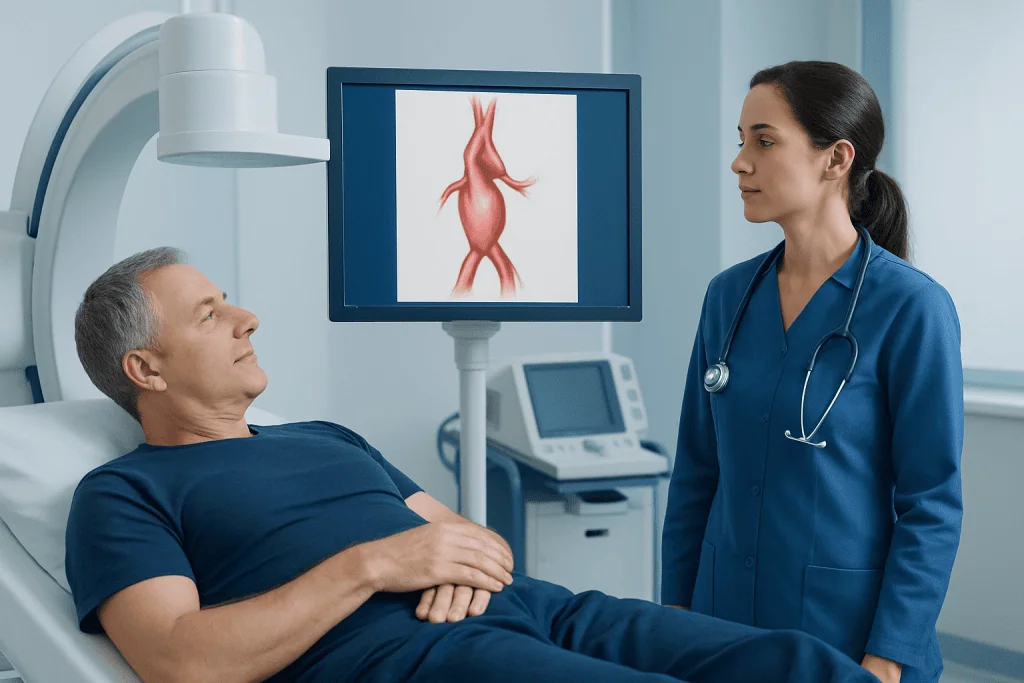
The aortic wall is normally strong and flexible. With age and exposure to certain risk factors, the wall can become less resilient. Blood pressure then places outward force on the weakened area, allowing the artery to widen. This process is usually gradual and may take years.
Most AAAs occur below the arteries that supply the kidneys; these are called infrarenal aneurysms. Less commonly, an aneurysm involves the aorta nearer the chest or extends toward the arteries leading to the legs. The location and shape help specialists decide how it should be monitored and whether repair may be appropriate.
AAA is related to vascular health but should not be confused with other aortic conditions. For example, an aortic dissection is a tear within the layers of the aortic wall and is a different emergency condition. The term aneurysm describes widening of the vessel rather than a blockage in it.
Symptoms and warning signs

Most small abdominal aortic aneurysms do not cause symptoms. This is why screening and imaging can be valuable for people with relevant risk factors. When symptoms do occur, they may include a persistent deep ache or discomfort in the abdomen, side or lower back.
Some people may notice a pulsing sensation in the abdomen, particularly when lying down. This symptom does not confirm an aneurysm, as normal aortic pulsation can sometimes be felt, especially in people with a slim body frame. Any new or concerning abdominal pulsation should be discussed with a healthcare professional.
A sudden, severe and persistent pain in the abdomen or back, especially with fainting, dizziness, sweating, weakness or a rapid heartbeat, can indicate rupture or another serious vascular problem. These symptoms require emergency medical care. A rupture is uncommon in small aneurysms but is life-threatening when it occurs.
Causes and risk factors
There is rarely one single cause of an AAA. The condition is associated with aging and changes in the structure of the artery wall. Atherosclerosis, the process in which fatty material accumulates in arteries, often occurs alongside AAA, although an aneurysm is not simply a plaque blockage.
Smoking is one of the strongest modifiable risk factors. Risk also rises with older age, male sex, high blood pressure, high cholesterol, coronary artery disease, peripheral artery disease and a family history of aortic aneurysm. People who have a close relative with an AAA may develop it at a younger age than those without a family history.
Less commonly, inherited connective-tissue disorders, inflammation, injury or certain infections can affect the aorta. A doctor may consider these possibilities when an aneurysm occurs at a younger age, there are aneurysms in multiple relatives, or imaging suggests an unusual pattern.
- Smoking or a past history of smoking
- Older age, particularly in men
- First-degree family history of AAA
- High blood pressure or other cardiovascular disease
- High cholesterol and reduced physical activity
Screening, diagnosis and monitoring
An abdominal ultrasound is the main test used to screen for and measure an AAA. It is painless, does not use radiation and can usually show the size of the aorta clearly. Screening recommendations differ by country, so the best approach depends on age, sex, smoking history, family history and local clinical guidance.
If an aneurysm is found, doctors may use ultrasound at regular intervals to monitor its size. CT angiography or magnetic resonance angiography may be used when more detailed information is needed, particularly when planning repair. These scans show the aneurysm’s exact location, shape and relationship to nearby arteries.
Clinical decisions are based on more than a single measurement. The care team considers whether the aneurysm is causing symptoms, whether it is enlarging quickly, its anatomy, the person’s health conditions and the likely balance between surveillance and treatment. Monitoring a small AAA is an active safety strategy, not a sign that care is being delayed.
Treatment options and everyday risk reduction
Small, stable AAAs are commonly managed with regular imaging and attention to cardiovascular health. Stopping smoking is one of the most important steps a person can take. Managing blood pressure, cholesterol and diabetes, taking prescribed medicines as directed, eating a balanced diet and remaining physically active within medical advice can support overall vascular health.
Repair may be recommended when an aneurysm reaches a size at which rupture risk is considered higher, grows rapidly or causes symptoms. The two main approaches are open surgical repair and endovascular aneurysm repair, often called EVAR. In EVAR, specialists place a stent-graft inside the aorta through blood vessels in the groin to direct blood flow away from the weakened section.
The most suitable approach depends on the aneurysm’s anatomy and the person’s general health. Endovascular aneurysm repair may offer a less invasive option for some people, while open surgery remains important when anatomy or other factors make it more appropriate. Both approaches require follow-up, and EVAR in particular involves ongoing imaging to check the stent-graft over time.
For international patients, Acibadem International’s multidisciplinary specialists and JCI-accredited hospitals provide assessment and treatment planning for abdominal aortic aneurysm, including vascular imaging and surgical care where indicated.
When to seek medical care
A person should arrange a routine medical appointment if they have a strong family history of AAA, have smoked in the past, or have questions about whether screening is appropriate. A clinician can review individual risks and discuss whether an abdominal ultrasound or referral to a vascular specialist is needed.
People already diagnosed with an AAA should attend planned scans and follow-up visits, even when they feel well. They should also contact their care team promptly if new abdominal, back or side pain develops, or if they have concerns about changes in symptoms.
Emergency care is needed for sudden severe abdominal or back pain, collapse, fainting, marked dizziness, confusion, cold clammy skin or severe weakness. These symptoms can have several causes, but they should never be managed at home when a ruptured aneurysm or another emergency is possible.
Frequently asked questions
Is AAA medical always an abdominal aortic aneurysm?
In vascular medicine, imaging and cardiovascular care, AAA most commonly means abdominal aortic aneurysm. Acronyms can have more than one meaning in healthcare, so it is sensible to check the surrounding context or ask the clinician who used the term.
Can an abdominal aortic aneurysm heal on its own?
An established abdominal aortic aneurysm generally does not shrink or heal on its own. Many small aneurysms remain stable for long periods, especially when risk factors are managed, but they still need follow-up as advised by a clinician.
Does an AAA cause high blood pressure?
AAA often occurs alongside high blood pressure, but it does not usually directly cause it. High blood pressure can add strain to the aortic wall, so appropriate blood pressure management is an important part of overall care.
Who should ask about AAA screening?
Older adults, particularly men with a history of smoking, may benefit from discussing screening with a doctor. People with a parent, sibling or child who has had an AAA should also ask about their individual screening needs.
Can exercise make an abdominal aortic aneurysm worse?
Regular moderate activity is often encouraged for cardiovascular health, but the appropriate level depends on aneurysm size, symptoms and other medical conditions. A vascular specialist can advise about heavy lifting, strenuous exertion and a safe exercise plan.
What is the difference between monitoring and treating an AAA?
Monitoring means repeating imaging tests to check whether the aneurysm is changing while managing risk factors such as smoking and blood pressure. Treatment refers to repair of the aneurysm, usually with open surgery or an endovascular procedure, when the expected benefit outweighs the risks.
References
- National Heart, Lung, and Blood Institute
- Society for Vascular Surgery
- National Health Service
- Mayo Clinic
- American Heart Association
This article is for general information only and is not a substitute for professional medical advice. Please consult a qualified doctor about your individual situation.
Explore treatments in Turkey — costs, top hospitals & a free quote
JCI-accredited · board-certified surgeons · reply within 24h
Check your numbers in seconds
BMI, calories, due date, blood pressure and 30+ more clinical calculators — free, instant, doctor-reviewed ranges.