Aba Therapy for Toddlers: How It Works, Results and What to Expect

ABA uses positive, individualized teaching strategies to support meaningful daily skills. For toddlers, effective sessions are usually play-based, brief, flexible and responsive to the child’s comfort.
Key Takeaways
- ABA uses positive, individualized teaching strategies to support meaningful daily skills.
- For toddlers, effective sessions are usually play-based, brief, flexible and responsive to the child’s comfort.
- Progress varies and is best judged by practical changes in communication, participation and independence over time.
- Parents and caregivers are important partners, especially when skills are practised naturally at home.
- A child does not need to wait for a formal autism diagnosis to receive a developmental evaluation or supportive services.
ABA therapy for toddlers is an individualized behavioral approach that may help young children build useful skills such as communicating needs, playing, following routines and managing everyday transitions. It is most often used for autistic children, but the plan, intensity and goals should be based on a careful developmental assessment and the child’s needs.
ABA Therapy for Toddlers: An Overview
Applied behavior analysis (ABA) is a structured approach that uses observation, teaching and positive reinforcement to help a child learn skills that matter in daily life. ABA therapy for toddlers is commonly considered for young autistic children and may support communication, play, self-care, participation in routines and reduction of behaviors that interfere with learning or safety.
Modern, child-centered ABA should be individualized, respectful and focused on quality of life rather than making a child appear less autistic. The therapist and family identify meaningful goals, such as helping a child request a favorite toy, tolerate toothbrushing, join a simple game or move between activities with less distress. A good plan recognizes the child’s strengths, preferences, sensory needs and ways of communicating.
ABA is not a single fixed procedure, and it is not appropriate to view it as a replacement for medical, developmental, speech-language or occupational assessment. Some toddlers benefit from a combination of developmental services, including speech and language therapy, occupational therapy, parent coaching and early education support.
How ABA Therapy Works for Toddlers
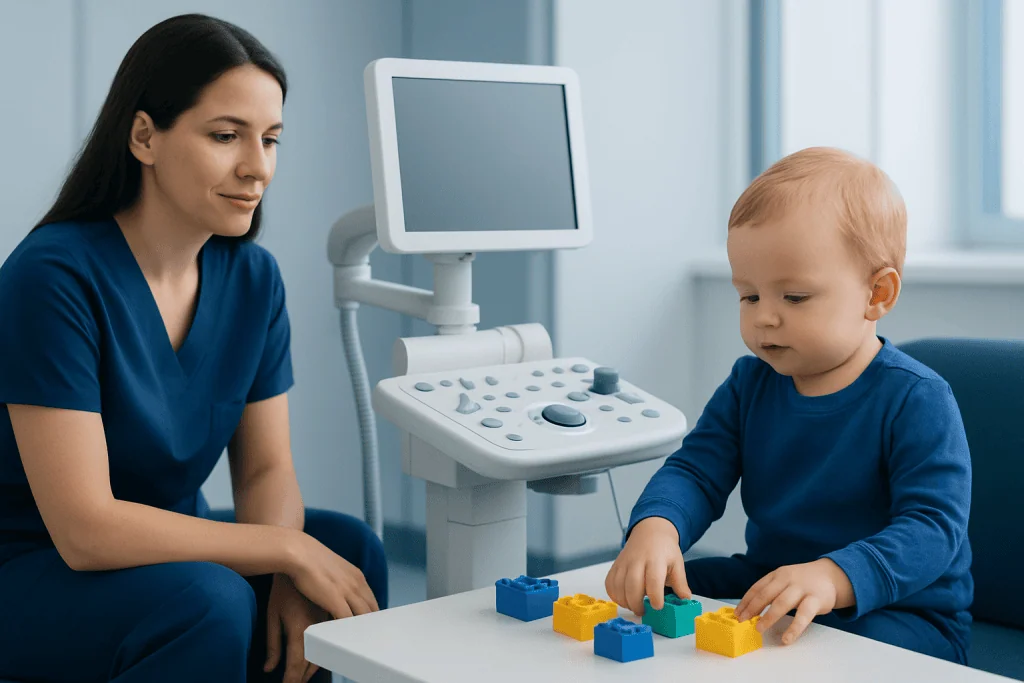
ABA starts by looking at what happens before, during and after a behavior. This helps the clinical team understand possible reasons for it. For example, a toddler may throw a toy when a task is too difficult, when they need help, when they want an item, or when they are overwhelmed by noise. The aim is not simply to stop the behavior; it is to teach a safer, more effective way to communicate or cope.
Therapists commonly use positive reinforcement, which means responding to a helpful skill in a way that makes the child more likely to use it again. Reinforcement may include praise, access to a preferred activity, a short movement break or engaging play. Teaching can occur during natural routines, such as snack time, dressing, bath time or play, rather than only at a table.
ABA therapy for toddlers with autism should include regular review of goals and data. Therapists track whether a skill is becoming easier, whether the child uses it with different people and in different settings, and whether the skill is useful beyond therapy. If a strategy is not helping or appears to cause distress, the plan should be reconsidered with the family.
Who May Be a Candidate for ABA Therapy?

A toddler may be referred for ABA when there are concerns about social communication, language development, play skills, flexibility with routines, daily living skills or behaviors that affect safety and participation. ABA is frequently one part of support for children with autism spectrum disorder, but a developmental professional should assess the child as a whole before deciding which services are appropriate.
Signs that merit discussion with a pediatrician include loss of previously acquired language or social skills, limited response to name, difficulty sharing attention or interests, very restricted play patterns, frequent intense distress during ordinary routines, or significant delays in communicating needs. These signs do not confirm autism by themselves, but early assessment can clarify what support may be helpful. Families can also learn more about developmental evaluation and support for autism spectrum disorder.
ABA therapy for a 1 year old is less commonly structured as formal skill sessions because development changes rapidly at this age. However, infants and young toddlers with developmental concerns may benefit from early-intervention assessment, family coaching and support for communication, play and responsive interaction. A pediatrician or developmental specialist can advise on the most suitable next step.
What Does ABA Therapy Look Like for a 2 Year Old?
For a 2 year old, ABA therapy should generally look like guided play and everyday learning, not prolonged drills. A therapist may sit on the floor with the child, follow the child’s interests and create small opportunities to practise a skill. If a child enjoys bubbles, for example, the therapist may pause briefly and encourage the child to look, gesture, sign, use a picture or vocalize to ask for more.
A session may include simple turn-taking games, imitation, matching, identifying familiar objects, requesting help, practicing transitions, or learning to participate in a routine such as handwashing. Tasks are broken into manageable steps, and the therapist adjusts the demands to keep the child engaged. Breaks, movement, sensory preferences and signs of fatigue should be respected.
Parents may observe, participate or receive coaching so that useful strategies can be carried into normal life. ABA therapy for toddlers at home often focuses on naturally occurring opportunities: asking for a snack, putting toys away, choosing clothes, greeting a family member or coping with a short wait. Home practice should be brief, positive and sustainable rather than an added source of pressure for the child or family.
Assessment and the Step-by-Step Therapy Process
The process usually begins with a developmental and behavioral assessment. A qualified clinician gathers information from caregivers, observes the child, reviews developmental and health history, and identifies strengths as well as areas needing support. The team may also coordinate with pediatricians, psychologists, speech-language therapists, occupational therapists and early-years educators when needed.
Next, the clinician and family agree on a small number of meaningful, measurable goals. These may include using a gesture or word to request, responding to a familiar routine, playing alongside another child, accepting a change in activity, or participating in dressing. The plan should explain how progress will be measured, how the child’s consent and comfort will be respected, and how caregivers will be involved.
During therapy, the provider uses teaching strategies suited to the goal and the child’s developmental level. Skills are practised repeatedly in varied, enjoyable contexts, then generalized to other people and environments. Progress reviews are held regularly, allowing goals, session format and therapy intensity to change as the toddler’s needs evolve. Some families may also benefit from speech and language therapy or occupational therapy as part of a coordinated plan.
How Long Does It Take to See Results From ABA?
There is no single timeline for results from ABA because every toddler has different strengths, developmental needs, opportunities to practise and levels of support. Some families may notice early changes in engagement, communication attempts or ease with routines over weeks. More complex skills, such as using communication consistently in different places or joining peer play, may take longer and usually develop gradually.
Progress should not be measured only by the number of words a child says or tasks completed in a session. Meaningful progress can include less frustration because the child can communicate needs, more shared enjoyment during play, increased independence with daily routines, or improved recovery after a change in plans. A child may also have periods of slower progress, particularly during illness, major changes at home or new developmental stages.
Therapy should be reviewed at planned intervals rather than continued automatically. If progress is limited, the team should reconsider the goals, the child’s communication and sensory needs, possible medical contributors, the therapy environment and whether another or additional intervention may be better suited. Families should feel comfortable asking how decisions are being made and what changes are recommended.
How to Tell if ABA Therapy Is Working
ABA therapy is working when it helps the child participate more comfortably and independently in meaningful parts of life. The most important question is whether skills learned in therapy are useful at home, in childcare and with other trusted adults. Data can be valuable, but it should be paired with caregiver observations and the child’s wellbeing.
Positive signs may include more reliable ways to express wants and discomfort, greater interest in shared play, reduced frustration around predictable routines, improved ability to wait briefly or transition, and increased independence with simple tasks. The child should have access to preferred activities, breaks and ways to communicate refusal. A child’s individuality, interests and neurodivergent traits should be respected.
Families should raise concerns promptly if sessions regularly lead to marked distress, if the child appears fearful of therapy, if needs for rest or communication are ignored, or if goals do not seem relevant to daily life. A collaborative provider welcomes questions, explains progress clearly and changes approaches when needed. Evidence-based child and adolescent mental health support may also be useful when emotional or behavioral concerns need broader assessment.
Should a 2 Year Old Be in ABA? Benefits, Limits and When to Seek Medical Care
A 2 year old may benefit from ABA if there are individualized, practical goals and the approach is developmentally appropriate, respectful and enjoyable for the child. The decision should be made with caregivers and qualified professionals after considering the toddler’s developmental profile, communication style, family priorities and other available supports. ABA is one option among several, not a requirement for every autistic toddler or every child with developmental differences.
Potential benefits include strengthened communication, greater participation in play and routines, caregiver confidence and reduced frustration when a child can express needs more effectively. Possible limitations include time demands, variable quality between providers and the risk of overly rigid goals if therapy is not closely individualized. Families can ask providers about qualifications, supervision, goal setting, safeguarding, use of positive strategies and how the child’s preferences are incorporated.
Parents or caregivers should seek medical care promptly if a toddler loses skills, has developmental concerns that are affecting daily functioning, shows self-injury or behaviors that create a significant safety risk, or has changes in sleep, eating, movement, hearing or responsiveness. Urgent medical assessment is needed for immediate danger, severe injury or any concern that a child is seriously unwell. Acibadem International’s multidisciplinary specialists and JCI-accredited hospitals can assess developmental concerns and coordinate care for international patients.
Frequently asked questions
Is ABA therapy only for toddlers with autism?
ABA is most commonly discussed as a support for autistic children, but behavioral teaching principles may be used for other developmental and learning needs. Whether it is appropriate depends on the child’s individual assessment, goals and family circumstances. A qualified developmental professional can help determine the most suitable services.
How many hours of ABA does a toddler need?
There is no universal number of hours that suits every toddler. The schedule should be individualized according to the child’s needs, tolerance, family routines, other therapies and opportunities for learning in daily life. Quality, relevance and the child’s wellbeing are more important than a fixed schedule.
Can parents do ABA therapy for toddlers at home?
Parents can use strategies taught through caregiver coaching, such as offering choices, pausing to encourage communication, reinforcing helpful skills and creating predictable routines. Home practice should fit naturally into play and everyday activities. A trained clinician can help ensure techniques are safe, appropriate and aligned with the child’s goals.
Will ABA make a toddler speak?
ABA may help some toddlers develop ways to communicate, but it cannot guarantee spoken language. Communication goals may include gestures, signs, pictures, speech-generating devices, vocalizations or spoken words. The best method is the one that allows the child to communicate effectively and comfortably.
What should parents ask an ABA provider?
Parents can ask about the provider’s training, clinical supervision, assessment process, goals, data collection and how the child’s preferences are respected. It is also reasonable to ask how the provider responds to distress, supports communication of refusal, involves caregivers and coordinates with other professionals. Clear, collaborative communication is an important part of quality care.
Can ABA be combined with speech or occupational therapy?
Yes. Many toddlers receive coordinated support from more than one professional, particularly when they have communication, sensory, feeding, motor or daily-living needs. With caregiver permission, providers can share goals and avoid duplicating demands. The care plan should remain manageable for the child and family.
References
- American Academy of Pediatrics
- Centers for Disease Control and Prevention
- National Institute for Health and Care Excellence
- World Health Organization
- Association for Behavior Analysis International
This article is for general information only and is not a substitute for professional medical advice. Please consult a qualified doctor about your individual situation.
Explore treatments in Turkey — costs, top hospitals & a free quote
JCI-accredited · board-certified surgeons · reply within 24h