Alzheimer’s PET Scan: Preparation, Procedure and Results
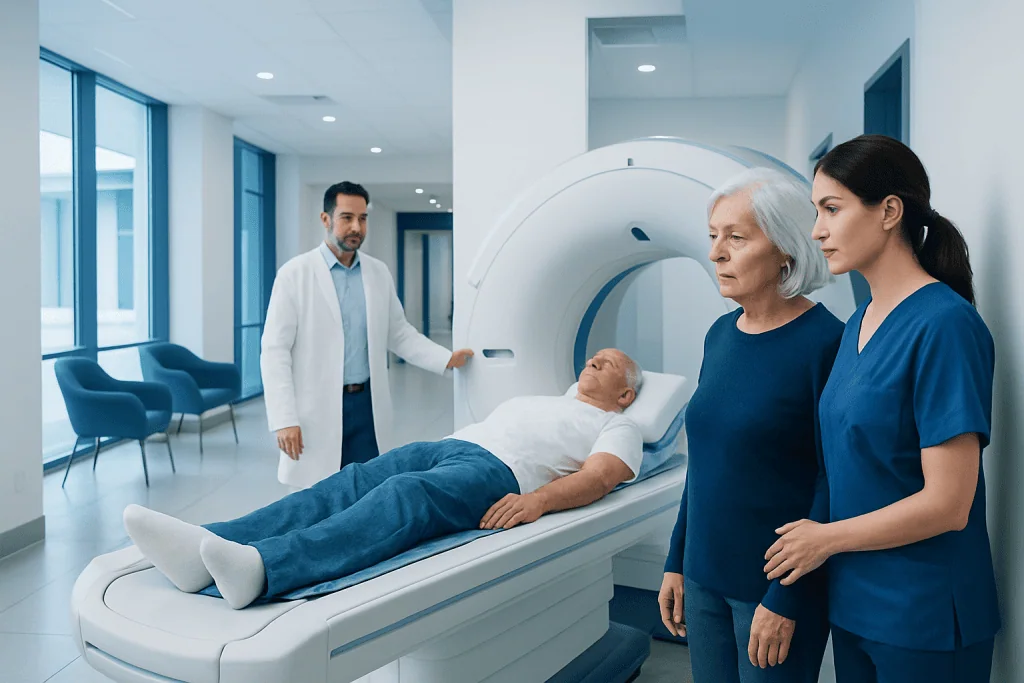
An Alzheimer's PET scan is an additional diagnostic tool, not a stand-alone test for dementia. Different PET tracers answer different clinical questions, including whether amyloid or tau protein is present in the brain.
Key Takeaways
- An Alzheimer's PET scan is an additional diagnostic tool, not a stand-alone test for dementia.
- Different PET tracers answer different clinical questions, including whether amyloid or tau protein is present in the brain.
- Preparation instructions vary by tracer, so patients should follow the imaging centre’s specific guidance.
- The scan is generally painless and most people can return to usual activities shortly afterward.
- Results should be interpreted alongside symptoms, medical history, cognitive testing and other investigations.
An Alzheimer's PET scan is a specialized brain imaging test that can detect certain protein deposits or changes in brain activity associated with Alzheimer’s disease. It is usually considered when a person has ongoing cognitive symptoms and standard assessment has not provided a clear explanation.
Overview: What Is an Alzheimer's PET Scan?
An Alzheimer’s PET scan is a type of positron emission tomography (PET) imaging that helps clinicians assess biological changes in the brain related to Alzheimer’s disease. A tiny amount of a radioactive tracer is injected into a vein. The tracer travels through the bloodstream and produces signals that a PET scanner can detect, creating detailed images of brain activity or specific proteins.
Depending on the tracer used, the scan may look for amyloid plaques, tau tangles, or patterns of reduced glucose use in the brain. Amyloid and tau are proteins associated with Alzheimer’s disease, while fluorodeoxyglucose (FDG) PET shows how actively different brain regions use glucose. The test can help clarify a difficult diagnosis, but it does not replace a full memory evaluation.
A positive amyloid scan means amyloid is present, not necessarily that a person’s symptoms are caused by Alzheimer’s disease. Amyloid can be found in some older adults without cognitive impairment. Conversely, a negative amyloid PET scan makes Alzheimer’s disease an unlikely cause of current symptoms, which may guide the clinical team toward other explanations.
How It Works and Who May Be a Candidate
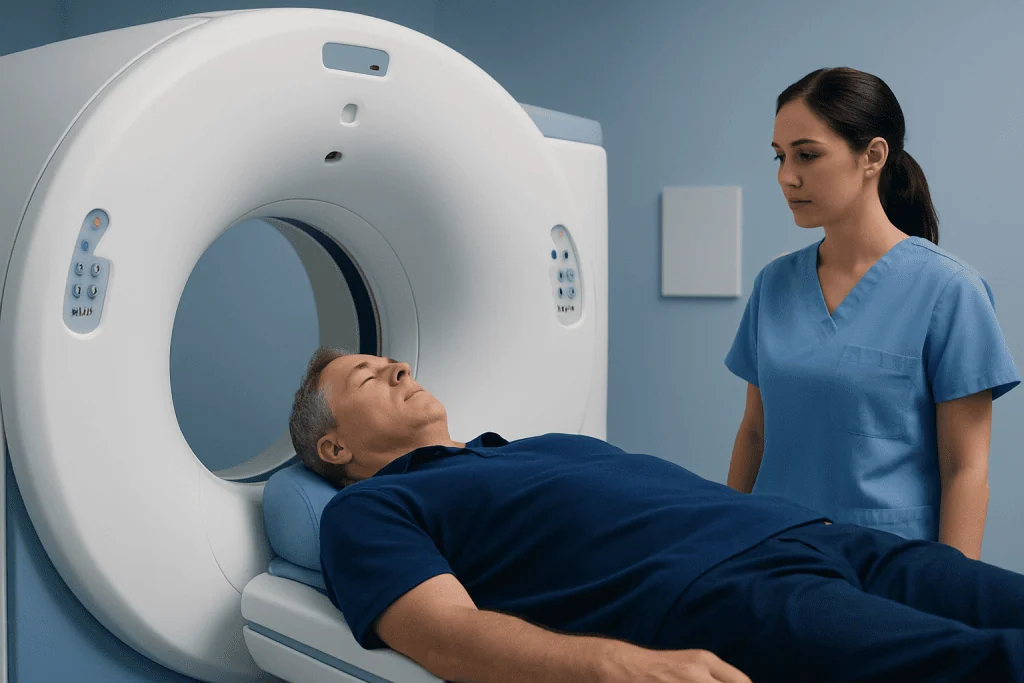
PET imaging works by detecting radiation released by the tracer after it reaches the brain. The amount of tracer involved is small, and the radiation exposure is generally low. A specialist in nuclear medicine or radiology interprets the images, usually in collaboration with the clinician managing the person’s memory concerns.
An Alzheimer’s PET scan is most useful when a person has objectively confirmed cognitive impairment, such as persistent memory, language, planning or orientation difficulties, and the cause remains uncertain after clinical assessment. It may also be considered when distinguishing Alzheimer’s disease from another neurodegenerative condition would change counselling, care planning or treatment decisions.
It is not usually used as a screening test for people who have no symptoms. Before recommending imaging, clinicians commonly review medical history, medications, blood tests, neurological examination findings and cognitive assessments. Brain MRI or CT may also be needed to identify problems such as stroke, bleeding, a tumour or hydrocephalus that can affect thinking.
- Amyloid PET: assesses amyloid plaque deposits.
- Tau PET: assesses tau deposits and may help characterize disease patterns in selected settings.
- FDG-PET: assesses brain glucose metabolism and can show patterns of reduced activity associated with different dementias.
What Should I Expect During a PET Scan for Alzheimer's Disease?

The appointment usually begins with registration, a review of medical information and confirmation of the type of PET study planned. Staff may ask about pregnancy, breastfeeding, diabetes, kidney problems, allergies, recent illness and medicines. An intravenous line is placed in the arm or hand, and the tracer is injected. The injection feels similar to a routine blood draw or injection.
After the injection, there is a waiting period while the tracer circulates and is taken up by the brain. This period varies according to the tracer. Patients are often asked to rest quietly in a comfortable area and may be advised to limit conversation, reading or use of electronic devices. The imaging team will provide instructions for the specific scan.
For the scan itself, the person lies on a narrow padded table that moves slowly into the PET scanner. The head may be supported or gently secured to reduce motion, because staying still is important for clear images. The scanner is open at both ends and does not usually make loud noises like an MRI. The imaging portion often takes about 10 to 30 minutes, though the full visit can be longer because of preparation and tracer uptake time.
The scan is painless. Some people feel mildly anxious in medical imaging equipment or uncomfortable lying still, but staff can communicate throughout the examination. A companion may be helpful for someone with significant memory problems, although local safety policies determine whether they can remain nearby.
What Can You Eat 24 Hours Before a PET Scan?
Dietary instructions depend on the tracer and the reason for the scan. For amyloid or tau PET imaging, many centres allow patients to eat and drink normally before the appointment unless they are given different directions. Drinking water is commonly encouraged, as hydration can support comfort and tracer clearance after imaging.
FDG-PET has more specific preparation requirements because it measures glucose metabolism. Patients are often asked to fast for several hours before the scan and avoid strenuous exercise beforehand. Blood glucose may be checked before the tracer is given, particularly for people with diabetes. High or unstable blood glucose can affect image quality and may require the appointment to be adjusted.
Rather than making major dietary changes during the previous 24 hours, patients should follow the written instructions from their imaging centre. They should tell the team about diabetes medicines, insulin, nutritional supplements and all prescription or non-prescription medicines. They should not stop a medicine unless the clinician who prescribed it advises them to do so.
How to Prepare for PET Scan Results?
Preparation for PET scan results is mainly about understanding what the test can and cannot answer. Before the appointment, it can be helpful for the patient and family to write down the symptoms that prompted assessment, when they began, how they have changed and how they affect daily life. Bringing a trusted relative or caregiver to the follow-up discussion can be useful, especially if the person has memory difficulties.
A PET result is interpreted in context. The clinician will compare it with cognitive testing, neurological examination, laboratory findings and structural imaging when available. A result may support Alzheimer’s disease, make it less likely, or reveal a pattern that leads to additional assessment. It may not provide a definitive explanation in every case.
Patients may wish to ask what tracer was used, whether the result changes the likely diagnosis, what other causes of symptoms remain possible and whether additional testing is recommended. If Alzheimer’s disease is diagnosed or strongly suspected, the discussion may include symptom management, safety, future planning, support for caregivers and whether disease-modifying treatment assessment is appropriate.
How Long Does It Take to Get Results From an Amyloid PET Scan?
Results from an amyloid PET scan are usually not given immediately at the scanner. A nuclear medicine physician or radiologist reviews the images and prepares a report for the referring clinician. Timing varies by hospital, local workflow and whether the case requires multidisciplinary review.
In many settings, the referring clinician discusses results within several days to one or two weeks. Patients should ask the imaging centre or their clinician when to expect the report and how the result will be communicated. It is usually best to receive the result in a planned clinical appointment, where there is time to explain what it means and answer questions.
Results are commonly described as positive or negative for amyloid deposition. A positive result supports the presence of amyloid pathology but does not by itself establish the stage of disease, predict the speed of change or prove that Alzheimer’s disease is the sole cause of symptoms. A negative result can be particularly informative because it makes Alzheimer’s disease pathology less likely as the main explanation for current cognitive impairment.
Benefits, Risks and Recovery After the Scan
The main benefit of an Alzheimer’s PET scan is improved diagnostic confidence in selected patients. Clarifying whether Alzheimer-related changes are present can help guide additional testing, treatment planning, lifestyle and safety discussions, and family support. It may also help clinicians determine whether a person could be considered for therapies that require confirmation of amyloid pathology.
Risks are generally small. The tracer involves a low dose of radiation, and allergic reactions are uncommon. Bruising, mild soreness or infection at the injection site are possible but rare. Patients who are pregnant, may be pregnant or are breastfeeding should tell the care team beforehand so that the scan’s timing and necessity can be considered carefully.
Most people can leave soon after imaging and resume their usual routine unless they have received other instructions. Drinking extra water and emptying the bladder regularly for the rest of the day may help the body eliminate the tracer. The tracer loses radioactivity quickly; nevertheless, the imaging team may provide short-term guidance about close contact with infants or pregnant people, depending on the tracer used.
Multidisciplinary specialists at Acibadem International and its JCI-accredited hospitals can assess cognitive symptoms and coordinate appropriate diagnostic imaging and follow-up care for international patients.
When to Seek Medical Care
A medical assessment is appropriate when memory or thinking changes are persistent, worsening, or interfering with work, finances, medicines, driving, relationships or independent daily activities. Examples include repeatedly asking the same questions, getting lost in familiar places, difficulty following familiar tasks, noticeable language changes or poor judgement that is new for the person.
Not all memory problems are caused by Alzheimer’s disease. Sleep disorders, depression, anxiety, hearing loss, thyroid conditions, vitamin deficiencies, medication effects, infections and other neurological conditions can contribute to cognitive symptoms. A timely evaluation can identify potentially treatable contributors and provide practical support.
Urgent medical care is needed for sudden confusion, new weakness or numbness, facial drooping, trouble speaking, a severe sudden headache, seizure, loss of consciousness or a rapid change in behaviour. These symptoms may indicate an acute condition rather than a gradual neurodegenerative disorder and should not wait for a routine memory appointment.
Frequently asked questions
Is an Alzheimer's PET scan the same as an MRI?
No. MRI shows the brain’s structure, including shrinkage, strokes, bleeding or other physical changes. An Alzheimer's PET scan shows specific protein deposits or brain metabolic activity, depending on the tracer used. The tests can provide complementary information.
Can a PET scan diagnose Alzheimer's disease by itself?
No. PET findings are interpreted alongside symptoms, medical history, cognitive testing, neurological examination and other tests. A positive amyloid PET scan indicates amyloid is present, but it does not alone prove that Alzheimer’s disease is causing a person’s symptoms.
Does an amyloid PET scan hurt?
The scan itself is painless. Most people notice only a brief pinch when the intravenous line is placed and the tracer is injected. Remaining still on the scanner table may be the most challenging part for some patients.
How long does an Alzheimer's PET scan take?
The total visit often lasts a few hours because it includes preparation, tracer injection, an uptake period and image acquisition. The actual time in the scanner is usually shorter, often around 10 to 30 minutes. Exact timing depends on the tracer and imaging protocol.
Can people with diabetes have a PET scan?
Yes, but they should notify the imaging centre in advance. Blood glucose management and meal or medication timing can affect FDG-PET imaging in particular. The care team will give individualized preparation instructions and may check blood glucose before the scan.
What does a negative amyloid PET scan mean?
A negative scan means there is little or no amyloid plaque detected in the brain at the time of imaging. In a person with cognitive symptoms, this makes Alzheimer’s disease pathology less likely as the primary explanation. The clinician may consider other causes and recommend further assessment if needed.
References
- Alzheimer's Association
- National Institute on Aging
- Society of Nuclear Medicine and Molecular Imaging
- Radiological Society of North America
- U.S. Food and Drug Administration
This article is for general information only and is not a substitute for professional medical advice. Please consult a qualified doctor about your individual situation.
Explore treatments in Turkey — costs, top hospitals & a free quote
JCI-accredited · board-certified surgeons · reply within 24h