Laser Treatment for Eyes Age Limit: How It Works, Results and What to Expect

Most laser eye surgery candidates are at least 18 years old and have had a stable prescription for about a year. There is no automatic age cutoff; people in their 50s, 60s and beyond may be suitable after a detailed eye examination.
Key Takeaways
- Most laser eye surgery candidates are at least 18 years old and have had a stable prescription for about a year.
- There is no automatic age cutoff; people in their 50s, 60s and beyond may be suitable after a detailed eye examination.
- LASIK and other laser procedures reshape the cornea to reduce dependence on glasses or contact lenses.
- Results are typically long-lasting, but natural age-related changes such as presbyopia and cataracts can still affect vision later.
- Laser eye surgery cannot guarantee perfect vision and is not appropriate for every eye or prescription.
Laser treatment for eyes is generally considered from age 18 onward, once the prescription has been stable, but there is no universal upper age limit. Suitability depends more on corneal health, prescription, dry eye symptoms, cataracts and overall eye health than age alone.
Overview: What Is the Age Limit for Laser Treatment for Eyes?
Laser treatment for eyes age limit: laser vision correction is usually considered from age 18, provided the person’s glasses or contact lens prescription has been stable and their eyes are healthy. There is no single upper age limit. Instead, an ophthalmologist assesses whether the cornea, lens, retina and tear film are suitable for treatment.
Laser eye surgery includes procedures such as LASIK, PRK and SMILE. These treatments change the shape of the cornea, the clear front surface of the eye, so that light focuses more accurately on the retina. They can reduce dependence on glasses or contact lenses in people with short-sightedness, long-sightedness and certain levels of astigmatism.
Age remains important because eyes change throughout life. Younger adults may have prescriptions that are still changing, while adults from their 40s onward commonly develop presbyopia, an age-related reduction in near focusing ability. Later in life, cataracts or other eye conditions may make a lens-based procedure more appropriate than corneal laser surgery.
How Laser Eye Surgery Works
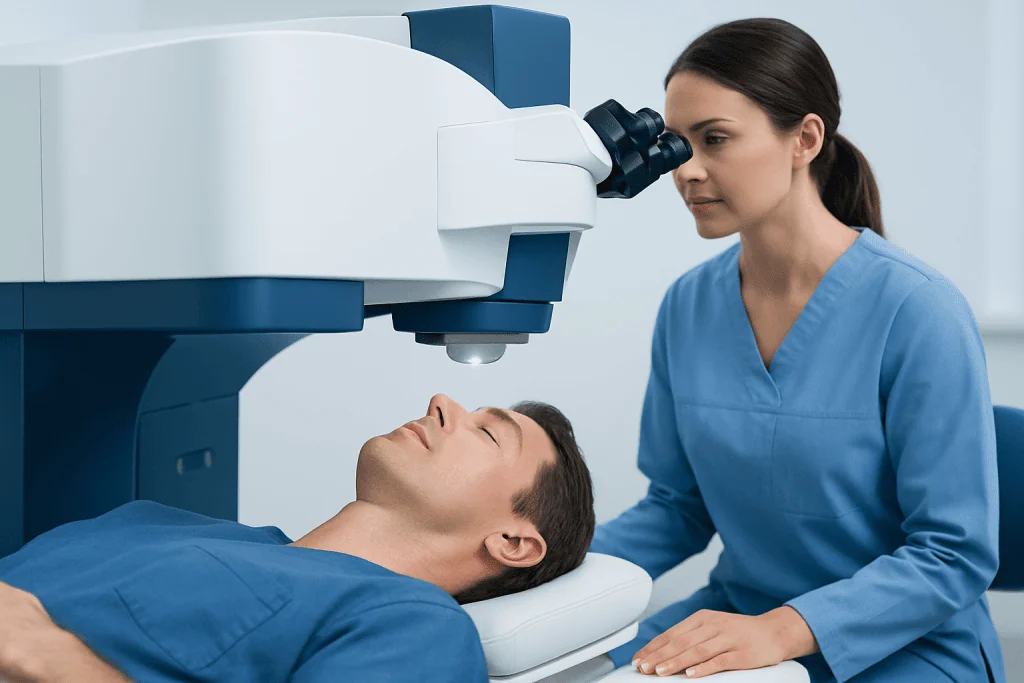
For clear vision, the cornea and natural lens must bend incoming light precisely onto the retina. In refractive errors, the focus falls in front of, behind or unevenly on the retina. Laser vision correction uses a carefully programmed laser to remove microscopic amounts of corneal tissue and alter its curvature.
In LASIK, the surgeon creates a thin corneal flap, reshapes the tissue underneath with an excimer laser and repositions the flap. PRK reshapes the corneal surface after the outer cell layer is removed; that layer grows back during healing. SMILE uses a femtosecond laser to create and remove a small disc of corneal tissue through a small incision. The best technique depends on the person’s prescription, corneal thickness, lifestyle and clinical findings.
A complete assessment is essential before any procedure. It may include refraction testing, corneal mapping and thickness measurements, tear-film evaluation, eye-pressure testing, pupil measurement and a dilated examination of the retina. These tests help the eye specialist select a safe approach or advise against surgery when needed.
Candidacy and Age: Is 60 Too Old for Laser Eye Surgery?
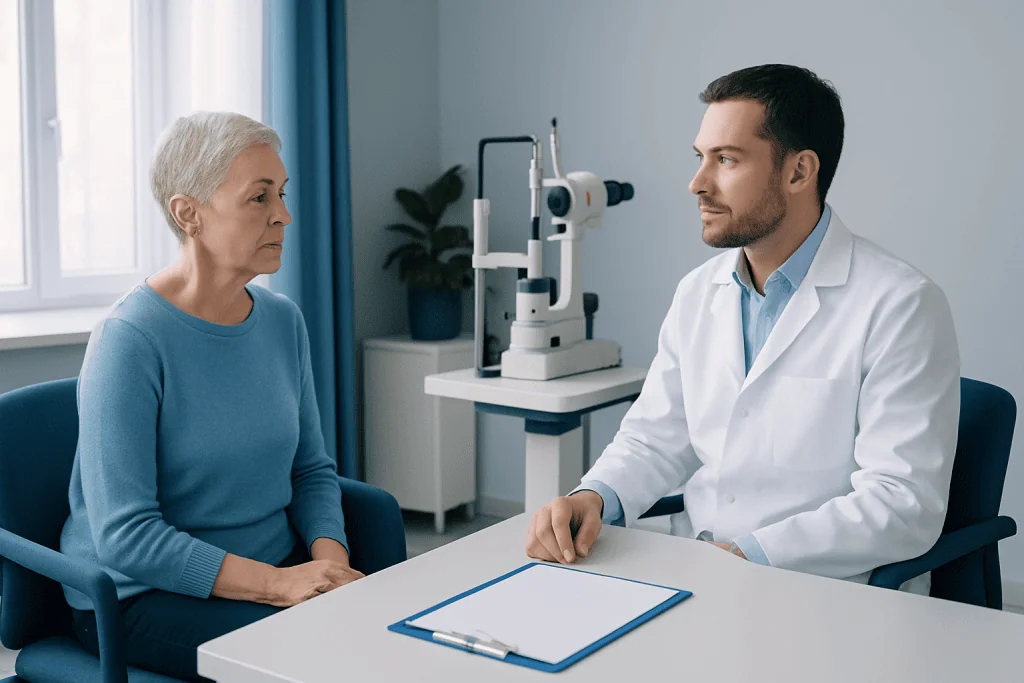
Is 60 too old for laser eye surgery? No. Age 60 alone does not rule out laser eye surgery. Some people in their 60s have healthy corneas, stable prescriptions and no significant lens changes, and may be candidates. However, a detailed ophthalmic examination becomes especially important because cataracts, dry eye disease, glaucoma and retinal conditions are more common with age.
At this stage of life, presbyopia is usually already present. Standard distance-focused laser treatment may improve distance vision but often does not remove the need for reading glasses. In selected people, monovision may be discussed, where one eye is adjusted more for distance and the other more for near tasks. A contact lens trial can help determine whether this arrangement feels comfortable before a permanent procedure is considered.
If a cataract is developing or expected to affect vision soon, laser corneal surgery may not be the most practical choice. Cataract surgery replaces the cloudy natural lens and can also address refractive error through the choice of intraocular lens. An ophthalmologist can explain whether laser correction now, observation or future lens surgery best fits the individual’s eye health and visual goals.
Who Cannot Get Laser Eye Surgery?
Who cannot get laser eye surgery? People are not suitable when the likely risks outweigh the expected benefit. This may be temporary, such as during pregnancy or breastfeeding when prescriptions can fluctuate, or it may relate to an eye condition that needs treatment or monitoring first. A stable prescription and realistic expectations are important parts of candidacy.
Laser surgery may be unsuitable or require particular caution in people with very thin or irregular corneas, keratoconus, significant dry eye disease, active eye infection or inflammation, uncontrolled glaucoma, certain retinal disorders, advanced cataracts or severe autoimmune disease. Very high refractive errors may also be better managed with another option. Keratoconus is one example of a corneal condition in which corneal laser reshaping is generally avoided because it may weaken an already vulnerable cornea.
Some medicines and health conditions can affect healing. The eye specialist should know about previous eye surgery, contact lens use, diabetes, immune-related conditions, medicines and occupational or sporting demands. Contact lenses usually need to be stopped for a period before measurements, following the clinic’s instructions, because they can temporarily alter corneal shape.
- Adults under 18 are generally not candidates because the eyes may still be changing.
- An unstable prescription suggests it may be better to wait and repeat measurements later.
- Active eye disease should be diagnosed and managed before elective refractive surgery is considered.
What to Expect: Procedure Steps and Recovery Timeline
Laser eye surgery is usually an outpatient procedure. On the day, the eye is numbed with anesthetic drops, and the person remains awake. The eyelids are gently held open, and a fixation light helps the person keep the eye positioned. Modern laser systems track small eye movements during treatment. The laser portion itself is brief, although preparation and checks take longer.
Vision may be hazy initially. After LASIK or SMILE, many people notice functional distance vision within a day or two, although vision can fluctuate for several weeks. PRK usually has a slower recovery because the surface layer must heal; discomfort, light sensitivity and blurred vision may be more noticeable in the first few days, with visual clarity improving gradually over weeks.
Follow-up appointments allow the team to check healing, vision and eye pressure. Lubricating drops and prescribed medications are commonly used for a limited period. Patients should avoid rubbing the eyes and follow individual guidance about water exposure, eye makeup, exercise, driving and returning to work. Dryness, halos or glare are often most noticeable early in recovery and frequently improve as the eyes heal.
Benefits, Limitations and Long-Term Results
The main potential benefit of laser vision correction is reduced reliance on glasses or contact lenses for everyday tasks. Many people achieve good uncorrected distance vision, but outcomes vary with the original prescription, procedure type, healing response and eye health. Some people still need glasses for particular activities, such as reading, night driving or detailed work.
Is laser eye surgery 100% successful? No medical procedure is 100% successful, and laser eye surgery cannot promise perfect vision or complete freedom from glasses. It is designed to improve refractive error within an appropriate safety range. In some cases, residual prescription remains, vision may regress over time, or an enhancement procedure may be considered after healing if the cornea and clinical findings permit.
What happens after 20 years of LASIK? The corneal reshaping from LASIK is generally permanent, but the eyes continue to age. Presbyopia can lead to reading-glass use from midlife onward, and cataracts may later develop in the natural lens. These changes are not usually caused by LASIK. Cataract surgery can often still be performed after previous laser surgery, although accurate preoperative measurements and knowledge of past treatment are important for lens planning.
When to Seek Medical Care
Anyone considering laser eye surgery should arrange a consultation with an ophthalmologist or refractive surgery specialist rather than relying on age alone. A comprehensive examination can identify whether laser treatment, another vision-correction option or no procedure is the safest recommendation. It is also helpful to discuss work, driving, sport, screen use and expectations for reading vision.
After any eye procedure, urgent medical assessment is appropriate for severe or increasing pain, a sudden drop in vision, marked redness, worsening light sensitivity, discharge, flashes of light or a curtain-like shadow in vision. These symptoms do not necessarily indicate a serious problem, but prompt assessment protects eye health.
Acibadem International’s multidisciplinary eye specialists and JCI-accredited hospitals assess and treat refractive and other eye conditions for international patients. A consultation can determine whether LASIK eye surgery or another approach is appropriate for the individual’s eyes and visual needs.
Frequently asked questions
What is the minimum age for laser eye surgery?
Laser eye surgery is generally considered from age 18. The prescription should also be stable, commonly for about one year, because treatment is less predictable while refractive error is still changing. An ophthalmologist confirms suitability through a full examination.
Is 60 too old for laser eye surgery?
No, being 60 does not automatically make someone too old for laser eye surgery. The decision depends on corneal health, dry eye symptoms, prescription stability, cataract development and the health of the retina and optic nerve. Some people may be better served by lens-based treatment if cataracts are present.
Is laser eye surgery 100% successful?
No procedure can provide a 100% guarantee of perfect vision or permanent freedom from glasses. Laser eye surgery is often effective at reducing refractive error, but individual healing and visual results differ. Reading glasses may still be needed with age, and a small residual prescription can remain.
What happens after 20 years of LASIK?
The LASIK corneal change is usually lasting, but normal aging of the eye continues. Many people develop presbyopia and may need reading glasses, while some later develop cataracts. Cataract surgery is often possible after LASIK, although the surgeon needs careful measurements for planning.
Who cannot get laser eye surgery?
People with unstable prescriptions, keratoconus, very thin or irregular corneas, severe dry eye, active eye inflammation or infection, advanced cataracts, or certain retinal and glaucoma conditions may not be suitable. Pregnancy and breastfeeding can be temporary reasons to postpone treatment. The final decision follows a specialist eye assessment.
How long does it take to recover from laser eye surgery?
Recovery varies by procedure. Many people see well enough for normal daily activities within a few days after LASIK or SMILE, while PRK usually takes longer for surface healing and vision to sharpen. Vision and dry-eye symptoms can continue to settle over several weeks or months.
References
- American Academy of Ophthalmology
- U.S. Food and Drug Administration
- National Eye Institute
- Royal College of Ophthalmologists
This article is for general information only and is not a substitute for professional medical advice. Please consult a qualified doctor about your individual situation.
Explore treatments in Turkey — costs, top hospitals & a free quote
JCI-accredited · board-certified surgeons · reply within 24h

More from the Health Library



Related Specialists
Assoc. Prof. Dr. Suat Bilici
Ear Nose & Throat
Dr. Seval Karakaya Atınçer
Anesthesiology
Cüneyt Karoğlu
Physical Medicine & Rehabilitation
Assoc. Prof. Dr. Burak Elmas
Vitro Fertilization and Reproductive Medicine Center