Bicep Muscle Tear Recovery: A Week-by-Week Timeline
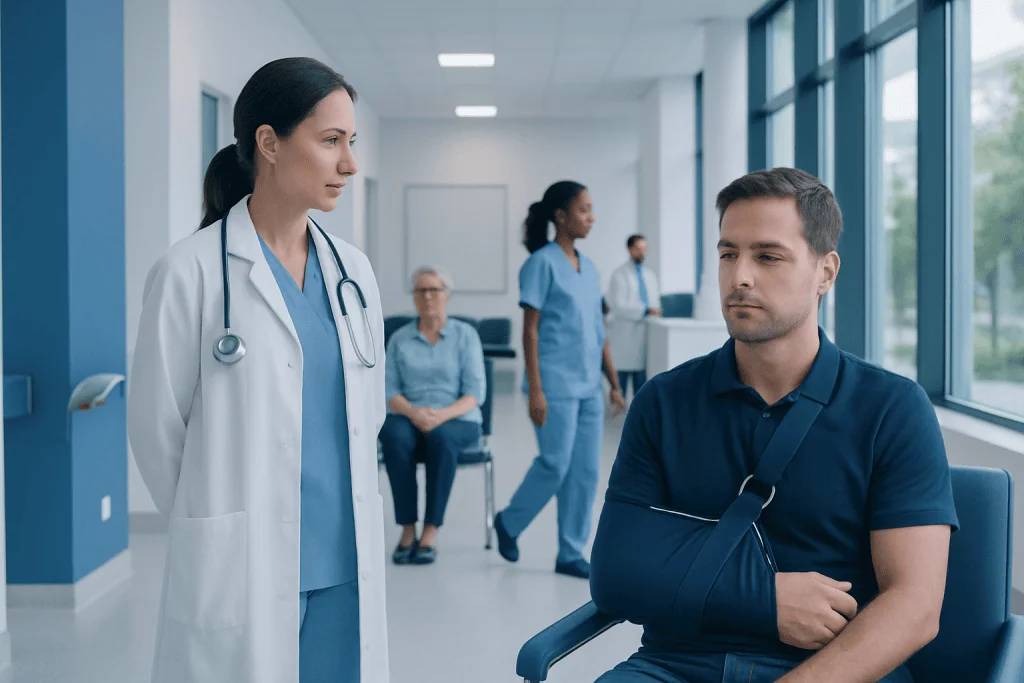
Mild biceps strains may improve over a few weeks, while complete tendon tears can require several months of rehabilitation. A sudden pop, bruising, weakness or a changed biceps shape should be assessed promptly.
Key Takeaways
- Mild biceps strains may improve over a few weeks, while complete tendon tears can require several months of rehabilitation.
- A sudden pop, bruising, weakness or a changed biceps shape should be assessed promptly.
- Not every biceps tear requires surgery, but tears near the elbow are more likely to need early surgical evaluation.
- Rehabilitation progresses from protection and gentle motion to strengthening and a gradual return to work, sport or weight training.
- Returning to lifting too early can increase the risk of reinjury or prolong recovery.
Bicep muscle tear recovery often takes several weeks for a mild strain and several months after a complete tendon tear or surgical repair. The timeline depends on whether the injury affects the upper-arm muscle, the tendon near the shoulder or elbow, and whether surgery is needed.
Overview: What to Expect During Bicep Muscle Tear Recovery
Bicep muscle tear recovery varies from a few weeks for a mild muscle strain to several months for a complete tear, especially when a tendon has detached and needs repair. Early assessment helps clarify the injury and supports a safe plan for pain relief, movement, rehabilitation and return to activity.
The term “bicep tear” may describe an injury within the muscle or, more commonly, a tear of a tendon that attaches the biceps to the shoulder or elbow. A proximal tear occurs near the shoulder, while a distal biceps tendon tear occurs at the front of the elbow. These injuries can have different effects on strength and different treatment needs.
A recovery schedule is always individualized. Age, general health, the extent of the tear, work demands, sporting goals and adherence to physiotherapy all influence healing. A clinician or physiotherapist can set milestones based on examination findings rather than relying on a calendar alone.
Biceps Basics: Location, Terms and Common Symptoms

What is a bicep? The biceps brachii is a two-headed muscle at the front of the upper arm. It helps bend the elbow, turn the palm upward and assists with shoulder movement. Its upper attachment includes tendons near the shoulder, and its lower tendon attaches to the radius bone just below the elbow.
Which body part is the bicep? The biceps is located in the front portion of the upper arm, between the shoulder and elbow. It should not be confused with the triceps, which is the larger muscle group at the back of the upper arm and helps straighten the elbow.
Which is correct, “biceps” or “bicep”? In anatomy, “biceps” is the correct name for the muscle, because it has two heads. In everyday language, “bicep” is widely used to refer to one upper-arm biceps muscle, while “biceps” may refer to the muscle itself or both upper-arm muscles. Both terms are understood in ordinary conversation.
What does a damaged bicep feel like? Symptoms can range from soreness and tightness to sudden sharp pain. A more significant tear may cause a popping sensation, swelling, bruising, cramping, weakness when bending the elbow or turning the palm upward, and a visible change in the contour of the upper arm. A tendon tear near the shoulder may produce a rounded “Popeye” bulge, while a distal tear near the elbow may cause marked weakness with lifting or rotating the forearm.
Causes, Severity and When to Seek Medical Care

Biceps injuries may happen during a sudden forceful movement, such as catching a falling object, lifting a heavy load, pulling, throwing or falling onto an outstretched arm. Repetitive overhead activity and weight training can contribute to tendon wear over time. Tendon degeneration becomes more common with age, and smoking, some medications and certain medical conditions may also affect tendon health.
Muscle strains are often graded from mild overstretching to partial or complete tearing. A partial tendon tear means some fibers remain connected. In a complete rupture, the tendon separates fully from its attachment. Complete distal biceps tears near the elbow are particularly important to evaluate because they can cause lasting loss of forearm rotation and lifting strength if not managed appropriately.
When to seek medical care: Prompt medical assessment is advisable after a pop or tearing sensation followed by bruising, noticeable weakness, a new upper-arm deformity, inability to use the arm normally or pain that does not settle. Urgent assessment is appropriate if the hand becomes numb, pale, cold, severely swollen or difficult to move, as these symptoms may indicate an associated injury requiring immediate care.
Until assessment, avoiding heavy lifting and painful resistance exercises is sensible. Ice wrapped in a cloth for short intervals, rest and keeping the arm comfortable may help symptoms. Pain medicines should be used only as appropriate for the individual’s health history and after advice from a pharmacist or clinician when needed.
Diagnosis and Choosing Between Non-Surgical and Surgical Care
A clinician will ask how the injury occurred and examine the shoulder, elbow and arm. They may check tenderness, bruising, muscle shape, range of motion and strength with elbow bending and forearm rotation. Comparing both arms can help identify functional changes.
Ultrasound or magnetic resonance imaging (MRI) may be used when the diagnosis is uncertain or to define the location and degree of tendon damage. X-rays do not show the tendon itself, but may help exclude a fracture or other bone-related cause of symptoms.
Many mild muscle strains, partial tears and some proximal biceps tendon tears can be managed without surgery using activity modification, pain management and supervised rehabilitation. The expected bicep tear recovery time without surgery depends on the tear and the person’s activities; discomfort may improve over weeks, but rebuilding strength and confidence can take longer.
Surgery may be considered for a complete distal biceps tendon tear, substantial weakness, persistent symptoms despite conservative care, or people whose work and sport require high arm strength. The choice is personal and should be made after discussing expected function, recovery demands, medical factors and possible risks with an orthopedic specialist.
Biceps Tendon Repair: How It Works and Who May Be a Candidate
Biceps tendon repair aims to reattach a torn tendon to its usual position, most often when the distal tendon has detached near the elbow. The surgeon makes one or more small incisions, identifies the tendon and secures it to the bone using specialized fixation devices. The exact method depends on the tear location, tissue quality and surgeon’s assessment.
Potential candidates include people with complete distal biceps ruptures, especially those with substantial weakness or physical work, sporting or daily-living demands that require strong elbow bending and palm-up rotation. Surgery is not automatically necessary for every injury. In some proximal tears near the shoulder, non-surgical care can provide acceptable comfort and function, particularly when symptoms are manageable.
Where surgery is recommended, timely specialist review matters because a tendon may retract and scar over time, making repair more complex. The procedure is commonly followed by a period of protection in a sling or brace, then a structured rehabilitation program. Patients can learn more about biceps tendon repair as part of a discussion with their orthopedic team.
Benefits may include improved strength and function, particularly after distal tendon repair. Possible risks include infection, stiffness, nerve irritation or injury, blood vessel injury, rerupture, persistent pain and complications related to anesthesia. A surgeon will explain the individual balance of benefits and risks before any procedure.
Bicep Tear Recovery Timeline: Week-by-Week Milestones
Recovery does not progress at exactly the same speed for everyone. The following bicep tear recovery timeline is a general guide for a significant tendon injury or repair; mild strains often move through similar stages more quickly. The treating clinician’s instructions always take priority, particularly after surgery.
- Weeks 0 to 2: The priority is protecting the injured area, controlling swelling and pain, and maintaining safe movement in the hand, wrist and shoulder as advised. After repair, a sling or brace may be used, and active lifting with the healing biceps is avoided.
- Weeks 2 to 6: Supervised gentle range-of-motion exercises may begin or progress. The goal is to restore movement without placing excessive load on the healing muscle or tendon. Daily tasks may remain limited.
- Weeks 6 to 12: Rehabilitation often advances toward controlled strengthening, posture work and gradual functional use. The timing and intensity depend on healing, examination findings and whether surgery was performed.
- Months 3 to 6: Many people work toward fuller strength, endurance and task-specific training. Heavy lifting, manual work and sport return only when strength, movement and clinical assessment support it.
- After 6 months: Some people, especially competitive athletes or those recovering from a complex tear, may continue building strength and confidence for longer. Residual tightness, fatigue or differences in appearance may persist in some cases.
For bicep recovery time bodybuilding or a bicep recovery time workout plan, returning to curls, pull-ups, rows, overhead lifts or explosive movements should be gradual. A physiotherapist can help select loads and techniques that match healing capacity, rather than using pain alone as a guide.
Rehabilitation, Prevention and Long-Term Outlook
Rehabilitation usually focuses on restoring comfortable motion first, then rebuilding strength in the biceps, shoulder, forearm and upper-back muscles. Exercises are progressed from low-load movement to resistance and task-specific activity. Consistent attendance, correct technique and communication about pain or setbacks can support recovery.
To reduce the chance of another injury, individuals can warm up before demanding activity, increase training loads gradually, use controlled lifting technique and allow adequate recovery between intense sessions. Addressing shoulder mobility, posture and overall arm strength may also reduce unnecessary strain on the biceps tendon.
It is important not to test healing by attempting a heavy lift too early. Sudden pain, renewed bruising, swelling, loss of strength or a new change in muscle shape should be reported to the treating team. These signs do not always mean a new tear, but they merit assessment.
Acibadem International’s multidisciplinary orthopedic, radiology and rehabilitation specialists at JCI-accredited hospitals can assess biceps injuries and guide treatment for international patients. Ongoing follow-up can help adapt recovery goals for everyday activities, work and sport.
Frequently asked questions
How long does bicep muscle tear recovery take?
A mild biceps muscle strain may improve within a few weeks, while a partial or complete tendon tear can take several months to recover from. Recovery may take longer after surgery because the repaired tendon needs time to heal before strengthening begins. The exact timeline depends on the tear location, severity, treatment and rehabilitation progress.
Can a bicep tear heal without surgery?
Some biceps injuries can be managed without surgery, particularly mild muscle strains, partial tears and many tears of the tendon near the shoulder. Treatment may include rest from aggravating activity, pain management and physiotherapy. A complete distal biceps tendon tear near the elbow should be assessed promptly because non-surgical treatment may leave meaningful weakness in some people.
When can someone return to the gym after a bicep tear?
Return to gym exercise should be guided by a clinician or physiotherapist and should begin with movements that do not overload the healing tissue. Light activity may be possible earlier than resistance training, but heavy curls, pulling exercises and overhead lifts generally need to wait until strength and control have returned. After tendon repair, return to heavier training often takes several months.
Can someone still move the arm with a torn bicep tendon?
Yes, many people can still move the arm after a biceps tendon tear because other muscles assist with shoulder and elbow movement. However, pain, bruising, cramping and weakness may be present, especially during elbow bending or turning the palm upward. Being able to move the arm does not rule out a significant tear.
Does a bicep tear always cause a Popeye bulge?
No. A visible Popeye-shaped bulge is more commonly associated with some tears of the long head of the biceps tendon near the shoulder. A partial tear may not change the arm’s shape, and distal tears near the elbow can have different signs, including bruising and weakness. A medical examination and, when needed, imaging can clarify the injury.
What should be avoided during bicep tear recovery?
Heavy lifting, forceful pulling, repeated overhead activity and exercises that reproduce sharp pain should be avoided until a clinician says they are safe. It is also important not to stop using a prescribed brace or sling early after surgery. Rehabilitation should be progressed step by step to protect healing tissue while preventing excessive stiffness.
References
- American Academy of Orthopaedic Surgeons
- American Society for Surgery of the Hand
- National Institute of Arthritis and Musculoskeletal and Skin Diseases
- OrthoInfo
This article is for general information only and is not a substitute for professional medical advice. Please consult a qualified doctor about your individual situation.
Joint and spine care in Turkey — expert assessment & treatment
JCI-accredited · board-certified surgeons · reply within 24h