

Fractured Finger Treatment: How It Works, Results and What to Expect

A suspected fractured finger should be assessed promptly, especially if it looks crooked, numb, pale or difficult to move. Stable fractures are often treated without surgery using a splint, buddy taping and follow-up imaging.
Key Takeaways
- A suspected fractured finger should be assessed promptly, especially if it looks crooked, numb, pale or difficult to move.
- Stable fractures are often treated without surgery using a splint, buddy taping and follow-up imaging.
- A clinician may realign a displaced fracture or recommend pins, screws or a plate when the fracture is unstable or affects a joint.
- Most finger fractures take several weeks to unite, and stiffness can persist longer without appropriate movement and rehabilitation.
- Following the splint plan, avoiding nicotine and attending follow-up visits support safe healing.
Fractured finger treatment depends on whether the bone is stable and well aligned. Many finger fractures heal with protection in a splint or with buddy taping, while displaced, rotated or joint-involving fractures may need realignment or surgery to restore hand function.
Overview: how fractured finger treatment works
Fractured finger treatment aims to help the bone heal in the correct position while preserving tendon function, joint movement and grip. The right approach is guided by which bone is broken, whether the fracture reaches a joint, and whether the fragments have shifted, rotated or become unstable.
Many uncomplicated fractures can be managed without an operation. A clinician may use buddy taping, in which the injured finger is supported by an adjacent finger, or a custom splint that limits harmful movement. More complex injuries may need reduction, meaning the bone is carefully moved back into alignment, followed by surgical stabilization if it cannot stay aligned.
Finger injuries can affect the fingertip bone, middle bone, base of the finger, or the knuckle area. Associated nail-bed, tendon, ligament, skin or nerve injuries may change treatment. Early assessment is important because a finger that heals rotated or stiff can make everyday activities more difficult.
Who may need splinting, reduction or surgery?
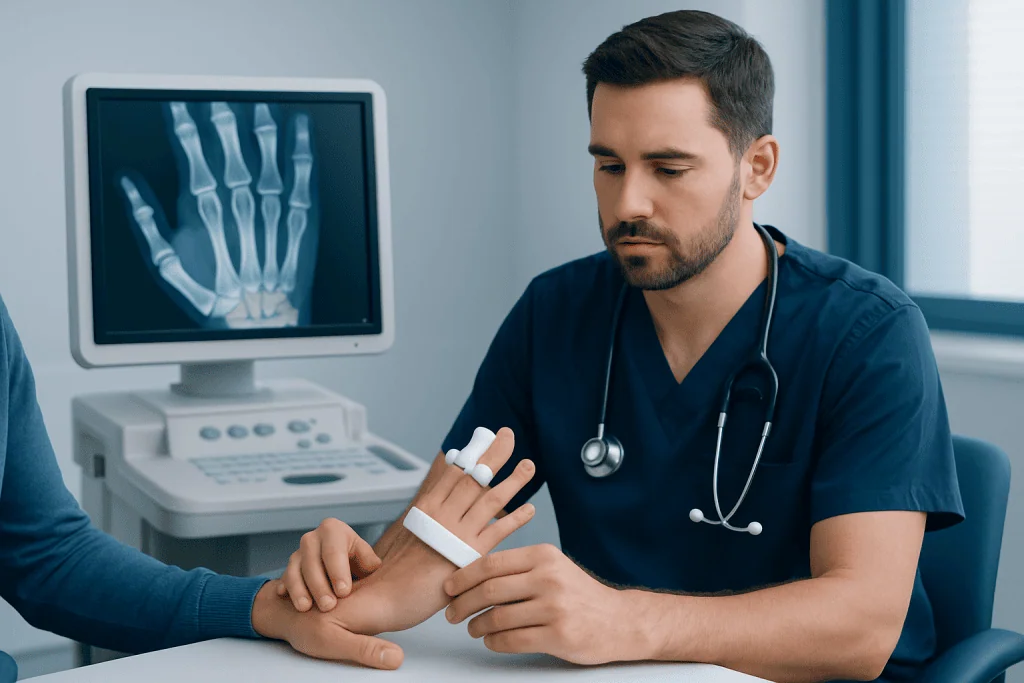
Non-surgical care is usually appropriate when a fracture is closed, stable and acceptably aligned. It may also be suitable after a clinician has successfully realigned a mildly displaced fracture. The hand is protected for a defined period, with follow-up to confirm that the bones remain in position.
Reduction or surgery may be considered when the finger is visibly crooked, rotates across another finger when making a loose fist, is shortened, or cannot maintain alignment in a splint. Surgery may also be recommended for fractures involving a substantial part of a joint surface, open fractures, multiple fractures, or injuries with tendon, nerve or blood-vessel damage.
Children, athletes, people whose work requires fine hand control, and people with conditions that affect bone health may have individual needs. A hand or orthopedic specialist considers the injury pattern, the person’s dominant hand, activities and overall health before recommending a plan. Related bone and joint injuries may also require assessment, including hand fractures.
Fractured finger treatment step by step

Assessment begins with a history of how the injury happened and an examination of swelling, skin integrity, sensation, circulation, nail injury and movement. The clinician checks for rotational deformity by asking the person to gently bend the fingers. X-rays from more than one angle are commonly used to identify the fracture pattern and alignment.
For stable injuries, treatment may include elevation, cold packs protected by a cloth, pain relief advice, and a splint or buddy tape. The splint position is selected to support the injured bone while limiting stiffness in unaffected joints. It is important not to change or remove the support unless the treating clinician advises it.
If realignment is needed, it may be performed using local or regional anesthesia. The clinician applies controlled pressure and then confirms alignment with imaging. If the fracture remains unstable, an operation can hold the fragments with temporary pins, screws, a plate, or other fixation. Hand surgery may be used when careful reconstruction is needed to protect alignment and function.
After treatment, repeat X-rays and clinical reviews help confirm progress. Hand therapy or guided exercises are often introduced when it is safe, because prolonged immobility can lead to stiffness. The schedule differs between injuries and should be individualized by the treating team.
Benefits, limits and possible risks
The main benefit of appropriate fractured finger treatment is that it supports bone union in a functional position. Good alignment lowers the chance of fingers crossing or catching during gripping, while timely movement guidance can help restore flexibility and strength.
Even with appropriate care, finger fractures can be followed by swelling, tenderness, reduced motion or a visible bump at the healing site. These changes often improve gradually, but recovery is variable. Fractures that involve a joint may carry a higher long-term risk of stiffness or post-traumatic arthritis.
Risks of non-surgical treatment include loss of alignment while healing, skin irritation from tape or splints, and stiffness. Surgical risks include infection, bleeding, nerve or tendon irritation, hardware discomfort, stiffness, delayed union, nonunion and a need for further treatment. The treating clinician discusses the expected benefits and risks based on the individual fracture.
Recovery timeline and signs of healing
Bone healing commonly takes several weeks, but the full recovery of comfort, motion and strength can take longer. Swelling often improves during the first weeks, while tenderness and stiffness may persist for months. Return to sport, heavy lifting or contact activities should wait until a clinician confirms that the fracture is stable enough.
Follow-up may include repeat X-rays, especially in the early phase when some fractures can shift. Exercises should be performed only as directed. Moving the joints that are not immobilized, when permitted, can help maintain circulation and reduce stiffness without disturbing the fracture.
Signs that healing is progressing can include decreasing pain at rest, reduced swelling, improving ability to move as allowed, and less tenderness directly over the fracture. These signs do not replace follow-up assessment: only a clinical examination and, when needed, imaging can confirm that the bone is healing in the intended position.
A hand therapy plan may support recovery after immobilization or surgery. It can include controlled range-of-motion, swelling management, scar care after an operation, and gradual strengthening. Physical therapy and rehabilitation can help patients regain safe, practical hand use.
Can a fractured finger heal in 2 weeks?
A fractured finger is unlikely to be fully healed in 2 weeks. Pain and swelling may improve noticeably during that time, particularly with a stable fracture, but bone healing usually requires several weeks and may take longer for more complex injuries.
Stopping splint use or returning to demanding hand activity too early can allow the fracture to shift or may lead to reinjury. A clinician should decide when protection can be reduced based on symptoms, examination findings and, when appropriate, follow-up X-rays.
Is a fractured finger very painful?
A fractured finger can be painful, especially immediately after the injury. Throbbing, swelling, bruising, tenderness, reduced movement and pain with gripping are common. Pain intensity varies with the fracture type, swelling and any associated soft-tissue injury.
Severe pain, worsening pain after initial treatment, numbness, tingling, coldness, blue or pale skin, or a tight splint should be assessed urgently. Elevating the hand and using pain medicine recommended by a clinician may help while awaiting care.
How do you know your fractured finger is healing?
Improving pain, swelling and tenderness can suggest that a fractured finger is healing. As recovery progresses, movement and daily function may improve within the limits set by the clinician. However, symptoms alone cannot reliably show whether the bone has united in good alignment.
Scheduled review is important because a fracture can sometimes shift despite feeling more comfortable. A clinician may examine finger alignment and movement and use X-rays to evaluate healing. New deformity, increasing pain, worsening swelling or declining movement should be reported promptly.
How to speed up finger fracture healing?
There is no safe shortcut that makes a finger fracture heal immediately, but patients can support normal healing by following the prescribed splinting or post-operative plan, attending follow-up visits and avoiding activities that place force through the injured finger. Keeping the hand elevated early on can help manage swelling.
A balanced diet with sufficient protein and overall calories supports tissue repair. Avoiding smoking and nicotine products is especially important because nicotine can impair bone healing. Patients should ask their clinician before taking supplements, particularly if they have kidney disease, take regular medicines or have other medical conditions.
Exercises should be started, progressed or avoided according to professional guidance. Too little movement may contribute to stiffness, while too much too soon can disturb healing. Acibadem International’s multidisciplinary specialists and JCI-accredited hospitals assess and treat finger fractures for international patients, including surgical care and rehabilitation when appropriate.
When to seek medical care
Medical assessment is recommended after a significant finger injury, particularly when there is swelling, bruising, pain with movement, reduced ability to bend or straighten the finger, or concern that the finger may be broken. Prompt evaluation can prevent missed injuries involving the joint, tendon or nail bed.
Urgent care is needed for an open wound near the fracture, a finger that appears bent or rotated, uncontrolled bleeding, numbness, loss of sensation, or a finger that is pale, blue or cold. These features can indicate injuries that need prompt treatment to protect circulation and function.
People should also contact their care team if a splint causes increasing pressure, skin pain, numbness or color change, or if symptoms worsen instead of gradually improving. For complex fractures and persistent functional difficulty, assessment by an orthopedic or hand specialist can guide further care.
Frequently asked questions
How long does a fractured finger usually take to heal?
Many finger fractures take several weeks for the bone to heal, while swelling, stiffness and reduced strength may last longer. The exact timeline depends on the bone involved, fracture stability, whether a joint is affected and whether surgery is needed. Follow-up with a clinician helps determine when normal activities can resume safely.
Can a fractured finger heal without a cast?
Yes. Many finger fractures are treated with a splint or buddy taping rather than a traditional cast. The correct form of support depends on fracture location and alignment, so it should be selected by a qualified clinician.
Should a fractured finger be splinted at night?
Patients should follow the specific instructions given for their injury, which often include wearing a splint continuously at first. Some fractures need strict protection, while others allow carefully timed motion. A person should not stop using a splint at night without medical advice.
What happens if a broken finger heals crooked?
A fracture that heals in poor alignment may cause a visible deformity, finger rotation, stiffness, pain or difficulty gripping. Some cases can be managed with therapy, but others may require specialist assessment and occasionally corrective surgery. Early evaluation and follow-up reduce the risk of missed malalignment.
Can I move my finger if it is fractured?
Some movement may be encouraged at certain stages to prevent stiffness, but moving the injured area too much can affect alignment. The safe amount and timing of movement depend on the fracture and treatment method. A clinician or hand therapist can provide individualized guidance.
Do all fractured fingers need surgery?
No. Most stable, well-aligned finger fractures can heal with non-surgical treatment. Surgery is more likely when the fracture is displaced, unstable, open, significantly involves a joint, or is associated with tendon, nerve or circulation injury.
References
- American Academy of Orthopaedic Surgeons
- American Society for Surgery of the Hand
- National Health Service
- Mayo Clinic
This article is for general information only and is not a substitute for professional medical advice. Please consult a qualified doctor about your individual situation.
Joint and spine care in Turkey — expert assessment & treatment
JCI-accredited · board-certified surgeons · reply within 24h

More from the Health Library



Related Specialists

Prof. Dr. Serdar Beken
Neonatal Intensive Care Unit
Faika Nur Erkol
Treatment of Lymphedema
Assoc. Prof. Dr. Işil Fazilet Kartaloğlu
Physical Medicine & Rehabilitation
Dr. Tural Safarlı
Endocrinology