Hand Surgery
Hand surgery treats injuries, deformities, nerve compression, tendon problems and arthritis affecting hand function. It aims to restore movement, strength, sensation and daily use.
Quick answer
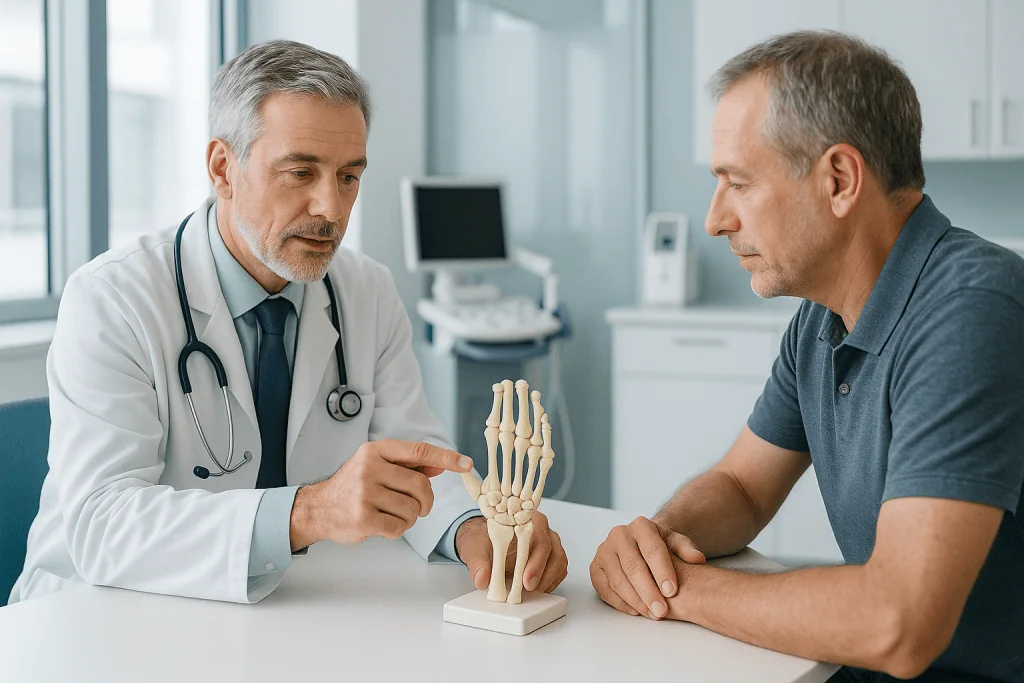
Hand surgery is the surgical treatment of conditions affecting the hand, wrist and sometimes the forearm, including fractures, nerve compression, tendon injuries, arthritis and congenital differences. Procedures range from short releases, such as carpal tunnel surgery, to complex microsurgical reconstruction after trauma. Surgery is considered when splinting, therapy, injections or observation cannot adequately restore comfort and function, and it is almost always paired with structured rehabilitation.
What Is Hand Surgery?
Hand surgery is the surgical treatment of conditions affecting the hand, the wrist and sometimes the forearm. It covers every structure in that region: bones, joints, tendons, ligaments, nerves, blood vessels, skin and soft tissue. It is considered when pain, stiffness, weakness, numbness, deformity or injury cannot be adequately managed with medication, splinting, injections, therapy or watchful waiting, or when an acute injury needs repair before healing closes the window for a good result.
Your hands are involved in nearly every part of daily living: working, dressing, writing, cooking, driving, using a phone, holding a child, or simply feeling the texture and temperature of the world around you. When something goes wrong, the impact feels immediate and personal. Most patients worry about more than pain. They want to know whether they will regain fine movement, grip strength, sensation and confidence in using the hand again. Those are the right questions to ask, because they are exactly what hand surgery is designed to address.
The scope is broad. Some procedures are short and focused, such as releasing a compressed nerve in carpal tunnel syndrome or freeing a locking finger. Others are complex reconstructions requiring microsurgical technique, tendon transfers, fracture fixation, joint reconstruction or soft tissue coverage. In trauma, several structures may be repaired in a single operation: a fractured bone stabilised, a cut tendon sutured and a divided nerve reconnected during the same procedure.
One point matters from the start: the goal of hand surgery is not simply to repair a structure. It is to restore useful function. That may mean improving movement, reducing pain, stabilising a joint, reconstructing a tendon, relieving pressure on a nerve, correcting a deformity or preserving tissue after injury. Because the anatomy of the hand is compact and highly specialised, a good result depends on three things working together: careful diagnosis, precise surgical planning and a structured rehabilitation process. Any one of them alone is not enough.
Not every hand condition needs an operation. Many patients improve with splints, activity modification, hand therapy, anti-inflammatory medication as prescribed by their doctor, corticosteroid injections or ergonomic changes. Surgery enters the discussion when symptoms persist, when function is significantly limited, when a structure is unstable or damaged, or when delaying repair would reduce the chance of recovery. The decision rests on the diagnosis, its severity, timing, your age, occupation, medical history and personal priorities, not on a standard formula.
What is a hand surgeon called?
A hand surgeon is usually an orthopedic hand specialist or a plastic and reconstructive surgeon with additional fellowship-level training in surgery of the hand and wrist; in everyday language, patients simply say hand doctor or hand specialist. All of these names describe the same role. If you have searched for a hand doctor specialist, the formal title you are looking for is a hand surgeon: a physician who has trained first in orthopaedics or plastic surgery and then focused specifically on the hand. Clinic directories sometimes abbreviate the title to “hand sp.” next to a doctor’s name; it marks the same qualification.
Which background suits your case depends on the problem. Fractures, arthritis and joint instability sit naturally within the Orthopedics & Joint Center tradition. Soft tissue reconstruction, microsurgery, nerve repair and complex wound coverage draw heavily on plastic, reconstructive and aesthetic surgery. In practice, experienced hand surgeons from either background treat the full range of conditions, and complex cases are often reviewed jointly. What matters is that the person operating on your hand treats hands as their focus, not as an occasional sideline.
What is the most common type of hand surgery?
Carpal tunnel release is widely regarded as the most frequently performed hand operation, followed closely by trigger finger release and excision of ganglion cysts. These procedures share a pattern: a common condition, a well-understood mechanical cause and a targeted operation that addresses it directly. Fracture fixation is also extremely common, because the hand and wrist are the parts of the body people instinctively use to break a fall. The frequency of a procedure tells you it is well practised; it does not tell you whether it is right for you. That depends on your diagnosis, your symptoms and what you need your hand to do.
Who May Need Hand Surgery?
You may need hand surgery after an acute injury, or because a chronic condition has gradually eroded function. The two paths feel different but end at the same question: can this hand do what you need it to do, and if not, what will change that?
Symptoms vary widely. Some patients experience pain and swelling after trauma. Others notice numbness or tingling in the fingers, loss of grip strength, a finger that locks or catches, visible deformity, limited range of motion, or difficulty with fine tasks such as buttoning clothing, typing or holding utensils. Common reasons for seeking evaluation include persistent hand or wrist pain, finger stiffness, inability to fully bend or straighten a finger, weakness when gripping, swelling around a joint, a lump or cyst, clicking during movement, night-time numbness, burning sensations, cold sensitivity, changes in skin colour after injury, or reduced sensation after a cut. Be aware that an injury can look minor on the surface and still involve deeper tendons, nerves or blood vessels: a small laceration over a flexor tendon is the classic example.
Diagnosis begins with a detailed history and a hands-on examination. The physician evaluates range of motion, grip and pinch strength, finger alignment, joint stability, tendon function, nerve sensation, circulation and the exact location of tenderness. Specific manoeuvres identify nerve compression, tendon triggering, ligament instability or arthritis-related pain. This examination carries real diagnostic weight; imaging confirms and refines what the examination suggests.
Tests are then selected according to the suspected condition, not ordered as a blanket screen:
- X-rays assess fractures, dislocations, arthritis, bone alignment and joint damage. They remain the workhorse of hand and wrist imaging.
- Ultrasound helps evaluate tendons, soft tissue masses and fluid collections, and can show structures moving in real time.
- MRI is useful when ligament injuries, cartilage problems, occult fractures, soft tissue tumours or complex wrist disorders are suspected.
- Nerve conduction studies and electromyography quantify nerve function in carpal tunnel syndrome, cubital tunnel syndrome and other compression conditions, and help establish severity.
- Vascular assessment is added in traumatic injuries when circulation is in question.
Situations that commonly lead to surgery include displaced fractures, unstable dislocations, tendon lacerations, nerve injuries, severe soft tissue wounds, advanced nerve compression, arthritis pain that limits daily activities, trigger finger that has not improved with conservative treatment, Dupuytren’s contracture pulling fingers toward the palm, and ligament injuries causing instability. Timing matters in almost all of these. Some injuries are best repaired early, before tendon ends retract or bone begins to heal out of position. Other conditions allow time for careful planning, a second opinion and medical optimisation. Part of a hand surgeon’s job is telling you which category you are in.
Conditions Treated With Hand Surgery
Hand surgery addresses a wide range of injuries and disorders, and the specific procedure follows from which structures are affected and what functional problem needs correcting. A tendon injury needs repair to restore finger motion. Arthritis needs a procedure that reduces pain and improves stability. Nerve compression needs decompression to protect sensation and muscle function. The categories below cover most of what hand surgeons treat.
Traumatic injuries
Trauma is among the most common reasons for hand surgery. It includes fractures of the fingers, metacarpals or wrist bones; dislocations; tendon cuts; ligament tears; crush injuries; nail bed injuries; fingertip injuries; amputations; burns; and complex wounds involving multiple tissues at once. Treatment may involve wound cleaning, fracture fixation, tendon repair, nerve repair, vascular repair, skin grafting, flap reconstruction or, in selected cases, replantation of an amputated part. Trauma surgery in the hand is often about sequencing: restoring blood flow first, then stability, then the structures that create movement and sensation.
Nerve compression conditions
Nerve compression may require surgical release when symptoms are significant or persistent. Carpal tunnel syndrome occurs when the median nerve is compressed at the wrist, typically causing numbness, tingling, pain and weakness in the thumb, index, middle and part of the ring finger, often worst at night. Cubital tunnel syndrome involves compression of the ulnar nerve around the elbow, affecting the ring and small fingers and sometimes causing weakness of the hand itself. Other entrapments occur in the wrist, forearm or hand. The principle is the same in each: relieve the pressure before the nerve sustains changes that are harder to reverse.
Tendon conditions
Tendon problems include trigger finger, tendon lacerations, tendon ruptures, De Quervain’s tenosynovitis and adhesions after injury. Trigger finger causes locking or catching when a swollen tendon can no longer glide smoothly through its sheath. Tendon lacerations usually need timely repair because the cut ends retract and scar, making later reconstruction more difficult. Some tendon problems are treated with release procedures; others require repair, reconstruction or transfer of a working tendon to take over a lost function.
Arthritis and joint disorders
Arthritis may affect the base of the thumb, the finger joints, the wrist, or joints damaged by previous trauma. It causes pain, swelling, stiffness, deformity and weakness, and the base of the thumb is a particularly common and disabling site, because every pinch and grasp loads that joint. Surgical options include joint debridement, ligament reconstruction, joint fusion, joint replacement in selected joints, and procedures that improve thumb stability. Each option trades something for something; a fusion gives up motion for stability and pain reduction, while a replacement preserves motion at the price of implant longevity concerns. Choosing well means matching the trade-off to how you use your hand.
Congenital and developmental differences
Children born with hand differences, extra fingers, webbed fingers, thumb differences, constriction bands or growth-related deformities, can also be treated surgically. Timing is planned around the child’s development, because the aim is to support function as the hand grows, not simply to change its appearance. This work sits at the intersection of hand surgery and paediatric surgery, and it rewards early, unhurried planning with the family.
Soft tissue masses and skin conditions
Lumps and skin lesions of the hand may need evaluation and removal when they cause pain, limit motion, compress nearby structures or raise diagnostic concern. Common examples include ganglion cysts, giant cell tumours of the tendon sheath, mucous cysts and benign soft tissue growths. Most masses in the hand are benign. In rare cases a tumour requires coordination with oncology, pathology and reconstructive specialists, another reason a lump that changes or grows deserves proper assessment rather than reassurance by guesswork.
How Hand Surgery Is Performed: Preparation, Procedure and Aftercare
Preoperative evaluation and planning
Preparation begins with confirming the diagnosis and defining the goal. Evaluation typically draws on medical records, existing imaging, prior operative reports and results of tests such as nerve conduction studies. The specialist examines the hand directly and requests updated imaging or laboratory tests only if they will change the plan.
The plan covers the procedure itself, anaesthesia options, expected recovery, timing of therapy and potential risks. The surgical team also reviews conditions that affect healing: diabetes, vascular disease, smoking history, immune suppression, bleeding disorders, prior infections, and any blood-thinning or immune-modifying medication you take. Decisions about those medications belong to your treating doctors, who coordinate them around the operation. In trauma, planning is compressed into hours. In elective cases, there is usually time to optimise these factors first, and it is worth taking that time.
You receive instructions about fasting, wound care, splints, and whether someone should accompany you after surgery. If hand therapy will be needed, it is introduced early, because rehabilitation may begin within days of the operation depending on the repair. For some procedures, immobilisation protects healing tissue; for others, guided early motion is what prevents stiffness. The protocol is chosen to match the repair, which is why generic advice from the internet is a poor substitute for your own team’s instructions.
Anaesthesia and surgical setting
Hand surgery may be performed under local anaesthesia, regional anaesthesia, sedation or general anaesthesia. The choice depends on the procedure, your preference, your medical history and the expected duration. Local anaesthesia suits smaller procedures. Regional anaesthesia numbs the whole arm and lets selected patients avoid general anaesthesia entirely. General anaesthesia is usually preferred for complex reconstruction, for children, for extensive trauma and for longer operations. A growing number of routine procedures are also performed with a wide-awake technique, local anaesthetic combined with adrenaline and no tourniquet, often abbreviated WALANT. Because the patient stays comfortable and alert, the surgeon can ask them to bend and straighten the fingers during the operation, checking tendon gliding or the stability of a repair in real time before the wound is closed.
Surgery takes place in an operating room or appropriate procedure setting with sterile technique and continuous monitoring. Many hand operations use magnification so the surgeon can see small structures clearly. A tourniquet on the upper arm may be inflated temporarily to keep the field bloodless and improve visibility. For fracture work, intraoperative imaging confirms bone alignment and implant position before the wound is closed. For nerve or vessel repair, microsurgical instruments and sutures finer than a human hair align the tissue edges.
What happens during the procedure
The exact steps vary by condition, but a typical planned hand operation follows a recognisable sequence:
- Confirmation and marking. The surgeon confirms the operative site and marks the planned incision, following the natural creases and safe zones of the hand.
- Anaesthesia and positioning. The chosen anaesthetic is administered, the arm is positioned on a hand table, and the tourniquet is applied if one will be used.
- Exposure. The incision is made and tissue layers are separated carefully, protecting nerves and vessels that cross the field.
- The definitive repair. The core work is done, release, repair, fixation, reconstruction or excision, depending on the diagnosis.
- Verification. The surgeon checks the result: tendon gliding, joint motion, fracture alignment under imaging, or circulation after vessel repair.
- Closure and protection. The wound is closed in layers, dressed, and usually protected in a splint positioned to keep the repair safe.
Within that framework, the details differ enormously. In a fracture operation, the surgeon realigns the bone and stabilises it with pins, screws, plates or other fixation, aiming to restore alignment while allowing healing and future movement. In a tendon repair, the cut ends are retrieved and sutured with techniques that balance strength against smooth gliding, then protected in a splint that positions the tendon safely. For carpal tunnel release, the surgeon divides the ligament forming the roof of the tunnel to take pressure off the median nerve, through an open or minimally invasive approach depending on anatomy and the surgeon’s recommendation. For trigger finger, a tight pulley is released so the tendon glides freely again. For Dupuytren’s contracture, diseased tissue is removed or released to improve finger extension, followed by splinting and therapy where needed.
Arthritis surgery is chosen joint by joint. Some patients benefit from removal of painful bone surfaces and reconstruction of supporting ligaments. Others need fusion to create a stable, pain-reduced joint: a sensible choice when motion is already limited and strength matters more. Joint replacement is considered for selected finger or wrist joints, weighing age, activity level, bone quality and expectations.
Complex trauma demands layered reconstruction. The surgeon cleans the wound, removes tissue that cannot survive, repairs vessels to restore blood flow, repairs nerves to give sensation a path back, repairs tendons, stabilises bone and covers exposed structures with healthy tissue. These operations can be lengthy and are sometimes staged across more than one procedure. The first operation often has a modest, crucial goal: preserve tissue, prevent infection and create the conditions for functional recovery later.
What is the most difficult hand surgery?
Replantation, reattaching an amputated finger, thumb or hand, is generally considered the most technically demanding hand operation, because bone, tendons, nerves, arteries and veins must all be repaired under the microscope in a single, time-critical procedure. Among planned operations, flexor tendon repair in the zone where the tendons run through their tight sheath in the finger has historically been called “no man’s land” by surgeons, because the margin between a tendon that glides and one that scars down is so narrow. Difficulty is not only technical: complex reconstructions also demand months of disciplined rehabilitation, and the outcome depends on that phase as much as on the operation itself.
Technology used to support accuracy and safety
Modern hand surgery relies on careful imaging, magnification, microsurgical instruments and specialised fixation systems. Digital X-rays identify fractures and joint changes. Intraoperative imaging guides alignment during fixation. Ultrasound and MRI support soft tissue diagnosis in selected cases. Magnification and microsurgical technique make nerve, vessel and fine tendon work possible at all. Custom splints and rehabilitation protocols protect repairs while allowing the earliest safe return of movement.
Keep the technology in perspective. It supports decision-making and precision; it does not replace clinical judgement. The surgeon’s understanding of anatomy, tissue handling, timing and rehabilitation remains central. At Acibadem, surgical planning is supported by modern diagnostic pathways, imaging resources, anaesthesiology services, operating room infrastructure and coordinated postoperative care: the infrastructure around the surgeon, not a substitute for one.
How long does the operation take, and will you stay in hospital?
Duration varies considerably. Trigger finger release and carpal tunnel release are relatively brief. Fracture fixation, tendon reconstruction, arthritis procedures and complex trauma take longer, sometimes much longer. Many routine hand ops are performed as day cases: after a period of observation, you return to your accommodation the same day. Hospitalisation is reserved for more complex situations, patients needing intravenous antibiotics, replantation, flap coverage or close monitoring of circulation.
Plan beyond the operation date. The first dressing change, wound check, splint adjustment and therapy instructions are genuine parts of the treatment, not administrative extras. Build them into your schedule from the start, because the timing of each step depends on the procedure, stitches, splints and pins are removed or adjusted at set points, and early therapy sessions are placed deliberately within the healing timeline.
Recovery After Hand Surgery
Recovery after hand surgery is highly individual, but the early pattern is consistent: swelling, tenderness and stiffness are normal at first, and elevation, wound care, medication as prescribed and correct splint use are what move healing forward. You will usually be told to keep the shoulder and elbow moving to prevent stiffness in joints that were never operated on. Finger movement is either encouraged or restricted depending on the repair, follow whichever instruction you were given, because the protocols for a tendon repair and a fracture are close to opposites.
Hand therapy is essential after many procedures. A specialised hand therapist provides custom splints, swelling control, scar management, range-of-motion exercises, strengthening programmes and functional retraining. Therapy matters most after tendon repair, fracture fixation, joint reconstruction and nerve injury. Your own participation has a major influence on the final result, arguably as much influence as the surgery itself.
Some improvements arrive quickly: the locking stops after trigger finger release, and night numbness often eases early after carpal tunnel surgery. Other recoveries take months. Nerve healing is slow, and sensation returns gradually. Strength typically comes back later than motion. Scar sensitivity can persist for a period and usually settles with desensitisation work. Your team will tell you when typing, driving, sport, manual work and lifting are appropriate for your specific procedure.
| Time period | What patients can generally expect |
|---|---|
| Day 1 | The hand is protected in a dressing or splint. Elevation reduces swelling. Mild to moderate discomfort is common and managed with prescribed medication. |
| First week | A wound check or dressing change is scheduled. Some patients begin gentle exercises; others remain immobilised to protect a repair or fixation. |
| First month | Swelling and stiffness gradually improve. Stitches are removed when appropriate. Therapy focuses on motion, scar care, oedema control and safe functional use. |
| Two to three months | Strengthening begins if healing allows. Office work usually resumes earlier than heavy manual labour, sport or lifting. |
| Longer term | Strength, coordination and sensation can continue improving over many months. Nerve recovery and complex reconstruction need the longest rehabilitation. |
How long does hand surgery take to recover?
There is no single answer, because “hand surgery” spans everything from a brief release to staged reconstruction, but a useful rule is that light use returns within weeks, while strength and full confidence take months. After a straightforward carpal tunnel or trigger finger release, many patients use the hand for light tasks within days and feel largely normal within weeks, though grip strength and scar comfort continue improving after that. After fracture fixation, bone needs weeks to unite before loading increases. After tendon repair, the protected phase alone lasts weeks, and strengthening follows only once the repair can bear it. Nerve recovery is the slowest of all, measured in months because nerves regrow gradually along their length. Ask your surgeon for the expected course of your operation: a good answer will include a range, not a promise.
What are the warning signs after hand surgery?
The warning signs surgical teams ask patients to watch for are: pain that increases rather than settles, spreading redness or warmth around the wound, fever, discharge or a bad odour from the dressing, fingers that become pale, blue, cold or dramatically more swollen, a dressing or splint that feels progressively tighter, and new numbness that was not present after the operation. Each of these can signal a problem, infection, pressure from swelling, or a circulation issue, that is far easier to address early than late. Normal recovery follows the opposite pattern: discomfort and swelling that gradually decrease day by day. Your discharge instructions explain exactly how these concerns are reviewed by the team responsible for your care; keep those instructions and your splint schedule to hand until healing is established.
What to expect after hand surgery with pins
Pins, thin metal wires, often called K-wires, hold bone fragments in position while a fracture heals, and living with them is usually more manageable than patients fear. Some pins sit entirely under the skin; others protrude slightly through it under a protective dressing. If a pin site is exposed, you will be shown how to keep it clean and dry, because pin-site irritation is the most common nuisance. The hand is normally splinted while pins are in place, and movement of the pinned area is restricted deliberately. Pins are typically removed in clinic once X-rays confirm healing, for most patients this is a quick procedure and does not require a second full operation. Expect stiffness after removal; that is normal after any period of immobilisation, and therapy afterwards is what restores motion. The pinned phase is temporary scaffolding, not the end result.
How long after hand surgery can I drive?
You can drive again when you can grip the wheel firmly with both hands, perform an emergency manoeuvre without hesitation, and are no longer taking medication that impairs alertness, and your surgical team will tell you when that applies to your case. In practice, some patients return to driving within days of a minor release once the dressing allows a solid grip, while patients in a cast or splint after fracture or tendon surgery wait weeks, until the protection is removed and control returns. Two practical points deserve attention: a splinted hand cannot react properly in an emergency even if routine driving feels easy, and insurers may not cover a driver who was medically advised not to drive. Get the clearance in plain words at your follow-up visit rather than estimating it yourself.
How to take care of your hand after carpal tunnel surgery
Care after carpal tunnel release follows a simple sequence: protect the wound, keep the fingers moving, and rebuild grip gradually. In the first days, keep the dressing clean and dry and the hand elevated to limit swelling. Move your fingers gently and often from the start unless told otherwise, finger motion prevents stiffness and helps the tendons glide. Avoid heavy gripping, twisting and weight-bearing through the palm while the wound heals. Once the wound has closed and your team confirms it, scar massage as they demonstrate helps soften the area; tenderness in the heel of the palm, sometimes called pillar pain, is common and settles gradually. Night numbness often improves early; grip strength recovers more slowly over the following weeks. If nerve compression was long-standing before surgery, sensation may improve only partially and over a longer period: a point worth understanding before the operation, not after.
Why Acting Early Matters
Hand problems worsen when diagnosis or treatment is delayed, and some deadlines are biological. A cut tendon retracts and becomes harder to repair. A fracture heals in poor alignment, producing stiffness, deformity or weakened grip. A nerve compressed for a long period develops numbness and muscle weakness that persist even after release. An untreated infection can spread along tendon sheaths and through the deep spaces of the hand, threatening function in a way that antibiotics alone cannot always contain.
Early evaluation does not mean early surgery. It means the condition is assessed before preventable changes occur. Early diagnosis often allows a simpler plan: a stable fracture identified promptly may be treated with immobilisation alone, while the same fracture found late and displaced needs fixation. A mild nerve compression may be monitored or treated conservatively; severe compression with muscle weakness is a different conversation. The examination is the same either way, what changes with delay is the menu of options.
Chronic conditions carry their own cost of waiting. People avoid using a painful hand, and the hand weakens and stiffens through disuse. They overload the other hand, or develop shoulder, elbow and neck discomfort from compensating. In arthritis, progressive deformity narrows the range of surgical options. In Dupuytren’s contracture, the more the fingers bend into the palm, the harder correction and rehabilitation become. None of this argues for rushing into an operation. It argues for finding out where you stand while every option is still open.
Benefits of Hand Surgery
The benefits depend on the underlying condition, but treatment is aimed at improving comfort, function, stability and everyday use of the hand.
| Benefit | What it means for you |
|---|---|
| Improved hand function | Repairing or reconstructing damaged structures can restore grasp, pinch, finger motion and the ability to perform daily tasks. |
| Pain reduction | Procedures for arthritis, nerve compression, fractures or tendon irritation can reduce pain that interferes with sleep, work and routine activity. |
| Better alignment and stability | Correcting fractures, dislocations or joint deformity supports more efficient movement and reduces abnormal stress on surrounding tissue. |
| Protection of sensation and strength | Nerve decompression or repair can help prevent worsening numbness, weakness or muscle loss, especially when performed at the right time. |
| Return to work and independence | With appropriate healing and rehabilitation, many patients resume professional, household and personal activities with greater confidence. |
What Influences the Outcome of Hand Surgery?
A good result depends on several factors working together: accurate diagnosis, appropriate timing, surgical technique, tissue quality, your general health and disciplined rehabilitation. The hand is biologically unforgiving of shortcuts. A technically perfect repair becomes stiff if motion is not guided properly; aggressive activity too soon overloads healing tissue. The best outcomes come from aligning the operation and the rehabilitation with the specific condition, not from either one alone.
The nature of the problem is central. A clean tendon cut repaired early has a different recovery profile from a crush injury involving bone, skin, nerve and vessels. Mild nerve compression improves more predictably than long-standing compression with muscle wasting. Timing matters throughout: some injuries need urgent surgery to preserve tissue; others should wait until swelling settles or imaging is complete. In elective cases, controlling diabetes, improving nutrition, stopping smoking and coordinating existing medication with your physicians all support healing: your treating doctors manage those adjustments as part of the plan.
Rehabilitation is often the single largest variable you control. Hand therapy reduces swelling, prevents stiffness, guides tendon gliding, protects repairs, mobilises scars and rebuilds strength. Patients who follow splinting and exercise instructions carefully give themselves the best chance of functional improvement. Because you use your hands constantly, this takes real discipline in both directions: doing the prescribed exercises, and resisting the activities that would overload the repair.
Expectations should be individualised and honest. Some operations aim for near-normal use, particularly when the condition is limited and treated early. Others aim to reduce pain, prevent deterioration or restore the ability to perform essential tasks. After serious trauma, the hand may need staged surgery, prolonged therapy and a degree of adaptation. A trustworthy care team explains the likely course including its uncertainty, so you can decide with open eyes.
How successful is hand surgery for arthritis?
Arthritis surgery reliably reduces pain for most appropriately selected patients, but it cannot return a worn joint to its original condition, and understanding that distinction is the key to being satisfied with the result. Pain relief is the most dependable benefit; improvements in strength and motion vary with the joint, the procedure and the state of the surrounding tissue. Fusion trades motion for stability and durable pain reduction. Joint replacement preserves motion but suits some joints and some patients better than others. Procedures at the base of the thumb typically ease pinch pain while grip strength rebuilds slowly through therapy. Success also depends on what you measure it against: a hand that lets you sleep, work and manage daily tasks without constant pain is a genuine success, even if it is not the hand of twenty years ago. Discuss with your surgeon what your specific procedure can and cannot deliver before you commit.
What are the risks?
Risks are discussed openly before any operation. Depending on the procedure, they may include infection, bleeding, stiffness, swelling, scar sensitivity, delayed healing, nerve irritation, persistent numbness, tendon adhesion or rupture, complex regional pain syndrome, implant irritation, recurrence of the condition, incomplete symptom relief, or the need for further surgery. The likelihood of each varies with the procedure and with patient factors such as smoking, diabetes and tissue quality. Careful technique, sterile protocols, structured follow-up and early recognition of problems reduce avoidable complications, which is one more reason the follow-up schedule deserves the same respect as the operation date.
Hand Surgery at Acibadem
Patients considering hand surgery at Acibadem are evaluated through an evidence-based diagnostic pathway, with treatment planned around the individual condition, functional goals, overall health and recovery needs. Depending on the diagnosis, care may involve orthopaedic hand surgeons, plastic and reconstructive surgeons, radiologists, neurologists, anaesthesiologists, physiatrists, hand therapists, infectious disease specialists or other physicians. Complex cases, trauma, tumours, congenital differences, nerve injuries, reconstructive problems, are reviewed through specialist collaboration when more than one discipline has something to contribute. You can read more about how Acibadem matches patients with the right specialist.
The diagnostic process uses X-ray, ultrasound, MRI, nerve conduction studies and laboratory testing selectively, to clarify the problem rather than to pad the file. In theatre, magnification, microsurgical methods, imaging guidance and specialised fixation or reconstruction techniques are used according to the case. These resources let the team plan around the small anatomical details that matter disproportionately in the hand.
Hand therapy is built into the same pathway rather than left to chance. Splinting, oedema control, scar management and graded exercise are planned alongside the operation itself, so the protected phase and the mobilisation phase follow the repair that was actually performed rather than a generic template: a distinction that matters most after tendon, nerve and fracture surgery.
Treatment planning is individual because priorities are individual. A musician, a surgeon, an office professional, a manual worker and an older adult with arthritis may share a diagnosis and still need different plans, different immobilisation strategies, different therapy schedules, different return-to-activity guidance. Physicians discuss the available options, expected benefits, limitations, recovery time and risks so that the decision is genuinely yours.
Because rehabilitation is inseparable from surgical success, postoperative planning is addressed before the operation, not after it. Some patients complete the first phase of follow-up with the surgical team and then continue therapy closer to home with written instructions; others are followed more closely for longer when the procedure demands it. The right arrangement depends on the type of surgery, wound healing and therapy needs, and clear documentation supports continuity of care between everyone involved in your recovery.
Making an Informed Decision About Hand Surgery
Living with hand pain, numbness, stiffness or lost movement wears down independence, work and confidence, whether the problem began with a single injury or crept up over years. A precise evaluation clarifies what is actually happening and which options exist. Sometimes the honest answer is that non-surgical treatment remains appropriate. Sometimes surgery offers the best opportunity to reduce symptoms, restore function or prevent further loss. Either answer is only as good as the diagnosis behind it.
Whoever treats you, the useful questions are the same. What exactly is the diagnosis, and how certain is it? What happens if nothing is done? What does the operation involve, and what does the rehabilitation demand of you? When will you regain light use, and when strength? What can this procedure realistically deliver, and what can it not? A second opinion is a reasonable step for any significant hand operation, and a competent hand specialist will not be offended by it. The decision belongs to you; the job of good medical care is to make sure you take it with accurate information, realistic expectations and a plan that extends past the operating room to the months of recovery that determine the result.
Preparation
- Before surgery, the hand is examined with imaging or nerve tests when needed. Patients should share all medications, allergies and medical conditions with the care team. Blood thinners may need adjustment, and fasting is usually required if sedation or general anesthesia is planned.
Aftercare
- The hand is usually protected with a dressing, splint or cast after surgery. Elevation, wound care and prescribed pain medication help reduce swelling and discomfort. Hand therapy may be recommended to restore motion, grip strength and fine motor function.
Frequently Asked Questions
What affects the cost of hand surgery?
Cost is influenced by the diagnosis, procedure complexity, surgeon and hospital factors, anaesthesia, imaging, implants or grafts, hospital stay, rehabilitation, splints and follow-up needs. A specialist review is needed to define the most appropriate plan.
How can I get a personalised quote for hand surgery in Turkey?
You can request a free consultation and share your medical reports, images, test results and photos of the affected hand if available. The team can then review your case and provide a personalised treatment and cost estimate.
Is rehabilitation included in the cost?
It depends on the package and the recommended procedure. Hand therapy, splints, dressing changes and follow-up visits may be included or listed separately, so it is important to ask what the quote covers.
Will the same surgical option be suitable for every patient?
No. Suitability depends on the condition, severity, timing of injury, nerve or tendon status, joint health, occupation, activity level and general health. A hand surgery specialist decides the best option after assessment.
What should international patients check before travelling?
Patients should confirm the surgeon’s experience with their condition, hospital accreditation, what the package includes, interpreter support, expected length of stay, rehabilitation plan and how follow-up will be coordinated after returning home.
Medically reviewed by the Acıbadem International Medical Board September 13, 2026
See our medical review board →
Update history
- PublishedJune 7, 2026
- Medical review approvedSeptember 13, 2026
- Last content updateSeptember 12, 2026
References1
- Hand Injuries and Disorders medlineplus.gov
Trusted care for international patients
From the Acibadem Blog

What Does Hand Therapy Involve After Surgery and Why Does Timing Matter So Much?
Hand therapy after surgery is a supervised program of swelling control, protective splinting, graded movement, scar care and strengthening, usually led by an occupational…