Are You Awake During Cataract Surgery: Procedure, Recovery and Results

Cataract surgery is commonly performed while the person is awake, with numbing eye drops and, when needed, calming medication. Patients are asked to lie still and follow simple instructions, but they should not feel pain or see detailed surgical instruments.
Key Takeaways
- Cataract surgery is commonly performed while the person is awake, with numbing eye drops and, when needed, calming medication.
- Patients are asked to lie still and follow simple instructions, but they should not feel pain or see detailed surgical instruments.
- There is usually no required bed rest after surgery; quiet activity is generally encouraged while the eye recovers.
- Follow-up care and prescribed eye drops are important for healing and for reducing the risk of infection and inflammation.
- Sudden vision loss, worsening pain, marked redness, flashes, or a curtain-like shadow require urgent eye assessment.
Most people are awake during cataract surgery, but the eye is numbed and light sedation is commonly used to reduce anxiety and discomfort. The procedure is usually brief, and vision commonly improves gradually as the eye heals.
Are you awake during cataract surgery?
Yes. Most people are awake during cataract surgery, although the eye is made numb with anesthetic drops and an injection around the eye may occasionally be used. Many people also receive light sedation through a vein to help them feel calm and sleepy. General anesthesia, where a person is fully asleep, is less common and may be considered for children, people unable to remain still, or selected medical circumstances.
Being awake does not mean a person is expected to tolerate pain. The surgical team monitors comfort throughout the procedure, and the patient can tell staff if they are uncomfortable or anxious. Cataract surgery is usually performed as an outpatient procedure, meaning most people go home the same day with a responsible adult.
A cataract is clouding of the eye’s natural lens. It can cause blurred or dim vision, glare from lights, faded colors, and difficulty reading or driving at night. Surgery removes the cloudy lens and replaces it with a clear artificial intraocular lens. Learn more about cataracts and their symptoms.
How cataract surgery works and who may benefit
Cataract surgery is considered when vision changes interfere with daily activities, such as reading, using screens, recognizing faces, working, or driving safely. The decision is based on a person’s symptoms and goals rather than the cataract’s appearance alone. An ophthalmologist assesses vision, eye health, and whether another condition, such as glaucoma, macular degeneration, or diabetic eye disease, may also affect expected results.
Before surgery, measurements of the eye help the surgeon select an intraocular lens. Lens choices may be designed primarily for distance vision or may reduce dependence on glasses at more than one distance. The best option depends on the eye’s anatomy, lifestyle needs, visual priorities, and any coexisting eye conditions.
People taking blood thinners, medicines for prostate symptoms, or other regular prescriptions should share this information before surgery. They should not stop prescribed medicines without advice from the clinician managing them. The ophthalmology team will provide individualized instructions about eating, drinking, eye drops, transport home, and any medications to adjust.
For patients considering the procedure, cataract surgery evaluation and treatment can clarify lens options, anesthesia planning, and the expected recovery process.
Step by step: what happens during the procedure

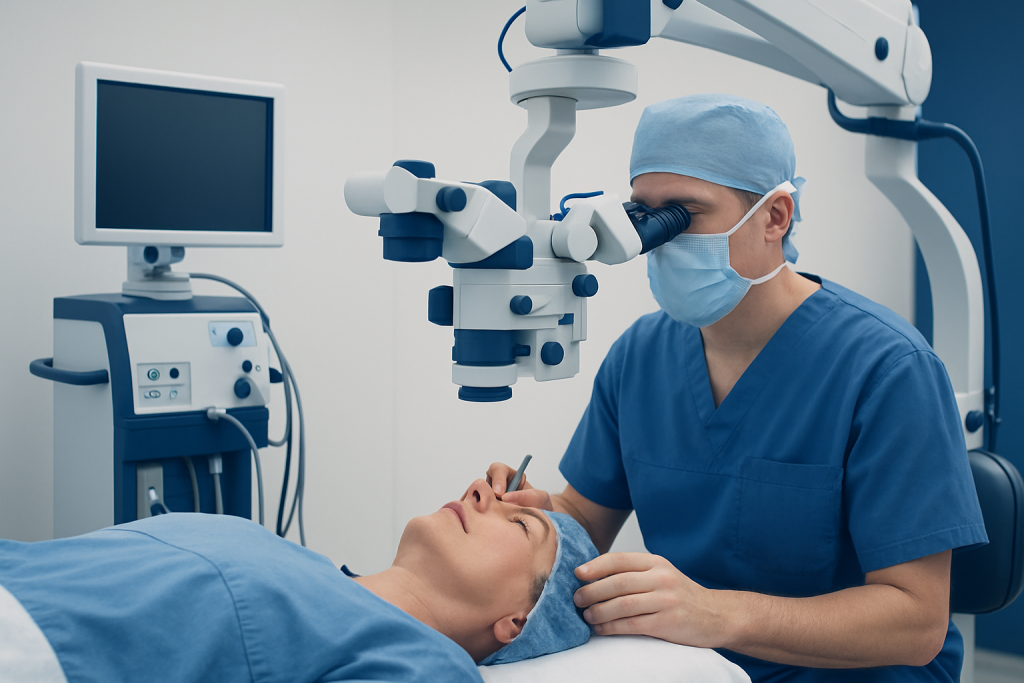
On the day of surgery, the eye is checked and dilating drops are usually given. The patient lies comfortably on a reclining operating table, and the face is covered with a sterile drape while the surgical eye remains accessible. The team cleans the area and applies numbing drops. Sedation may be given to promote relaxation, but it is usually light enough for the patient to respond to instructions.
The surgeon makes a very small opening in the eye and uses ultrasound energy to break up the cloudy natural lens, a technique called phacoemulsification. The lens pieces are gently removed, and a folded artificial lens is placed inside the lens capsule. The small incision generally seals without stitches, although the exact approach can vary with the eye and cataract type.
The operation itself often takes less than an hour, though preparation and recovery-room time make the visit longer. Most patients return home the same day. The operated eye may be covered with a shield for the journey home or while sleeping, depending on the surgeon’s instructions.
During the operation, patients should avoid squeezing the eyelids, moving suddenly, or speaking unless needed. If they need to cough, change position, or feel discomfort, they can alert the team. Clear communication helps the procedure proceed safely.
Is it normal to be awake during cataract surgery?
Yes, it is normal and routine to be awake during cataract surgery. Local anesthesia blocks sensation in the eye, and light sedation can make the experience feel less stressful. Some people remember little of the procedure because they are relaxed or drowsy, while others remain more aware of sounds and general activity in the room.
People who are very anxious should discuss this before the operation. The anesthesia and ophthalmology teams can explain the available comfort measures and decide whether additional support is appropriate. It is important to disclose breathing conditions, sleep apnea, medication allergies, previous anesthesia concerns, and use of alcohol or sedating medicines.
Fully asleep anesthesia is not automatically safer or necessary for routine cataract surgery. It has its own considerations and is generally reserved for circumstances in which local anesthesia and light sedation are not suitable. The final plan should be individualized after a preoperative assessment.
Can you see what they are doing during cataract surgery?
Patients do not usually see the surgeon, surgical instruments, or detailed steps of the operation. The eye is dilated, the view is affected by bright operating lights, and the brain does not process a normal visual image during surgery. Some people notice light, colors, moving shadows, or a vague swirling pattern, which is generally expected.
Visual sensations differ from person to person and may be influenced by the cataract, anesthesia, and the type of light used in the operating room. These sensations should not be painful. If a patient feels pain, pressure that is difficult to tolerate, or sudden anxiety, they should tell the team immediately.
After the operation, vision may initially seem hazy, bright, watery, or unusually colorful. This often improves over the first days and weeks as the eye settles. The pace of recovery varies, especially when dry eye, corneal swelling, retinal disease, or other eye conditions are present.
Recovery timeline, activity and visual results
Recovery starts immediately after surgery, but the eye needs time to heal. In the first 24 hours, mild grittiness, tearing, light sensitivity, and blurred vision can occur. The patient should rest at home, use prescribed drops exactly as directed, avoid rubbing the eye, and attend planned follow-up visits. A protective shield may be recommended during sleep for several days.
Vision can improve quickly for some people, but steadier improvement often occurs over days to several weeks. New glasses, if needed, are commonly prescribed only after the eye has stabilized. People with other eye diseases may have a different degree or speed of visual improvement, and the ophthalmologist can provide more personalized expectations.
How long is bed rest after cataract surgery? Bed rest is usually not required. Resting quietly on the day of surgery is sensible, especially while the effects of sedation wear off, but gentle movement around the home is generally acceptable. Patients should avoid heavy lifting, strenuous exercise, swimming, dusty environments, and any activity that risks injury or water entering the eye until their surgeon says it is safe.
Can I go for a walk 2 days after cataract surgery? In many cases, an easy walk is acceptable two days after surgery if vision is adequate, the patient feels well, and the surgeon has not given different advice. Walking should be unhurried, with care to avoid falls, crowded settings, windblown dust, and strenuous uphill exercise. Sunglasses can improve comfort outdoors, and any activity restriction given by the surgical team takes priority.
Benefits, possible risks and when to seek medical care
The main benefit of cataract surgery is clearer vision, which may make everyday tasks easier and improve sensitivity to contrast and glare. It can also allow an ophthalmologist to better examine and manage the back of the eye when needed. However, no procedure can guarantee a particular visual result, because the outcome also depends on the health of the cornea, retina, optic nerve, and other parts of the eye.
Most people heal without serious problems, but possible complications include inflammation, infection, bleeding, increased eye pressure, corneal swelling, retinal swelling, retinal detachment, or displacement of the artificial lens. A later clouding of the lens capsule, sometimes called a secondary cataract, can occur months or years afterward and can often be treated with a laser procedure.
When to seek medical care: Patients should contact their eye surgeon promptly if they have worsening or severe eye pain, rapidly decreasing vision, increasing redness, significant discharge, persistent nausea or vomiting, new flashes of light, many new floaters, or a dark curtain or shadow in their vision. These symptoms do not always indicate a serious complication, but they need timely assessment.
Acibadem International’s multidisciplinary specialists and JCI-accredited hospitals diagnose and treat cataracts for international patients, with care plans based on individual eye findings and recovery needs.
Frequently asked questions
Do you feel pain during cataract surgery?
With numbing eye drops or local anesthesia, most people should not feel pain during cataract surgery. They may notice pressure, touch around the eye, bright light, or movement sensations. The surgical team should be told immediately if discomfort becomes painful or difficult to tolerate.
Are you put to sleep for cataract surgery?
Most adults are not fully asleep for routine cataract surgery. They are usually awake with a numb eye and may receive light sedation to help them relax. General anesthesia may be used in selected situations when it is medically appropriate.
How long does cataract surgery take?
The surgical portion commonly takes less than an hour and is often much shorter, depending on the eye and cataract. Preparation before surgery and observation afterward mean the total appointment takes longer. Most people return home on the same day.
When can normal activities resume after cataract surgery?
Light daily activities often resume within a day or two, provided the person feels well and follows the surgeon's instructions. Heavy lifting, vigorous exercise, swimming, and activities that could expose the eye to dirt or impact usually need to wait. The timing varies, so the surgeon's individualized advice is important.
Why is vision blurry after cataract surgery?
Temporary blurred vision can result from normal healing, dilating drops, mild corneal swelling, dryness, or inflammation. It often improves over the first few days to weeks. Vision that suddenly worsens or is accompanied by pain, redness, flashes, or a curtain-like shadow needs urgent review.
Will glasses still be needed after cataract surgery?
Some people still need glasses after surgery, especially for reading, computer work, or detailed close tasks. Whether glasses are needed depends on the selected intraocular lens, the eye's healing, and any remaining refractive error. An eye professional can check for the most suitable prescription after recovery.
References
- American Academy of Ophthalmology
- National Eye Institute
- National Health Service
- Mayo Clinic
This article is for general information only and is not a substitute for professional medical advice. Please consult a qualified doctor about your individual situation.
Cataract Surgery in Turkey — costs, top hospitals & a free quote
JCI-accredited · board-certified surgeons · reply within 24h

Ophthalmology
Comprehensive eye care from laser vision correction to retina, cornea and cataract surgery.
75 specialists in this unitMore from the Health Library



Related Specialists

Dr. Ahsen Ercan
Physical Medicine & Rehabilitation
Dr. Nezihi Ün
Ophthalmology
Prof. Dr. Ayhan Aşkın
Physical Medicine and Rehabilitation
Dr. Sezgi Güllü Erciyestepe
Gynecology & Obstetrics