Blood During Vomiting in Pregnancy: A Complete Clinical Guide for Patients

Small streaks of blood after repeated vomiting can happen from irritation or tiny tears in the upper digestive tract. Bright red blood, large amounts of blood, weakness, fainting, severe abdominal pain, or black stools need urgent medical care.
Key Takeaways
- Small streaks of blood after repeated vomiting can happen from irritation or tiny tears in the upper digestive tract.
- Bright red blood, large amounts of blood, weakness, fainting, severe abdominal pain, or black stools need urgent medical care.
- A doctor may assess both pregnancy-related nausea and possible digestive causes such as esophageal tears, ulcers, or reflux-related inflammation.
- Treatment depends on the cause and may include fluids, anti-nausea medicines, acid-reducing treatment, and management of dehydration.
- Persistent vomiting in pregnancy should not be self-managed alone, especially if eating, drinking, or passing urine becomes difficult.
Blood during vomiting in pregnancy is not a normal symptom, but it does not always mean a serious emergency. In many cases, small streaks of blood come from irritation in the throat or food pipe after repeated vomiting, while heavier bleeding, dizziness, black stools, or severe pain need urgent medical assessment.
Overview
Blood during vomiting in pregnancy means that some blood appears in vomit while a person is pregnant. This may look like red streaks mixed with mucus or food, dark brown material that resembles coffee grounds, or more obvious fresh blood. Although this symptom can be frightening, the cause is not always severe.
In pregnancy, frequent retching and forceful vomiting can irritate the throat and esophagus, the tube that carries food to the stomach. This can lead to small amounts of bleeding. At the same time, blood in vomit should never be ignored because it can also come from conditions such as inflammation, ulcers, or a tear in the lining of the upper digestive tract.
The most important step is to consider the amount of blood, how often it happens, and whether there are other symptoms such as dizziness, chest pain, severe abdominal pain, dehydration, or black stools. A clinician will assess both maternal health and pregnancy-related factors. If vomiting is severe or prolonged, doctors may also evaluate for hyperemesis gravidarum, a more serious form of nausea and vomiting in pregnancy.
What it can look like and common symptoms
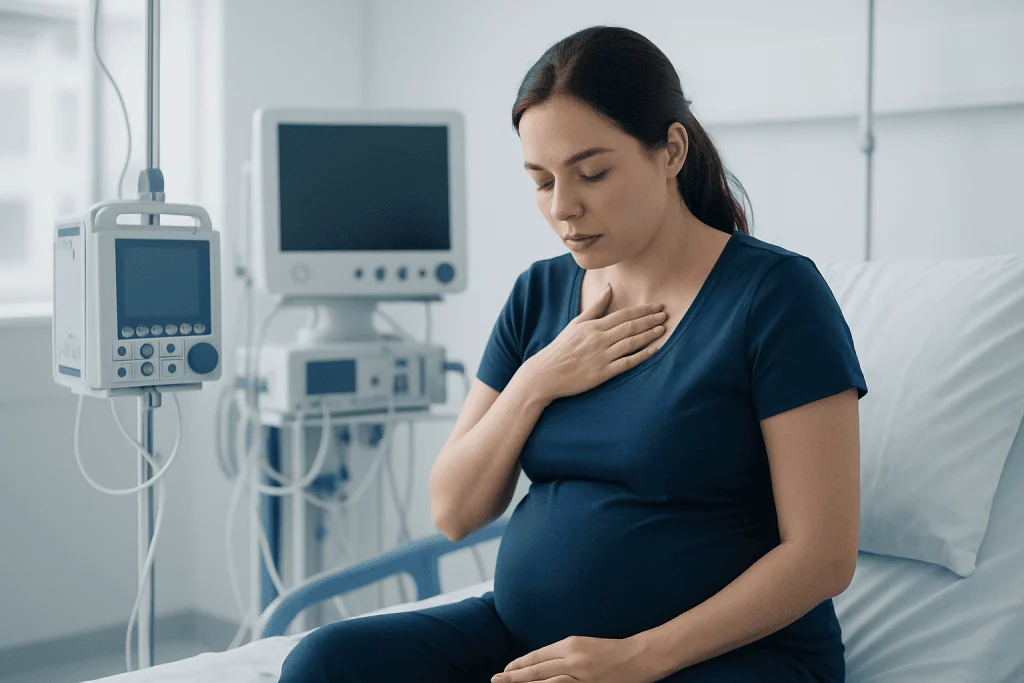
Blood in vomit can appear in different ways. A few pink or red streaks after repeated retching may suggest minor irritation in the throat or esophagus. Dark brown or coffee-ground material may indicate blood that has been in contact with stomach acid. Larger amounts of bright red blood may point to more active bleeding and need urgent medical attention.
Symptoms that may occur alongside blood during vomiting in pregnancy include ongoing nausea, repeated retching, burning behind the breastbone, sore throat, upper abdominal discomfort, weakness, dry mouth, and reduced urine output. If bleeding is more significant, a person may feel lightheaded, faint, unusually sleepy, or short of breath.
It can also help to notice whether the blood is truly coming from vomit or from another source. For example, bleeding gums, a nosebleed, or coughing up blood can mix with saliva and be mistaken for blood from the stomach. A medical assessment can help identify where the bleeding started.
- Small streaks of blood after severe retching are often less concerning than repeated or heavy bleeding.
- Black or tarry stools may suggest digested blood from the upper digestive tract.
- Inability to keep fluids down can quickly lead to dehydration in pregnancy.
Causes and risk factors

The most common reason for blood during vomiting in pregnancy is irritation from repeated vomiting. Frequent retching can inflame the lining of the throat or esophagus and may cause small surface bleeding. In some cases, forceful vomiting can lead to a small tear where the esophagus meets the stomach, sometimes called a Mallory-Weiss tear.
Other digestive causes are also possible. These include acid reflux, gastritis, peptic ulcer disease, or less commonly bleeding from enlarged veins in the esophagus in people with liver disease. Pregnancy itself does not directly cause all of these problems, but hormonal changes and pressure on the stomach can worsen reflux and nausea, making irritation and bleeding more likely.
Risk factors include severe morning sickness, dehydration, previous stomach or esophageal disease, use of medicines that irritate the stomach lining, alcohol use, smoking, and a history of ulcers. A clinician may also consider whether there is vomiting with significant weight loss, persistent inability to eat or drink, or signs of a more serious digestive problem. If symptoms suggest an upper digestive source, doctors may investigate conditions related to gastrointestinal bleeding.
Not all blood seen during vomiting is from the digestive tract. Blood swallowed from a nosebleed, dental bleeding, or trauma to the mouth can later appear in vomit. This is another reason doctors ask about recent nose, gum, or throat symptoms as part of the evaluation.
How doctors diagnose the cause
Diagnosis starts with a careful history and physical examination. The doctor will ask when the vomiting began, how often it happens, the amount and color of blood, whether there is abdominal pain or heartburn, and whether the person can keep fluids down. They will also check hydration, blood pressure, pulse, and general appearance.
Blood tests may be used to look for anemia, dehydration, infection, or problems with electrolytes. Urine testing can help assess dehydration and ketones, especially when vomiting is severe. In pregnancy, the evaluation may also include checking fetal well-being when appropriate for the stage of pregnancy.
If the bleeding seems more than minor, or if there are warning signs such as ongoing blood loss, black stools, low blood pressure, or severe pain, doctors may recommend further digestive evaluation. This can include specialist assessment in gastroenterology and, in selected cases, endoscopy to identify the bleeding source. The choice of tests depends on symptoms, trimester, and the urgency of the situation.
The goal is not only to find the source of blood but also to determine how much the vomiting is affecting nutrition, hydration, and day-to-day safety. That broader picture guides treatment and helps protect both maternal health and pregnancy health.
Treatment options
Treatment depends on the cause, the amount of bleeding, and how unwell the patient feels. If there are only tiny streaks of blood after repeated vomiting and no signs of dehydration or ongoing bleeding, management may focus on controlling nausea, protecting the esophagus and stomach, and improving fluid intake. Doctors may recommend pregnancy-appropriate anti-nausea treatment, dietary changes, and medicines that reduce acid or soothe inflammation when clinically appropriate.
When vomiting is frequent or dehydration is present, medical treatment may include oral rehydration guidance or intravenous fluids. If eating and drinking are difficult, doctors may temporarily treat in hospital to correct fluid and electrolyte problems and monitor response. This is especially important when there is suspected hyperemesis gravidarum or repeated episodes of blood in the vomit.
If a specific digestive cause is found, treatment is directed at that problem. For example, reflux-related irritation may improve with acid suppression and lifestyle measures, while ulcers or more significant bleeding may need specialist treatment. In rare situations where blood loss is heavier or ongoing, care may involve hospital monitoring and targeted procedures guided by obstetrics and gynecology and digestive specialists working together.
Self-medicating with over-the-counter remedies is not always safe in pregnancy. Any medicine, supplement, or herbal product should be discussed with a qualified clinician, especially when there is bleeding, severe vomiting, or reduced food and fluid intake.
Self-care and prevention
Although not every cause can be prevented, some steps may reduce irritation and help control vomiting. Many people find it easier to tolerate small, frequent meals instead of large ones. Bland foods, slow sipping of fluids, and avoiding known triggers such as greasy, spicy, or strong-smelling foods may reduce nausea. Sitting upright after eating can also help if reflux is contributing.
Good hydration is especially important. Drinking small amounts often may be easier than trying to drink a full glass at once. If plain water worsens nausea, a clinician may suggest alternatives such as oral rehydration options or other tolerated fluids. Rest can also help, since fatigue may intensify nausea for some pregnant patients.
It may be useful to keep a symptom record including what was eaten, how often vomiting occurred, whether there was blood, urine output, and any associated pain or dizziness. This information helps doctors judge severity and identify patterns. Avoiding smoking and alcohol is also important because both can worsen irritation and bleeding risk.
Near the end of the care journey, some patients benefit from coordinated assessment by internal medicine, digestive specialists, and maternity teams. Acibadem International’s multidisciplinary specialists in JCI-accredited hospitals diagnose and treat pregnancy-related vomiting and digestive concerns for international patients when advanced evaluation is needed.
When to seek medical care
Any blood during vomiting in pregnancy should be discussed with a healthcare professional, even if the amount seems small. Prompt assessment is especially important if the symptom is new, keeps happening, or occurs with severe nausea and poor oral intake. A clinician can help decide whether this is likely due to irritation from vomiting or a more important source of bleeding.
Urgent medical care is needed if there is more than a small streak of blood, repeated vomiting of blood, black or tarry stools, fainting, severe weakness, chest pain, severe abdominal pain, trouble breathing, or signs of dehydration such as very little urine, confusion, or inability to keep fluids down. Heavy bleeding or collapse should be treated as an emergency.
Pregnant patients should also seek medical advice sooner if they have a history of ulcers, liver disease, bleeding disorders, or use medicines that can irritate the stomach. Ongoing vomiting with weight loss, ketones, or inability to function day to day may require hospital-based treatment and monitoring.
Frequently asked questions
Is blood during vomiting in pregnancy always an emergency?
Not always. Small streaks of blood can happen after repeated retching because the throat or esophagus becomes irritated. However, any blood in vomit should be discussed with a doctor, and urgent care is needed if the bleeding is heavy, repeated, or happens with dizziness, severe pain, or black stools.
Can morning sickness cause blood in vomit?
Yes, severe morning sickness can sometimes cause small amounts of blood. Forceful vomiting may inflame or tear the lining of the upper digestive tract. If vomiting is frequent or blood appears more than once, medical evaluation is important.
What color of blood is more concerning?
Bright red blood can suggest more active bleeding, while dark brown or coffee-ground material may mean blood has mixed with stomach acid. Both deserve medical attention. The amount of blood and associated symptoms are often more important than color alone.
Will doctors need to do tests during pregnancy?
Sometimes. Many patients are assessed with history, examination, and basic blood or urine tests first. If there are warning signs or concern about a digestive source of bleeding, doctors may recommend additional testing that is chosen carefully for pregnancy.
How can someone reduce vomiting without harming the pregnancy?
General measures include small frequent meals, avoiding trigger foods, sipping fluids often, and following the treatment plan given by a pregnancy care clinician. Medicines for nausea or reflux may be used when appropriate, but they should be chosen by a qualified professional rather than self-started.
Can dehydration make this problem worse?
Yes. Dehydration can worsen nausea, weakness, and the overall effects of repeated vomiting. It can also make pregnancy-related vomiting more difficult to control, which is why reduced urine output or inability to keep fluids down should prompt medical care.
References
- American College of Obstetricians and Gynecologists
- National Institute for Health and Care Excellence
- Royal College of Obstetricians and Gynaecologists
- National Institute of Diabetes and Digestive and Kidney Diseases
- Merck Manual Professional Edition
This article is for general information only and is not a substitute for professional medical advice. Please consult a qualified doctor about your individual situation.
Explore treatments in Turkey — costs, top hospitals & a free quote
JCI-accredited · board-certified surgeons · reply within 24h
Check your numbers in seconds
BMI, calories, due date, blood pressure and 30+ more clinical calculators — free, instant, doctor-reviewed ranges.