Does Urine Hold DNA? Here Is What the Evidence Says

Urine may contain human DNA, usually from cells shed from the urinary tract. Finding DNA in urine is not automatically a sign of disease.
Key Takeaways
- Urine may contain human DNA, usually from cells shed from the urinary tract.
- Finding DNA in urine is not automatically a sign of disease.
- Urine DNA is used in some medical and research settings, but sample quality matters.
- Blood in the urine, pain, fever, or ongoing urinary symptoms should be medically assessed.
- Doctors evaluate the full clinical picture, not DNA alone, when looking for a cause.
Yes, urine can hold DNA. In most cases, this is simply because urine carries a small number of shed cells from the urinary tract and nearby tissues, but the amount and quality of DNA can vary widely depending on health, hydration, contamination, and how the sample is collected.
Overview: Does urine hold DNA?
Yes, urine can hold DNA. This is often harmless and expected because urine is not made up of fluid alone; it can also contain tiny numbers of cells shed naturally from the lining of the kidneys, bladder, urethra, and surrounding genital tissues. Those cells carry human genetic material, so a urine sample may contain detectable DNA.
What matters is context. The presence of DNA in urine does not, by itself, diagnose a disease or prove that something is wrong. In everyday health, the amount of DNA may be quite small and can change depending on hydration, collection method, infection, inflammation, bleeding, exercise, and whether the sample was contaminated by skin or genital cells.
From a medical perspective, urine DNA is a sample type, not a diagnosis. Laboratories may sometimes analyze urine for genetic material from human cells, bacteria, or viruses, but the usefulness of the sample depends on the question being asked. If a person has urinary symptoms, doctors focus first on the symptoms, examination, and standard urine testing before considering more specialized tests.
Where does DNA in urine come from?
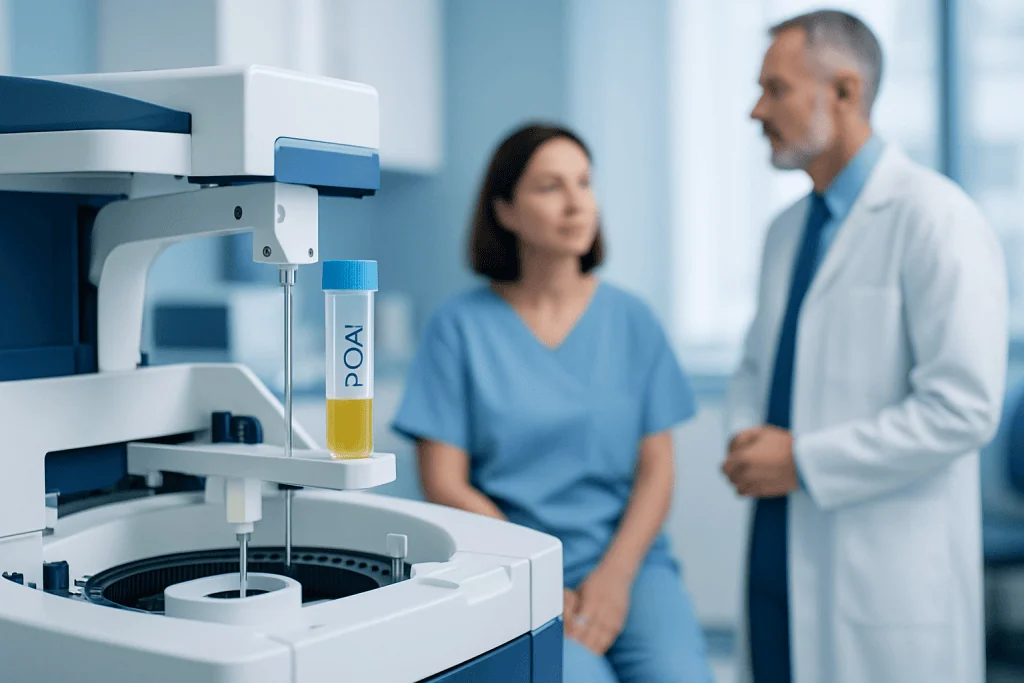
Most human DNA found in urine comes from cells that naturally slough off into the urinary stream. These can include cells from the kidneys, ureters, bladder, urethra, and nearby genital tract. A small amount of free-floating DNA may also be present after cells break down.
The amount is not constant. A concentrated first-morning urine sample may contain more cellular material than a diluted sample taken after high fluid intake. Collection technique also affects results; for example, a clean-catch midstream sample is often preferred because it helps reduce contamination from the skin or genital area.
DNA found in urine may be human, but laboratories can also detect genetic material from microbes. That is one reason urine testing can help identify certain infections. In some settings, urine can also be used to look for changes linked to urinary tract conditions, although these tests are usually interpreted alongside standard urinalysis, imaging, and sometimes cystoscopy or biopsy.
- Normal shedding of urinary tract cells
- Blood cells entering urine during bleeding or inflammation
- Cells from the genital area contaminating the sample
- Microbial DNA from urinary infections
When is DNA in urine normal, and when can it reflect a problem?

In many people, DNA in urine is a normal finding at a microscopic level because cells are routinely shed from body surfaces. On its own, it usually does not cause symptoms and is not something a person would notice without laboratory analysis. This is why the question is less about whether urine can contain DNA and more about what else is going on at the same time.
DNA in urine may become more relevant when there are other signs of irritation or injury in the urinary tract. For example, infections, stones, inflammation, recent urinary procedures, vigorous exercise, and bleeding can increase the number of cells or cell fragments in the urine. Conditions such as kidney stones or urinary tract infection may lead to symptoms that prompt testing.
Doctors do not usually tell patients that they have “DNA in the urine” as a stand-alone diagnosis. Instead, they investigate symptom patterns such as burning with urination, urinary frequency, visible blood, flank pain, fever, or trouble emptying the bladder. In some specialized cases, urine-based molecular tests may support evaluation for selected urinary tract conditions, but they are only one part of the overall picture.
Symptoms and red flags that need attention
Most people asking about urine and DNA are either curious about testing or worried because of a lab result or urinary symptom. The reassuring point is that many short-lived urinary changes are related to common, treatable issues such as dehydration, mild irritation, or infection. Still, certain warning signs deserve medical review because they may point to a condition affecting the kidneys, bladder, or urinary tract.
Red flags include visible blood in the urine, persistent pain or burning when urinating, fever, chills, back or side pain, repeated urgent urination, difficulty passing urine, new leakage, or symptoms that keep coming back. Unexplained weight loss, swelling, or fatigue alongside urinary changes should also be discussed with a doctor.
Some symptoms require more urgent attention, especially if there is severe pain, inability to urinate, heavy bleeding, confusion, or fever with shaking chills. These can signal significant infection, obstruction, or other problems that should not be monitored at home.
- Blood in the urine, even if painless
- Burning, frequency, or urgency that does not settle
- Fever or flank pain with urinary symptoms
- Repeated urinary infections or recurrent symptoms
- Difficulty urinating or sudden urinary retention
How doctors evaluate the cause
If a person has symptoms or a concerning urine result, a doctor usually begins with a medical history and physical examination. They will ask about pain, blood in the urine, fever, medication use, recent exercise, menstrual contamination, kidney stone history, smoking, past urinary infections, and any recent procedures. This helps identify whether the issue is most likely harmless, infectious, inflammatory, stone-related, or something that needs closer assessment.
The first-line test is often a standard urinalysis. This can look for blood, protein, white blood cells, nitrites, bacteria, and other clues. Depending on the result, a urine culture may be ordered to check for infection. If symptoms suggest stones, obstruction, or structural changes, imaging such as ultrasound or CT may be considered through a radiology evaluation.
When a more detailed assessment is needed, a specialist in urology care may evaluate the bladder and urinary tract further. This can involve repeat urine testing, cystoscopy, or other investigations to understand the source of bleeding or abnormal cells. In selected cases, doctors may also use molecular or cytology-based urine tests, but they are generally adjuncts rather than replacements for routine assessment.
If a person has broader kidney concerns, blood tests and kidney function review may also be appropriate. The aim is to identify the underlying cause safely and systematically, not to rely on the presence of urine DNA alone.
Can urine DNA be used for medical testing?
Yes, urine DNA can sometimes be used in medicine, but the answer depends on the type of test. Because urine may contain cells and cell-free genetic material, laboratories can sometimes analyze it for microbial DNA, certain inherited changes, or urinary tract-related abnormalities. However, urine is not ideal for every purpose because the DNA may be present in low amounts or may be degraded.
This is why blood, saliva, cheek swabs, or tissue samples are still often preferred for many genetic tests. Urine can be useful when clinicians want information related specifically to the urinary tract, when a noninvasive sample is helpful, or when other sample types are not practical. Even then, proper collection and laboratory handling are important because contamination can affect the result.
For patients, the key point is that a positive or negative urine DNA-related test does not stand alone. Doctors interpret it together with symptoms, standard urine findings, imaging, and sometimes pathology. If there is concern about a bladder or urinary tract disorder, the next steps may include a structured assessment that can involve medical check-up support and specialist follow-up.
What can affect how much DNA is found in urine?
Several practical factors influence whether DNA is detectable in urine and whether the sample is useful. Hydration is one of the most important. Very diluted urine may contain fewer cells per milliliter, while concentrated urine may yield more material. Time of day, recent urination, and how quickly the sample is processed can also change the quality.
Collection technique matters as well. A clean-catch midstream sample lowers contamination from external skin or genital cells. Menstruation, sexual activity, topical products, and poor sample handling can all introduce additional cells or interfere with interpretation. This does not necessarily mean the result is abnormal, but it can make the sample less reliable for certain tests.
Medical conditions can also increase cellular material in urine. Infection, inflammation, stones, trauma, recent catheterization, and bleeding may all raise the amount of DNA present. That is one reason doctors may repeat testing if a result is unclear or if a sample appears contaminated.
- Hydration level and urine concentration
- First-morning versus later sample timing
- Clean-catch collection quality
- Infection, inflammation, or bleeding
- Delay in getting the sample to the laboratory
When to seek medical care
A person should seek medical care if urinary symptoms last more than a short time, keep returning, or are paired with warning signs such as blood in the urine, fever, side pain, or difficulty passing urine. Children, older adults, pregnant people, and anyone with a weakened immune system should be especially cautious because urinary problems can sometimes progress more quickly in these groups.
Prompt assessment is also sensible if there is a family history of kidney disease, recurrent stones, or known structural urinary problems. Early review can clarify whether the issue is a simple infection, irritation, dehydration, or something that needs imaging or specialist attention.
For international patients who need further assessment, Acibadem International’s multidisciplinary specialists and JCI-accredited hospitals diagnose and treat urinary conditions with coordinated care. Depending on the findings, evaluation may involve nephrology or urology specialists to investigate kidney and urinary tract health in more detail.
Frequently asked questions
Does urine naturally contain human DNA?
Yes. Urine can naturally contain human DNA because it may include small numbers of cells shed from the urinary tract. The amount is usually low and can vary from one sample to another.
Does DNA in urine mean cancer?
No. DNA in urine does not automatically mean cancer and is often a normal consequence of cell shedding. Doctors look at symptoms, urinalysis, imaging, and sometimes specialist tests before considering serious causes.
Can a urine sample be used for genetic testing?
Sometimes. Urine can be useful for certain molecular or urinary-tract-related tests, but blood, saliva, cheek swabs, or tissue are often preferred for many genetic analyses because they may provide more reliable DNA.
What is the best way to collect urine for testing?
A clean-catch midstream sample is commonly recommended. This helps reduce contamination from skin or genital cells and can make the result easier to interpret.
Can dehydration affect DNA in urine?
Yes. Hydration changes how concentrated the urine is, which can affect how many cells or cell fragments are present in the sample. It can also influence how useful the sample is for laboratory testing.
When should someone worry about a urine-related finding?
Medical review is important if there is visible blood in the urine, burning, fever, flank pain, trouble urinating, or symptoms that keep coming back. These signs may point to infection, stones, inflammation, or another urinary tract problem that needs assessment.
References
- National Institute of Diabetes and Digestive and Kidney Diseases
- Mayo Clinic
- MedlinePlus
- National Cancer Institute
- American Urological Association
This article is for general information only and is not a substitute for professional medical advice. Please consult a qualified doctor about your individual situation.
Explore treatments in Turkey — costs, top hospitals & a free quote
JCI-accredited · board-certified surgeons · reply within 24h