Can a Colonoscopy Detect Anal Cancer: Preparation, Procedure and Results
Colonoscopy may reveal suspicious tissue in or near the anal canal, but it does not by itself diagnose anal cancer. A digital rectal examination, anoscopy and biopsy are commonly used to assess suspected anal cancer.
Key Takeaways
- Colonoscopy may reveal suspicious tissue in or near the anal canal, but it does not by itself diagnose anal cancer.
- A digital rectal examination, anoscopy and biopsy are commonly used to assess suspected anal cancer.
- Colonoscopy is often helpful for investigating rectal bleeding and excluding problems elsewhere in the colon.
- Most people receive sedation for colonoscopy and can return home the same day with an accompanying adult.
- New rectal bleeding, a persistent anal lump, pain or changes in bowel habits should be assessed by a healthcare professional.
A colonoscopy can sometimes identify an abnormality near the anus that could be anal cancer, especially when the endoscopist examines the anal canal as the scope is inserted or withdrawn. However, it is not the main test for diagnosing anal cancer, and confirmation requires a focused examination and biopsy.
Can a Colonoscopy Detect Anal Cancer?
Yes, a colonoscopy can sometimes detect a suspicious growth, ulcer, bleeding area or other abnormal tissue near the anus that may be anal cancer. The anal canal is passed during the examination, and careful inspection may identify changes that need further assessment. However, colonoscopy is designed mainly to examine the rectum and colon rather than to screen specifically for anal cancer.
A diagnosis cannot be made by appearance alone. If a clinician sees an abnormal area, or if symptoms strongly suggest anal cancer, the next step is usually a focused examination of the anus and anal canal, often with anoscopy, followed by a biopsy. The tissue sample is examined in a laboratory to determine whether cancer cells are present.
Colonoscopy can still be valuable when a person has rectal bleeding, anemia, an unexplained bowel change or a positive stool screening result. These symptoms may result from many conditions, including hemorrhoids, polyps, inflammatory bowel disease, colorectal cancer or anal cancer.
How Colonoscopy Works and What It Can Show
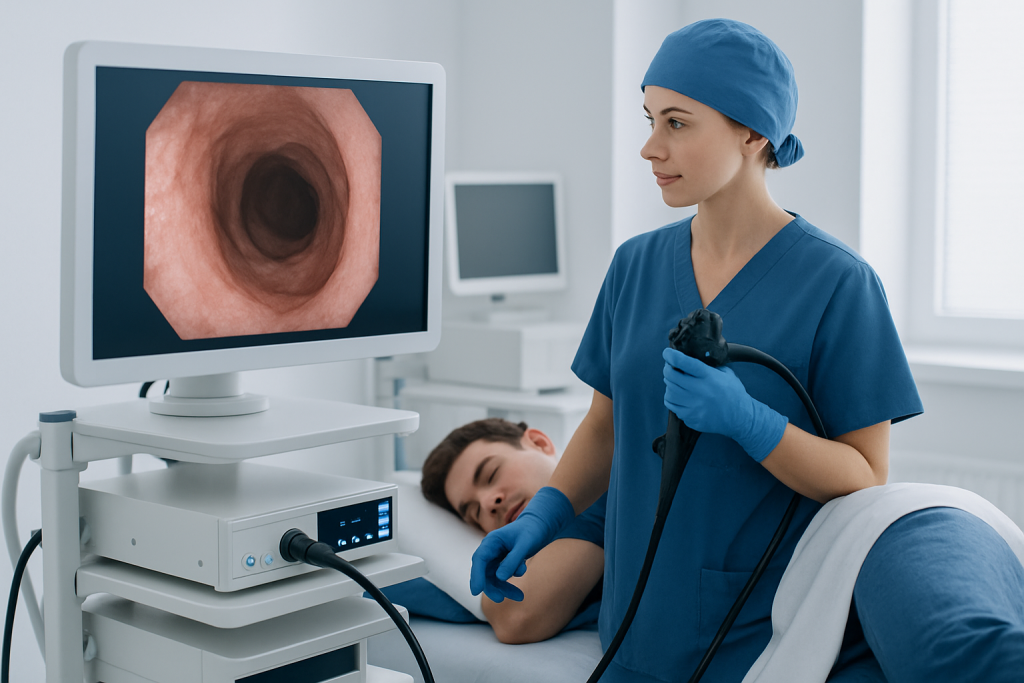
A colonoscopy is an endoscopic procedure that allows a gastroenterologist to view the lining of the large intestine. A thin, flexible tube with a light and camera is gently passed through the anus, into the rectum and through the colon. Images are displayed on a monitor so the clinician can inspect the bowel lining in detail.
During the procedure, the clinician may find polyps, inflammation, diverticular disease, bleeding sources or tumors. Small tissue samples can be taken, and many polyps can be removed at the same time. If an anal lesion is visible and safely accessible, a sample may sometimes be collected, although a dedicated anal examination may still be needed.
The test has an important limitation: some anal abnormalities are best assessed with direct visualization of the anal canal, a digital rectal examination and anoscopy. These targeted methods provide a closer view of the area where anal cancers arise and can help guide an accurate biopsy.
Who May Need Colonoscopy or a Focused Anal Examination?

A doctor may recommend colonoscopy when symptoms could be coming from the colon or rectum. These can include blood in or on the stool, dark stools, persistent changes in bowel habit, unexplained iron-deficiency anemia, abdominal symptoms or unintended weight loss. It may also be performed as part of colorectal cancer screening based on age, family history and individual risk.
A focused anal assessment is particularly important for people with an anal lump, ongoing itching, pain, pressure, discharge, sores that do not heal, narrowing of stool, or bleeding that is not clearly explained. These symptoms are common and often caused by noncancerous conditions, but they deserve appropriate assessment if they persist.
Some people have a higher likelihood of anal cancer, including those with persistent high-risk human papillomavirus infection, a weakened immune system, a history of certain genital cancers, smoking exposure or chronic anal inflammatory conditions. Risk factors do not mean that cancer is present, but they can help a clinician decide which tests are most appropriate.
Preparing for the Procedure and What Happens Step by Step
Good bowel preparation is essential because stool can hide important findings. The medical team provides instructions, usually including a temporary low-fiber or clear-liquid diet and a prescribed bowel-cleansing solution the day before or on the day of the procedure. People should tell their doctor about all medicines, allergies, pregnancy and conditions such as diabetes, kidney disease or bleeding disorders.
At the appointment, the patient changes into a gown and a healthcare professional reviews the plan. Sedation is commonly provided to improve comfort. The patient lies on their side while the colonoscope is inserted carefully through the anus and advanced through the colon. Air or carbon dioxide is introduced to open the bowel gently and improve visibility.
The examination commonly takes less than an hour, although timing varies if polyps are removed or samples are collected. If a suspicious anal or rectal area is found, the clinician may take a biopsy or arrange prompt referral to a colorectal specialist. Removing or sampling tissue is usually not felt because the bowel lining has limited pain sensation.
Because sedating medicines can affect alertness for the rest of the day, patients generally need someone to take them home. Driving, operating machinery, signing important documents and drinking alcohol should be avoided until the effects of sedation have fully worn off.
Recovery, Benefits and Possible Risks
Most people go home on the day of the colonoscopy. Mild bloating, gas or brief cramping can occur as the air used during the examination leaves the bowel. After sedation, tiredness or reduced concentration may last through the day, while usual food and activities can often be resumed according to the care team’s instructions.
The main benefit is that colonoscopy can investigate symptoms and identify disease in the colon and rectum while allowing biopsies or polyp removal during the same visit. It can help clarify whether bleeding or bowel symptoms are related to colorectal conditions, while also providing an opportunity to notice abnormalities around the anal canal.
Serious complications are uncommon but can include bleeding, particularly after polyp removal, a tear in the bowel wall, medication reactions or infection. Urgent medical advice is needed after the procedure for severe or worsening abdominal pain, fever, heavy rectal bleeding, fainting, vomiting or a swollen abdomen. The treating team can explain individual risks before consent is given.
How Often Is Cancer Detected During a Colonoscopy?
Cancer is not found during most colonoscopies. The likelihood depends greatly on why the procedure is being done: it is generally lower in routine screening for people without symptoms and may be higher when the test is performed because of bleeding, anemia, an abnormal stool test, concerning imaging findings or a strong family history.
Colonoscopy is primarily used to identify colorectal polyps and colorectal cancer, not anal cancer. Anal cancer is relatively uncommon, and a cancer detected during colonoscopy may be in the colon or rectum rather than the anal canal. A clinician should interpret any finding in the context of the person’s symptoms, risk factors and examination results.
Finding a suspicious area does not necessarily mean cancer. Benign polyps, hemorrhoids, fissures, inflammation, infections and other conditions can resemble or cause concerning changes. Laboratory examination of a biopsy is the reliable way to establish the diagnosis.
What Happens If Cancer Is Found During a Colonoscopy?
If a colonoscopy shows tissue that appears suspicious, the clinician may take biopsies and document the location and appearance. The patient is usually informed after recovering from sedation, although final pathology results take additional time. A pathology report confirms whether cancer is present and identifies key features of the cells.
If anal cancer is diagnosed, further tests may be used to determine its size and whether it has spread. These may include a detailed physical examination, imaging such as MRI, CT or PET-CT, and blood tests. Care is commonly planned by a multidisciplinary team that may include colorectal surgeons, medical oncologists, radiation oncologists, radiologists and pathologists.
Treatment depends on the cancer’s type, stage, location and the person’s overall health. Many anal cancers are treated with combined chemotherapy and radiotherapy, while surgery may be considered in selected circumstances, including persistent or recurrent disease. Anal cancer treatment should be individualized after specialist assessment.
Acibadem International’s multidisciplinary specialists and JCI-accredited hospitals provide diagnostic evaluation and treatment planning for international patients with suspected or confirmed anal cancer.
When to Seek Medical Care
A person should arrange a medical appointment for rectal bleeding that is new, recurrent or unexplained; an anal lump; persistent pain, itching or discharge; a sore that does not heal; or a lasting change in bowel habits. Although hemorrhoids and other benign conditions are common, it is not safe to assume they are the cause without an assessment.
More urgent evaluation is appropriate for heavy bleeding, black or maroon stools, dizziness or fainting, severe abdominal pain, marked weakness, or symptoms accompanied by fever. Emergency services may be needed if symptoms are severe or rapidly worsening.
Early assessment does not mean that cancer is likely. It means that a clinician can identify the cause, provide reassurance when appropriate and arrange timely testing or treatment when needed. People with known risk factors or a prior history of anal or genital precancer should also ask their doctor about appropriate follow-up.
Frequently asked questions
Can a colonoscopy see the anus?
A colonoscope enters through the anus, so the clinician can observe the anal opening and lower anal canal during insertion and withdrawal. However, colonoscopy is not the most detailed test for the anal canal. Anoscopy and a digital rectal examination are often better for evaluating a suspected anal lesion.
Can a colonoscopy diagnose anal cancer?
A colonoscopy can identify a suspicious abnormality and may allow a tissue sample to be taken. It cannot confirm cancer by visual inspection alone. A biopsy reviewed by a pathologist is required to diagnose anal cancer.
Is a colonoscopy painful?
Most people receive sedation and do not feel significant pain during colonoscopy. Some pressure, bloating or cramping can occur because the bowel is gently expanded for viewing. Mild gas discomfort after the procedure is common and usually short-lived.
What tests confirm anal cancer?
Confirmation usually involves a clinical examination, digital rectal examination, anoscopy and biopsy. If cancer is confirmed, imaging tests may be used to assess its extent and plan treatment. The exact testing plan depends on the person's symptoms and initial findings.
Can hemorrhoids be mistaken for anal cancer?
Hemorrhoids can cause bleeding, itching, discomfort and a lump, which can overlap with symptoms of anal cancer. Most anal symptoms are not caused by cancer, but persistent or changing symptoms should be examined by a healthcare professional. A biopsy may be needed if an area looks unusual.
How long does it take to get colonoscopy biopsy results?
The timing varies by laboratory and healthcare setting, but biopsy results commonly take several days to around two weeks. The clinician or care team should explain how and when results will be communicated. If the report identifies cancer or another significant condition, follow-up appointments and further tests are arranged promptly.
References
- American Cancer Society
- National Cancer Institute
- American Society for Gastrointestinal Endoscopy
- National Comprehensive Cancer Network
- World Health Organization
This article is for general information only and is not a substitute for professional medical advice. Please consult a qualified doctor about your individual situation.
Persistent digestive symptoms? Get evaluated in Turkey
JCI-accredited · board-certified surgeons · reply within 24h
Add us as a Preferred Source to see more of our trusted health content across Google Search, AI Overviews and Discover.

More from the Health Library



Related Specialists

Dr. Nuh Hakan Temiz
Nuclear Medicine
Prof. Dr. Mehmet E. Erdil
Orthopedic Surgery & Traumatology
Dr. Bedii Ender Topçu
Oral and Dental Health
Prof. Dr. Beril Akman
Internal Medicine