Corneal Abrasion Treatment: How It Works, Results and What to Expect

A corneal abrasion is a scratch on the clear front surface of the eye, called the cornea. Treatment depends on the cause, abrasion size, contact lens use and whether infection or a foreign body is suspected.
Key Takeaways
- A corneal abrasion is a scratch on the clear front surface of the eye, called the cornea.
- Treatment depends on the cause, abrasion size, contact lens use and whether infection or a foreign body is suspected.
- Most uncomplicated abrasions heal quickly, but pain, light sensitivity and tearing can be significant during the first days.
- Contact lenses should not be worn until an eye specialist confirms that healing is complete.
- Persistent pain, reduced vision, discharge or worsening redness requires urgent medical assessment.
Corneal abrasion treatment usually involves assessing the eye, removing any retained debris when present, preventing infection when needed and controlling discomfort while the corneal surface heals. Many minor abrasions improve within one to three days, but contact lens-related injuries, ongoing symptoms or vision changes need prompt eye-care assessment.
Overview: How Corneal Abrasion Treatment Works
Corneal abrasion treatment aims to protect the eye while its outer surface repairs itself. A corneal abrasion is a scratch or loss of cells on the corneal epithelium, the thin protective layer over the clear front of the eye. Because the cornea has many nerve endings, even a small injury may cause marked pain, tearing, a gritty sensation and sensitivity to light.
For a simple abrasion, the surface cells commonly regenerate within 24 to 72 hours. Treatment may include lubricating drops or ointment, pain relief and, in selected situations, antibiotic eye medication to reduce the chance of infection. An eye clinician may also remove a foreign particle if one is present and check that there is no deeper injury.
The treatment plan is individualized. A scratch caused by a contact lens, a high-speed object, plant material or a chemical exposure deserves particular attention because the risk of infection or more serious eye damage can be higher. The main goals are comfort, safe healing and preservation of vision.
Symptoms, Causes and Who May Need Assessment
A corneal abrasion may develop after rubbing the eye, getting dust or sand in it, being scratched by a fingernail, wearing a damaged contact lens or sustaining a minor sports or workplace injury. Dry eye, eyelid problems and recurrent corneal erosion can also make the corneal surface more vulnerable to injury.
Typical symptoms include sharp pain, a feeling that something is stuck in the eye, redness, excessive tearing, blurred vision, blinking discomfort and light sensitivity. Symptoms may begin immediately after an injury, although a retained particle beneath the eyelid can sometimes continue to cause irritation until it is removed.
People who wear contact lenses should be evaluated promptly if they develop pain, redness or reduced vision. Contact lens wear can be associated with corneal infection, which may resemble an abrasion at first but needs different treatment. Eye injuries involving metal, glass, chemicals or a forceful impact also require urgent professional assessment rather than home treatment alone.
- Minor surface injuries may be suitable for outpatient care after examination.
- Children, people with reduced corneal sensation and those with a prior eye condition may need closer follow-up.
- Any suspected penetrating injury is an emergency and should not be touched, pressed or patched at home.
Step-by-Step: What Happens During Treatment

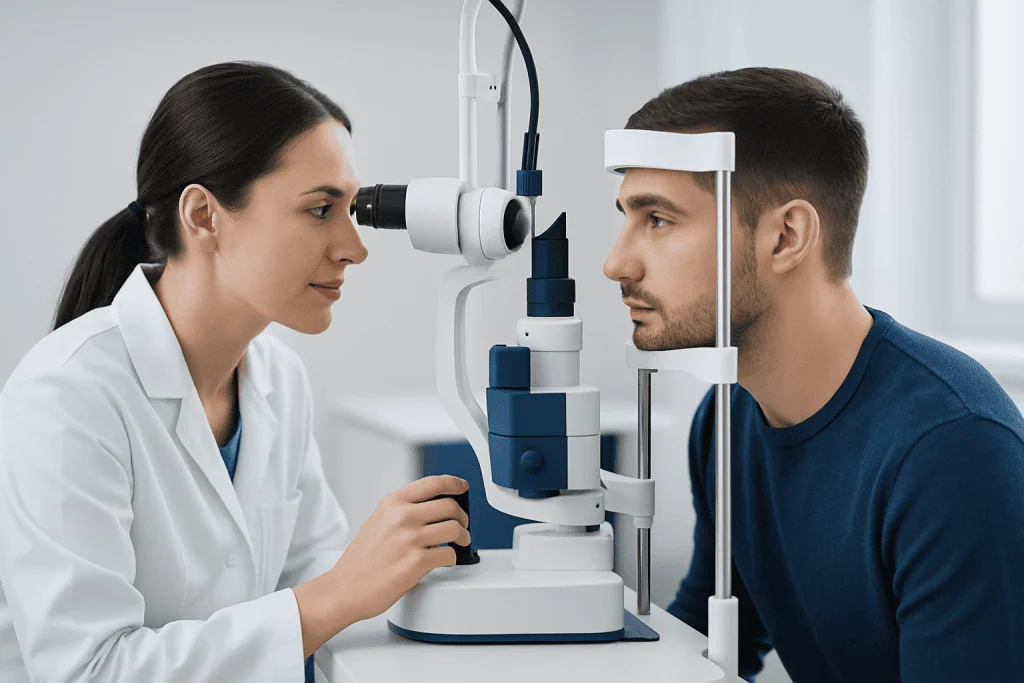
An eye clinician begins by asking how the injury occurred, whether contact lenses were worn and whether there has been a change in vision. Visual acuity is checked first. The eye and surrounding eyelids are then examined carefully, often after numbing drops are used to make the examination more comfortable.
A fluorescein dye may be placed in the eye. Under blue light, this dye highlights areas where the corneal surface has been disrupted and helps the clinician estimate the abrasion’s size and location. The eyelids may be gently turned inside out to look for a trapped eyelash, dust particle or other foreign body.
If a superficial foreign body is found, it may be removed with irrigation or a sterile instrument by a trained professional. Treatment may then include preservative-free lubricants, an antibiotic drop or ointment when indicated and oral pain medicine if appropriate for the individual. Clinicians generally avoid sending patients home with anesthetic eye drops because repeated use can delay healing and mask worsening injury.
Routine eye patching is usually not recommended for uncomplicated corneal abrasions. It does not reliably improve healing and may be unsuitable in some situations. Follow-up timing depends on the injury, symptoms, contact lens use and examination findings.
Benefits, Risks and Expected Results
The expected result of appropriate corneal abrasion treatment is a comfortable, healed corneal surface with vision returning to its usual level. Treating retained debris, protecting against infection when indicated and arranging follow-up for higher-risk injuries can reduce the chance that a minor scratch becomes a more significant problem.
Most abrasions resolve without lasting effects. However, the eye can remain uncomfortable while epithelial cells regenerate, and vision may be temporarily blurred if the injury is near the center of the cornea. A larger abrasion can take longer to close and may require repeat examinations.
Possible complications are uncommon but important to recognize. They include a corneal infection, ulcer, persistent epithelial defect, scarring or recurrent corneal erosion, in which the surface repeatedly breaks down after an earlier injury. The risk is greater with contact lens wear, delayed care after certain injuries and failure to use prescribed medication as directed.
Medical treatment also has potential side effects. Some eye drops can sting briefly, and antibiotic medication may occasionally cause irritation or allergy. Patients should tell their clinician about medication allergies, pregnancy, existing eye disease and all drops or ointments they are using.
Recovery Timeline and Self-Care During Healing
Small uncomplicated abrasions often feel substantially better within one to two days and heal in up to three days. Larger scratches, injuries related to contact lenses or abrasions complicated by dryness or repeated rubbing may take longer. The recovery timeline should be guided by symptoms and follow-up advice rather than by a fixed number of days.
During healing, patients should avoid rubbing the eye and should not wear contact lenses until a clinician says it is safe to restart them. Makeup and eye products should be avoided until the surface has healed. Sunglasses can improve comfort outdoors for people with light sensitivity.
Using prescribed drops exactly as instructed is important. Artificial tears may be recommended to keep the eye comfortable, but people should not use redness-relieving drops to treat a scratch unless advised by a clinician. They should also avoid attempting to remove embedded objects themselves and should not share eye medication with another person.
Rest can reduce strain and support overall recovery. Screen use may need to be limited temporarily if it increases dryness, blinking discomfort or light sensitivity. A follow-up examination may be arranged, especially for contact lens wearers, larger abrasions or symptoms that do not improve as expected.
Can a Corneal Abrasion Take 2 Weeks to Heal?
Yes, a corneal abrasion can occasionally take up to two weeks to heal, particularly if it is large, repeatedly irritated, associated with dry eye or related to contact lens wear. However, many uncomplicated scratches heal much sooner, commonly within 24 to 72 hours. A prolonged course is a reason to be reviewed by an eye-care professional.
Symptoms lasting beyond a few days may mean that the surface has not fully closed, a foreign body remains, an infection has developed or another condition is causing similar symptoms. Ongoing reduced vision, increasing redness, discharge or worsening pain should not be attributed to normal healing.
Some people develop recurrent corneal erosion after a previous abrasion. This can cause episodes of pain on waking when the eyelid sticks to a fragile corneal surface. An ophthalmologist can identify this pattern and discuss ways to protect the cornea over time.
Is Corneal Abrasion Very Painful?
Corneal abrasions can be very painful, even when the scratch is small. The cornea is richly supplied with nerves, so symptoms can include sharp pain, burning, tearing, frequent blinking and strong light sensitivity. The sensation of having grit in the eye is also common.
Pain should generally begin to improve as the surface heals. Lubrication, prescribed medication and suitable oral pain relief can help, depending on the individual’s health needs. Persistent or worsening pain is not something to manage alone, especially if it occurs with blurred vision or increasing redness.
Patients should not use leftover numbing drops from a clinic visit or obtain anesthetic drops for home use without specialist direction. These drops can make the eye feel better temporarily but may interfere with corneal healing and conceal a developing complication.
What Helps a Corneal Abrasion Heal Faster?
The most helpful approach is prompt, accurate assessment followed by protecting the eye from further injury. This includes using prescribed medication as directed, avoiding contact lenses until cleared, not rubbing the eye and attending recommended follow-up. If a particle is trapped beneath the eyelid or an infection is present, professional treatment addresses the cause that may otherwise delay recovery.
Lubricating drops or ointment may support comfort and reduce friction while the surface repairs, when recommended by an eye clinician. Maintaining good hand hygiene before touching the face or applying drops is also important. Contact lens cases and lenses involved at the time of injury should not be reused unless a clinician advises that they are safe.
There is no reliable home remedy that replaces an eye examination when vision is affected or symptoms are significant. Avoid placing herbal products, non-sterile liquids or home-made preparations in the eye. These can irritate the cornea or introduce infection.
Does Sleeping Help Corneal Abrasion Heal Faster?
Sleep does not directly make a corneal abrasion heal faster, but adequate rest may reduce eye strain and make symptoms easier to manage. Keeping the eyes closed during sleep limits exposure to light, wind and screen-related dryness. Healing still depends mainly on the corneal cells regenerating and on avoiding further injury or infection.
Some people with a corneal abrasion notice discomfort when waking, especially if the eye feels dry. A clinician may recommend a lubricating ointment at bedtime in appropriate cases. This should be based on individual advice, particularly for people who have recurrent symptoms or use other eye medications.
If pain is severe on waking, repeatedly returns after apparent healing or is accompanied by blurred vision, an ophthalmology assessment is advisable. These features can occur with recurrent corneal erosion or other corneal surface conditions that need a tailored care plan.
When to Seek Medical Care
Medical care should be sought urgently for any eye injury with reduced vision, severe pain, inability to keep the eye open, marked light sensitivity, increasing redness, pus-like discharge or a visible spot on the cornea. Urgent assessment is also needed after chemical exposure, a high-speed injury, an object embedded in the eye or a direct blow to the eye.
Contact lens wearers should arrange same-day eye assessment for suspected corneal abrasion or a painful red eye. They should remove the lenses and not put them back in unless advised to do so. Symptoms that do not clearly improve within 24 hours, or that persist beyond two to three days, also warrant review.
At Acibadem International, multidisciplinary eye-care specialists at JCI-accredited hospitals assess and treat corneal conditions for international patients. A qualified ophthalmologist can determine whether symptoms are due to a simple abrasion, infection or another eye problem and recommend appropriate treatment and follow-up.
Frequently asked questions
How is a corneal abrasion diagnosed?
An eye clinician usually checks vision, examines the eye and may use fluorescein dye with blue light to show the scratch clearly. The eyelids may also be examined for a hidden eyelash or foreign particle. This assessment helps rule out infection, deeper injury and other causes of a painful red eye.
Should a corneal abrasion be patched?
Eye patching is not routinely recommended for uncomplicated corneal abrasions. It generally does not speed healing and may be unsuitable for some injuries. A clinician may recommend a different protective approach in selected cases based on the examination.
Can I use contact lenses with a corneal abrasion?
No. Contact lenses should be removed and not worn again until the eye has healed and an eye-care professional has confirmed that it is safe. Wearing lenses over an injured cornea can increase irritation and the risk of serious infection.
Can I rinse a scratched eye with water?
Gentle rinsing with clean water or sterile saline may help flush out loose dust or a superficial irritant. It should not be used to delay care for persistent pain, vision changes, chemical exposure or a suspected embedded object. Do not attempt to remove anything stuck in the eye.
What happens if a corneal abrasion becomes infected?
An infected corneal abrasion can progress to keratitis or a corneal ulcer, which needs urgent ophthalmology treatment. Warning signs include worsening pain, redness, discharge, a white spot on the cornea or declining vision. Early assessment is important because prompt treatment helps protect sight.
Can a corneal abrasion cause permanent vision loss?
Most minor corneal abrasions heal completely without permanent vision changes. Vision loss is more likely when there is a deep injury, infection, corneal scarring or delayed treatment of a serious eye problem. Prompt evaluation is especially important if vision is reduced or symptoms worsen.
References
- American Academy of Ophthalmology
- American Optometric Association
- National Eye Institute
- Mayo Clinic
- Merck Manual Consumer Version
This article is for general information only and is not a substitute for professional medical advice. Please consult a qualified doctor about your individual situation.
Explore treatments in Turkey — costs, top hospitals & a free quote
JCI-accredited · board-certified surgeons · reply within 24h