Hickman Catheter: An Evidence-Based Patient Guide

A Hickman catheter is a type of long-term central venous catheter placed through the chest into a large vein near the heart. It may be used for chemotherapy, stem cell transplantation, long-term antibiotics, parenteral nutrition, transfusions, and frequent blood tests.
Key Takeaways
- A Hickman catheter is a type of long-term central venous catheter placed through the chest into a large vein near the heart.
- It may be used for chemotherapy, stem cell transplantation, long-term antibiotics, parenteral nutrition, transfusions, and frequent blood tests.
- Regular dressing changes, flushing as prescribed, clean handling, and protecting the line from pulling help prevent complications.
- Contact the care team promptly for fever, chills, redness, drainage, pain, swelling, leakage, or difficulty flushing the catheter.
- Most usual activities are possible, but swimming, heavy pulling, and contact activities may be restricted while the line is in place.
A Hickman catheter is a soft, tunneled central venous catheter used when a person needs reliable intravenous access for weeks, months, or longer. It can make repeated treatments and blood sampling more practical, but safe daily care and prompt attention to possible complications are essential.
Overview: what is a Hickman catheter?
A Hickman catheter is a long, flexible tube that provides direct access to the bloodstream through a large central vein. It is inserted under the skin of the upper chest and advanced into a vein, with the tip positioned near the heart. The external part usually has one, two, or three lumens (separate channels), allowing different treatments to be given when needed.
Unlike a short peripheral IV placed in the hand or arm, a Hickman line is designed for longer-term use. A cuff under the skin encourages tissue to grow around the catheter over time, helping to secure it and acting as an additional barrier to bacteria. The catheter can remain in place for as long as it is clinically needed and working safely.
It is commonly used during cancer treatment, blood and bone marrow transplantation, prolonged intravenous antibiotic treatment, transfusions, or intravenous nutrition. The decision to place one is individualized and considers the planned treatment, vein access, health status, and the person’s preferences.
How it works, benefits and who may be a candidate
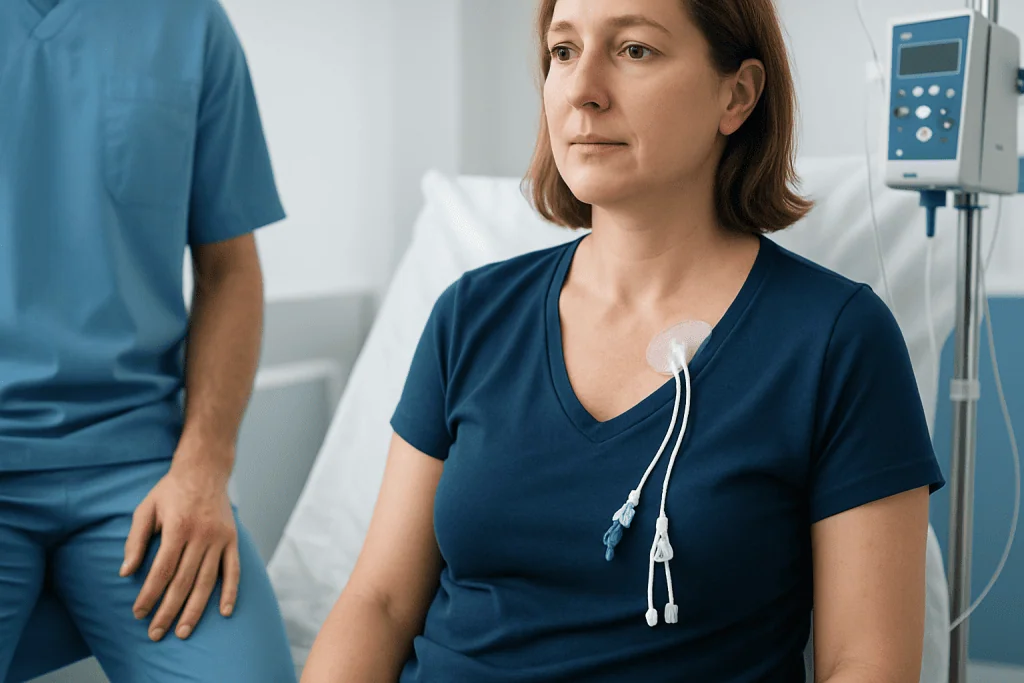
The catheter’s internal tip sits in a high-flow central vein. This allows medicines, fluids, nutrition, or blood products to enter the circulation quickly and can reduce repeated needle sticks in peripheral veins. Some medicines that may irritate smaller veins can also be given more safely through central access when clinically appropriate.
A clinician may recommend a Hickman catheter for a person expected to need frequent or continuous intravenous treatment over a prolonged period. It may be particularly useful when blood tests are needed regularly, peripheral IV access is difficult, or several infusions need to be managed. It is one of several central-line choices; a peripherally inserted central catheter (PICC) or implanted port may be better suited to some treatment plans.
The main potential benefits are dependable access, fewer repeated cannulas, and the ability to administer complex therapies. These benefits must be balanced against risks such as infection, blood clots, blockage, and accidental damage to the line. The treating team can explain why this device is appropriate in a particular situation.
Hickman catheter insertion steps: what happens during the procedure
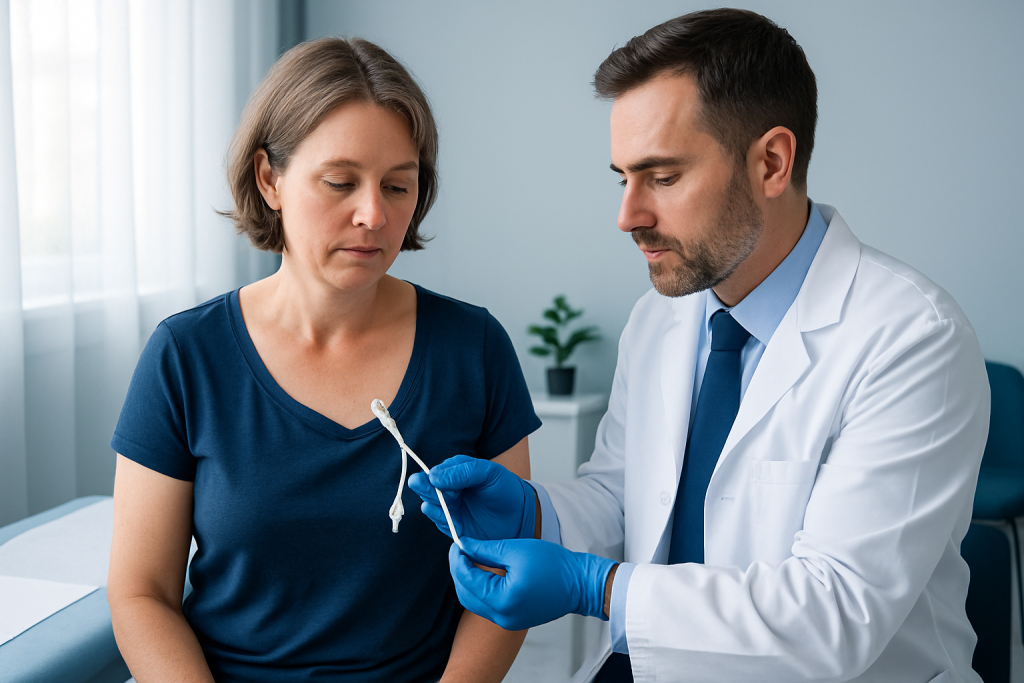
Before placement, the medical team reviews the person’s medical history, medicines, allergies, blood tests when needed, and any bleeding or clotting concerns. Blood-thinning medicines may need special planning, but they should never be stopped or changed without the prescribing clinician’s instruction. Imaging may be used to select a suitable vein and guide safe placement.
The procedure is usually performed using sterile technique in an operating room, interventional radiology suite, or other dedicated setting. Local anesthetic is commonly used, sometimes with sedation depending on the person and the procedure. The clinician accesses a large vein, often in the neck or upper chest, creates a small tunnel beneath the skin to the exit site on the chest, and advances the catheter to the intended position.
The catheter is secured, dressed with a sterile covering, and checked before use. Tip position may be confirmed with imaging or another approved method. The exact Hickman catheter insertion steps and recovery instructions can differ by hospital and by individual circumstances, so the discharge plan from the placing team should always take priority.
Recovery timeline and daily adjustment
After insertion, mild tenderness, bruising, or a pulling sensation around the chest and neck can occur for several days. The site should be kept clean, dry, and protected while the first dressing remains in place. The care team will explain when the initial dressing change is due and when the catheter can first be used.
Many people return to gentle daily activities within a short time, depending on the reason for the line and their overall health. For the first days, avoiding strenuous upper-body activity and movements that stretch or tug the catheter can reduce discomfort and help protect the insertion site. Pain that worsens rather than improves should be assessed.
The skin cuff generally becomes more secure over the following weeks. Until healing is complete, the exit site requires especially careful protection. Keeping an up-to-date written care plan from the hospital is more useful than relying on a generic online hickman catheter pdf, because catheter materials, dressing schedules, and flushing protocols can vary.
What are the care guidelines for a Hickman catheter?
Hickman catheter care guidelines focus on preventing infection, maintaining patency, and avoiding accidental removal or damage. Hands should be cleaned thoroughly before touching the catheter, clamps, caps, or dressing. Only the patient, a trained caregiver, or healthcare professional should access the line, using the cleaning and sterile technique taught by the clinical team.
The exit-site dressing and catheter cap should be changed on the schedule provided by the service, and sooner if they become wet, loose, visibly soiled, or damaged. The catheter should be flushed exactly as prescribed, often using a particular solution and technique. Never force a flush; resistance, pain, swelling, or leakage may indicate a blockage or other problem that needs assessment.
Keep the line clamped when it is not being used if the catheter type and team instructions require this. Secure the external tubing beneath clothing or with an approved device so it does not catch. The exit site should generally remain dry; shower protection may be advised, while baths, hot tubs, and swimming are usually avoided because of infection risk.
- Inspect the dressing, skin, and tubing each day for redness, swelling, drainage, cracks, or loose connections.
- Use only supplies and products recommended by the care team.
- Do not use scissors or sharp objects close to the tubing.
- Keep emergency contact details available when traveling or away from the usual treatment center.
What is the difference between a Hickman catheter and a central venous catheter?
Central venous catheter is a broad term for any catheter whose tip rests in a large central vein. A Hickman catheter is one specific type of central venous catheter. It is tunneled under the skin of the chest and has an external section that remains outside the body for treatment access.
Other central venous catheters include non-tunneled central lines, PICC lines, implanted ports, and other tunneled catheters. They differ in where they enter the body, whether they have an external component, how long they are expected to remain in place, and which treatments they best support. An implanted port, for example, sits entirely beneath the skin and is accessed with a special needle when treatment is needed.
There is no single “best” device for every person. The team considers how often treatment is required, the length of therapy, the medications being used, infection risk, everyday activities, and access to follow-up care before recommending a device.
What are the restrictions on using a Hickman line?
People with a Hickman line can usually walk, work, travel, and carry out many ordinary activities, provided the catheter is secured and protected. However, they should avoid activities that may pull, crush, contaminate, or damage the line. Contact sports, heavy lifting soon after placement, and activities that involve repetitive strong upper-body movement may be limited by the treating team.
Immersing the catheter or exit site in water is generally not recommended. Swimming pools, the sea, lakes, hot tubs, and baths can expose the line to bacteria and increase infection risk. Showering may be possible with an intact waterproof cover, but the local care instructions should be followed carefully.
Hickman catheter anticoagulation is not routine for every patient. Some people take anticoagulant medicines for a separate medical reason or for a diagnosed catheter-related clot. Decisions about prevention, testing, or treatment of clots must be made by the responsible clinician, as anticoagulants can also increase bleeding risk.
Can you wear a bra with a Hickman line?
Many people can wear a bra with a Hickman line once the insertion site is comfortable, but it should not press directly on the exit site, dressing, clamps, or tubing. A soft, well-fitting bra or camisole may be more comfortable than an underwire style, especially during the early recovery period. The tubing should be positioned securely so it is not pulled by clothing.
If a strap rubs the dressing, causes pain, dislodges the line, or makes the skin red, a different style or fit may be needed. Some people use clothing with pockets or line-management accessories recommended by their nurse. The nurse can help identify practical options that maintain comfort without compromising catheter safety.
Clothing should never make it difficult to inspect the dressing or access the line when treatment is due. Any persistent pressure, skin breakdown, or dressing problems should be discussed with the care team.
Risks, precautions and when to seek medical care
Possible complications include local or bloodstream infection, catheter blockage, a blood clot in the vein, bleeding, line migration, breakage, or accidental removal. Careful insertion, appropriate flushing, clean dressing changes, and consistent Hickman catheter precautions reduce risk but cannot eliminate it completely. The care team should be contacted if there is new difficulty drawing blood or flushing the line.
When to seek medical care: Contact the medical team urgently for fever, chills, feeling suddenly unwell, new redness or warmth around the exit site, swelling, increasing pain, pus-like drainage, bleeding that does not stop with advised pressure, leaking fluid, a cracked catheter, or a line that appears to have moved. Seek emergency help for severe shortness of breath, chest pain, fainting, or uncontrolled bleeding.
Do not attempt to repair a broken catheter, push a catheter back in, remove a line independently, or force fluid through it. A multidisciplinary team can coordinate insertion, follow-up, and complication management. Acibadem International’s multidisciplinary specialists and JCI-accredited hospitals provide evaluation and treatment for international patients who require long-term central venous access.
Frequently asked questions
How long can a Hickman catheter stay in place?
A Hickman catheter can stay in place for months or longer if it remains necessary, functions properly, and does not cause a complication. It is removed when treatment is complete, another type of access is more suitable, or a problem such as infection or damage makes removal necessary. The healthcare team reviews the need for the line regularly.
Is Hickman catheter insertion painful?
Local anesthetic is used to numb the skin and tissues during insertion, and some people also receive sedation. Pressure or pulling sensations may be felt during the procedure, followed by mild soreness or bruising for a few days. Severe, worsening, or persistent pain should be reported to the treating team.
Can a Hickman catheter be used to take blood samples?
Yes, many Hickman catheters can be used for blood sampling as well as for intravenous treatments. Whether a specific lumen should be used depends on the treatment plan and local protocol. A trained clinician should perform blood draws and flushing according to the prescribed technique.
What should a person do if the Hickman line will not flush?
The line should never be forced. The person should check for obvious kinks or closed clamps only if they have been taught to do so, then contact the care team for instructions. Resistance can result from a mechanical issue, a medication-related blockage, or a clot and needs professional assessment.
Can a person shower with a Hickman catheter?
Showering may be possible when the dressing and catheter are protected with an appropriate waterproof cover. The exit site and dressing should be kept dry, and the cover should be removed and the dressing checked afterward. Bathing and swimming are usually avoided unless the treating team gives specific approval.
How is a Hickman catheter removed?
Removal is performed by a qualified clinician using sterile technique. Because the catheter has a cuff under the skin, a small procedure and local anesthetic may be needed to free it safely. After removal, the site is covered and monitored until it heals.
References
- Centers for Disease Control and Prevention
- National Cancer Institute
- Infusion Nurses Society
- National Health Service
- American Society of Clinical Oncology
This article is for general information only and is not a substitute for professional medical advice. Please consult a qualified doctor about your individual situation.
Explore treatments in Turkey — costs, top hospitals & a free quote
JCI-accredited · board-certified surgeons · reply within 24h