Day 1 Staph Infection Stages: Early Signs, Risk Factors, and How It Is Treated

Early staph infection may look like a small red, warm, painful bump, pimple, boil, or irritated cut. Symptoms can worsen over 24 to 48 hours, especially if swelling, pus, or spreading redness develops.
Key Takeaways
- Early staph infection may look like a small red, warm, painful bump, pimple, boil, or irritated cut.
- Symptoms can worsen over 24 to 48 hours, especially if swelling, pus, or spreading redness develops.
- Risk is higher with broken skin, close skin contact, shared personal items, weakened immunity, or recent healthcare exposure.
- Doctors diagnose most skin staph infections through examination and sometimes by testing drainage from the wound.
- Treatment may include wound care, drainage of an abscess, and antibiotics when appropriate.
- Urgent medical care is needed for fever, facial infection, rapid spread, severe pain, or signs of serious illness.
Day 1 staph infection stages usually begin with a localized skin change such as redness, warmth, tenderness, or a pimple-like bump. Because staph infections can progress quickly in some people, early recognition, good wound care, and timely medical assessment are important.
Overview: What day 1 staph infection stages usually look like
Day 1 staph infection stages most often refer to the earliest visible and physical changes caused by a skin infection from Staphylococcus bacteria, especially Staphylococcus aureus. On the first day, the area may look like a small red spot, a tender pimple, an inflamed hair follicle, or a warm patch around a minor cut, insect bite, or scrape. It may seem mild at first, which is why these infections are sometimes mistaken for irritation, acne, or an ingrown hair.
The key point is that early staph infection is usually localized. At the beginning, it tends to affect one small area rather than the whole body. A person may notice discomfort when touching the spot, mild swelling, or skin that feels warmer than the surrounding area. In some cases, a tiny amount of yellow or white drainage begins to form as the infection develops.
Staph bacteria commonly live on the skin or in the nose without causing illness. Infection happens when the bacteria enter through a break in the skin and begin to multiply. Some infections stay superficial and resolve with proper care, while others deepen into boils or abscesses and need medical treatment. A related concern is antibiotic-resistant staph, often discussed as MRSA, which can cause similar early skin changes but may be harder to treat with standard antibiotics.
Early signs and how symptoms can change in the first 24 to 48 hours

The earliest symptoms are often subtle. A person may first notice a sore, red, slightly swollen area that is painful or unusually tender. Some people describe a throbbing feeling, while others notice skin that appears shiny, tight, or irritated. The spot may resemble a bite, pimple, or rash, but it often becomes more painful than expected for its size.
As the first day progresses, the area may enlarge or become firmer. A central white or yellow head can form, especially if the infection is collecting under the skin. Warmth and swelling may become easier to feel, and touching the area may become uncomfortable. If the infection involves a hair follicle, it can start as folliculitis and then develop into a deeper boil.
Warning signs that the infection is progressing include spreading redness, increasing pain, new drainage of pus, fever, or red streaking away from the area. These changes can suggest a deeper skin infection such as cellulitis or an abscess. Not every staph infection follows the same timeline, but any rapid worsening over a day or two should be taken seriously.
- Redness that becomes brighter or spreads
- Increasing warmth or swelling
- Pus, crusting, or a boil-like center
- Pain that feels stronger than the skin change looks
- Fever, chills, or feeling generally unwell
Why staph infections happen and who is at higher risk
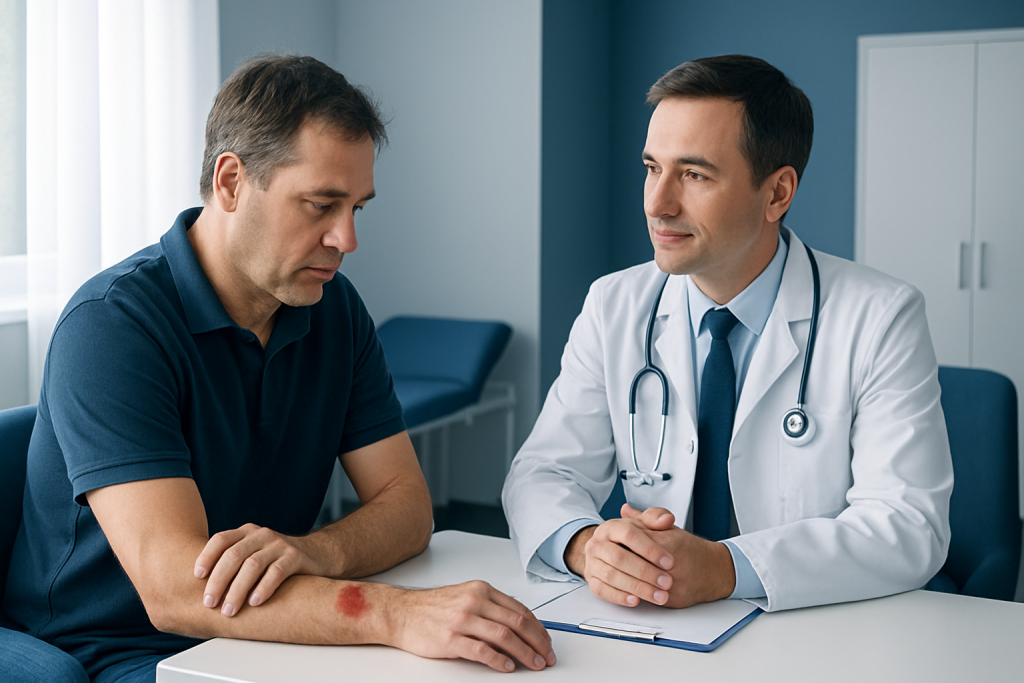
Staph infections usually begin when bacteria enter through a break in the skin. The opening may be obvious, such as a cut or surgical wound, or very small, such as dry cracked skin, shaving nicks, friction from sports equipment, or irritation from eczema. Even minor skin trauma can provide a pathway for bacteria if the skin barrier is weakened.
Certain situations increase risk. Close skin-to-skin contact, shared towels or razors, crowded living conditions, and contact sports can all make transmission easier. Risk may also be higher after hospitalization, recent surgery, indwelling devices, or frequent antibiotic use. People with diabetes, poor circulation, chronic skin disease, or a weakened immune system may be more vulnerable to infection or complications.
Good hygiene reduces risk, but it does not eliminate it completely. Because staph can live harmlessly on the skin, infection is not necessarily a sign of poor cleanliness. What matters most is whether bacteria have a chance to enter the skin and whether the body can contain the infection quickly.
How doctors diagnose a staph infection
Diagnosis often begins with a medical history and physical examination. A clinician looks at the size, depth, location, redness, drainage, tenderness, and whether the infection seems limited to the skin or is spreading. They may ask how quickly the spot appeared, whether there was a cut or insect bite, and whether there are fever, chills, or other symptoms.
In many simple skin infections, examination is enough to guide initial treatment. If there is pus or fluid, a sample may be collected for culture to identify the bacteria and determine which antibiotics are likely to work. This is especially useful for recurrent infections, severe infections, or suspected resistant bacteria such as MRSA.
Additional testing is not always necessary, but blood tests or imaging may be considered if the infection is extensive, very painful, associated with fever, or located near sensitive areas. If there is concern about a deeper pocket of infection, ultrasound or other imaging may help determine whether abscess drainage is needed. Early assessment is particularly important when the infection is on the face, near the eyes, over a joint, or around a surgical wound.
Treatment options and what helps in the early stage
Treatment depends on how mild or advanced the infection is. For a very small area without drainage or severe symptoms, a doctor may recommend gentle cleansing, keeping the area covered, and watching closely for changes. Warm compresses can sometimes encourage a small superficial infection to drain naturally, but squeezing or picking at the spot can push infection deeper and should be avoided.
If a pocket of pus has formed, the most effective treatment may be to drain it rather than relying on antibiotics alone. A clinician can decide whether the area needs a procedure, whether oral antibiotics are appropriate, and which medicine is best based on the suspected bacteria and the person’s health history. In some cases, care may overlap with wound care to protect healing skin and reduce the chance of further infection.
Antibiotics are not needed for every red bump, and they should not be started without medical advice. When they are prescribed, it is important to use them exactly as directed. More serious infections, or those affecting deeper tissues, may require hospital-based treatment, especially if there are signs of spreading infection or if the person has significant underlying medical conditions.
Supportive care matters too. The area should be kept clean and covered with a fresh dressing if it is draining. Hands should be washed before and after touching the site, and items such as towels, bedding, and razors should not be shared until the infection has resolved.
Prevention and self-care at home
Prevention starts with protecting the skin barrier. Cuts, scrapes, and insect bites should be cleaned promptly with mild soap and water, then covered if needed. Dry or cracked skin should be moisturized, and conditions that damage the skin barrier should be managed. People with recurring infections may benefit from discussing prevention strategies with a doctor, particularly if they have diabetes, eczema, or repeated boils.
At home, self-care should focus on hygiene and observation rather than aggressive treatment. The area can be washed gently once or twice daily, kept dry between cleanings, and covered if there is drainage. Warm compresses may be soothing, but over-the-counter creams or leftover antibiotics should not be used without guidance, as they may not be appropriate and can delay proper treatment.
It also helps to reduce spread to others. Hands should be cleaned regularly, and clothing or linens that touch the infected area should be washed. Gym equipment, shared surfaces, and personal items such as razors, towels, and cosmetics should not be shared while the infection is active. If repeat skin infections are a pattern, a dermatologist or infectious disease specialist may help identify triggers and discuss longer-term prevention.
When to seek medical care
Medical care should be sought if the skin change is rapidly getting bigger, increasingly painful, or producing pus. A doctor should also assess any possible staph infection that occurs on the face, near the eyes, on the hands, around the genitals, or close to a recent surgical site. People with diabetes, poor circulation, cancer treatment, chronic kidney disease, or weakened immunity should contact a clinician earlier because complications can develop more easily.
Urgent evaluation is important if fever, chills, red streaks, severe swelling, or a feeling of being unwell develops. These signs can suggest that the infection is spreading beyond the surface of the skin. Breathing difficulty, confusion, faintness, or widespread illness need emergency care.
Prompt review is also important if the problem keeps coming back or does not improve with initial care. In selected cases, assessment may involve specialists in dermatology or infectious diseases to confirm the diagnosis and plan treatment. Acibadem International’s multidisciplinary specialists and JCI-accredited hospitals diagnose and treat skin and soft tissue infections for international patients when advanced evaluation is needed.
Frequently asked questions
What does a staph infection look like on day 1?
On day 1, a staph infection often looks like a small red, tender, warm bump or sore. It may resemble a pimple, ingrown hair, insect bite, or irritated cut, but it often becomes more painful or swollen over a short time.
Can a staph infection start as something that seems minor?
Yes. Many staph skin infections begin with a very small area of irritation, especially where the skin has been nicked, scratched, or rubbed. What makes it different is that the area may quickly become more tender, warm, swollen, or filled with pus.
How fast can a staph infection get worse?
Some staph infections change noticeably within 24 to 48 hours. A spot that looked mild at first can become more swollen, painful, or drain pus, which is why close observation and early medical advice are important if symptoms are progressing.
Should a person pop or squeeze a suspected staph bump?
No. Squeezing or picking at a suspected staph infection can push bacteria deeper into the skin and make the infection worse. It can also increase pain, delay healing, and spread drainage to nearby skin or other people.
Do all staph infections need antibiotics?
Not always. Some small, limited skin infections may improve with proper wound care, while others need drainage, antibiotics, or both. A clinician can decide the safest approach based on the size, depth, drainage, location, and whether there are signs of spreading infection.
When is a staph infection an emergency?
Urgent or emergency care is needed if there is fever, rapidly spreading redness, severe pain, red streaking, facial involvement, or signs of serious illness such as weakness, confusion, or trouble breathing. These symptoms can mean the infection is spreading or affecting deeper tissues.
References
- Centers for Disease Control and Prevention
- Mayo Clinic
- National Health Service
- Merck Manual Consumer Version
- Infectious Diseases Society of America
This article is for general information only and is not a substitute for professional medical advice. Please consult a qualified doctor about your individual situation.
Hair transplant in Turkey — costs, graft counts & a free assessment
JCI-accredited · board-certified surgeons · reply within 24h