Erb Palsy Physical Therapy Exercises: How It Works, Results and What to Expect

Physical therapy usually begins early after Erb palsy is identified, with guidance from a pediatric specialist. Caregiver-led range-of-motion exercises are commonly performed gently and regularly at home.
Key Takeaways
- Physical therapy usually begins early after Erb palsy is identified, with guidance from a pediatric specialist.
- Caregiver-led range-of-motion exercises are commonly performed gently and regularly at home.
- Therapy aims to preserve joint movement, encourage functional arm use and reduce the risk of contractures.
- Progress varies because brachial plexus injuries differ in severity, location and ability to heal.
- Some children need additional assessment or nerve, orthopedic or reconstructive treatment alongside rehabilitation.
Erb palsy physical therapy exercises are individualized movements and play-based activities that help a baby or child maintain range of motion, encourage safe use of the affected arm and limit joint stiffness. A pediatric therapist teaches caregivers how to perform the exercises gently and adapts the plan as the child grows and recovery becomes clearer.
Overview: How Erb Palsy Physical Therapy Exercises Help
Erb palsy physical therapy exercises help babies and children with weakness of the shoulder, upper arm or elbow after a brachial plexus injury. The exercises are designed to keep joints moving comfortably, support muscle activity as nerves recover and help the child use the affected arm in daily play and development. A pediatric physical or occupational therapist should assess the child first and teach parents or caregivers the safest technique.
Erb palsy is a form of brachial plexus palsy. The brachial plexus is a network of nerves running from the neck to the shoulder and arm. Injury to the upper part of this network, often around birth, may cause the arm to rest close to the body with reduced shoulder movement, weakness in bending the elbow or difficulty lifting the hand toward the mouth. Brachial plexus injuries vary widely, so exercise plans and expected recovery are individualized.
Therapy is not a single procedure or a quick cure. It is a structured rehabilitation process that combines professional follow-up with short, gentle home sessions. The therapist monitors movement quality, strength, comfort, milestones and joint alignment, then changes activities as the child develops.
How the Rehabilitation Plan Works
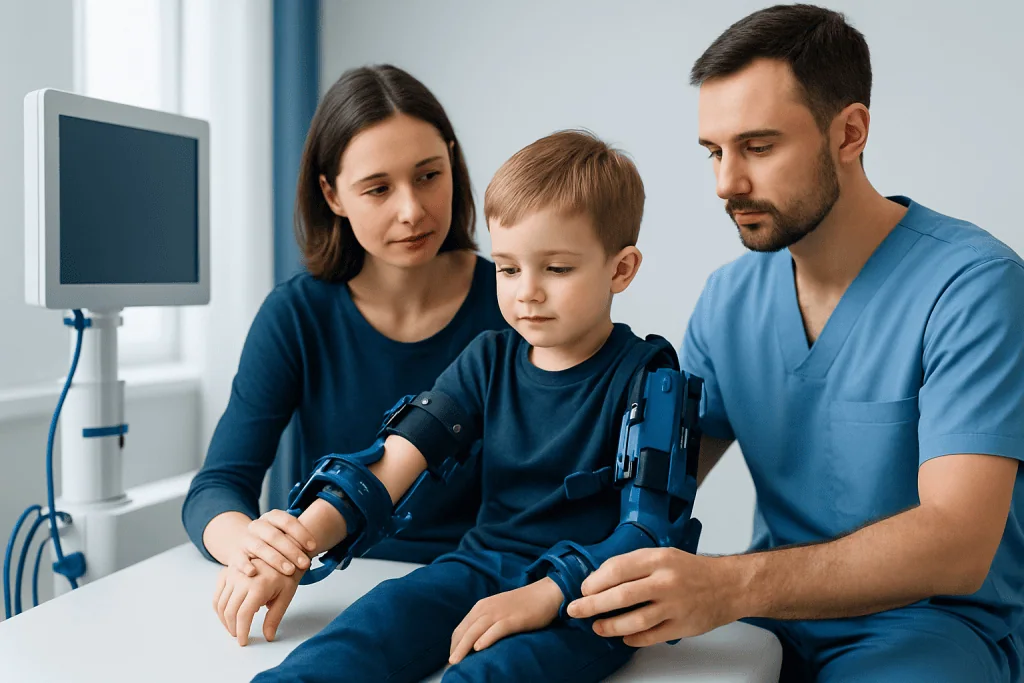
In the early months, therapy primarily protects movement while the care team watches for signs of nerve recovery. Passive range-of-motion exercises mean that the caregiver moves the child’s arm slowly while the child remains relaxed. These movements may include bringing the shoulder forward, turning the arm outward, bending and straightening the elbow, and moving the wrist and fingers, always within a comfortable range.
As voluntary movement appears, the focus shifts toward active play. A therapist may use age-appropriate positions, toys, reaching games, tummy time adaptations and two-handed activities to encourage the child to move the arm independently. The aim is not to force movement, but to create frequent, positive opportunities to use the recovering arm.
Children with persistent weakness may develop muscle imbalance around the shoulder. Therapy can include positioning, stretching, strengthening of available muscles and strategies to improve functional reaching. In some cases, splints or other supportive devices are considered by the rehabilitation and orthopedic teams to maintain alignment or assist selected activities.
A written home program helps the family include therapy in routines such as dressing, bathing, changing and playtime. The number and type of repetitions should come from the treating therapist, since overly vigorous stretching or lifting can cause discomfort and may not be appropriate for every injury pattern.
Who May Benefit and How Candidacy Is Assessed
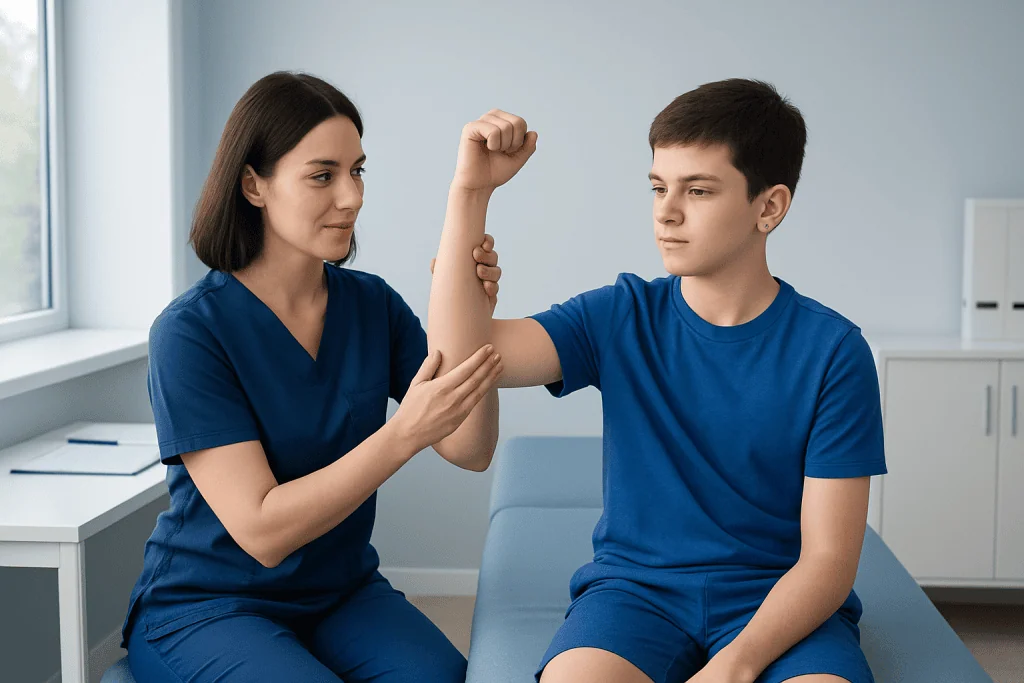
Most infants diagnosed with Erb palsy benefit from early assessment by a clinician experienced in brachial plexus injuries and pediatric rehabilitation. Therapy is commonly recommended even when the outlook appears favorable, because maintaining gentle movement can help prevent stiffness while the nerves heal. A pediatrician, neurologist, physiatrist, orthopedic surgeon, hand surgeon or brachial plexus specialist may contribute to the care plan.
The initial evaluation looks at which movements are present, whether the child can bend the elbow against gravity, hand and wrist function, shoulder position, sensation where age-appropriate, and the child’s overall development. Clinicians also ask about the birth history and assess for associated injuries, such as a collarbone fracture. Follow-up examinations are particularly important because the pattern of recovery over time helps guide decisions.
Some children recover substantial function with observation and rehabilitation alone. Others may be referred early to a specialized brachial plexus team when movement remains limited, recovery slows or there are concerns about severe nerve injury. Surgery, when indicated, is evaluated separately and does not replace rehabilitation; therapy remains important before and after treatment.
Families should not compare one child’s progress directly with another’s. Nerves may have been stretched, compressed, partially torn or completely torn, and each type of injury has a different potential for recovery. Regular assessment provides a more reliable picture than any single early examination.
What a Therapy Session and Home Exercise Routine May Include
A first therapy appointment usually begins with observation of the child’s spontaneous movements and posture during play, feeding or handling. The therapist checks the shoulder, elbow, forearm, wrist and hand for range of motion, then demonstrates handling techniques that support the arm without pulling on it. Parents are encouraged to ask for a return demonstration so they feel confident using the correct amount of support.
A typical home routine may involve gentle shoulder and elbow movements, forearm turning, wrist and finger mobility, and play that brings attention to both hands. For an infant, this may look like placing an interesting toy within reach, helping the hands meet at midline, or using supported tummy time. For an older child, activities may include reaching, grasping, dressing practice and play that involves both arms.
Exercises should be smooth and pain-free. Caregivers should not force the shoulder, pull the arm overhead, use jerky movements or continue an activity if the child appears distressed. The therapist may advise temporarily adjusting an exercise following surgery, during illness or if a joint becomes painful or difficult to move.
Rehabilitation may also involve pediatric physical therapy for whole-body development, posture and movement confidence. Occupational therapy can be helpful when hand use, feeding, self-care or participation in preschool and school activities needs additional support.
- Practice only the movements demonstrated by the child’s clinician or therapist.
- Use play, songs and familiar routines to keep sessions calm and positive.
- Support the shoulder and upper arm during handling, dressing and carrying.
- Record questions or changes in movement to discuss at follow-up visits.
Expected Results and Recovery Timeline
Recovery from Erb palsy is variable. Some infants begin to show meaningful improvement in the first weeks or months, while others require longer-term rehabilitation and specialist follow-up. Early return of certain movements, particularly active elbow bending, can be an encouraging clinical sign, but only the treating team can interpret progress in the context of the full examination.
Physical therapy supports recovery but cannot directly reconnect a severely damaged nerve. Its role is to protect flexibility and joint health, guide development and help the child make the best use of available movement. Improvements can be gradual and may be easier to notice over several weeks or months than from day to day.
As the child grows, the goals often change. In infancy, preserving comfortable movement and encouraging symmetrical development are central. Later, therapy may focus more on reaching overhead, rotating the forearm, using both hands together, dressing, sports participation and preventing shoulder deformity or contracture.
Scheduled reassessment is essential. If recovery is incomplete, the team may discuss further investigations, surgical consultation, orthopedic management or targeted rehabilitation. Occupational therapy may also help children develop practical strategies for school, play and independent daily activities.
Benefits, Limits and Possible Risks
The potential benefits of a guided program include maintaining range of motion, lowering the chance of soft-tissue tightness, supporting balanced motor development and helping families participate actively in care. Therapy may also identify changes in shoulder position or function early, allowing timely referral to the appropriate specialist.
Exercise has limits. A child with a more severe nerve injury may continue to have weakness despite consistent therapy, and some degree of restricted motion can persist. Rehabilitation plans should therefore be paired with appropriate medical follow-up rather than used as a substitute for specialist assessment.
When exercises are taught and performed correctly, they are generally gentle and well tolerated. Potential problems include discomfort, increased irritability, over-stretching, or aggravating an already stiff or unstable joint when exercises are performed too forcefully. Pain is not an expected goal of therapy and should be discussed with the clinician.
Caregivers should also avoid unproven devices, aggressive manipulation or online exercise programs that have not been adapted for their child. A personalized plan is safer because it accounts for the child’s age, current movement and any surgical or orthopedic considerations.
Daily Care and When to Seek Medical Care
Daily care includes supporting the affected arm during lifting and carrying, avoiding traction on the arm, and following the therapist’s recommendations for play and positioning. Families can encourage use of both hands without criticizing or pressuring the child. Consistent, brief practice is often more manageable than trying to complete long sessions.
Parents should contact the child’s doctor or therapist if the child seems to be in pain during movement, has new swelling, warmth or redness around a joint, becomes noticeably less able to move the arm, or develops increasing stiffness. Prompt advice is also appropriate if the shoulder appears persistently out of position, the child stops using a previously active hand or arm, or caregivers are uncertain about how to do an exercise safely.
Specialist review is important when there is little visible improvement over the follow-up period set by the care team, or when weakness interferes increasingly with development and everyday function. Early review does not necessarily mean a serious problem; it helps clinicians decide whether the rehabilitation plan needs adjustment or whether further assessment is useful.
Acibadem International’s multidisciplinary specialists and JCI-accredited hospitals can assess and treat brachial plexus-related conditions for international patients, including rehabilitation planning and referral for surgical opinion where appropriate.
Frequently asked questions
What are the best Erb palsy physical therapy exercises?
The best exercises are those selected by a pediatric physical or occupational therapist after assessing the child. They often include gentle shoulder, elbow, wrist and hand range-of-motion activities, followed by play-based movements that encourage active use of the arm. Exercises should never be forced or painful.
How often should Erb palsy exercises be done?
The schedule depends on the child’s age, movement pattern and stage of recovery. Therapists often teach families how to fit short sessions into normal daily routines, but the exact frequency should come from the treating team. Regular follow-up allows the program to be adjusted safely.
Can physical therapy cure Erb palsy?
Physical therapy cannot by itself repair a severely injured nerve. However, it can support recovery by maintaining joint mobility, preventing stiffness and helping the child use available movement effectively. Some children recover well with rehabilitation, while others need additional specialist treatment.
When should therapy for Erb palsy start?
Therapy is commonly considered soon after diagnosis, once the child has been assessed and caregivers have been given safe instructions. Early guidance can help protect range of motion while the clinical team monitors natural nerve recovery. Timing may differ if there are associated injuries or surgical considerations.
What should parents avoid when exercising an infant with Erb palsy?
Parents should avoid pulling the affected arm, forcing a movement, stretching through resistance or pain, and copying exercises from non-medical sources without professional guidance. The shoulder should be supported during handling and dressing. Any new pain, swelling or loss of movement should be reported to the care team.
Will a child with Erb palsy need surgery?
Not every child needs surgery. The decision depends on the severity of the nerve injury and the pattern of recovery during specialist follow-up. If surgery is considered, rehabilitation remains an important part of care before and after the procedure.
References
- American Academy of Pediatrics
- American Academy of Orthopaedic Surgeons
- Mayo Clinic
- National Institute of Neurological Disorders and Stroke
- Royal College of Occupational Therapists
This article is for general information only and is not a substitute for professional medical advice. Please consult a qualified doctor about your individual situation.
Joint and spine care in Turkey — expert assessment & treatment
JCI-accredited · board-certified surgeons · reply within 24h