Facial Warts: What Patients Need to Know

Facial warts are caused by certain HPV types that infect the top layer of skin. They can look flat, smooth, rough, or thread-like, especially around the beard area, eyelids, and lips.
Key Takeaways
- Facial warts are caused by certain HPV types that infect the top layer of skin.
- They can look flat, smooth, rough, or thread-like, especially around the beard area, eyelids, and lips.
- Because facial skin is delicate, home acids or aggressive removal can cause irritation or scarring.
- A doctor can usually diagnose facial warts by examining the skin and may suggest freezing, prescription creams, or other office treatments.
- Medical advice is important if a facial growth changes quickly, bleeds easily, is painful, or the diagnosis is uncertain.
Facial warts are usually harmless skin growths caused by certain types of human papillomavirus (HPV). They often improve with time, but treatment may be helpful when they spread, persist, or affect appearance, shaving, or comfort.
Overview: what facial warts are
Facial warts are small growths on the skin of the face caused by certain strains of human papillomavirus, or HPV. They are common, usually non-cancerous, and can appear as flat, smooth bumps or as slightly raised, rough, or thread-like lesions. Although they are often harmless, many people seek advice because the face is visible, sensitive, and prone to irritation from shaving or skin-care products.
These warts develop when HPV enters the outer layer of skin through tiny breaks that may not be noticeable. The virus encourages extra skin-cell growth, which creates the wart. Facial warts are not a sign of poor hygiene, and they can affect children, teenagers, and adults.
Some facial warts go away on their own as the immune system gradually clears the infection. However, this can take months or longer, and during that time the warts may remain the same, spread to nearby skin, or become bothersome. A careful, skin-friendly approach is especially important on the face to reduce the risk of irritation, pigment changes, or scarring.
How facial warts look and feel
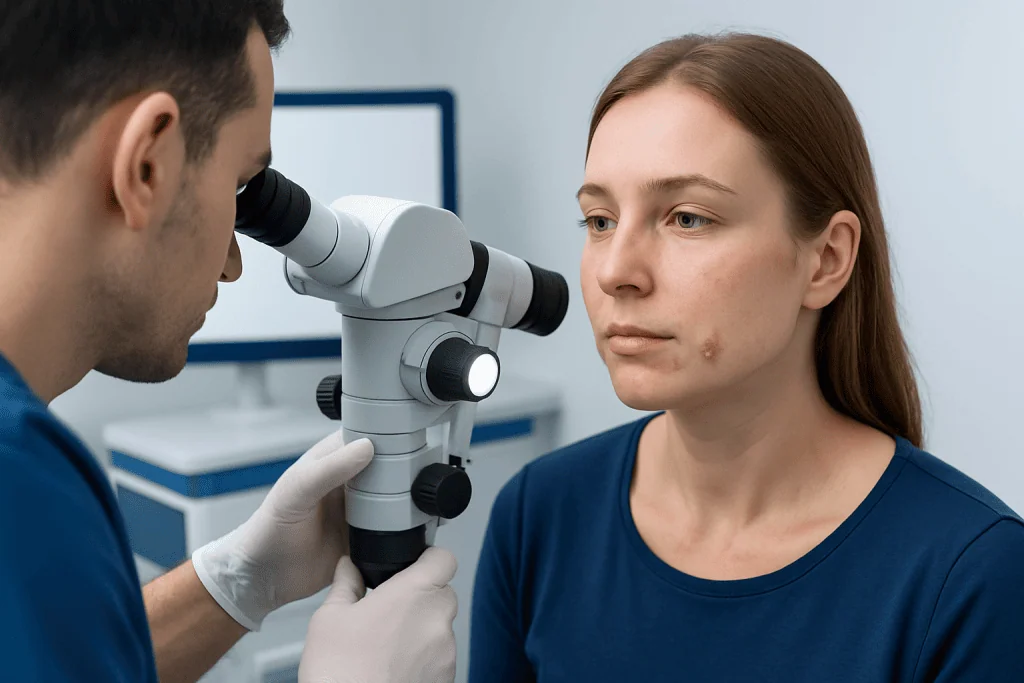
Facial warts can vary in size, shape, and texture. Flat warts are especially common on the face and often appear as small, smooth, slightly raised spots that may be skin-colored, light brown, or yellowish. Filiform warts are narrow and finger-like and may appear around the lips, eyelids, or beard area. Some common warts can also appear on the face, though they are more often seen on the hands.
Most facial warts do not cause pain. They may, however, feel rough, catch on a razor, become irritated by friction, or cause self-consciousness. In children and teens, multiple small flat warts can appear in clusters, especially where the skin has been scratched or rubbed.
Not every bump on the face is a wart. Conditions such as acne, skin tags, seborrheic keratoses, molluscum contagiosum, or other benign lesions can look similar. Because facial skin changes can have many causes, a professional skin examination is useful if the growth is new, unusual, or difficult to identify.
- Flat warts: small, smooth, often multiple
- Filiform warts: thin, elongated, often around the mouth, nose, or eyes
- Common warts: firmer, rougher, more raised
Causes, spread, and risk factors

Facial warts are caused by contact with HPV types that prefer the skin rather than the genital area. The virus spreads through direct skin contact or through contaminated objects such as razors, towels, or grooming tools, although this route is less common. A person can also spread the virus from one area of their own body to another by scratching, shaving, or picking at a wart.
Small cuts, dry skin, eczema, and frequent friction can make it easier for the virus to enter. Children, people who shave regularly, and those whose immune systems are weakened may be more likely to develop visible warts or have them persist longer. Facial warts can also spread along scratch lines, a pattern sometimes seen after irritation.
Having facial warts does not mean a person is seriously ill. Still, warts may be more stubborn in people with skin barrier problems or immune suppression. When other skin conditions are present, such as eczema, treatment plans may need to be adjusted to protect sensitive skin and reduce further irritation.
How doctors diagnose facial warts
In many cases, a doctor can diagnose facial warts by looking closely at the skin and asking about how long the growth has been present, whether it has changed, and whether it has been treated before. The shape, surface, location, and number of lesions often provide enough information for diagnosis.
If the diagnosis is uncertain, a dermatologist may use magnification or dermoscopy to examine the lesion in more detail. This can help distinguish warts from other common facial growths. Occasionally, if a lesion has an unusual appearance or does not respond to treatment, a small sample may be taken for further evaluation.
Assessment is particularly important for growths near the eyes, on the eyelids, or around the lips, where treatment requires extra care. Prompt evaluation also helps rule out lesions that can mimic warts, including some benign growths and certain skin cancers. For broader evaluation of suspicious skin lesions, patients may also need assessment related to skin cancer.
Treatment options for facial warts
Treatment depends on the type of wart, its location, the person’s age, skin sensitivity, and whether the lesion is spreading or causing distress. Because facial skin is thin and more likely to scar or develop color changes, treatments used on the hands or feet are not always suitable for the face. In some cases, watchful waiting is reasonable if the wart is small, not changing, and not bothersome.
Common doctor-guided options include cryotherapy, which freezes the wart; prescription topical treatments that encourage the immune system or remove abnormal skin more gently; and careful office-based removal for selected cases. If a wart is in a delicate area or if diagnosis is uncertain, a specialist may recommend dermatology evaluation before proceeding. For persistent lesions, advanced methods such as laser treatment may sometimes be considered.
Self-treatment on the face should be approached cautiously. Strong salicylic acid preparations, cutting, tying off, or scraping a facial wart at home can damage surrounding skin and increase the risk of scarring, infection, or pigment changes. Products marketed for hand or foot warts may be too harsh for facial use. If over-the-counter treatment is considered at all, it should only be used after a clinician confirms that the lesion is truly a wart and that the product is safe for the specific area.
Some people benefit from treatment of related skin issues that worsen irritation or make spread more likely. For example, if shaving causes repeated trauma, clinicians may suggest changes in shaving technique or skin care. Where a broader skin-health plan is needed, a consultation in skin care and dermatology can help tailor treatment while protecting cosmetic outcome.
Self-care, prevention, and reducing spread
Good skin care can help reduce irritation and lower the chance of spreading warts to other parts of the face. The most important steps are to avoid picking, scratching, or shaving directly over a wart when possible. Gentle cleansing, moisturizing dry skin, and managing underlying irritation can support the skin barrier.
Personal items that touch the face should not be shared. Razors, towels, makeup tools, and facial grooming devices can transfer virus-containing skin cells. People who shave may reduce spread by using clean equipment, shaving carefully, and stopping if the area becomes inflamed or starts bleeding.
Prevention also includes paying attention to other skin problems. Broken skin, eczema, and frequent rubbing can make viral entry easier. While there is no guaranteed way to prevent every wart, these habits are helpful:
- Avoid picking or trying to remove a wart by force
- Do not share razors, towels, or cosmetics
- Keep facial skin moisturized if it is dry or irritated
- Wash hands after touching a wart
- Seek medical advice before using wart products on the face
When to seek medical care
Medical care is worth seeking when a facial wart is growing, spreading, bleeding, painful, or causing repeated irritation. Evaluation is also important if the lesion is near the eye, inside the nose, on the lips, or in an area where shaving keeps reopening the skin. A clinician can confirm whether it is truly a wart and recommend the safest treatment for that location.
It is especially important to seek assessment if the growth has an unusual color, irregular border, rapid change in size, or a crusted or ulcerated surface. These features do not always mean something serious, but they should not be ignored. People with diabetes, immune suppression, or chronic skin disease should also consider earlier medical advice, since healing and treatment response can differ.
If facial warts are persistent or affect confidence or daily comfort, support from a dermatology team can be helpful. Near the end of a care pathway, some patients may explore treatment through centers such as Acibadem International, where multidisciplinary specialists in JCI-accredited hospitals diagnose and treat skin conditions for international patients.
Frequently asked questions
Are facial warts contagious?
Yes. Facial warts can spread through direct skin contact and sometimes through shared personal items such as razors or towels. They are usually only mildly contagious, but picking, scratching, or shaving over them can increase spread.
Do facial warts go away on their own?
Many do. The immune system can gradually clear the virus, but this may take months or longer. Some warts persist, spread, or return, which is why medical treatment may be considered.
Is it safe to use over-the-counter wart remover on the face?
Often, no. Many over-the-counter wart products are too strong for delicate facial skin and can cause burns, scarring, or darkening or lightening of the skin. A doctor should confirm the diagnosis and advise whether any home treatment is appropriate.
Can shaving make facial warts worse?
Yes. Shaving can irritate the wart, cause small cuts, and spread the virus to nearby skin. If a wart is in the beard area, a clinician may suggest a temporary change in shaving method or timing during treatment.
How are facial warts different from skin tags or acne bumps?
Facial warts are caused by HPV and often have a smooth, flat, rough, or finger-like surface depending on the type. Skin tags are soft, hanging growths, and acne bumps are usually inflamed or related to clogged pores. Because they can look similar, diagnosis by a clinician can be helpful.
When should a child with facial warts see a doctor?
A child should be seen if the wart is spreading quickly, is near the eye or mouth, bleeds, becomes painful, or if the diagnosis is uncertain. Medical advice is also useful when the wart is affecting confidence or when parents are considering treatment, since children's facial skin is sensitive.
References
- American Academy of Dermatology
- American Academy of Family Physicians
- National Health Service
- Centers for Disease Control and Prevention
- DermNet
This article is for general information only and is not a substitute for professional medical advice. Please consult a qualified doctor about your individual situation.
Explore treatments in Turkey — costs, top hospitals & a free quote
JCI-accredited · board-certified surgeons · reply within 24h