Quick answer
Warts are common benign skin growths caused by the human papillomavirus, often appearing on the hands, feet, face, or genital area. Treatment depends on the wart’s type, size, and location and may include topical medicines, cryotherapy, electrocautery, laser therapy, or minor surgical removal after specialist evaluation at Acibadem in Turkey.
What is warts?
Warts are small, rough growths on the skin caused by an infection with the human papillomavirus (HPV), a very common virus that affects the top layer of the skin. When the virus enters the skin, usually through a tiny cut or scratch, it causes the skin cells to grow faster than normal. This extra growth builds up into the raised, grainy bump that most people recognize as a wart. In medical coding, common viral warts fall under the diagnosis code ICD-10 B07.9.
If you are wondering what is warts in simple terms, it helps to know that warts are benign, which means they are not cancer. They are, however, contagious, because the virus that causes them can spread from person to person or from one part of the body to another. Warts can appear at any age, but they are especially common in children and teenagers, whose immune systems have often not yet built up defenses against the virus. People with weakened immune systems, such as those taking medicines that suppress immunity or living with certain chronic illnesses, are also more likely to develop warts and may find them harder to clear.
Warts can appear almost anywhere on the body, but they most often show up on the hands, fingers, feet, knees, and face. Different types of HPV tend to cause different types of warts, which is why warts on the sole of the foot look and feel different from warts on the fingers. Most warts are harmless and many go away on their own over time, although this can take months or even years.
Symptoms of warts
Warts symptoms are usually easy to see and feel, because the condition affects the surface of the skin. The most common signs include:
- A small, raised bump with a rough, grainy surface, often described as looking like a tiny cauliflower
- Skin-colored, white, pink, or tan coloring, sometimes slightly darker than the surrounding skin
- Tiny black dots inside the wart, which are small clotted blood vessels (sometimes called “wart seeds”)
- A firm or gritty feel when you touch the growth
- Pain or tenderness, especially with warts on the soles of the feet, which can hurt when you stand or walk
- Interruption of the normal skin lines (the fine ridges on your fingers and palms do not continue across a wart)
Symptoms often differ by the type of wart. Common warts usually appear on the fingers, hands, and knees as rough, dome-shaped bumps. Plantar warts grow on the soles of the feet; because body weight presses them inward, they often look flat, feel like a hard callus, and can cause pain when walking. Flat warts are smaller and smoother than other types, often appear in larger numbers, and tend to show up on the face, backs of the hands, or legs. Filiform warts are long, thin, thread-like growths that often appear around the mouth, nose, or eyes. Periungual warts grow around or under the fingernails and toenails and can affect nail growth.
Warts usually develop slowly. In the early stage, a wart may look like a tiny, smooth bump that is easy to overlook. As it grows over weeks or months, the surface becomes rougher and the characteristic grainy texture appears. Warts do not usually itch or bleed on their own, but they can bleed if they are scratched, picked at, or shaved. Any skin growth that bleeds easily, changes color rapidly, or grows quickly deserves a medical evaluation, because these features are not typical of ordinary warts.
Causes and risk factors
The direct cause of warts is infection with the human papillomavirus (HPV). There are many different strains, or types, of HPV, and only some of them cause warts on the skin of the hands, feet, and face. The virus infects the outer layer of the skin, called the epidermis, and stimulates the skin cells to multiply faster than they normally would, which produces the visible growth.
Understanding warts causes also means understanding how the virus spreads. HPV passes from person to person through:
- Direct skin-to-skin contact with a wart on another person
- Indirect contact with surfaces or objects that carry the virus, such as towels, razors, gym equipment, or the wet floors of communal showers and swimming pools
- Self-spread (autoinoculation), when scratching or picking at a wart transfers the virus to other areas of your own skin
The virus enters the skin more easily when the skin barrier is broken. Tiny cuts, scrapes, hangnails, bitten nails, and skin softened by long exposure to water all make infection more likely. Not everyone who is exposed to the virus develops warts; the immune system plays a large role in whether an infection takes hold.
Several factors raise the risk of developing warts:
- Age: children and teenagers get warts more often than adults
- Weakened immune system: people with immune-suppressing conditions or medicines are more susceptible
- Skin damage: nail biting, picking at cuticles, shaving, and frequent minor injuries create entry points for the virus
- Walking barefoot in communal wet areas such as locker rooms, pool decks, and shared showers
- Occupations involving raw meat handling, which have been linked to a higher rate of hand warts
- Close contact with someone who has warts, especially within a household
It can take weeks to many months after exposure for a wart to appear, so it is often impossible to know exactly when or where the infection occurred.
Diagnosis
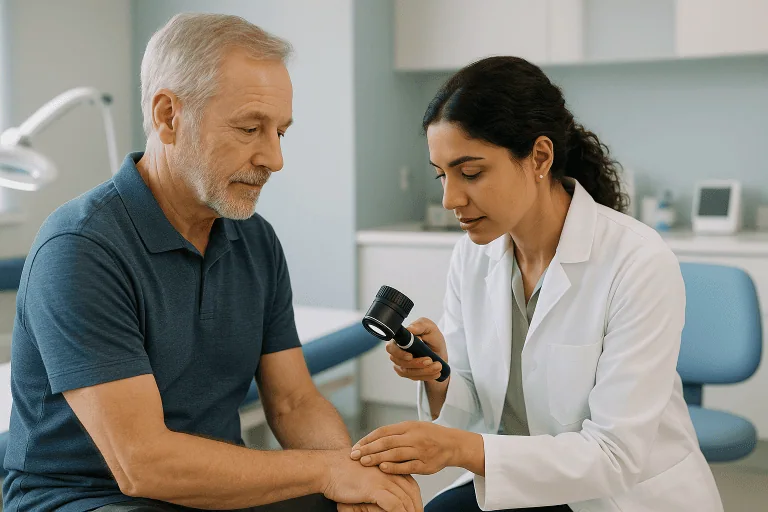
In most cases, warts diagnosis is straightforward and does not require laboratory tests or imaging. A doctor, often a dermatologist (a physician who specializes in skin conditions), can usually identify a wart simply by examining it. Features that support the diagnosis include the rough surface, the interruption of normal skin lines, and the tiny black dots of clotted blood vessels.
During the examination, your doctor may take one or more of the following steps:
- Visual and physical examination: looking at the growth closely, sometimes with a dermatoscope, a handheld magnifying instrument that lights and enlarges the skin surface
- Paring the surface: gently scraping the top layer of the growth with a small blade to look for the characteristic black dots and to distinguish a wart from a callus or corn
- Skin biopsy: in rare or uncertain cases, removing a small sample of the growth so it can be examined under a microscope in a laboratory
A biopsy is usually reserved for situations where the diagnosis is unclear, the growth looks unusual, it does not respond to standard treatment, or there is any concern that it could be something other than a wart, such as a skin cancer. Certain other skin conditions, including corns, calluses, seborrheic keratoses (harmless age-related growths), and molluscum contagiosum (another viral skin infection), can resemble warts, so a professional assessment is helpful when there is doubt. Blood tests and imaging scans are not needed to diagnose ordinary skin warts.
Treatment options for warts
There is no treatment that removes the virus itself; instead, warts treatment aims to destroy or remove the wart tissue and to encourage the body’s immune system to clear the infection. Because many warts eventually disappear without any intervention, and because no single treatment works for everyone, doctors often discuss several options and choose one based on the wart’s type, location, size, and how much it bothers the patient. Warts are typically managed by a dermatology department; at hospital groups such as Acibadem, dermatologists evaluate and treat viral warts as part of routine skin care.
Watchful waiting
In children especially, many warts go away on their own within months to a couple of years as the immune system controls the virus. If a wart is small, painless, and not spreading, simply monitoring it can be a reasonable choice. Your doctor may suggest this approach when the wart is not causing problems, since all treatments carry some discomfort and a chance of scarring or recurrence.
Topical medications
Salicylic acid is the most widely used first-line treatment. It is a peeling agent that gradually softens and removes the layers of the wart. It is available in over-the-counter and prescription strengths as liquids, gels, and medicated patches. Treatment usually requires daily application for several weeks, often combined with soaking the wart in warm water and gently filing away the softened tissue. Other prescription topical medicines, such as those that trigger a local immune response or interfere with cell growth, may be used for stubborn warts under a doctor’s guidance. Salicylic acid should not be used on the face or on genital warts, and people with diabetes or poor circulation should not treat foot warts on their own without medical advice.
Cryotherapy (freezing)
Cryotherapy involves applying liquid nitrogen to the wart to freeze and destroy the abnormal tissue. It is performed in a clinic and often requires several sessions spaced a few weeks apart. Freezing can cause temporary pain, blistering, and, occasionally, lightening or darkening of the treated skin. Milder freezing products are sold over the counter, but in-office treatment is generally stronger.
Procedures for resistant warts
When warts do not respond to first-line treatments, a dermatologist may consider:
- Electrosurgery and curettage: burning the wart with an electrical current and scraping it away, usually under local anesthesia (numbing medicine injected into the skin)
- Laser treatment: using focused light energy to destroy the wart tissue and the small blood vessels that feed it
- Cantharidin or other applied agents: substances applied in the clinic that cause a blister to form under the wart so it can later be removed
- Immunotherapy: treatments designed to stimulate the immune system to attack the virus, sometimes used for widespread or resistant warts
- Surgical excision: cutting the wart out, which is used less often because it leaves a wound and a scar and the wart can still return
It is important to have realistic expectations. Warts can come back after any treatment, because the virus may remain in nearby skin even after the visible growth is gone. In many cases, more than one treatment session, or a combination of methods, is needed. Your doctor can help weigh the discomfort and cost of treatment against the likelihood that the wart will resolve on its own.
Living with warts and outlook
The overall outlook for warts is good. They are benign growths, and in many people, particularly children, they eventually disappear without treatment as the immune system clears the virus. That said, the timeline is unpredictable: some warts fade within months, while others persist for years or return after treatment. Adults and people with weakened immune systems often find that their warts last longer and are more resistant to therapy.
While living with warts, a few practical habits can reduce spread and discomfort:
- Avoid picking, scratching, or biting warts, since this can spread the virus to other areas
- Do not share towels, razors, nail clippers, or socks with others while you have warts
- Cover warts with a bandage or waterproof plaster when swimming or using shared facilities
- Wear flip-flops or shower shoes in communal showers, locker rooms, and around pools
- Keep the skin around a wart clean and dry, and wash your hands after touching it
- Use a separate nail file or pumice stone for the wart and do not use it on healthy skin or nails
Warts on the feet can make walking uncomfortable. Cushioned insoles or pads that relieve pressure on a painful plantar wart may help while the wart is being treated. Warts in visible places, such as the face or hands, can also affect self-confidence, especially in children and teenagers; discussing treatment options with a doctor is reasonable when a wart causes emotional distress even if it is not physically painful. There is no guaranteed way to prevent warts entirely, but protecting your skin from cuts, keeping hands and feet dry, and avoiding direct contact with other people’s warts all lower the risk.
Frequently asked questions
What is warts and is it dangerous?
Warts are benign skin growths caused by the human papillomavirus (HPV), which makes skin cells multiply faster than normal. Common skin warts are not dangerous and are not cancer. They can, however, be contagious, uncomfortable, or cosmetically bothersome, and warts on the soles of the feet can make walking painful. If a growth changes rapidly, bleeds without injury, or looks unusual, a doctor should examine it to rule out other conditions.
Can warts go away on their own?
Yes, in many cases they can. Warts often resolve without treatment as the immune system gradually controls the virus, and this is especially common in children. The process is unpredictable and may take months or even a few years. Watchful waiting is a reasonable option for small, painless warts, but treatment may be preferred when a wart hurts, spreads, or causes distress.
Are warts contagious?
Warts are contagious because HPV spreads through direct skin contact and through shared items or surfaces, such as towels, razors, and wet communal floors. The virus enters the skin more easily through small cuts or softened, damp skin. You can also spread warts to other parts of your own body by scratching or picking at them, so covering warts and practicing good hand hygiene are sensible precautions.
What is the most effective warts treatment?
No single treatment works for everyone, and doctors often need to try more than one approach. Salicylic acid applied consistently over several weeks and cryotherapy (freezing with liquid nitrogen) are the most commonly used first-line treatments. For stubborn warts, options such as laser treatment, electrosurgery, immunotherapy, or minor surgery may be considered. Your doctor can recommend a plan based on the wart’s type, location, and how it has responded to previous treatment.
Why do my warts keep coming back after treatment?
Treatments destroy the visible wart tissue, but the virus can remain in the surrounding skin. If the immune system has not fully cleared the infection, a new wart can grow in the same spot or nearby. Recurrence is common and does not mean the treatment was done incorrectly. Repeat sessions or a combination of treatments may be needed, and a dermatologist can adjust the approach if warts persist.
How do doctors confirm a warts diagnosis?
Doctors usually diagnose warts by examining the skin. Typical clues include a rough surface, tiny black dots from clotted blood vessels, and the interruption of the normal fine skin lines. The doctor may gently pare down the top of the growth to see these features more clearly. In rare cases where the diagnosis is uncertain or the growth looks atypical, a small skin biopsy may be taken for examination under a microscope.
Can I treat warts at home?
Over-the-counter salicylic acid products can be effective for common warts on the hands and feet when used patiently and correctly, often over several weeks. However, home treatment is not appropriate for warts on the face or genitals, and people with diabetes, poor circulation, or a weakened immune system should see a doctor before treating warts themselves. If a home-treated wart does not improve, spreads, or becomes painful, professional care is advisable.
When to see a doctor
Most warts are harmless, but medical evaluation is recommended in certain situations. See a doctor if:
- You are not sure the growth is a wartother skin conditions, including some skin cancers, can look similar
- The wart bleeds easily, grows quickly, or changes color or shape
- The wart is painful or interferes with walking, writing, or daily activities
- Warts are multiplying or spreading despite home treatment
- The wart is on your face, genitals, or around your nails, where self-treatment can cause harm
- You have diabetes, poor circulation, or a weakened immune system and develop any wart, especially on the feet
- Signs of infection appear, such as spreading redness, warmth, swelling, pus, or fever
- Home treatment has not helped after several weeks of consistent use
A dermatologist can confirm the diagnosis, rule out more serious conditions, and recommend a treatment plan suited to the type and location of the wart. Prompt evaluation is particularly important for any skin growth that behaves differently from a typical wart.
Medically reviewed by the Acıbadem International Medical Board September 3, 2026
See our medical review board →
Update history
- PublishedJune 14, 2026
- Medical review approvedSeptember 3, 2026
- Last content updateSeptember 2, 2026