Eczema Treatment
Eczema treatment focuses on reducing skin inflammation, itching, dryness, and flare-ups through dermatologist-led care, trigger control, topical medicines, and individualized long-term skin barrier management.
Quick answer
Eczema is a chronic inflammatory skin condition in which a weakened skin barrier leads to dry, itchy, inflamed skin that flares in cycles. Treatment combines daily barrier repair with moisturisers, anti-inflammatory prescription creams, trigger identification and, for more severe disease, phototherapy, oral medicines or injectable biologic therapies. There is no permanent cure, but a structured, dermatologist-led plan can keep flares and itching under control long term.
What Is Eczema?
Eczema is a chronic inflammatory skin condition in which the skin barrier does not work as well as it should: it loses water too easily and lets irritants and allergens in too readily. The result is dry, itchy, inflamed skin that flares and settles in cycles. The most common form is atopic dermatitis, but the word eczema covers a family of related conditions, and doctors often use the broader term dermatitis for the whole group.
If you are reading this after months or years of moisturisers, over-the-counter creams, dietary experiments and repeated prescriptions that helped briefly and then stopped helping, you are describing a familiar pattern, not a failure on your part. Eczema is not simply “sensitive skin”. It behaves like other chronic inflammatory diseases: it has quiet periods and active periods, some predictable triggers and some that seem random, and it responds better to a structured plan than to any single product. One cream rarely fixes it, because one cream cannot address inflammation, barrier damage, triggers and infection risk at the same time.
The impact usually reaches well beyond the skin surface. Persistent itching breaks sleep. Visible rashes cause discomfort at work or school and the constant low-level strain of not knowing when the next flare will arrive. The skin can become dry, red, thickened, cracked, weeping or infected. In children, eczema can disrupt feeding, play and family routines; when one child cannot sleep for scratching, often nobody in the house sleeps. In adults, it frequently appears on the hands, face, eyelids or neck, where it is hardest to hide and hardest to rest.
Effective care is therefore not one prescription or a single visit. It is a dermatologist-led plan that identifies the type of eczema you have, calms the inflammation, repairs the skin barrier, reduces your specific triggers, prevents infection and sets out a practical long-term maintenance strategy. The goal is not only to clear the current flare, but to make future flares rarer, milder and easier to manage.
What does eczema look like?
Eczema usually looks like dry, rough, inflamed patches of skin that itch, and it can also scale, crack, ooze, crust or thicken over time. The edges tend to be less sharply defined than the plaques of psoriasis. In lighter skin, active eczema often appears pink or red. In darker skin, it may look brown, grey, purple or simply darker than the surrounding skin, and the inflammation can be less obvious at first glance, which sometimes delays diagnosis. Location shifts with age: infants often flare on the cheeks and outer limbs, children in the creases of the elbows and knees, and adults on the hands, eyelids, neck and flexures. Some people mainly experience severe itch with only subtle visible change, and that pattern is just as real as a dramatic rash.
Is eczema contagious?
No. Eczema is not contagious. You cannot catch it from touching someone’s skin, sharing towels, swimming in the same pool or sleeping in the same bed, and a person with eczema cannot pass it to others. It arises from a person’s own skin barrier and immune system, not from an organism that spreads. One nuance is worth knowing: eczema-damaged skin can become secondarily infected with bacteria or viruses, and those infections, not the eczema itself, can sometimes pass between people. That is one of several reasons dermatologists take open, weeping or crusted eczema seriously.
What Causes Eczema?
What causes eczema is a combination of genetics, immune system overactivity and environment, rather than any single factor. Many people with atopic dermatitis inherit a tendency towards a weaker skin barrier, variations affecting barrier proteins such as filaggrin are one well-studied example, which lets moisture escape and irritants penetrate. The immune system then reacts strongly to things that intact skin would tolerate, producing inflammation and itch. Scratching damages the barrier further, and the cycle feeds itself.
Eczema often runs in families alongside asthma, allergic rhinitis (hay fever) and food allergies, a cluster doctors call the atopic tendency. Having relatives with any of these conditions raises the likelihood of developing atopic dermatitis. It is worth stating a limit clearly here, because it saves people a great deal of anxiety and unnecessary restriction: although food allergy and eczema can coexist, food is not the main driver of flares for most people with eczema, and unsupervised elimination diets rarely control the disease. Testing and dietary decisions belong in a medical assessment, particularly in children.
What can trigger eczema?
Common eczema triggers include irritants, allergens, climate, fabrics, sweat, stress and infection, but the pattern is individual, and no two patients share exactly the same list. Frequent culprits include soaps, detergents, hand sanitisers and cleaning chemicals; fragrances and preservatives in cosmetics and skincare; contact allergens such as nickel, rubber chemicals and hair dye; house dust mite, pet dander and pollen; cold dry air, indoor heating, hot showers, heat and sweating; wool and rough synthetic fabrics; hormonal changes; psychological stress; and viral or bacterial infections. Occupational exposure matters too: wet work, gloves and repeated friction are major factors in hand eczema.
What are the 7 triggers of eczema?
There is no official medical list of seven triggers: the number comes from popular articles, not from dermatology. The lists that circulate usually name irritants, allergens, dry air and temperature extremes, sweat and heat, rough fabrics, stress, and infection, which is a reasonable summary of the common categories. The more useful exercise is not memorising a generic list but working out which two or three factors actually drive your flares. A dermatologist can help focus that search, and this matters because excessive, scattergun avoidance is exhausting and rarely improves symptoms. Targeted avoidance of proven triggers does.
Types of Eczema and Related Dermatitis
Dermatitis is the umbrella term for inflammation of the skin, and several distinct conditions sit under it. Telling them apart matters, because conditions that look similar can need genuinely different management: a plan built for the wrong type delivers partial results at best.
Atopic dermatitis is the most common form of eczema. It typically begins in childhood but can persist into adulthood or appear for the first time later in life. It reflects the combination described above: a weakened skin barrier plus an overactive immune response. Many patients also have asthma, allergic rhinitis or food allergies, though these conditions accompany the eczema rather than cause most flares.
Contact dermatitis develops when the skin reacts to something touching it, and it comes in two forms. Irritant contact dermatitis follows direct damage from frequent handwashing, detergents, solvents, cleaning chemicals or friction, no allergy required. Allergic contact dermatitis is a true immune reaction to a specific substance, such as nickel, fragrance, preservatives, rubber chemicals, hair dye or even an ingredient in a topical medication. The distinction is practical: allergic contact dermatitis usually needs the causative substance identified through patch testing and then avoided, or the rash will keep returning no matter how good the creams are.
Hand eczema deserves its own mention because of how disabling it can be. It is common among healthcare workers, hairdressers, cleaners, food handlers, mechanics and parents of young children, anyone whose hands face repeated water, gloves, chemicals or friction. Painful cracks, peeling and swelling can make ordinary tasks difficult and, for some people, threaten their ability to work.
Nummular eczema produces coin-shaped itchy plaques, often on the arms, legs or trunk, and is regularly mistaken for fungal infection or psoriasis. Dyshidrotic eczema causes crops of small, intensely itchy blisters on the palms, the sides of the fingers or the soles of the feet. Seborrheic dermatitis, while often discussed as a separate condition, can overlap with eczema-like inflammation on the scalp, eyebrows, ears, chest and facial folds, and sometimes coexists with atopic disease.
Whatever the type, treatment also has to address complications. Repeated scratching thickens the skin (lichenification) and opens cracks that bleed and admit bacteria. Viral infection of eczema-prone skin, most seriously eczema herpeticum, caused by the herpes simplex virus, can spread rapidly. Inflammation frequently leaves darker or lighter patches after it settles, and severe, long-neglected disease can scar. In children, poorly controlled eczema affects sleep, behaviour and family wellbeing; in adults, it erodes work performance, social confidence and mental health. A good plan takes these burdens as seriously as the rash itself.
The Eczema Rash: Symptoms and When Specialist Care Helps
An eczema rash typically combines itch, dryness, redness or discolouration, rough patches, scaling and cracking, sometimes with oozing, swelling or skin that has thickened from months of scratching. Itch is usually the dominant symptom, and for many patients it is the one that matters most: it interferes with concentration during the day and with sleep at night, and it drives the scratching that keeps the disease going.
Mild dryness often responds to regular moisturising alone. Medical assessment earns its place when symptoms are persistent, recurrent, widespread, painful, infected or interfering with daily life, or when eczema affects delicate territory such as the eyelids, face, genitals, hands or skin folds, where treatment must be chosen with particular care because the skin there is thin and some medicines are unsuitable.
People who tend to benefit most from dermatologist-led eczema care include:
- Infants, children and adults with moderate to severe itching, disturbed sleep or frequent flares.
- Anyone with eczema on the face, eyelids, hands, feet, genitals or across large areas of the body.
- Patients whose rash returns quickly whenever a cream stops, or who need repeated courses of medication with no lasting change.
- People with suspected allergic contact dermatitis or work-related eczema, where identifying the cause changes everything.
- Patients with signs of infection, such as increasing pain, warmth, crusting, pus, fever or rapidly spreading redness.
- People who have tried multiple treatments without ever receiving a clear diagnosis or a long-term plan.
- Patients weighing up advanced options such as phototherapy, biologic therapy or systemic anti-inflammatory medication.
How Eczema Is Diagnosed
Eczema is diagnosed primarily through a detailed medical history and skin examination: there is no single blood test for it. The dermatologist assesses where the rash appears, how long it has been present, whether it shifts with seasons or exposures, and whether you or your family have a history of eczema, asthma, hay fever or allergies. Expect specific questions: which soaps, cosmetics, fragrances and hair products you use; what cleaning materials and workplace chemicals you handle; whether you wear gloves or jewellery; what fabrics you favour; whether pets, sweating, stress, climate or particular foods seem connected to flares.
Targeted tests come in when the diagnosis is uncertain or the disease is not responding as expected:
- Patch testing identifies allergic contact dermatitis. Small amounts of potential allergens, fragrances, preservatives, metals, rubber chemicals, topical medications, are placed on the skin under patches and assessed over several days for reactions. It is particularly useful for recurrent facial, eyelid, hand or occupational eczema.
- Skin swabs check for bacterial, viral or fungal infection when the skin is weeping, crusted or suddenly worse.
- Skin biopsy is reserved for atypical or treatment-resistant rashes, where it helps distinguish eczema from psoriasis, cutaneous lymphoma, autoimmune disease and other inflammatory conditions.
- Blood tests may be arranged if systemic treatment is planned, to check blood count, liver, kidney or infection status depending on the medicine, or if there are signs of another medical issue.
Preparation improves any consultation, wherever it happens. Previous prescriptions, allergy test results, biopsy reports, photographs of past flares and a simple timeline of symptoms let the dermatologist see what has already been tried and reason about why it did not hold. This matters most when the skin happens to be calm on the day of the appointment, photographs of the flare tell the story the examination cannot.
Eczema Treatment: From Flare Control to Long-Term Maintenance
Eczema treatment is a personalised medical plan designed to control inflammation, relieve itching, restore the skin barrier and prevent future flares. It usually combines daily skin care with prescription medicines and trigger control, and it is adjusted over time according to response, side effects, age, lifestyle, pregnancy considerations, occupational needs and other medical conditions. A modern plan is also deliberately educational: you learn how much moisturiser to use, when and where to apply prescription creams, how to manage bathing, how to recognise early infection, which products to avoid and when the plan needs review. For parents of children with eczema this guidance is often the difference between control and chaos, fear of medication leads to undertreatment, while incorrect use adds irritation and risk.
How to treat eczema: the layered approach
Treating eczema works in layers, starting with the barrier and escalating only as far as the disease demands. A typical sequence looks like this:
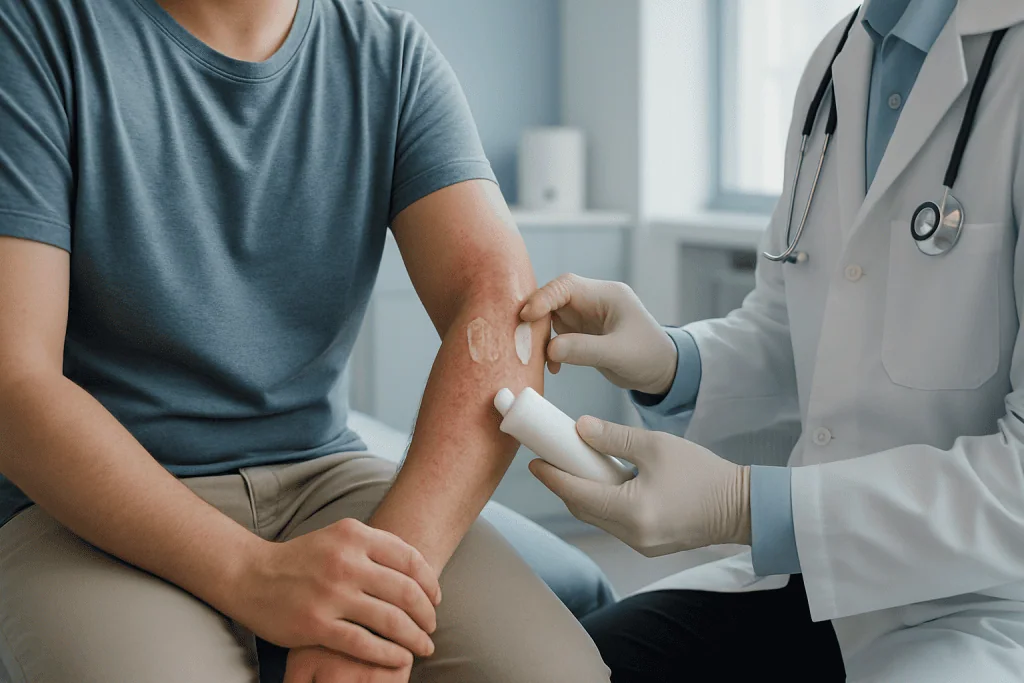
- Repair the skin barrier. Regular fragrance-free moisturisers, gentle cleansers, sensible bathing habits and avoidance of harsh products form the foundation of everything else. Moisturiser applied soon after bathing, and repeatedly through the day where needed, keeps water in the skin. Ointments and thick creams generally outperform lotions on very dry skin, though comfort and climate matter: a plan you can realistically follow beats a theoretically perfect one you abandon.
- Calm inflammation with topical medicines. Topical corticosteroids remain a central option for flares when used correctly; the dermatologist selects the strength, formulation, location, duration and tapering approach. Sensitive areas, eyelids, face, skin folds, genitals, usually need lower-strength options or non-steroid alternatives. Topical calcineurin inhibitors and other non-steroid anti-inflammatories are often used for maintenance or for sites where steroid exposure should stay limited.
- Reduce your specific triggers. Product changes, glove strategies for wet work, fabric choices and environmental adjustments are targeted at proven triggers, identified through history and, where indicated, patch testing.
- Treat infection when it is present. Infected eczema does not settle with anti-inflammatory treatment alone; swabs and appropriate antimicrobial treatment come first or alongside.
- Escalate for severe or resistant disease. Wet-wrap therapy, phototherapy, oral immunomodulating medicines and injectable biologic therapies form the upper layers, each with its own selection criteria and monitoring requirements, described below.
What is the best treatment for eczema?
There is no single best treatment for eczema: the best treatment is the one matched to your type of eczema, its severity, its location, your age and your medical history. For mild atopic dermatitis, consistent barrier care plus a short, correctly used course of topical anti-inflammatory medicine may be all that is needed. For allergic contact dermatitis, identifying and avoiding the allergen outperforms any cream. For severe, widespread or treatment-resistant disease, phototherapy or systemic medicines may achieve what topical therapy cannot. Beware of any product marketed as the best treatment for everyone; the variety of eczema types is precisely why blanket claims fail.
What is the 3 minute rule for eczema?
The three-minute rule is the practice of applying moisturiser within about three minutes of finishing a bath or shower, while the skin is still slightly damp, to trap water in the skin before it evaporates. It is a practical habit rather than a strict clinical protocol, moisturising at five minutes is not a failure, but the underlying principle is sound: moisturiser locks in hydration far more effectively on damp skin than on skin that has already dried out. The same logic applies to applying prescribed topical medicines in the sequence your dermatologist specifies.
Can eczema be cured permanently?
No treatment currently cures eczema permanently, and it is better to know that plainly than to chase claims that suggest otherwise. Eczema is a chronic condition driven by genetics, barrier function and immune behaviour, none of which a cream can rewrite. What honest medicine can offer is substantial: many children see their atopic dermatitis settle markedly as they grow, many adults achieve long quiet periods with maintenance care, and modern systemic and biologic therapies have changed what is possible for severe disease. The realistic goal is durable control, skin that is comfortable most of the time, flares that are infrequent and manageable, and a plan for when they come. Treat any product promising a permanent cure with scepticism.
Advanced options for more severe eczema
When optimised topical care and trigger management are not enough, several escalation routes exist, each chosen deliberately rather than by default.
Wet-wrap therapy may be used for short periods under medical guidance during intense flares, especially in children. Moisturiser and prescribed medication are applied, then covered with a damp layer and a dry layer to boost hydration and calm inflammation. It is effective but needs to be taught properly, because overuse or poor technique raises irritation and infection risks.
Phototherapy delivers controlled medical ultraviolet light in measured sessions under dermatology supervision, and can reduce inflammation and itching in selected patients with widespread eczema that has not responded adequately to topical care. The schedule, your skin type, previous sun sensitivity, current medicines and long-term risk profile are all reviewed before treatment begins, and it requires repeated visits over weeks or months.
Systemic therapyoral anti-inflammatory or immunomodulating medicines, and injectable biologic therapies that target specific inflammatory pathways, is reserved for moderate to severe eczema that stays uncontrolled despite everything above. These medicines require careful patient selection, counselling, baseline testing and ongoing monitoring. The choice among them depends on disease severity, age, other medical conditions, pregnancy plans, infection risk, prior treatment history and your own preferences, and it is made with your treating dermatologist rather than from a list.
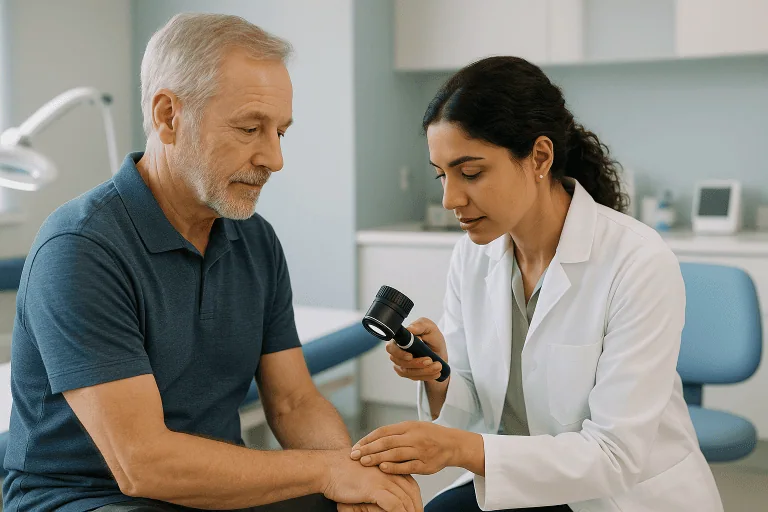
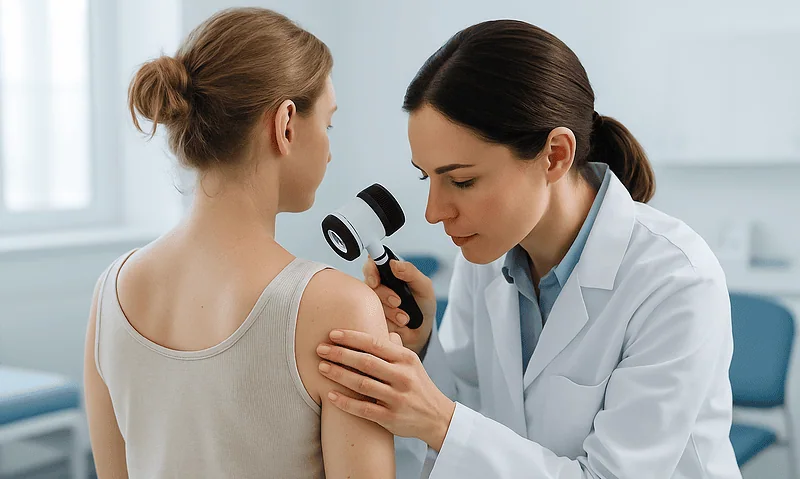
Technology supports the whole pathway without replacing judgement: dermoscopic assessment, high-resolution clinical photography, digital severity documentation, laboratory testing and structured follow-up systems help track response, spot triggers, compare skin changes over time and coordinate input from other specialists when needed.
Timescales vary with complexity. An initial evaluation may fit into a single appointment; patch testing needs several visits over a few days; phototherapy runs across weeks or months; systemic medicines mean ongoing monitoring. Many patients feel itch relief within days of effective flare treatment, but durable control is a longer project. Recovery from a flare is also gradual and uneven: redness, swelling, oozing and itch usually improve first, while dryness, rough texture and discolouration lag behind. Darker or lighter patches can persist for weeks or months after the inflammation has settled: that is post-inflammatory pigment change, not necessarily treatment failure, and your dermatologist can explain which signs mean healing and which mean the inflammation is still active.
Why Acting Early Matters
Early treatment interrupts a cycle that gets harder to break the longer it runs: itching leads to scratching, scratching damages the barrier, the damaged barrier lets in more irritation and infection, and the inflammation intensifies. Skin trapped in this loop becomes progressively thicker, more cracked, more painful and more reactive, products it once tolerated start to sting.
Delay also raises infection risk. Open or weeping skin is an entry point for bacteria, and some skin infections spread quickly. Viral infection of eczema-prone skin can be serious too: eczema herpeticum causes painful clustered blisters, fever and rapidly worsening skin involvement, and doctors treat it as urgent when it occurs. These complications are far less likely in skin that is kept intact and calm.
The knock-on costs of waiting are easy to underestimate. In children, uncontrolled eczema disrupts sleep for the whole household, with downstream effects on mood, behaviour and school performance. In adults, chronic hand eczema makes work tasks painful and can force sick leave or occupational limits; facial and eyelid eczema wears down confidence. Earlier specialist care tends to mean less total medication over time, not more, fewer emergency prescriptions, fewer antibiotic courses, fewer cycles of strong treatment applied too late.
There is one more reason not to wait: some conditions mimic eczema and need entirely different care. Psoriasis, fungal infections, scabies, drug reactions, autoimmune blistering disease and rare skin lymphomas have all been mistaken for eczema. When a plan is genuinely not working, the right response is not a stronger version of the same cream: it is a dermatologist reconsidering the diagnosis.
Benefits of Eczema Treatment
What you gain from treatment depends on the type and severity of your eczema, but a well-designed plan improves both the skin and the life lived in it.
| Benefit | What It Means for You |
|---|---|
| Reduced itching and inflammation | Less scratching, improved comfort, and fewer interruptions to sleep, work, school and daily activities. |
| Improved skin barrier function | Skin becomes better hydrated and less reactive to everyday irritants when barrier care is consistent. |
| Fewer and milder flares | Maintenance treatment and trigger control can reduce the frequency and intensity of flare-ups over time. |
| Lower risk of infection | Healing cracks and controlling scratching reduces the openings through which bacteria and viruses enter. |
| Clearer treatment decisions | Dermatologist-led diagnosis distinguishes eczema from look-alike conditions and guides safer medication use. |
| Better long-term self-management | You learn when to moisturise, when to use medicines, what to avoid and when the plan needs medical review. |
Recovery Timeline After Starting Eczema Treatment
Every patient’s course is different, and the timeline below is a typical shape rather than a schedule. It reflects what many patients experience once an individualised plan begins.
| Time Period | What Patients Can Expect |
|---|---|
| Day 1 | The dermatologist confirms the likely diagnosis, identifies immediate concerns such as infection, and begins a flare-control and skin-barrier plan with clear instructions on how and where to apply each treatment. |
| First week | Itching and redness may begin to settle if the plan is followed closely. Moisturising routines become habit, and you may start recognising your personal triggers. |
| First month | Many flares are noticeably calmer, though dryness and pigment changes can remain. The dermatologist may taper topical medication, introduce maintenance therapy, or review results such as patch testing. |
| Two to three months | Patients with recurrent or moderate eczema usually have a clearer picture of triggers and response by now. Phototherapy or systemic treatment may be considered if topical care is not enough. |
| Longer term | The focus shifts to prevention: maintaining the skin barrier, using anti-inflammatory treatment early when flares begin, avoiding your proven triggers, and attending follow-up when symptoms change. |
What Influences a Good Eczema Treatment Result
A good result is not defined by clear skin on one particular day. It means fewer flares, better sleep, less itching, medication used safely rather than fearfully, and a routine you can actually keep up in real life. Several factors shape whether you get there.
Accurate diagnosis comes first. If allergic contact dermatitis, infection, fungal disease, psoriasis or another condition is contributing, standard eczema treatment delivers only partial improvement, which is exactly why persistent cases justify targeted testing rather than another round of the same prescription.
Severity and duration matter. Long-standing eczema with thickened skin takes longer to calm than a recent flare, and severe disease may need escalation beyond moisturisers and topical steroids. Frequent infections or widespread involvement call for a broader strategy from the outset.
Consistency of barrier care is one of the strongest practical levers you control. Moisturisers work best used regularly, not only when the skin is visibly inflamed. Gentle cleansing, avoiding fragrance and harsh exfoliants, and protecting your hands from irritants all reduce how much medication the skin ends up needing.
Correct use of prescription medicines is equally decisive, and errors run in both directions: some patients underuse topical medicines out of fear of side effects, while others use them too long or on the wrong areas. A clear written plan cuts through the confusion, which medicine is for the face, which for the body, how many days to use each, when to step down, and what maintains the result. Those specifics come from your treating dermatologist, not from a leaflet or a search result.
Trigger identification can transform outcomes, particularly in hand, facial, eyelid and occupational eczema. Soaps, sanitisers, detergents, fragrance, preservatives, cosmetics, hair dye, nickel, rubber chemicals, wool, sweating, cold weather, dry air, dust, pet dander, stress and workplace exposures are all candidates, but not for everyone, and blanket avoidance of all of them is a burden without a benefit. Medical guidance narrows the field to the factors that actually apply to you.
Age and life stage shape every choice. Infants, children, pregnant patients, older adults and people with immune conditions each need different approaches. Children often need family education and guidance for school or nursery; adults need plans that survive contact with professional responsibilities, travel and cosmetic realities.
Follow-up is what turns a prescription into a strategy. Eczema shifts with season, hormones, stress, infections, travel, climate and new products. Review appointments let the dermatologist confirm response, strip out unnecessary medication, adjust maintenance therapy and decide whether more advanced options have earned their place.
Eczema Care at Acibadem
At Acibadem, eczema is treated with the same seriousness as other chronic inflammatory diseases. Dermatologists evaluate the pattern of disease alongside your age, medical history, allergies, occupational exposures, previous treatments and the impact on your quality of life, and because they practise within a hospital network, input from allergy and immunology, paediatrics, infectious disease and other disciplines can be coordinated when a case needs more than one perspective. That coordination matters most when eczema is severe, recurrent, atypical, treatment-resistant, or overlaps with asthma, suspected contact allergy or repeated infection.
Care plans are individual rather than protocol-for-everyone. A person with mild atopic dermatitis may need education, barrier repair and a simple flare plan. A healthcare worker with chronic hand eczema may need an occupational exposure review, patch testing and a protective strategy. A child with widespread eczema and lost sleep may need family-centred education, infection assessment and stepwise escalation. An adult with severe disease despite multiple prior treatments may need evaluation for phototherapy, systemic medication or biologic therapy. The emphasis throughout is on choosing the right level of treatment rather than escalating by default, guided by internationally accepted, evidence-based dermatology principles.
Because eczema is a long-term condition, continuity is built into the plan. Where previous care has been fragmented across different clinics, a structured evaluation pulls the history, testing and treatment response into one coherent picture. A written treatment summary, medication instructions, product guidance and follow-up recommendations can then be prepared so that ongoing care continues smoothly with a treating physician, including the monitoring arrangements that advanced therapies require.
Living With Eczema Long Term
Eczema is a condition you manage rather than a problem you solve once, and accepting that reframes everything. The skin barrier needs maintaining in the quiet periods, not just rescuing in the loud ones. Flares treated early, with the right medicine in the right place, stay small. Triggers, once genuinely identified, lose most of their power. And a diagnosis that has been properly confirmed, rather than assumed, means every subsequent decision rests on solid ground.
Progress is rarely a straight line. Seasons change, jobs change, stress rises and falls, and the skin responds to all of it. What a structured, dermatologist-led plan provides is not a promise that flares will never return, but something more useful: comfortable skin most of the time, a clear playbook for the days when it is not, and the confidence that comes from understanding your own disease well enough to stay ahead of it.
Preparation
- Before your appointment, note when symptoms started, possible triggers, current skincare products, and any medicines used. Bring previous test results or allergy evaluations if available. Avoid applying strong topical steroids or new cosmetic products just before evaluation unless advised by your doctor.
Aftercare
- Use prescribed moisturizers and medications exactly as directed, even after symptoms improve. Avoid known triggers such as harsh soaps, irritants, allergens, overheating, and scratching. Follow-up visits help adjust treatment, prevent infections, and manage recurring flare-ups.
Frequently Asked Questions
What affects the cost of eczema treatment?
The main factors are eczema severity, the extent of skin involvement, need for tests, type of medicines prescribed, follow-up frequency, and whether advanced therapies or phototherapy are recommended. Travel, translation, and international patient services can also affect the overall budget.
How can I get a personalised quote for eczema care in Turkey?
You can request a free consultation by sharing your medical history, current symptoms, photos if appropriate, previous prescriptions, and any test results. A dermatologist-led review helps estimate the likely consultation, testing, treatment, and follow-up needs.
Is eczema treatment usually a single visit or ongoing care?
Eczema often needs long-term management rather than a single treatment. Many patients require an initial plan, flare control, skin barrier guidance, and follow-up to adjust treatment safely over time.
Are medicines included in an eczema treatment package?
Package content varies. Some arrangements may include consultation, selected tests, prescription planning, translation, and follow-up coordination, while medicines, advanced treatments, or additional visits may be handled separately. This should be confirmed before travel.
Will I need allergy testing for eczema?
Not every patient needs allergy testing. A dermatologist may recommend selected tests if the history suggests contact allergy, food-related concerns, occupational triggers, or eczema that does not respond as expected.
Is this information medical or financial advice?
No. This is general educational information. A dermatologist should assess your condition, and the international patient team can provide a personalised quote based on your needs after a free consultation.
Medically reviewed by the Acıbadem International Medical Board August 30, 2026
See our medical review board →
Update history
- PublishedJune 8, 2026
- Medical review approvedAugust 30, 2026
- Last content updateSeptember 8, 2026
References3
- Atopic eczema nhs.uk
- Eczema medlineplus.gov
- Eczema my.clevelandclinic.org
Trusted care for international patients
From the Acibadem Blog

Questions to Ask at Your Eczema Consultation: Treatment Steps, Maintenance and When to Return
At an eczema consultation, the most useful questions cover four areas: what type of eczema you have and what may be driving it, which…
Is It Eczema or Another Dermatitis? How Dermatologists Tell Atopic and Contact Types Apart
Eczema (atopic dermatitis) and contact dermatitis can look nearly identical, but they arise differently. Atopic eczema is a chronic, inherited tendency toward a leaky…