Seborrheic Dermatitis Treatment
Seborrheic dermatitis is a chronic inflammatory skin condition causing redness, itching, and flaky scales, often on the scalp and face. Care focuses on controlling flares and preventing recurrence.
Quick answer
Seborrheic dermatitis is a chronic inflammatory skin condition that causes redness, itching and greasy or dry flaking in oil-rich areas such as the scalp, eyebrows, sides of the nose, ears, beard area and chest. Treatment combines antifungal and anti-inflammatory creams or medicated shampoos to calm flares with a simple maintenance routine to reduce recurrence. It is common, not contagious, and usually well controlled with consistent care.
What Is Seborrheic Dermatitis?
Seborrheic dermatitis is a chronic inflammatory skin condition that causes redness, itching and flaking in areas of the skin rich in sebaceous, or oil-producing, glands. It most often affects the scalp, hairline, eyebrows, eyelids, sides of the nose, ears, beard and moustache area, upper chest and sometimes the skin folds. It is common at every age, it is not contagious, and it is not caused by poor hygiene, although many people who live with it privately worry about both.
Because the condition is chronic, the honest framing matters from the start. Seborrheic dermatitis can be controlled very effectively for many people, but it typically requires ongoing management rather than a one-time result. No current treatment removes the underlying tendency permanently. What good treatment does is calm inflammation, reduce scale and itching, restore comfort and appearance, and lower the frequency and intensity of flare-ups. When the diagnosis is clear and the plan is matched to the location and severity of the disease, long stretches of calm, comfortable skin are a realistic expectation.
The day-to-day burden is often underestimated. Seborrheic dermatitis can feel like a small skin problem until it starts to shape how you feel in public, at work, in photographs or during ordinary routines. Redness around the nose, eyebrows or beard draws attention. Flakes on the scalp fall onto dark clothing. Itching interrupts sleep, and scratching worsens the irritation it was meant to relieve. Perhaps most frustrating of all, symptoms improve for a while and then return without warning. That cycle is not a sign that you are doing something wrong: it is how the condition behaves, and it is exactly what a structured treatment plan is designed to interrupt.
Many people arrive at a dermatology appointment carrying more questions than symptoms. Is the diagnosis actually correct? Why did a shampoo that used to work stop working? Is this an allergy, an infection, or something more serious? Could the facial redness be rosacea, psoriasis or eczema instead? These are reasonable questions, and answering them properly is the foundation of effective care. This page explains what seborrheic dermatitis is, what causes it, how it is diagnosed and treated, and what realistic long-term control looks like.
Seborrhea, Seborrhea Disease and Other Names
Seborrhea disease, seborrhea and the frequent misspelling serbatic dermatitis all point towards the same diagnosis, although the words are not identical in meaning. Strictly, seborrhea describes excessive oiliness of the skin, the overactive sebaceous glands themselves, while seborrheic dermatitis describes the inflammatory rash that develops in those oil-rich areas. In everyday use the terms blur together, and people searching for seborrhea disease or serbatic dermatitis are almost always describing the same red, flaky, itchy condition covered here. You may also see the British spelling, seborrhoeic dermatitis, and in infants a related form is called cradle cap. Whatever the label, the underlying condition and its management are the same.
What Causes Seborrheic Dermatitis?
Seborrheic dermatitis develops from several interacting factors rather than a single cause. The most consistent finding is an exaggerated inflammatory reaction to Malassezia, a yeast that lives naturally on everyone’s skin. In people prone to the condition, the immune system responds to this ordinary yeast, and to the by-products it creates when breaking down skin oils, with inflammation, redness and accelerated shedding of skin cells, which appears as flaking. Increased oil production in certain areas, individual skin barrier sensitivity and genetic tendency all contribute. Hormonal influences, certain neurological conditions, immune status and some medication effects can also play a role. What the condition is not is equally important: it is not an infection you caught from someone, it is not an allergy in the classic sense, and it is not a reflection of how clean you are.
What causes dandruff?
Dandruff is caused by the same process as seborrheic dermatitis, a reaction to Malassezia yeast on an oil-rich scalp, and is best understood as the mildest end of the same spectrum. In dandruff, flaking occurs without visible inflammation; in scalp dandruff that has progressed to seborrheic dermatitis, redness, itching and sometimes thick, adherent scale join the flakes. This is why the same active ingredients appear in both anti-dandruff shampoos and prescription scalp treatments, and why persistent dandruff that no longer responds to cosmetic shampoos is often the first clue that a medical-strength approach is needed.
What can trigger seborrheic dermatitis?
Common triggers include stress, fatigue, cold or dry weather, illness, sweating, hormonal changes and irritating hair or skin products. Many patients notice a seasonal rhythm, with flares in winter when indoor air is dry and improvement in summer. Others flare after a stressful period at work, an infection, disrupted sleep or travel across climates. New cosmetics, hair dyes, alcohol-based products and harsh cleansers can provoke or worsen a flare by irritating an already sensitive skin barrier. Certain neurological conditions and changes in immune function are associated with more persistent or severe disease. Triggers vary between individuals, and part of good long-term care is learning your own pattern, because a patient who recognises an approaching flare can act early with a simple plan rather than waiting until symptoms peak.
Is seborrheic dermatitis contagious?
No, seborrheic dermatitis is not contagious. You cannot pass it to a partner, a child or a colleague through touch, shared towels, pillows or combs. The Malassezia yeast involved in the condition lives on virtually everyone’s skin; what differs in people with seborrheic dermatitis is not the presence of the yeast but the way their skin responds to it. This distinction matters emotionally as well as medically, patients sometimes withdraw from close contact out of unfounded worry, and understanding that the condition is an individual inflammatory response, not a transmissible infection, removes an unnecessary burden.
Symptoms: How Seborrheic Dermatitis Presents
Typical symptoms include white or yellowish flakes, redness, itching, burning, tightness and patches that can look oily, dry or irritated, sometimes all at once. The distribution is the biggest diagnostic clue: seborrheic dermatitis favours the scalp, hairline, eyebrows, eyelid margins, the creases beside the nose, the ears and behind them, the beard area, the mid-chest and occasionally the underarms, groin and other skin folds. Some patients have scalp symptoms alone; others have facial involvement with little or no scalp disease; a smaller group has widespread involvement of the trunk and folds.
Seborrheic Dermatitis Scalp Symptoms
Seborrheic dermatitis scalp involvement is the most common presentation, ranging from fine, powdery dandruff to thick, greasy, yellowish scale stuck to a red, itchy scalp. Flakes fall visibly onto shoulders and clothing, and itching can be intense enough to disturb sleep or concentration. On the scalp the condition is easily mistaken for simple dandruff, psoriasis, contact dermatitis from hair products or a fungal infection, which is one reason a stubborn scalp that has defeated multiple shampoos deserves a proper diagnosis rather than another product change. The hairline, the skin behind the ears and the ear canals are frequently involved alongside the scalp itself.
Face, Eyelids, Ears, Beard and Body
Facial seborrheic dermatitis typically produces redness and flaking around the eyebrows, the sides of the nose, the ears and, in men, within and around the beard and moustache, where shaving can either help or aggravate depending on technique and products. On the face it can closely resemble rosacea, eczema, allergic dermatitis or lupus-related rashes, so the pattern and history matter. Around the eyelids, seborrheic dermatitis can contribute to blepharitis, with redness, irritation, crusting at the lash line or a gritty sensation; significant eye involvement is usually assessed together with an ophthalmologist because eyelid skin is thin and the eyes are sensitive. On the body, the most common sites are the centre of the chest and upper back, where patches may look pink-brown with fine greasy scale, and the skin folds, where friction and moisture keep the area inflamed.
Can seborrheic dermatitis cause hair loss?
Seborrheic dermatitis does not usually cause permanent hair loss, but severe scalp inflammation and repeated scratching can lead to temporary shedding or hair breakage. When the scalp is intensely inflamed, hairs can shift into a resting phase and shed more than usual, and mechanical scratching snaps hair shafts and damages follicles superficially. In the great majority of cases, hair regrows once the inflammation is controlled and the scratching stops, which is itself a practical argument for treating a flaring scalp promptly rather than tolerating it. If shedding continues after the dermatitis is calm, or if there are smooth bald patches, a dermatologist will look for a separate cause of hair loss, because seborrheic dermatitis and other hair conditions can coexist.
Diagnosis: How Seborrheic Dermatitis Is Confirmed
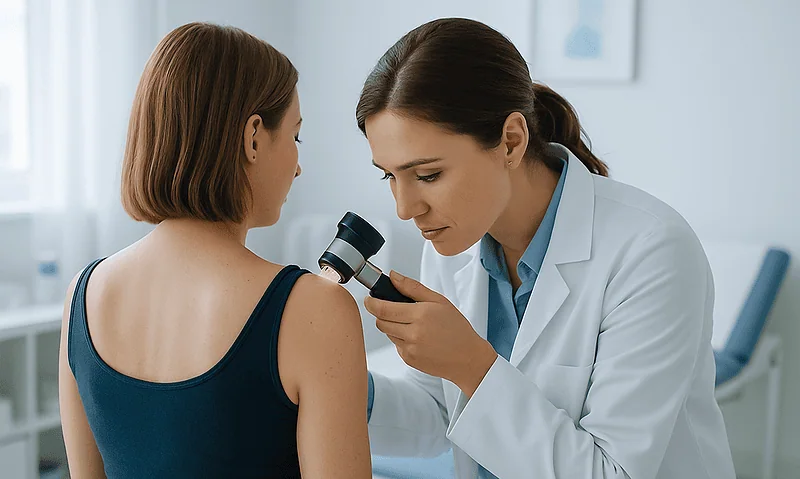
Diagnosis is usually made through a careful skin examination and medical history, no blood test or scan defines the condition. The dermatologist evaluates the distribution of the rash, the character of the scale, how long symptoms have been present, what treatments have already been tried and with what result, personal and family history of skin disease, and any associated medical conditions. Dermoscopy, a magnified skin examination, can help distinguish seborrheic dermatitis from psoriasis or fungal infection. If the appearance is unusual or the response to appropriate treatment is poor, the doctor may recommend microscopic examination of skin scale, fungal testing, allergy evaluation or, rarely, a small skin biopsy to rule out other diseases. Most patients need none of this; a trained eye and a thorough history settle the diagnosis in the majority of cases.
What is mistaken for seborrheic dermatitis?
The conditions most often mistaken for seborrheic dermatitis are psoriasis, rosacea, atopic dermatitis, contact dermatitis, fungal infections of the skin or scalp, and, much more rarely, lupus-related facial rashes. Scalp psoriasis in particular can look almost identical, with the scale tending to be thicker, drier and more sharply bordered; some patients genuinely have overlapping features of both, sometimes described as sebopsoriasis. Allergic contact dermatitis from hair dye, fragrance or a preservative in a shampoo can mimic a scalp flare, and rosacea shares facial redness though it favours the cheeks rather than the creases beside the nose. Getting this differential right is not academic: each of these conditions responds to different treatment, and months of frustration often trace back to treating the wrong diagnosis. This is also why a rash that fails to behave as seborrheic dermatitis should, despite correct, consistent treatment, is a signal to reassess rather than simply intensify therapy.
Who May Benefit From Specialist Treatment
Specialist treatment is worth considering when dandruff, itching, redness, scaling or greasy-looking flakes persist despite regular cosmetic shampoos or moisturisers. Dermatologists also usually take a closer look when there is oozing, crusting, noticeable hair shedding, significant swelling, marked eyelid involvement or signs suggesting secondary infection. People with weakened immune systems, neurological diseases or complex medical histories often need closer assessment, because seborrheic dermatitis can be more persistent and more extensive in these settings and may need a differently paced plan.
In infants, treatment may be appropriate for cradle cap when scaling is extensive, persistent, inflamed or simply worrying for parents. Infant care is different from adult treatment: it must be gentle, age-appropriate and, when symptoms are severe or widespread, guided by a clinician rather than assembled from adult products, which are frequently too strong for a baby’s skin.
Seborrheic dermatitis management is also often part of care for patients with overlapping skin conditions. Some individuals have both seborrheic dermatitis and psoriasis; others have acne, rosacea, atopic dermatitis, generally sensitive skin or a contact allergy that complicates treatment choices. In these cases a dermatologist sequences therapies carefully so that treating one condition does not inflame another: a low-potency approach in one area, a stronger targeted approach in another.
Finally, quality of life is a legitimate reason to seek care. Patients describe embarrassment about flakes on clothing, anxiety about facial redness before meetings or events, and fatigue from a condition that keeps returning. Seborrheic dermatitis is medically manageable in most people, but its effect on confidence and daily comfort is real, and “it’s only dandruff” is not a reason to keep tolerating symptoms that a structured plan could control.
How Seborrheic Dermatitis Treatment Is Performed
Treatment begins with a consultation, not a prescription. The dermatologist reviews where symptoms occur, how long they have been present, whether flares are seasonal, which products have been used and for how long, and whether there are identifiable triggers such as stress, illness, sweating, new cosmetics, hair dyes or harsh cleansers. Photographs are useful for documenting severity, particularly when symptoms fluctuate between appointments. The physician also reviews general health, current medications, allergies, pregnancy or breastfeeding status where relevant, and any history of immune or neurological conditions, because all of these shape which treatments are suitable.
The examination is detailed but usually straightforward: the pattern of redness and scale across the scalp, hairline, eyebrows, eyelids, nose creases, ears, beard area, chest and skin folds as needed, with dermoscopy where it adds clarity. Preparation is simple. It helps to bring a list or photos of the shampoos, creams, oils, cosmetics and prescription products you have used, and, unless instructed otherwise, not to apply heavy creams or medicated products immediately before the appointment, so the dermatologist can see the condition in its active state. Prior biopsy reports, allergy test results and photographs of past flares are all useful where they exist.
Treatment then follows a two-phase logic, adapted to your skin:
- Flare control: a short, defined course of treatment to quickly reduce redness, itching and scaling in the affected areas.
- Maintenance: a lighter, intermittent routine, typically a medicated shampoo or periodic antifungal cream, designed to keep the condition quiet and prevent frequent recurrence.
- Review and adjust: a follow-up to confirm response, step down stronger medications, and set a clear plan for what to do when the next flare begins.
What is the best treatment for seborrheic dermatitis?
There is no single best treatment for seborrheic dermatitis; the most effective plan depends on where the condition is, how severe it is, and how sensitive your skin is. That said, the pillars are consistent. Topical antifungal therapy, as shampoo, cream, gel or foam, reduces the yeast-driven inflammation and is the backbone of most regimens. Short courses of topical anti-inflammatory medication calm acute flares. Keratolytic agents loosen thick scale where it has built up. Gentle, non-irritating skin care protects the barrier while treatment works. The dermatologist’s task is choosing the right combination and, just as importantly, the right intensity: strong enough to control the disease, mild enough to be used repeatedly on sensitive areas over years without harm. A regimen that clears the skin but cannot be sustained is not a good regimen.
Dry Scalp Medications and Medicated Shampoos
Dry scalp medications for seborrheic dermatitis range from over-the-counter medicated shampoos to prescription-strength solutions, foams and lotions. The active ingredients typically include antifungals such as ketoconazole or ciclopirox, antiseborrheic agents such as zinc pyrithione or selenium sulfide, keratolytics such as salicylic acid to lift thick scale, and coal tar preparations in selected cases. How you use them matters as much as which you use: medicated shampoos generally need to stay in contact with the scalp for several minutes before rinsing, because a shampoo rinsed off immediately treats the drain more than the scalp. The dermatologist explains frequency, contact time, whether to rotate products, and how to adapt the routine for curly, textured, colour-treated or chemically processed hair so treatment does not cause excessive dryness or breakage. For dense scale, an additional scalp solution or a short course of anti-inflammatory medication may be prescribed to reduce itching and redness while the shampoo does its longer-term work.
Treating the Face, Beard and Eyelids
Facial treatment is deliberately gentler, because facial skin tolerates less. Antifungal creams, gels or foams reduce yeast-related inflammation. Short courses of low-potency topical corticosteroids can settle acute flares in selected areas, but they must be used carefully and briefly, especially near the eyes, because prolonged steroid use on the face carries its own risks. For recurrent facial involvement, non-steroid anti-inflammatory creams may be considered precisely because they can be used in sensitive areas where long-term steroids are unsuitable. The plan usually includes practical skin care: a mild cleanser, a non-irritating moisturiser and a sunscreen compatible with sensitive skin. Beard-area disease may need specific instructions for cleansing and applying medication under facial hair. Eyelid involvement calls for the most caution of all, eyelid hygiene measures, gentle cleansing and carefully selected medication under a physician’s direction, with ophthalmological assessment where eye symptoms are significant.
Treating the Chest, Back and Skin Folds
For the chest, back and skin folds, topical antifungal and anti-inflammatory therapies are prescribed in forms that suit the area, creams, lotions or gels rather than heavy ointments that occlude. The dermatologist may also advise on clothing choices, sweat management and avoiding occlusive or irritating products, because friction and trapped moisture keep fold areas inflamed. If secondary infection is suspected because of oozing, crusting, tenderness or worsening redness, additional targeted medication may be required before the underlying dermatitis can settle.
How do I fix seborrheic dermatitis?
You fix seborrheic dermatitis by controlling it, not by eliminating it, and understanding that distinction is the single most useful thing a patient can take from a consultation. The tendency to react to skin yeast does not disappear, so the realistic goal is a routine with two settings: a flare plan you can start promptly when symptoms return, and a maintenance plan light enough to sustain indefinitely. Patients who internalise this stop experiencing recurrence as failure and start treating it as a manageable event. In more resistant cases, short-term oral medication may be considered, particularly when disease is extensive or unresponsive to topical therapy; this is not needed for most patients and is weighed against medical history, potential interactions and safety by the treating doctor. And if the condition genuinely refuses to behave despite correct treatment, the answer is usually reassessment of the diagnosis rather than escalation, persistent “seborrheic dermatitis” sometimes turns out to be psoriasis, contact allergy or a fungal infection wearing a convincing disguise.
Technology supports rather than dominates this process. Magnified skin evaluation helps assess scale pattern, redness and hair-bearing areas; digital photography documents baseline severity and treatment response; laboratory testing is used selectively for infection or fungal disease. The appointment may run longer when the diagnosis is complex, but treatment does not require a procedure or hospital stay, and many patients begin therapy the same day. Early improvement in itching and redness may appear within days to weeks; durable control of scaling and recurrence depends on consistent use of the regimen. Follow-up matters because seborrheic dermatitis often rebounds when treatment is stopped abruptly: the planned step-down from flare control to maintenance is where long-term results are actually won.
Why Acting Early Matters and the Risks of Delay
Seborrheic dermatitis is not usually dangerous, but delay makes it harder to control. Repeated scratching damages the skin barrier, which increases irritation and can open the door to secondary infection: the kind of complication that may require input from an infectious diseases specialist alongside dermatology in more severe cases. Persistent inflammation can produce burning, tenderness, crusting and mounting sensitivity, and on the scalp, heavy scale plus scratching contributes to the temporary shedding and breakage described earlier.
Delay also multiplies exposure to unsuitable products. Many patients cycle through harsh anti-dandruff routines, oils, alcohol-based solutions, strong exfoliants or steroid creams without supervision. Some of these deliver short-term relief while quietly worsening the underlying irritation, especially on the face and eyelids. Inappropriate long-term use of topical corticosteroids can thin the skin, trigger acne-like eruptions, aggravate rosacea or cause other side effects depending on the site, problems that then need treating on top of the original condition.
Early assessment is most valuable when the diagnosis is uncertain. Psoriasis, allergic contact dermatitis, fungal infection, lupus-related rash, rosacea and atopic dermatitis can all mimic seborrheic dermatitis, and treating the wrong condition means symptoms persist or worsen while confidence in treatment erodes. A dermatologist identifies the warning signs, orders testing only where it changes the plan, and matches treatment to the actual cause.
There is also the emotional arithmetic. Visible facial redness or flakes on a dark jacket affect professional interactions and social ease in ways patients rarely volunteer. Most people feel genuine relief on learning that the condition is common, manageable and unrelated to hygiene, and a clear written plan replaces months of uncertain trial-and-error with practical steps.
Benefits of Seborrheic Dermatitis Treatment
The main benefits of treatment are symptom control, fewer flares and a safer long-term routine for sensitive skin and scalp areas.
| Benefit | What It Means for You |
|---|---|
| Reduced redness and scaling | Inflamed patches and visible flakes can improve, helping the skin look calmer and feel more comfortable. |
| Less itching and irritation | Better control of inflammation can reduce scratching, burning and the sleep disruption caused by itch. |
| Clear diagnosis | A dermatological evaluation confirms seborrheic dermatitis and rules out conditions that need different treatment. |
| Personalised maintenance plan | You learn which medications and skin-care steps to use during flares and how to prevent frequent recurrence. |
| Safer medication use | Medical guidance helps avoid overuse of strong topical steroids or irritating products, especially on the face and eyelids. |
| Improved daily confidence | Better symptom control reduces the visibility of flakes and redness in professional and social settings. |
Recovery and Control Timeline
Recovery from a seborrheic dermatitis flare is gradual: first the current flare is calmed, then control is maintained with a consistent, lighter routine. “Recovery” here is best understood as control over time rather than a one-off recovery period.
| Time Period | What Patients Can Expect |
|---|---|
| Day 1 | After evaluation, many patients begin a prescribed regimen the same day, typically medicated shampoo, topical antifungal therapy, anti-inflammatory medication where needed, and gentle skin-care guidance. |
| First week | Itching and irritation may begin to ease. Scale starts to loosen, particularly when scalp treatments are used with the correct contact time and frequency. |
| First month | Redness, flaking and discomfort often improve significantly with adherence to treatment. The dermatologist may adjust medications and begin stepping down flare-control therapy. |
| Longer term | Maintenance therapy helps prevent recurrence. Some patients need intermittent treatment around seasonal changes, stress, travel or other personal triggers. |
Factors That Influence Outcomes
Diagnostic accuracy comes first. When seborrheic dermatitis is correctly distinguished from psoriasis, eczema, contact allergy, fungal infection or rosacea, treatment is targeted and effective; when symptoms are atypical or fail to improve as expected, reassessment matters more than persistence with the same plan.
Consistency comes a close second. Medicated shampoos and topical treatments work best used exactly as directed: contact time on the scalp, correct amounts on the face, and neither too often nor too rarely. Over-application irritates sensitive skin; under-application undertreats. A plan is only as good as its fit with your actual life, work schedule, travel, exercise, hair-washing habits, so the best regimens are deliberately simple enough to follow anywhere.
Severity and location shape the approach. Mild scalp dandruff may respond quickly to a medicated shampoo alone. Thick scalp scale, eyelid involvement, beard-area disease or widespread involvement need a more layered plan. Facial disease is both more visible and more delicate, so treatment there is adjusted repeatedly to balance effectiveness with tolerability.
Skin type and hair-care practices matter more than most patients expect. Curly, textured, colour-treated or chemically processed hair may need modified washing frequency or product formats so medicated shampoos do not cause dryness or breakage. Oils, styling products, cosmetics, sunscreens and masks vary in how likely they are to irritate or occlude the skin, and specific guidance here often prevents self-inflicted flares. Men with beard involvement benefit from concrete instructions on cleansing and applying medication under facial hair.
Overall health influences persistence. Seborrheic dermatitis tends to be more stubborn in people with certain neurological conditions, changes in immune function, sustained stress, disrupted sleep or coexisting inflammatory skin disease. In these situations dermatological care may be coordinated with other specialists so the whole picture is treated, not just the rash.
Environment sets the rhythm. Cold weather, dry indoor air, sweating, fatigue, illness and travel across climates all provoke flares in susceptible people. Patients who learn their own pattern can act early with their flare plan instead of waiting for symptoms to peak, and that habit, more than any single product, is what separates well-controlled disease from a frustrating cycle.
Finally, communication with the dermatologist keeps the plan honest. Burning, worsening redness, acne-like bumps, eye symptoms, pregnancy, new medications or a simple lack of improvement are all reasons the regimen may need adjusting, and it almost always can be. Seborrheic dermatitis is a dynamic condition, and the best plans respond to how the skin behaves in real life rather than how it behaved at the first appointment.
Seborrheic Dermatitis Care at Acibadem
At Acibadem, care for seborrheic dermatitis is built around a detailed dermatological assessment, evidence-based treatment protocols and personalised maintenance planning. For a chronic, recurring skin condition, the quality of the consultation is the treatment’s foundation: the physician looks beyond a single prescription to understand your history, previous treatments, lifestyle, skin sensitivity and expectations, then designs a plan with both a flare setting and a maintenance setting that you can carry on after you return home.
While most cases are managed directly within dermatology, Acibadem’s multidisciplinary hospital structure allows coordinated input from ophthalmology for significant eyelid involvement, allergy and immunology where contact allergy is suspected, infectious diseases for complicated secondary infection, and neurology or other departments where an underlying condition is relevant. This matters most when a rash is recurrent, atypical, resistant to treatment or entangled with other health concerns: the situations in which a single-specialty view can miss the pattern.
Diagnostic tools are used selectively and in proportion to the question being asked. Magnified skin examination supports clinical assessment; laboratory tests help exclude fungal or secondary infection where the presentation suggests it; skin biopsy is reserved for genuinely uncertain diagnoses. The purpose of technology here is accuracy, not ceremony. Electronic medical records support continuity between visits, so maintenance therapy can be reviewed and adjusted sensibly over time, which, for a condition managed over years rather than weeks, is where continuity of care earns its keep.
Personalisation is the recurring theme because patients vary so widely. One person needs a scalp-focused regimen for persistent dandruff; another needs a gentle facial plan that avoids irritation at all costs; a third needs evaluation for overlapping psoriasis or contact allergy before any treatment choice makes sense. The physician’s role is to identify the pattern, match treatment to skin and lifestyle, and leave the patient with a maintenance plan that is both medically sound and genuinely followable.
Living Well With Seborrheic Dermatitis
Seborrheic dermatitis is common, chronic and, with the right approach, highly manageable. The condition rewards understanding: knowing what it is and is not, recognising your own triggers, keeping a flare plan ready, and maintaining a light routine during the calm periods rather than abandoning treatment the moment the skin clears. Patients who make that shift usually find the condition retreats from the centre of daily life to its edges.
Effective care is not only about calming today’s flare. It is about knowing what to use, when to use it, what to avoid, and how to stop symptoms from repeatedly disrupting sleep, work and confidence. A clear diagnosis, a treatment plan matched to your skin and circumstances, and a realistic maintenance strategy are what turn a frustrating, recurring condition into a manageable part of ordinary skin care, visible occasionally, in control almost always.
Preparation
- A dermatologist reviews symptoms, medical history, current skin products, and possible triggers. Patients may be asked to stop irritating cosmetics or bring previous prescriptions. Diagnosis is usually clinical, but further testing may be considered if symptoms resemble psoriasis, eczema, or fungal infection.
Aftercare
- Treatment may include medicated shampoos, antifungal creams, anti-inflammatory lotions, or maintenance therapy as prescribed. Patients should use gentle cleansers, avoid harsh products, and follow instructions even after symptoms improve. Follow-up visits help adjust treatment for recurrent flares.
Frequently Asked Questions
What affects the cost of seborrheic dermatitis treatment?
Cost depends on the areas involved, severity of symptoms, need for diagnostic review, prescription type, follow-up frequency, and whether international patient services such as translation or appointment coordination are included.
Can I get a personalised quote before travelling to Turkey?
Yes. A free consultation can help review your symptoms, photos if appropriate, previous treatments, and expectations so the team can prepare a personalised care plan and quote.
Is seborrheic dermatitis treatment usually a one-time cost?
Seborrheic dermatitis is usually chronic and may flare again. Costs can include initial assessment, flare treatment, maintenance products, and follow-up rather than a single treatment only.
Will tests be included in the quote?
This depends on your case. If the dermatologist needs to exclude similar conditions or assess persistent symptoms, recommended tests may be added to the treatment plan and explained before proceeding.
Do packages include medications and follow-up?
Packages vary by provider and clinical need. A clear quote should state what is included, such as consultation, treatment planning, prescription guidance, follow-up arrangements, and international patient support.
Medically reviewed by the Acıbadem International Medical Board August 31, 2026
See our medical review board →
Update history
- PublishedJune 8, 2026
- Medical review approvedAugust 31, 2026
- Last content updateSeptember 8, 2026
References2
- Seborrheic Dermatitis my.clevelandclinic.org
- Seborrheic dermatitis medlineplus.gov
Trusted care for international patients
From the Acibadem Blog

Seborrheic Dermatitis in Babies and Adults: How Cradle Cap and Adult Flares Are Approached
Cradle cap and adult seborrheic dermatitis are the same inflammatory skin condition seen at two different ages. In babies it shows as greasy, yellowish…
How Is Facial Seborrheic Dermatitis Treated? Beards, Eyebrows and the Cosmetics to Pause
Facial seborrheic dermatitis is usually treated with topical antifungal creams or shampoos that reduce Malassezia yeast, short courses of mild anti-inflammatory creams for flares,…

Does Seborrheic Dermatitis Cause Hair Loss?
Seborrheic dermatitis does not usually destroy hair follicles, so it is not a classic cause of permanent hair loss. It can, however, trigger temporary…