Gastroesophageal Reflux Disease Without Esophagitis: Symptoms, Causes, and Treatment Options

GERD without esophagitis causes reflux symptoms without visible esophageal damage on endoscopy. Heartburn, regurgitation, throat symptoms, cough, and chest discomfort may occur.
Key Takeaways
- GERD without esophagitis causes reflux symptoms without visible esophageal damage on endoscopy.
- Heartburn, regurgitation, throat symptoms, cough, and chest discomfort may occur.
- Diagnosis often combines symptom review with testing such as endoscopy, reflux monitoring, or manometry when needed.
- Treatment usually includes lifestyle changes and acid-suppressing medicines, tailored to the person's symptoms.
- Persistent, severe, or alarm symptoms should be assessed by a qualified doctor.
Gastroesophageal reflux disease without esophagitis means a person has ongoing reflux symptoms, but an endoscopy does not show visible inflammation or erosion in the esophagus. It is a real and common form of reflux disease, and symptoms can still affect comfort, sleep, eating, and quality of life even when the esophageal lining looks normal.
Overview
Gastroesophageal reflux disease without esophagitis is a type of reflux disorder in which stomach contents flow back into the esophagus and cause symptoms, but the esophageal lining does not show visible inflammation during endoscopy. This is often grouped under non-erosive reflux disease, sometimes called NERD. In practical terms, it means a person can have frequent, genuine reflux symptoms even when a camera test does not reveal obvious injury.
This distinction matters because many people assume that a “normal” endoscopy rules out reflux. It does not. Reflux symptoms may still be linked to acid exposure, non-acid reflux, or a heightened sensitivity of the esophagus. Some people also have symptoms that overlap with related conditions such as gastroesophageal reflux disease or functional heartburn, which is why careful evaluation is important.
Although there is no visible esophagitis, the condition can still interfere with daily life. Burning behind the breastbone, sour fluid in the mouth, sleep disruption, throat irritation, and food-related discomfort are common concerns. The goal of care is not only to reduce acid but also to identify symptom triggers, confirm the diagnosis when needed, and improve long-term comfort and quality of life.
Symptoms and How They May Feel
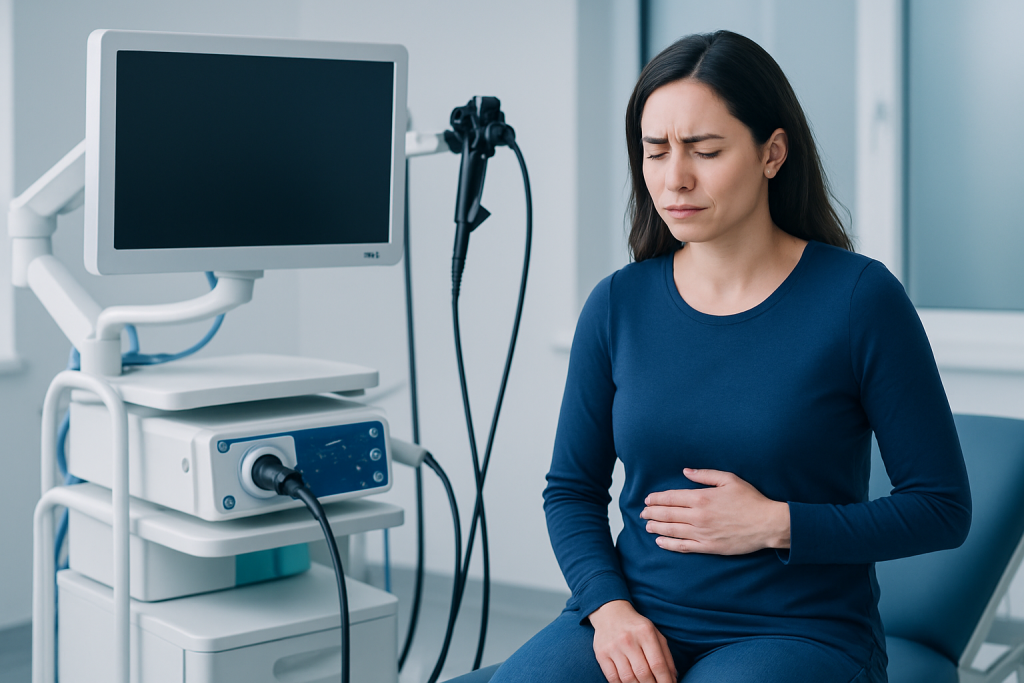
The most typical symptoms are heartburn and regurgitation. Heartburn is often described as a burning feeling rising from the upper abdomen or lower chest toward the throat. Regurgitation is the sensation of stomach contents or sour liquid coming back up into the mouth. Some people notice symptoms mainly after meals, when bending over, during exercise, or when lying down at night.
GERD without esophagitis can also cause less obvious symptoms. These may include chest discomfort, a lump-in-the-throat sensation, chronic throat clearing, hoarseness, an ongoing cough, or a bitter taste in the mouth. Because these symptoms can overlap with ENT, lung, and heart conditions, reflux is only one possible explanation and should be assessed in the right clinical context.
Symptoms can vary from person to person. Some individuals have frequent but mild burning, while others have symptoms only a few times a week yet find them very disruptive. Many people with this form of reflux have a sensitive esophagus, meaning symptoms may feel intense even when acid exposure is not severe. That is one reason symptoms and endoscopy findings do not always match.
- Burning in the chest after meals
- Sour or bitter fluid coming into the mouth
- Symptoms that worsen when lying down
- Nighttime cough or throat irritation
- Hoarseness or repeated throat clearing
- Upper abdominal discomfort or bloating
Why It Happens: Causes and Risk Factors
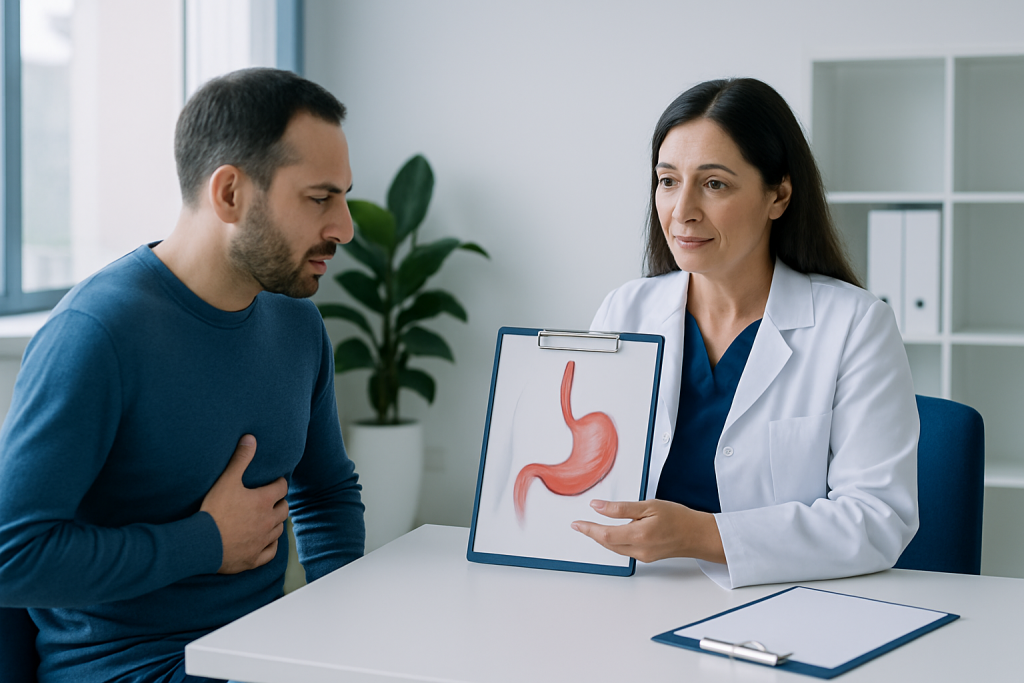
Reflux happens when the barrier between the esophagus and stomach does not work as effectively as it should. The lower esophageal sphincter, a muscular ring at the lower end of the esophagus, normally helps keep stomach contents where they belong. If it relaxes at the wrong time or does not close firmly enough, acid and other stomach contents can move upward.
In gastroesophageal reflux disease without esophagitis, symptoms may result from several mechanisms. Some people have true excess acid exposure. Others have non-acid reflux, where stomach contents still trigger symptoms even without high acidity. Another group has reflux hypersensitivity, meaning even normal or mildly increased reflux events cause noticeable discomfort because the esophagus is more sensitive.
Common risk factors include excess body weight, large meals, lying down soon after eating, pregnancy, smoking, and a hiatal hernia. Certain foods and drinks may trigger symptoms in some people, although triggers are individual rather than universal. Medicines that relax the lower esophageal sphincter or irritate the esophagus can also play a role. Conditions that slow stomach emptying may make reflux more likely as well.
Not every person with these risk factors will develop reflux, and not every person with reflux will have visible esophagitis. That is why treatment often works best when it is personalized rather than based on one single cause.
How Doctors Diagnose It
Diagnosis starts with a detailed symptom history. A doctor will usually ask what the symptoms feel like, how often they happen, whether they are related to meals or body position, and whether they improve with reflux treatment. The pattern over time often gives important clues. Doctors also ask about swallowing difficulty, weight loss, vomiting, bleeding, anemia, or chest pain that could point to another problem and may need more urgent evaluation.
Endoscopy may be recommended if symptoms are persistent, if alarm features are present, or if the diagnosis is uncertain. In GERD without esophagitis, endoscopy does not show erosions or clear inflammatory injury in the esophagus. Even so, the test remains useful because it can identify other explanations for symptoms and check for complications or structural problems.
When symptoms continue despite initial treatment, reflux monitoring can help. This test measures acid or non-acid reflux over time and can show whether symptoms correlate with reflux episodes. Esophageal manometry may also be used to evaluate how the esophagus contracts and whether the lower esophageal sphincter is functioning normally, especially before considering procedures. In some cases, specialists may distinguish GERD without esophagitis from functional heartburn, which can look similar but is managed somewhat differently.
Depending on symptoms, a gastroenterologist may recommend tests performed through a dedicated gastroenterology evaluation pathway. The aim is to confirm the cause of symptoms and avoid unnecessary treatment when reflux is not the main issue.
Treatment Options
Treatment usually begins with practical lifestyle measures and medicines that reduce stomach acid. Proton pump inhibitors and H2 blockers are commonly used to decrease acid exposure and help relieve symptoms. The choice of treatment depends on how often symptoms occur, whether they are mostly daytime or nighttime, and how strongly they affect daily life. A doctor may recommend a trial of therapy and then adjust the plan based on response.
For some people, treatment needs to go beyond acid suppression. If reflux monitoring suggests non-acid reflux or if symptom sensitivity is a major factor, the care plan may include more individualized strategies. These can include attention to meal timing, weight management, sleep position, and, in selected cases, therapies guided by specialist testing. It is also important to review other medicines that might worsen reflux or mimic its symptoms.
If symptoms remain troublesome, doctors may look for an anatomical reason such as a hiatal hernia or discuss whether a procedure could help. In carefully selected patients, anti-reflux procedures or GERD treatment options may be considered, especially when objective testing confirms reflux and medicines are not enough or are not preferred. When reflux is linked to a structural problem, evaluation for hiatal hernia surgery may also be relevant.
Treatment is most effective when it matches the actual mechanism behind the symptoms. That is why self-diagnosis can be misleading. A person with chest burning does not always have acid reflux, and a person with normal endoscopy findings does not automatically have a harmless condition. Careful medical assessment helps target treatment appropriately.
Self-care and Prevention Strategies
Daily habits can make a meaningful difference. Many people improve by avoiding large late meals, reducing lying down after eating, and identifying personal food triggers. Weight loss, if recommended by a doctor, may lessen pressure on the stomach and reduce reflux episodes. Elevating the head of the bed can help some people with nighttime symptoms.
Trigger foods are individual, so a strict universal diet is usually not necessary. Instead, it can help to keep a simple symptom diary and notice whether certain patterns stand out. Common triggers for some people include fatty meals, spicy foods, chocolate, peppermint, caffeine, carbonated drinks, and alcohol. The goal is not to eliminate every possible trigger, but to find the ones that clearly matter for that individual.
Smoking cessation is also important, as smoking can worsen reflux and irritate the upper digestive tract. Eating more slowly, avoiding very tight clothing around the abdomen, and reviewing medicines with a doctor or pharmacist may also help. These steps are often most effective when combined with medical treatment rather than used alone for persistent symptoms.
Long-term self-care should feel realistic and sustainable. Small, consistent changes are usually more helpful than short periods of very restrictive eating or frequent medication changes without medical advice.
When to Seek Medical Care
A person should seek medical care if reflux symptoms occur often, return repeatedly, disturb sleep, or do not improve with simple measures. Medical review is also important when symptoms begin after age 50, change noticeably, or lead to avoidance of food or daily activities. Even when endoscopy later shows no esophagitis, persistent symptoms still deserve proper assessment.
Prompt evaluation is especially important for alarm symptoms. These include trouble swallowing, painful swallowing, vomiting, gastrointestinal bleeding, black stools, unexplained weight loss, anemia, or ongoing chest pain. Chest pain can have causes outside the digestive system, including heart-related problems, so urgent medical evaluation may be needed depending on the situation.
For international patients who need specialist assessment, Acibadem International’s multidisciplinary specialists in JCI-accredited hospitals diagnose and treat reflux-related conditions using evidence-based evaluation and personalized care plans.
Frequently asked questions
What does gastroesophageal reflux disease without esophagitis mean?
It means a person has reflux symptoms, but an endoscopy does not show visible inflammation or erosions in the esophagus. The symptoms are still real and may be caused by acid reflux, non-acid reflux, or increased sensitivity of the esophagus.
Is GERD without esophagitis the same as non-erosive reflux disease?
The terms are closely related and are often used in similar ways. Non-erosive reflux disease usually refers to reflux symptoms without visible erosions on endoscopy, but doctors may use additional testing to separate it from reflux hypersensitivity or functional heartburn.
Can reflux be serious even if the endoscopy looks normal?
Yes. A normal endoscopy does not mean symptoms should be ignored, especially if they are frequent, disruptive, or associated with alarm symptoms. While the lack of visible injury is reassuring in some ways, persistent symptoms still need proper evaluation and management.
How is this condition usually treated?
Treatment often starts with lifestyle changes and medicines that reduce stomach acid, such as proton pump inhibitors or H2 blockers. If symptoms continue, doctors may recommend reflux monitoring or other tests to better match treatment to the underlying cause.
What foods should be avoided with GERD without esophagitis?
There is no single diet that works for everyone. Many people do better by identifying their own triggers, which may include fatty foods, spicy foods, caffeine, chocolate, alcohol, or late large meals.
When should someone see a doctor for reflux symptoms?
A doctor should be consulted if symptoms are frequent, keep coming back, affect sleep, or do not improve with self-care. Urgent assessment is important for swallowing problems, bleeding, black stools, unexplained weight loss, anemia, or significant chest pain.
References
- National Institute of Diabetes and Digestive and Kidney Diseases
- American College of Gastroenterology
- National Institute for Health and Care Excellence
- American Gastroenterological Association
- Mayo Clinic
This article is for general information only and is not a substitute for professional medical advice. Please consult a qualified doctor about your individual situation.
Reflux Disease in Turkey — costs, top hospitals & a free quote
JCI-accredited · board-certified surgeons · reply within 24h

Gastroenterology
Diagnosis and treatment of the digestive system and liver, with advanced endoscopy.
46 specialists in this unit