Reflux Disease Treatment
Reflux disease, or GERD, is chronic backflow of stomach acid into the esophagus causing heartburn, regurgitation and swallowing discomfort. Care focuses on accurate diagnosis, lifestyle changes, medication and selected procedures.
Quick answer
Acid reflux treatment is the stepwise management of gastroesophageal reflux disease (GERD), in which stomach contents repeatedly flow back into the esophagus. It usually starts with lifestyle and diet changes plus acid-suppressing medication. When symptoms persist, tests such as endoscopy, reflux monitoring and esophageal manometry clarify the cause, and selected patients may be offered anti-reflux surgery, often combined with hiatal hernia repair.
Acid Reflux Treatment: Managing Reflux Disease Properly
Acid reflux treatment is the structured medical care used to diagnose and manage reflux disease: the repeated backflow of stomach contents into the esophagus. It ranges from lifestyle and nutrition changes to acid-suppressing medication, objective reflux testing and, for a smaller group of patients, anti-reflux surgery. It is intended for people whose symptoms are frequent, persistent or severe enough to affect eating, sleep and daily life, not for the occasional discomfort most people feel after a heavy meal.
That distinction matters. Many people experience burning after a large meal, a late dinner or certain foods, and an antacid usually settles it. When the same burning returns week after week, when regurgitation wakes you at night, or when you find yourself planning meals and social occasions around your symptoms, you have moved beyond ordinary indigestion. That is the point at which a proper diagnostic pathway, rather than another packet of over-the-counter tablets, becomes worthwhile.
What is gastroesophageal reflux disease?
Gastroesophageal reflux disease, usually shortened to GERD, is a chronic condition in which stomach contents repeatedly flow back into the esophagus, the muscular tube that carries food from the mouth to the stomach. This backflow can cause burning chest discomfort, sour or bitter regurgitation, throat irritation, coughing, swallowing discomfort and disrupted sleep. The word disease is deliberate: GERD describes acid reflux that happens often enough, or injures the esophageal lining severely enough, to need medical attention rather than occasional self-treatment.
For many patients, the decision to seek care comes after months or years of uncertainty. You may have tried over-the-counter medications, changed your diet, elevated your bed or avoided social meals because symptoms are unpredictable. Some patients worry that chest burning could be heart-related. Others are concerned about long-term medication use, persistent throat symptoms, or whether chronic reflux is quietly damaging the esophagus.
Reflux disease is common, but frequency should not lead to dismissal. Persistent acid exposure can inflame the esophageal lining and, in some people, lead to complications such as narrowing, bleeding, ulcers or Barrett’s esophagus, a tissue change that requires ongoing medical monitoring. At the same time, not every symptom that feels like reflux is truly GERD. Accurate diagnosis is essential, because acid reflux treatment works best when it is matched to the actual cause of the symptoms.
Care usually begins with careful evaluation and lifestyle guidance, followed by medication when appropriate. Some patients benefit from advanced diagnostic testing, and a smaller group may be candidates for procedural or surgical treatment, especially when reflux is severe, associated with a hiatal hernia, or not adequately controlled with medication. The goal is not only to reduce acid exposure, but to help you eat, sleep, work and travel with confidence again.
What Acid Reflux Treatment Involves
Acid reflux treatment is not a single prescription or procedure. It is a stepwise approach that may include lifestyle changes, nutrition guidance, acid-suppressing medications, tests that measure reflux and esophageal function, endoscopic monitoring and, for selected patients, anti-reflux procedures or surgery. Which of these you need depends on how severe your reflux is, what is causing it and how your esophagus has responded to it over time.
Why does reflux happen in the first place?
The lower esophageal sphincter is a ring-like muscle between the esophagus and the stomach. It normally opens to let food into the stomach and closes to stop stomach contents moving backward. GERD can develop when this barrier is weak, relaxes at inappropriate times, or is disrupted by a hiatal hernia: a condition in which part of the stomach moves upward through the diaphragm into the chest. Delayed stomach emptying, excess body weight, pregnancy, certain medications and dietary patterns can all add to the pressure on this barrier.
Because reflux symptoms overlap with several other conditions, treatment is never simply a matter of prescribing acid medication and hoping. Some patients have non-acid reflux, esophageal hypersensitivity, motility disorders, eosinophilic esophagitis, gallbladder disease or peptic ulcer disease. Other digestive conditions, including celiac disease and Crohn disease, can produce upper abdominal symptoms that muddy the picture, and chest discomfort sometimes has a cardiac rather than a digestive origin. A comprehensive reflux evaluation therefore looks at the pattern of symptoms, risk factors, alarm signs and the response to previous therapy, and, where needed, uses objective testing to confirm whether acid reflux is genuinely present before any major treatment decision is made.
For most patients, treatment follows a logical sequence. Lifestyle changes and medication come first. Proton pump inhibitors and other acid-reducing medicines are often effective for typical burning and acid regurgitation. If symptoms persist despite well-directed treatment, or if complications appear, physicians may recommend endoscopy, reflux monitoring or esophageal function testing. Surgery is considered only after a careful assessment of anatomy, reflux severity and esophageal movement.
Who May Need Evaluation and Treatment for Reflux Disease
You may need medical evaluation for reflux disease if symptoms occur frequently, require regular medication, disturb sleep, interfere with eating, or return soon after treatment is stopped. Occasional mild symptoms rarely justify advanced testing. Recurrent symptoms deserve attention, particularly when they shape your daily routines or arrive together with warning signs.
Heartburn, regurgitation and other typical GERD symptoms
GERD symptoms centre on two complaints: heartburn and regurgitation. Heartburn is a burning sensation behind the breastbone that may rise toward the throat, typically after meals or when lying down. Regurgitation is the sensation of acid, food or bitter fluid coming back into the throat or mouth without warning. Many patients also report chest discomfort, belching, bloating, nausea or an uncomfortable feeling of fullness after eating. The pattern is often as telling as the symptoms themselves, worse after large meals, worse at night, better when upright.
Acid reflux symptoms beyond the esophagus
Acid reflux symptoms are not confined to the chest. Refluxed material can irritate the throat and airways, producing chronic cough, hoarseness, repeated throat clearing, a sensation of a lump in the throat, sore throat, changes to dental enamel, asthma-like breathing symptoms and disturbed sleep. Each of these has multiple possible causes, airway symptoms, for instance, can also reflect underlying pulmonary diseasewhich is exactly why assessment by the right combination of specialists matters more for atypical symptoms than for classic heartburn.
Alarm signs that change the diagnostic pathway
Doctors treat certain features as alarm signs because they can point to complications or to a different disease altogether. These include difficulty swallowing, painful swallowing, unexplained weight loss, vomiting blood, black stools, persistent vomiting, anaemia, new or worsening chest pain, and reflux symptoms that first appear later in life. When any of these features are present, the evaluation usually moves directly to endoscopy rather than beginning with a trial of medication. Chest pain in particular is always assessed carefully, because coronary artery diseases and reflux can feel remarkably similar, and the two require very different care.
How is reflux disease diagnosed?
Diagnosis begins with a detailed medical history, not a machine. Your physician will ask when symptoms occur, what triggers them, whether they improve with medication, how often they happen, and whether you have swallowing problems or other risk factors. A physical examination and a review of your current medications follow, since some medicines can worsen reflux or irritate the esophagus directly.
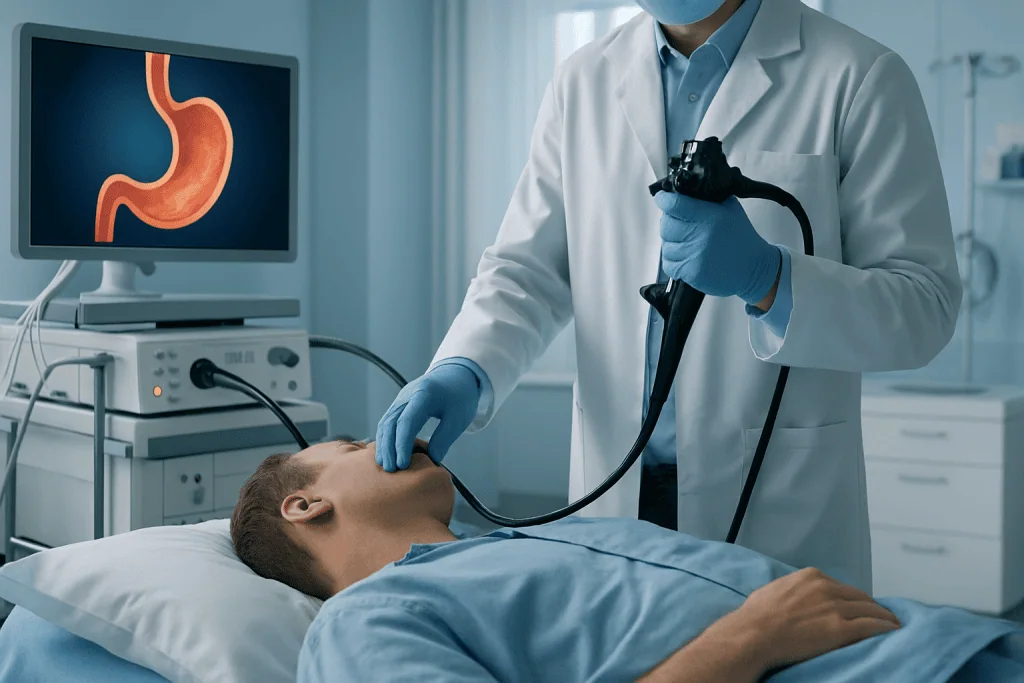
Upper gastrointestinal endoscopy may be recommended when symptoms are severe, persistent, associated with alarm signs, or when long-standing reflux raises concern about complications. During endoscopy, a thin flexible camera is used to examine the esophagus, stomach and upper small intestine. Biopsies can be taken if inflammation, Barrett’s esophagus, eosinophilic esophagitis or another tissue-level condition is suspected.
Two further tests measure function rather than appearance. Ambulatory pH or pH-impedance monitoring records acid and non-acid reflux episodes over a defined period while you go about your normal activities, and links those episodes to the symptoms you report. Esophageal manometry measures the strength and coordination of esophageal muscle contractions and the behaviour of the lower esophageal sphincter. Both tests are especially important before anti-reflux surgery, because a sound surgical plan depends on understanding reflux and swallowing function together, not one without the other.
Conditions and Indications Treated Through Reflux Disease Care
Reflux disease care addresses a range of problems related to abnormal backflow of stomach contents and its effects on the esophagus, throat and airways. Some patients need treatment mainly for symptom control. Others require monitoring or intervention to stop disease progressing quietly in the background.
Common indications include frequent burning behind the breastbone, persistent regurgitation, erosive esophagitis, reflux-related chest discomfort after cardiac causes have been excluded, and night-time reflux that repeatedly interrupts sleep. Patients with suspected complications, esophageal stricture or Barrett’s esophagus among them, need an accurate diagnosis and a long-term management plan rather than symptom relief alone.
Care may also be appropriate when a hiatal hernia is contributing to reflux, particularly if regurgitation is prominent or medication gives incomplete relief. Some patients seek evaluation because they do not want to stay on medication indefinitely. In these cases, physicians first confirm whether reflux is objectively present and whether a procedure is medically suitable: the wish to stop tablets is understandable, but it is never by itself a reason to operate.
Evaluation is equally useful when symptoms are atypical or when the source of upper abdominal discomfort is unclear, since gallbladder problems and liver disease can mimic digestive complaints. Chronic cough, hoarseness and throat irritation are related to reflux in some patients, but they can also arise from allergy, sinus disease, vocal cord disorders, asthma or other causes. A multidisciplinary approach may involve gastroenterology, ear-nose-throat specialists, pulmonology, radiology, nutrition and surgery, each contributing a piece of the answer when the picture is unclear.
How Reflux Disease Treatment Is Performed: From Diagnosis to Recovery
Treatment is individualised. Some patients need education and medication only; others need advanced testing and a procedural plan. Whatever the path, the process is designed to answer a small set of decisive questions. Is reflux truly the cause of the symptoms? Is there damage to the esophagus? Is there a hiatal hernia or another anatomical problem? Is the esophagus moving normally? And which treatment offers the best balance of benefit and risk for this particular patient?
Step 1: Preparation and clinical assessment
The pathway usually begins with a consultation and a review of previous records, endoscopy reports, biopsy results, imaging, medication history and any earlier pH studies. Bringing this documentation together before testing begins helps the care team avoid repeating investigations unnecessarily and plan the most useful sequence of appointments.
Preparation depends on the tests planned. Before endoscopy, you will typically be asked not to eat or drink for a set period. For reflux monitoring, your doctor may ask you to pause certain acid-suppressing medications beforehand, depending on whether the goal is to diagnose GERD off medication or to evaluate persistent symptoms while on therapy. Any change to medication is decided and supervised by the treating physician, never made on your own initiative.
Step 2: Lifestyle and nutrition planning
Lifestyle measures are not a substitute for medical care when GERD is significant, but they meaningfully reduce symptoms for many patients. Typical recommendations include weight management where appropriate, avoiding meals close to bedtime, reducing large or high-fat meals, limiting personal trigger foods and drinks, and elevating the head of the bed for night-time symptoms. The aim is a workable routine, not a punishing one: guidance that is too restrictive tends to be abandoned within weeks, and abandoned guidance helps nobody.
What foods cause acid reflux disease?
No single food causes reflux disease, but several reliably provoke symptoms in susceptible people. The most frequently reported triggers are high-fat and fried foods, chocolate, peppermint, coffee and other caffeinated drinks, alcohol, spicy dishes, acidic foods such as citrus and tomato, and carbonated drinks. Portion size and timing often matter as much as the foods themselves, because a full stomach close to bedtime presses against the reflux barrier for hours. Triggers are individual: a food diary kept for a couple of weeks is usually more informative than any generic list.
What to eat with gastroesophageal reflux disease?
A practical reflux diet is built around smaller, earlier meals rather than a long list of forbidden foods. Lean proteins, vegetables, whole grains, non-citrus fruits and lower-fat cooking methods sit comfortably with most patients. Eating slowly, stopping before you feel overfull, and leaving a few hours between the evening meal and lying down often achieve more than eliminating entire food groups. Nutrition guidance should preserve a balanced diet: the target is identifying the patterns that worsen your reflux, not restriction for its own sake. For people whose schedules force late meals, shift workers, for example, small adjustments such as a lighter final meal, a longer upright interval before sleep and a raised bed head often make an awkward routine manageable without abandoning the plan altogether.
Step 3: Medication therapy
Medications are often the first medical treatment for GERD. Proton pump inhibitors reduce stomach acid production and are commonly used for erosive esophagitis and frequent symptoms. H2 receptor blockers may be used for milder symptoms or night-time breakthrough symptoms in selected cases. Antacids and alginate-based therapies can give short-term relief for occasional episodes.
Timing matters as much as the choice of drug. Some acid-reducing medications work best when taken before meals, and an apparently failed medication is sometimes simply a mistimed one. If symptoms persist despite proper use, the explanation may be dose timing, adherence, non-acid reflux, an alternative diagnosis, or a mechanical problem such as a hiatal hernia. Rather than escalating treatment indefinitely, physicians will usually recommend testing to clarify why the response is incomplete.
Step 4: Endoscopy and diagnostic testing
Upper endoscopy allows direct visualisation of the esophageal lining. It can identify erosions, ulcers, narrowing, inflammation, a hiatal hernia and features suggestive of Barrett’s esophagus, with biopsies taken wherever tissue changes need microscopic assessment.
Reflux monitoring uses a small sensor or catheter-based system to record reflux episodes and their relationship to your symptoms as they happen. This shows whether burning, regurgitation, cough or chest discomfort actually coincide with acid or non-acid reflux events: a distinction that changes treatment. Esophageal manometry evaluates swallowing mechanics and is particularly important before surgery, since certain motility disorders alter the choice of operation.
Imaging is added for selected patients. A contrast swallow study can show the shape and movement of the esophagus and stomach, the presence and size of a hiatal hernia, or narrowing that affects swallowing. Together, these tools let the care team build a plan on objective findings instead of assumptions.
Step 5: Endoscopic or surgical treatment when appropriate
Most people with GERD never need a procedure. Procedural treatment is considered when symptoms are severe, medication is not sufficient, complications are present, or a hiatal hernia is clearly contributing to reflux. The most established option is anti-reflux surgery, often combined with hiatal hernia repair when needed.
In laparoscopic anti-reflux surgery, small incisions are used to access the upper abdomen. The surgeon returns the stomach and esophagus to their correct position if a hiatal hernia is present, repairs the opening in the diaphragm, and creates a valve mechanism at the lower end of the esophagus using the upper part of the stomach. This is known as fundoplication, and the type of wrap can be tailored to your anatomy, reflux severity and esophageal motility.
Some patients are candidates for less invasive endoscopic treatments, which aim to reinforce the reflux barrier from inside the digestive tract. Suitability depends on hernia size, esophageal inflammation, body weight, motility and any prior procedures: these approaches are selected for the right patient rather than offered universally.
Durations vary. Endoscopy is usually a short procedure performed with sedation. Ambulatory reflux monitoring records data over a period the physician specifies. Laparoscopic anti-reflux surgery generally requires a short hospital stay, with a gradual return to normal activities over the following days and weeks. Recovery is individual, particularly when a hiatal hernia repair is performed at the same time.
Step 6: Follow-up and long-term care
Follow-up focuses on symptom response, swallowing comfort, diet progression, medication adjustment and monitoring for complications. Patients with Barrett’s esophagus or severe esophagitis may need surveillance endoscopy at intervals set by biopsy findings and international guidelines. After surgery, you receive specific diet instructions, usually beginning with liquids or soft foods and advancing step by step as swelling settles and swallowing improves.
Why Acting Early Matters
Reflux disease fluctuates, and that makes it easy to postpone care. Symptoms improve for a while, then return. Meanwhile, recurrent acid exposure can cause ongoing inflammation, erosive esophagitis and scarring. Over time, scarring may narrow the esophagus and make food feel stuck on the way down. Chronic reflux is also associated with Barrett’s esophagus in some patients: a change that needs monitoring because it can increase the risk of esophageal cancer.
Does acid reflux disease go away?
Reflux linked to a temporary cause, a period of weight gain, pregnancy, a particular eating pattern, can settle when that cause changes. Established GERD, however, is usually a chronic, relapsing condition: symptoms often return when medication is stopped, because the underlying valve weakness or hernia has not changed. That does not automatically mean lifelong tablets. It means the useful question is not whether the condition will disappear on its own, but what is driving your reflux and which treatment addresses that driver: a question that testing answers far better than waiting.
Delay also prolongs uncertainty. If symptoms are not actually due to GERD, months of acid suppression will not address the real cause. Eosinophilic esophagitis, motility disorders, functional heartburn, gallbladder disease and cardiac problems all need different evaluation and different treatment. Early assessment separates uncomplicated reflux from the conditions that require closer attention.
Patients with night-time reflux, persistent regurgitation, swallowing difficulty or an incomplete response to medication should not assume that a stronger tablet is the only remaining option. A timely diagnostic pathway can show whether anatomy, esophageal function or non-acid reflux is playing a role, which matters most before any procedure, because good outcomes depend on matching the right treatment to the right patient.
Benefits of Reflux Disease Treatment
When reflux disease is accurately diagnosed and treated, patients may notice meaningful improvements in comfort, sleep, nutrition and long-term esophageal health. The table below summarises what a well-matched treatment plan can offer.
| Benefit | What It Means for You |
|---|---|
| Better symptom control | Burning, regurgitation and throat symptoms may become less frequent and less disruptive when treatment is matched to the cause. |
| Protection of the esophagus | Treating acid injury can help heal inflammation and reduce the risk of complications such as ulcers, narrowing or recurrent erosive disease. |
| Clearer diagnosis | Endoscopy, reflux monitoring and motility testing can confirm whether GERD is present and identify other conditions that mimic reflux. |
| Improved sleep and daily function | Reducing night-time reflux can help patients sleep more comfortably and wake with fewer throat or chest symptoms. |
| Personalised long-term plan | Your plan may include lifestyle measures, medication, surveillance or procedural options based on your anatomy, test results and goals. |
| Appropriate procedural selection | For patients who may benefit from anti-reflux surgery, objective testing helps determine whether a procedure is suitable and which approach is most appropriate. |
Recovery Timeline After Reflux Disease Treatment
Recovery depends on whether treatment involves medication, endoscopy or anti-reflux surgery, but the following timeline gives a general picture of what many patients experience.
| Time Period | What Patients Can Expect |
|---|---|
| Day 1 | After consultation or diagnostic testing, many patients return to routine activities quickly. After endoscopy, mild throat irritation or bloating may occur briefly. After surgery, patients are monitored in hospital and begin early mobilisation. |
| First Week | Medication plans and lifestyle changes begin to take effect for many patients. After surgery, the diet is limited at first and advanced gradually according to the surgeon’s instructions. Temporary swallowing tightness, bloating or shoulder discomfort may occur. |
| First Month | Symptoms are reassessed, medication may be adjusted, and test results are reviewed. Surgical patients often return to many normal activities while continuing diet progression and avoiding heavy lifting until cleared. |
| Longer Term | Long-term care may include weight management, trigger control, medication review, endoscopic surveillance when indicated, or follow-up after anti-reflux surgery to assess swallowing, symptom control and quality of life. |
Factors That Influence Outcomes and a Good Result
The outcome of treatment depends first on diagnostic accuracy. Patients with typical burning symptoms and documented acid reflux often respond well to properly timed acid-suppressing therapy. Patients whose symptoms come from non-acid reflux, esophageal hypersensitivity or another disorder may need an entirely different strategy, which is why careful testing matters whenever symptoms are persistent or atypical.
Anatomy matters too. A small hiatal hernia can often be managed medically, while a larger or symptomatic hernia may drive regurgitation, swallowing symptoms or persistent reflux despite medication. In surgical candidates, the size of the hernia, the strength of the esophageal muscles, body weight, prior abdominal operations and general health all shape the plan.
Medication technique affects results more often than patients expect. Some people do not improve because medicines are taken at the wrong time, stopped too early or used inconsistently. Others are taking medications that worsen reflux, certain muscle relaxants, blood pressure medicines, pain medications or supplements. A physician can review these factors and adjust the plan safely; this is a conversation for the treating doctor, not a change to make alone.
Lifestyle patterns influence symptom control throughout. Late meals, large portions, alcohol, smoking, weight gain and lying down soon after eating all increase reflux in susceptible people. Even after successful medication or surgery, maintaining sensible habits reduces the chance of symptoms returning.
Can stress cause reflux disease?
Stress does not usually cause the mechanical weakness behind reflux disease, but it can make the condition feel worse and behave worse. Stress heightens the esophagus’s sensitivity to acid, so the same reflux episode hurts more. It also changes behaviour, larger meals, later eating, more alcohol or caffeine, disrupted sleep, all of which increase reflux itself. Many patients notice symptom flares during stressful periods. Managing stress supports treatment, but it rarely replaces it when GERD is established.
Is acid reflux disease hereditary?
Reflux disease often clusters in families, and inherited factors appear to play a part. Genetics may influence how the lower esophageal sphincter functions, the tendency to develop a hiatal hernia, and body weight, all of which affect reflux risk. Shared household habits around food, meal timing and smoking contribute as well, so a family history raises the likelihood of GERD without making it inevitable. If close relatives have had reflux complications, that history is worth mentioning during evaluation, because it can influence how thoroughly the esophagus is examined.
For procedural treatment, patient selection is one of the strongest predictors of a good result. Anti-reflux surgery can work well for carefully selected patients with objectively proven reflux, suitable anatomy and adequate esophageal motility. It is far less likely to help when symptoms are not actually caused by reflux. Preoperative testing, surgeon experience and structured follow-up all contribute to safer decisions.
Expectations should stay realistic. The goal is to reduce the reflux burden, heal inflammation where present, improve symptoms and lower the risk of complications. Some patients still need medication after treatment, particularly with complex disease, Barrett’s esophagus, ongoing risk factors or symptoms from more than one cause. A good result is one that is clinically appropriate, durable for the individual situation and aligned with the patient’s own priorities.
Reflux Disease Care at Acibadem
At Acibadem, reflux care is organised around accurate diagnosis and individualised treatment planning rather than a one-size approach. Gastroenterologists and surgeons work from the same set of objective findings, which keeps medical and surgical options open in parallel instead of steering every patient down a single track.
Patients are evaluated by physicians working across gastroenterology, endoscopy, general surgery, radiology, nutrition and related specialties. When symptoms are complex or surgery is under consideration, cases can be reviewed through multidisciplinary discussion so the treatment plan reflects the full clinical picture. This is particularly valuable for patients with persistent symptoms despite medication, a suspected hiatal hernia, Barrett’s esophagus, swallowing difficulty or previous abdominal procedures.
Treatment decisions are guided by symptom history, endoscopic findings, biopsy results, reflux monitoring, esophageal function testing and patient-specific risk factors. The emphasis is on selecting the least invasive effective treatment, while recognising when a more advanced intervention is genuinely appropriate. High-quality endoscopy supports examination of the esophageal lining and biopsy where needed; reflux monitoring measures acid and non-acid events and connects them with symptoms; manometry assesses swallowing function before any surgical planning; and cross-sectional imaging or contrast studies clarify anatomy when required. None of these technologies replaces clinical judgement: they sharpen it.
For patients who need surgery, minimally invasive techniques may allow smaller incisions, reduced tissue trauma and a structured recovery compared with traditional open surgery. If a hiatal hernia is present, repair may be performed together with the anti-reflux procedure, and patients receive clear instructions on diet progression, activity, medication use and follow-up.
The reasons patients seek a dedicated reflux evaluation vary: a second opinion before committing to long-term medication or surgery, a complete diagnostic work-up when symptoms have never been fully explained, or treatment for a hiatal hernia and the complications of chronic reflux. In every case, the priority is the same, understand the cause first, then build a plan that is medically sound and practical to live with. Structured follow-up after treatment, whether medical or surgical, closes the loop: symptom response is checked against the original findings, and the plan is adjusted rather than left to drift.
Living With Reflux Disease Over the Long Term
Reflux disease is frustrating because it intrudes on everyday life in small, persistent ways: meals, sleep, exercise, work meetings, travel. It also creates uncertainty when symptoms continue despite medication or when previous tests have not produced clear answers. A careful, structured evaluation resolves most of that uncertainty: it establishes whether you truly have GERD, whether complications are present, and which treatment options fit your anatomy and your goals.
Long-term success usually rests on three things working together: an accurate diagnosis rather than an assumed one, treatment matched to the actual mechanism of your reflux, and everyday habits that stop the problem rebuilding itself. With those in place, many patients reduce their symptoms substantially, protect the health of the esophagus and return to eating, sleeping and travelling with far greater comfort than they thought possible after years of managing symptoms alone.
Preparation
- Your doctor reviews symptoms, medical history, current medications and alarm signs such as weight loss or swallowing difficulty. If endoscopy or reflux testing is planned, fasting and temporary adjustment of acid-suppressing medicines may be required. Bring previous test results and a list of medications.
Aftercare
- Follow the prescribed medication plan and lifestyle measures such as weight control, avoiding late meals, reducing trigger foods and elevating the head of the bed. Attend follow-up visits to assess symptom control and adjust treatment. Seek medical attention for chest pain, bleeding, persistent vomiting or progressive swallowing difficulty.
Frequently Asked Questions
What affects the cost of reflux disease treatment?
The final cost depends on the consultations required, diagnostic tests, medication plan, whether endoscopy or surgery is needed, hospital stay, anaesthesia, specialist fees and international patient services such as interpretation or transfers.
How can I get a personalised quote for GERD care in Turkey?
You can request a free consultation and share your symptoms, previous test results, medication history and any endoscopy reports. The medical team can then advise which assessments may be needed and prepare a personalised quote.
Is surgery always needed for reflux disease?
No. Many patients are managed with lifestyle measures and medication. Procedures are considered only for selected patients after specialist assessment and, when appropriate, objective testing to confirm reflux and review anatomy.
What is usually included in an international patient package?
Package content varies, but it may include specialist consultation, selected diagnostics, treatment planning, hospital coordination, interpreter support and follow-up guidance. Any exclusions or possible additional services should be confirmed before travel.
Is this information medical or financial advice?
No. This is general educational information only. A specialist consultation is needed to confirm diagnosis, treatment suitability and an individual cost estimate.
Medically reviewed by the Acıbadem International Medical Board August 31, 2026
See our medical review board →
Update history
- PublishedJune 8, 2026
- Medical review approvedAugust 31, 2026
- Last content updateSeptember 8, 2026
References3
- GERD medlineplus.gov
- Heartburn and acid reflux nhs.uk
- GERD (Chronic Acid Reflux) my.clevelandclinic.org
Trusted care for international patients
From the Acibadem Blog

Which Tests Come Before a GERD Treatment Plan? Endoscopy, pH Monitoring and Manometry
GERD testing before treatment usually starts with a history and physical exam; many people begin acid-suppressing therapy without any test. Doctors typically order an…

When Is Anti-Reflux Surgery Considered for GERD? The Treatment Ladder Explained
Anti-reflux surgery is usually considered only after GERD has been confirmed with testing and has not been controlled by lifestyle changes and an adequate…