Pulmonary Disease Treatment
Pulmonary disease care evaluates and treats conditions affecting the lungs and breathing, such as asthma, COPD, infections, and chronic cough, with specialist-led diagnosis and personalized management.
Quick answer
Pulmonary disease care is the specialist diagnosis and treatment of conditions affecting the lungs and airways, including COPD, asthma, infections, interstitial lung disease and sleep-related breathing disorders. It typically involves lung function testing, imaging, laboratory work and sometimes bronchoscopy, followed by an individual treatment plan built around medication, pulmonary rehabilitation, oxygen assessment and structured long-term follow-up.
Pulmonary Disease Care: When Breathing Becomes a Daily Concern
Pulmonary disease care is the specialist evaluation, diagnosis and long-term management of conditions that affect the lungs, the airways, the breathing muscles and the blood vessels that carry blood through the chest. It covers short-term illnesses such as pneumonia and bronchitis, and long-term conditions such as asthma and chronic obstructive pulmonary disease, where structured COPD treatment shapes how a person lives from day to day. It is for anyone whose breathing has become difficult, noisy, unpredictable or persistently interrupted by cough.
Breathing is usually automatic. When it stops being automatic, it affects everything else. People living with respiratory symptoms tend to ask the same questions: why am I short of breath, is this asthma or COPD or an infection, will I still be able to travel, work, sleep, exercise and look after my family? If you are weighing up care away from home, those questions carry extra weight, because you are also trying to understand a diagnosis across languages and health systems. This page explains what pulmonary care actually involves, step by step, so that the process is less of a black box.
Timely evaluation matters because similar symptoms can have very different causes, and those causes need very different treatments. A cough that persists for weeks may be related to asthma, reflux, infection, allergy, a medication side effect, postnasal drip, bronchiectasis or, rarely, a tumour. Shortness of breath may come from the lungs themselves, from the heart, from anaemia, from deconditioning, from blood clots, from anxiety, or from several of these at once. Specialist-led pulmonary care separates these possibilities with a structured diagnostic pathway rather than guesswork, and then builds a treatment plan around your condition, history, lifestyle and goals.
At Acibadem, pulmonary disease care sits inside a hospital environment where respiratory specialists can work with radiology, cardiology, infectious diseases, thoracic surgery, oncology, intensive care, allergy and immunology, sleep medicine and rehabilitation when a case calls for it. For patients travelling from abroad, that coordination matters in a practical way: it reduces uncertainty, keeps testing efficient, and produces a clear plan for continuing care after you return home.
What Is Pulmonary Disease?
Pulmonary disease is any condition that affects the respiratory system: the nose and upper airway, the windpipe, the bronchi and smaller airways, the air sacs where oxygen enters the blood, the pleura surrounding the lungs, the respiratory muscles, and the pulmonary blood vessels. Some pulmonary diseases are acute and treatable, such as pneumonia. Others are chronic and need careful long-term management, such as asthma, COPD, interstitial lung disease, bronchiectasis and sleep-related breathing disorders. The label covers a wide territory, which is exactly why an accurate diagnosis matters more than the label itself.
Pulmonary disease care, in turn, is not a single procedure. It is a specialist-led process that can include consultation, lung function testing, advanced imaging, laboratory evaluation, bronchoscopy when necessary, sleep testing, medication planning, oxygen assessment, pulmonary rehabilitation, infection management and long-term follow-up. It also looks beyond the chest, because breathing symptoms frequently overlap with heart disease, immune disorders, reflux, occupational exposure, smoking history, allergy, obesity, neuromuscular disease and prior infections.
How the Lungs and Airways Work
The lungs move air in and out through a branching system of airways and transfer oxygen into the blood across millions of thin-walled air sacs, while removing carbon dioxide. For this to work, four things must function together: the airways must stay open, the lung tissue must remain elastic and unscarred, the breathing muscles must generate enough force, and the pulmonary blood vessels must carry blood through the lungs at normal pressure. Different pulmonary diseases attack different parts of this system. Airway diseases narrow the tubes. Interstitial diseases stiffen and scar the tissue. Vascular diseases raise the pressure or block the flow. Sleep-related disorders collapse the upper airway at night. Understanding which part has failed is the first task of diagnosis.
What Is COPD?
Chronic obstructive pulmonary disease is a long-term lung condition in which the airways become persistently narrowed and the air sacs may be damaged, making it progressively harder to move air out of the lungs. That is the working COPD definition clinicians use, and it covers two overlapping patterns: chronic bronchitis, where inflamed airways produce mucus and cough, and emphysema, where the air sacs lose their structure. If you have searched for “what is COPD”, the honest short answer is: airflow limitation that does not fully reverse, most often linked to smoking, but sometimes to long-term environmental exposure or genetic factors. COPD develops gradually. Many people put early breathlessness down to age or fitness, which is one reason the condition is often diagnosed later than it could be.
Is Asthma a Chronic Obstructive Pulmonary Disease?
No, asthma and chronic obstructive pulmonary disease are separate diagnoses, even though both narrow the airways and can cause wheeze, cough and breathlessness. The key difference is reversibility. In asthma, airway narrowing is driven by inflammation and typically improves substantially with treatment or between attacks; many people with well-controlled asthma have normal lung function most of the time. In COPD, the airflow limitation is persistent and does not fully reverse, even with good treatment. The two conditions also tend to differ in age of onset, triggers and smoking history. That said, the border is not always clean: some patients show features of both, sometimes described as asthma-COPD overlap, and long-standing severe asthma can leave a degree of fixed narrowing. Distinguishing the two matters because the medication strategy, the monitoring plan and the long-term outlook are different.
Who May Need Pulmonary Disease Evaluation
You may need pulmonary evaluation if your symptoms are persistent, recurrent, unexplained, worsening or interfering with daily activities. Common reasons include shortness of breath, chronic cough, wheezing, chest tightness, repeated respiratory infections, coughing up blood, reduced exercise tolerance, an abnormal chest X-ray or CT finding, low oxygen saturation, snoring with pauses in breathing, or fatigue linked to poor sleep. Some patients arrive after an emergency visit or hospitalisation; others after a workplace health screening picked up something unexpected.
Symptoms can be subtle at first. You might notice that climbing stairs takes longer than it used to, that every cold “goes to the chest”, that a cough has quietly lasted for months, or that your sleep is broken by disturbed breathing. Others experience acute symptoms: fever, chest pain, sudden breathlessness, coughing blood. In chronic pulmonary disease, symptoms often fluctuate. People with asthma may feel entirely well between attacks. People with COPD tend to worsen during respiratory infections or periods of high air pollution. People with interstitial lung disease may notice breathlessness creeping up slowly over months or years.
What Are the Typical COPD Symptoms?
The core COPD symptoms are breathlessness that worsens with activity, a persistent cough that may produce mucus, wheezing, chest tightness and frequent chest infections. Early on, breathlessness may only appear during exertion, hills, stairs, carrying shopping, which makes it easy to dismiss. As the condition progresses, symptoms appear at lower levels of activity and flare-ups become more frequent. A flare-up, or exacerbation, is a period when symptoms become distinctly worse than the usual day-to-day variation, often triggered by infection. Recognising a personal pattern of flare-ups is a central part of living with the condition, because prevention and early treatment of exacerbations is one of the main goals of COPD care.
How Can COPD Affect Someone Physically?
COPD affects the body well beyond the chest. The most direct effect is breathlessness, which gradually limits walking distance, stair climbing and physical work. Because breathing costs more effort, many people unconsciously reduce activity, which leads to deconditioning: the leg and breathing muscles weaken, and the same task then feels even harder: a cycle that pulmonary rehabilitation is specifically designed to interrupt. Advanced disease can cause weight and muscle loss, fatigue and disturbed sleep. Low oxygen levels, where present, place strain on the heart, and COPD frequently coexists with cardiovascular disease, which is why a thorough assessment sometimes involves cardiology as well as pulmonology. None of this is inevitable at any fixed pace; how the disease behaves depends heavily on smoking status, treatment, activity and flare-up prevention.
Diagnosis begins with a detailed history and physical examination. A pulmonologist will ask about smoking or vaping, occupational and environmental exposures, allergies, childhood respiratory illness, infections, medications, travel, family history, autoimmune symptoms, sleep quality and exercise capacity. If you have been treated elsewhere, previous reports, images, medication lists and discharge summaries are genuinely useful at the consultation: they spare you repeat testing and let the team focus on the questions that remain unanswered.
Conditions Pulmonary Disease Care Addresses
Pulmonary medicine covers a broad range of respiratory conditions. Some are common and manageable in outpatient care. Others require urgent evaluation, advanced diagnostics or multidisciplinary treatment. The principle is to match the level of care to the seriousness of the condition and the patient’s overall health, no more, no less.
Asthma is a chronic inflammatory airway condition causing wheeze, cough, chest tightness and breathlessness. Symptoms may be triggered by exercise, infection, allergens, cold air, smoke, workplace exposures or stress. Care involves confirming the diagnosis, which is not always straightforward, assessing severity, identifying triggers, optimising inhaler therapy and reducing the risk of severe attacks.
Chronic obstructive pulmonary disease includes chronic bronchitis and emphysema. It is most commonly linked to smoking but can also relate to environmental exposure or genetic factors. Modern COPD treatment focuses on symptom control, flare-up prevention, vaccination, pulmonary rehabilitation, medication optimisation, oxygen assessment and management of associated heart and metabolic conditions. A dedicated overview of this condition is available on our COPD disease page.
Respiratory infections include pneumonia, bronchitis, influenza-related complications, tuberculosis, fungal infections and infections in immunocompromised patients. Evaluation may involve imaging, microbiology, blood work and sometimes bronchoscopy, often in collaboration with the infectious diseases department. Identifying the organism matters, because bacterial, viral, fungal and mycobacterial disease each demand different treatment.
Chronic cough is usually defined as a cough lasting more than eight weeks in adults. Causes include asthma, upper airway cough syndrome, reflux, medication side effects, chronic infection, bronchiectasis, airway hypersensitivity and smoking-related disease. A structured approach avoids the common trap of repeated trial-and-error treatments that never address the actual cause.
Interstitial lung diseases are a group of conditions involving inflammation or scarring of the lung tissue itself. They may relate to autoimmune disease, occupational exposure, medication reactions, prior radiation or unknown causes. Diagnosis often requires detailed imaging, lung function testing, laboratory evaluation and review by specialists familiar with these complex disorders.
Bronchiectasis is abnormal widening of the airways, which makes mucus harder to clear and infections more frequent. Treatment may include airway clearance techniques, infection control, inhaled therapies, vaccination and evaluation for underlying immune or inflammatory causes.
Pulmonary nodules and suspected lung cancer require careful weighing of imaging characteristics, risk factors and the safest route to a diagnosis when one is needed. Not every lung nodule is cancer, most are not, but appropriate follow-up and multidisciplinary review protect against both over-treatment and delayed diagnosis.
Sleep-related breathing disorders, especially obstructive sleep apnoea, can cause loud snoring, witnessed pauses in breathing, morning headaches, daytime sleepiness, raised blood pressure and poor concentration. Pulmonary and sleep specialists assess breathing during sleep and recommend treatment such as positive airway pressure therapy, lifestyle measures or other interventions depending on the cause.
Pulmonary vascular conditions, including pulmonary embolism and pulmonary hypertension, can cause breathlessness, chest discomfort, fainting, leg swelling or low oxygen levels. These conditions may require urgent diagnosis and close collaboration with cardiology, radiology, haematology and intensive care.
Can Scoliosis Cause Pulmonary Artery Disease?
Severe scoliosis can, indirectly, affect the pulmonary arteries, though this applies to marked spinal curvature, not mild cases. A significantly curved spine deforms the chest wall and restricts how fully the lungs can expand, a pattern called restrictive lung disease. Over many years, if breathing is restricted enough to cause chronically low oxygen levels, the blood vessels in the lungs can respond by narrowing, and pressure in the pulmonary arteries can rise, pulmonary hypertension. This is a recognised, uncommon, late complication of severe untreated chest-wall deformity. Evaluation typically involves lung function testing, oxygen assessment during rest, exertion and sleep, and cardiology input where raised pulmonary pressure is suspected.
Post-infection and post-COVID respiratory symptoms may include persistent cough, breathlessness, fatigue, chest tightness or abnormal imaging after the acute illness has passed. Care focuses on distinguishing ongoing inflammation, scarring, airway reactivity, clotting complications and deconditioning from unrelated conditions that simply became noticeable after the infection.
COPD Treatment: What Modern Management Involves
COPD treatment does not reverse the underlying airflow limitation, and it is important to say that plainly. What it does, and does well when properly organised, is reduce breathlessness, cut the frequency and severity of flare-ups, protect remaining lung function, and keep people active. A complete plan usually combines several elements: stopping smoking with structured support, inhaled medication matched to the individual, vaccination against respiratory infections, pulmonary rehabilitation, treatment of coexisting conditions, oxygen assessment where levels are low, and a written action plan for flare-ups. The order of priority differs from patient to patient, which is why the plan should always follow a proper assessment of severity, exacerbation history and comorbidities rather than a standard recipe.
What Is the Most Commonly Used Treatment for COPD?
Inhaled bronchodilators are the most commonly used treatment for COPD. These medicines relax the muscle around the airways so that air moves more freely, and they come in short-acting forms for relief and long-acting forms taken regularly for maintenance. Depending on symptom burden and flare-up history, a doctor may combine different classes of bronchodilator, and in selected patients add an inhaled anti-inflammatory component. Alongside medication, the single most consequential intervention for anyone with COPD who smokes is stopping smoking, because it is the one measure that changes the trajectory of the disease itself rather than the symptoms alone. Which inhaler, in which combination, at which dose is a decision for the treating physician, and its effectiveness depends heavily on inhaler technique, which is checked and re-taught during follow-up more often than most patients expect.
Can Your Lungs Recover From COPD?
The structural damage of COPD, particularly destroyed air sacs in emphysema, does not grow back, so the lungs do not return to their previous state. What can genuinely improve is how you function and feel. Airway inflammation and mucus production can be reduced, breathlessness can ease with the right medication, exercise capacity can increase substantially through pulmonary rehabilitation, and stopping smoking slows the further loss of lung function. In other words: the damage that has occurred is fixed, but the pace of future decline and the day-to-day experience of the disease are both open to change. That distinction is the honest foundation of every realistic COPD treatment plan.
What Is the Longest You Can Live With COPD?
There is no fixed ceiling. Many people live with COPD for decades, particularly when the disease is identified at an earlier stage, smoking stops, flare-ups are prevented and treatment is followed consistently. Outlook varies enormously between individuals and depends on the stage at diagnosis, how often exacerbations occur, smoking status, oxygen levels, activity, weight and the presence of other conditions such as heart disease. Averages quoted online say little about any single person, because the factors that matter most, smoking cessation, rehabilitation, flare-up prevention, are precisely the ones that can be acted on. A pulmonologist assessing your lung function, history and overall health can discuss what the numbers mean for you specifically, which is more useful than any general figure.
How Pulmonary Disease Care Is Performed
Pulmonary care is a step-by-step clinical pathway rather than a single visit or test. The sequence depends on your symptoms, the urgency, your previous results and whether you are being seen as an outpatient or admitted to hospital. For international patients, the process often begins before travel, with medical records reviewed in advance so appointments and tests can be scheduled efficiently.
Preparation Before Your Visit
Before the consultation, it helps to gather previous chest X-rays, CT scans, pulmonary function results, bronchoscopy reports, laboratory results, medication lists, allergy information and hospital discharge summaries. If you use inhalers, oxygen, a nebuliser or a sleep apnoea device, note the type, dose, frequency and settings. If your symptoms are chronic, write down when they began, what makes them better or worse, and whether they appear during exercise, sleep, meals, travel, or exposure to dust, animals, mould, perfume, smoke or cold air. Small details of this kind often shorten the diagnostic path considerably.
If lung function testing is planned, the care team will tell you whether any inhaler needs to be paused beforehand, any decision about pausing or adjusting a medicine belongs to the treating doctor, not to a checklist. If bronchoscopy or another procedure is being considered, preparation may include blood tests, fasting instructions and a careful review of blood thinners and diabetes medications, again managed by the physician. For patients flying in, the team may also consider fitness to fly, oxygen needs during travel and sensible infection precautions.
The Specialist Consultation
The pulmonologist reviews your symptoms in detail and performs a physical examination: listening to the lungs and heart, checking oxygen saturation, assessing your breathing pattern, and looking for signs such as wheeze, crackles, swelling, finger clubbing or features of autoimmune disease. From there, the physician decides which tests are needed and in what order. Good pulmonary care avoids unnecessary testing, but it also recognises early when advanced evaluation is the right call rather than a last resort.
Diagnostic Testing and Technology
A typical diagnostic pathway moves through stages, each answering a different question:
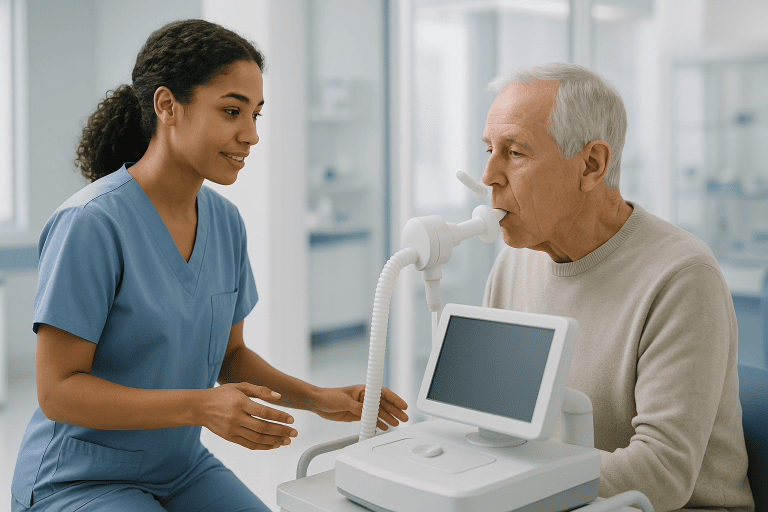
- Lung function testing measures how well air moves in and out, how much air the lungs hold, and how effectively oxygen transfers into the blood. These tests distinguish airway obstruction (asthma, COPD) from restrictive disease and gas-exchange problems.
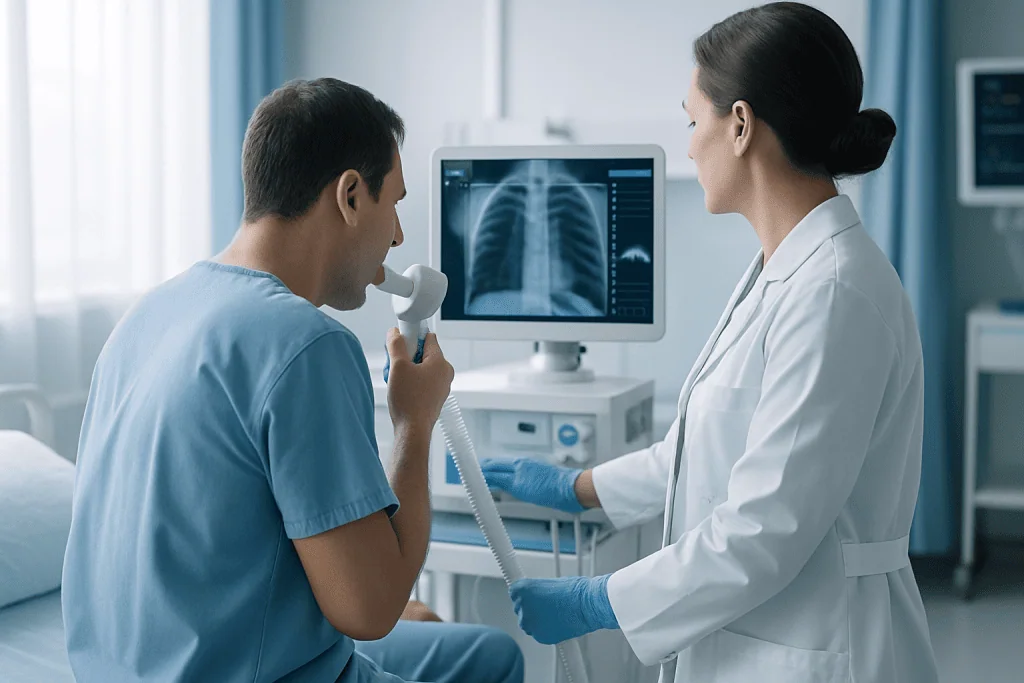
- Imaging provides structural information. Chest X-rays identify many infections, fluid collections and larger abnormalities; computed tomography gives detailed views of lung tissue, airways, pleura and blood vessels, with specialised protocols for interstitial disease, pulmonary embolism or nodule assessment.
- Laboratory and microbiology testing assesses infection, inflammation, immune function, allergy patterns, blood gases, clotting risk and autoimmune markers. Sputum analysis can identify bacteria, tuberculosis, fungi or inflammatory patterns.
- Bronchoscopy, where needed, examines the airways directly with a thin flexible camera, usually under sedation with careful monitoring.
- Sleep testing, where symptoms point to a sleep-related breathing disorder, monitors breathing, oxygen, heart rate, airflow and body position, in a sleep laboratory or, for selected patients, at home.
Radiologists and pulmonologists interpret imaging in the context of symptoms and test results, because images alone rarely tell the complete story. A shadow on a scan means one thing in a lifelong smoker with weight loss and quite another in a young non-smoker recovering from infection.
Bronchoscopy deserves a fuller word, because patients often worry about it. The scope passes through the nose or mouth into the airways and can inspect them, take samples, wash a small area of the lung for analysis, clear mucus plugs, evaluate bleeding or help diagnose lung nodules and enlarged lymph nodes. Some interventional bronchoscopic techniques can also manage airway narrowing or selected lesions. The specific method is chosen on the basis of safety, diagnostic value and your overall condition, and it is only used when less invasive testing cannot answer the question.
When cancer is suspected, the pulmonary team works with thoracic surgery, radiology, pathology, nuclear medicine and oncology through specialist boards, so that diagnosis and treatment follow evidence-based protocols rather than a single opinion.
Treatment Planning
Once the diagnosis is clearer, the pulmonologist discusses a treatment plan with you. For airway diseases, this may include inhaled medication, anti-inflammatory therapy, bronchodilators, trigger avoidance, allergy management and, crucially, education on correct inhaler technique. For infections, it may involve targeted antimicrobial therapy with follow-up imaging or cultures where appropriate. For COPD and other chronic respiratory limitation, pulmonary rehabilitation and exercise conditioning are often central rather than optional extras.
Patients with low oxygen levels may undergo oxygen assessment at rest, during walking and sometimes during sleep. If oxygen therapy is needed, the team explains when to use it, how it is monitored and what to consider when travelling. Patients with sleep apnoea may receive positive airway pressure therapy with follow-up adjustment to improve comfort and effectiveness: a device that fits badly is a device that gets abandoned, so this fine-tuning matters.
For complex disease, decisions are reviewed in multidisciplinary boards. Suspected lung cancer brings together pulmonology, thoracic surgery, medical oncology, radiation oncology, radiology, nuclear medicine and pathology. Interstitial lung disease may need rheumatology, radiology, pathology and rehabilitation input. This collaborative review keeps treatment aligned with international clinical standards and with your own priorities, which are discussed, not assumed.
Typical Duration and Recovery
The duration of evaluation varies. A straightforward consultation with basic testing can be completed within a short outpatient timeframe. Complex cases may need several days of coordinated investigations, especially where advanced imaging, sleep testing, bronchoscopy, infectious disease work-up or multidisciplinary review is involved. Hospitalised patients with severe infection, respiratory failure, pulmonary embolism or major asthma or COPD flare-ups need more intensive monitoring and treatment.
Recovery depends on the condition. Pneumonia typically improves over days to weeks, though fatigue and cough can linger longer. Asthma symptoms may improve quickly once the right medication and trigger plan are in place, but long-term control needs monitoring. In COPD, care aims to reduce symptoms and flare-ups, and improvement is usually gradual, supported by rehabilitation and lifestyle change. After bronchoscopy, most patients return to usual light activities within a short period, though instructions vary with sedation, biopsy and findings.
Why Acting Early Matters
Respiratory symptoms are often minimised until they interfere with daily life. Delay has a cost. Uncontrolled asthma can lead to severe attacks, emergency admissions and progressive limitation. Repeated COPD flare-ups accelerate functional decline and raise the likelihood of hospitalisation. Pneumonia that is inadequately treated can spread, cause fluid around the lung, or progress to respiratory failure, particularly in older adults and people with chronic disease.
Early evaluation also matters when symptoms could reflect serious disease. Coughing blood, unexplained weight loss, persistent fever, chest pain, low oxygen readings, sudden breathlessness and new abnormal imaging findings are the kinds of presentations clinicians prioritise, because pulmonary embolism, tuberculosis, severe pneumonia, lung cancer and rapidly progressive inflammatory lung disease all reward early diagnosis. Waiting narrows treatment options and makes recovery harder.
For chronic disease, early care preserves function. Patients who learn correct inhaler technique, receive appropriate vaccinations, stop smoking with structured support, treat sleep apnoea, begin pulmonary rehabilitation and understand their own warning signs generally manage their condition more safely over the years. Early planning has an extra dimension for international patients: it allows records, travel timing, medication supply and follow-up arrangements to be organised calmly, before anything becomes urgent.
Benefits of Pulmonary Disease Treatment
The benefits depend on the diagnosis, but the consistent aim is to improve breathing, reduce risk and leave you with a plan you actually understand.
| Benefit | What It Means for You |
|---|---|
| Accurate diagnosis | Testing identifies whether symptoms come from asthma, COPD, infection, scarring, sleep apnoea, vascular disease or another condition, so treatment is directed at the actual cause. |
| Improved symptom control | Medication adjustment, inhaler education, airway clearance, rehabilitation and oxygen assessment can reduce breathlessness, cough, wheeze and activity limitation. |
| Reduced risk of flare-ups | A prevention plan may include vaccinations, trigger control, smoking cessation support, early action plans and structured follow-up for patients prone to recurrent attacks or infections. |
| Earlier recognition of serious disease | Prompt evaluation of abnormal imaging, coughing blood, unexplained weight loss or low oxygen leads to faster referral for advanced diagnostics or multidisciplinary treatment. |
| Better long-term self-management | You leave with practical guidance on medications, warning signs, travel precautions, exercise and sleep, and a clear picture of how your own condition behaves. |
Recovery and Follow-Up Timeline
Because pulmonary disease covers many conditions, the timeline below describes what many patients can generally expect during evaluation and early treatment. Individual plans vary: this is a map, not a schedule.
| Time Period | What Patients Can Expect |
|---|---|
| Day 1 | Initial consultation, examination, oxygen assessment, review of prior records, and planning of tests such as lung function studies, imaging, laboratory work or sputum analysis. |
| First week | Completion of key diagnostic tests, treatment adjustment, inhaler or medication education, and discussion of whether bronchoscopy, sleep testing or additional specialist input is appropriate. |
| First month | Symptom response is reviewed. The care plan may be refined based on test results, culture findings, imaging changes, lung function data or how well medications are tolerated. |
| Longer term | Chronic disease usually needs periodic follow-up: vaccination review, pulmonary rehabilitation, oxygen reassessment, sleep therapy monitoring or surveillance imaging, depending on the diagnosis. |
What Influences Outcomes and a Good Result
Outcomes in pulmonary disease care depend on the underlying diagnosis, severity at presentation, age, general health, smoking history, immune status, occupational exposures, adherence to treatment, and whether other conditions, heart disease, diabetes, obesity, reflux, autoimmune disease, are also present. Some lung conditions are reversible or highly controllable. Others are chronic and require long-term management to slow progression, prevent complications and protect quality of life.
Accurate diagnosis is the single most important factor. Treating breathlessness without knowing its cause produces incomplete results. A patient assumed to have asthma may actually have vocal cord dysfunction, reflux-related cough, heart disease, bronchiectasis or a medication effect. A patient treated repeatedly for “pneumonia” may need evaluation for aspiration, immune deficiency, airway obstruction or an underlying structural lung disease. Where breathlessness overlaps with cardiac causes, joint assessment with cardiology, for example where coronary artery disease or heart valve disease is suspected, prevents months of treating the wrong organ. The more precise the diagnosis, the more rational everything that follows becomes.
Medication technique and adherence strongly influence results. Inhalers work only when used correctly and consistently, and a large share of patients who remain symptomatic are simply not receiving the full benefit of therapy because the inhaler type, dose, timing or technique does not fit them. Education, demonstration and follow-up correction make a measurable practical difference to daily symptoms.
Lifestyle and exposure control matter just as much. Smoking cessation is the most important single step for patients with COPD, chronic bronchitis, emphysema, lung nodules, recurrent infections or reduced lung function. Avoiding occupational dust, fumes, mould, air pollution and known allergens reduces symptoms in selected patients. Exercise conditioning and pulmonary rehabilitation improve endurance, confidence and breathing efficiency, particularly after hospitalisation or in established chronic lung disease.
Vaccination and infection prevention protect vulnerable lungs. Influenza, pneumococcal disease, COVID-19 and other infections can cause serious complications in people with chronic respiratory conditions. Your physician will recommend vaccinations based on your age, diagnosis, immune status and current guidance.
Finally, for complex or serious disease, outcomes depend on timely referral and multidisciplinary planning. Patients with suspected malignancy, interstitial lung disease, pulmonary hypertension, recurrent pulmonary embolism, severe sleep apnoea or advanced COPD benefit from coordinated assessment across specialties. And a good result is not always the disease disappearing. For chronic conditions, a good result often means fewer exacerbations, better exercise tolerance, improved sleep, stable imaging, safer oxygen levels, and a plan for the future that you understand and can follow.
How Pulmonary Care Is Organised at Acibadem
International patients typically come to pulmonary care abroad for one of three reasons: they need a clearer diagnosis, they want a second opinion because symptoms persist despite treatment, or they need treatment planning within a hospital system able to manage both routine and complex respiratory disease. At Acibadem, pulmonary care is built around exactly that: experienced respiratory physicians working inside diagnostic pathways designed to bring the right specialists to each case.
The organisational side is treated as part of the medicine, not an afterthought. Acibadem International provides dedicated services for international patients in more than 20 languages, including assistance with appointments, medical record transfer, interpretation, hospital coordination and follow-up planning. For patients and families managing a diagnosis far from home, this support keeps attention where it belongs, on the clinical decision at hand.
The pulmonary team works within a genuinely multidisciplinary hospital environment. If symptoms suggest a cardiac cause, cardiology joins the evaluation. If an infection is complex, infectious disease specialists and microbiology laboratories support diagnosis and treatment. If imaging shows a suspicious nodule or mass, radiology, pathology, thoracic surgery, nuclear medicine, medical oncology and radiation oncology can review the case together. If sleep apnoea, allergy, autoimmune disease or rehabilitation needs emerge, the relevant specialties are brought into the plan rather than bolted on afterwards.
The diagnostic technology, lung function laboratories, detailed chest imaging, bronchoscopy, sleep testing, laboratory and pathology services, exists to answer specific clinical questions. Its value lies less in the equipment itself than in how experienced clinicians interpret the results and integrate them into a coherent treatment plan. The guiding principle is deliberately unfashionable: not every available test, but the tests that are actually relevant to your symptoms and risks. Over-testing creates confusion; under-testing misses diagnoses. A balanced, specialist-led process avoids both.
Care remains personal rather than formulaic. A young adult with exercise-induced wheeze, an older patient with COPD and heart disease, a person with recurrent pneumonia and a frequent traveller with chronic cough each need a different approach. Plans may include medication optimisation, inhaler training, pulmonary rehabilitation, sleep therapy, oxygen planning, infection treatment, lifestyle counselling, surveillance imaging or referral for a procedure. For patients returning home after evaluation, the team prepares reports and recommendations that support continuity with local physicians, so the work done here keeps working after you leave.
Second Opinions and Planning Your Care
Second opinions are a normal and valuable part of pulmonary medicine, not a sign of distrust. Patients often arrive with an uncertain diagnosis, conflicting recommendations, symptoms that persist despite treatment, or reservations about a proposed invasive procedure. A well-conducted second opinion can confirm an existing plan, suggest additional testing, or identify a less invasive option where one exists. Just as importantly, it can clarify the expected course of the disease, the warning signs that matter for you specifically, and what a realistic goal of treatment looks like, which is often the piece patients say they were missing.
Persistent cough, breathlessness, wheeze, recurrent infections, abnormal chest imaging, low oxygen levels and disturbed breathing during sleep are the kinds of symptoms that structured pulmonary evaluation exists to name, understand and manage. Some conditions need urgent treatment; others need careful long-term management. In both cases, the same two things make the path forward easier: a precise diagnosis and a practical plan. For international patients, evaluation typically begins with a review of existing medical history and test results, so that any travel, testing and follow-up can be organised around what is genuinely needed, and nothing more.
Preparation
- Bring previous chest X-rays, CT scans, pulmonary function test results, and a list of current medications. Tell your doctor about smoking history, allergies, recent infections, and breathing symptoms. You may be asked to avoid inhalers or certain medicines before specific lung function tests.
Aftercare
- Follow the medication, inhaler, oxygen, rehabilitation, or lifestyle plan recommended by your pulmonologist. Avoid smoking and respiratory irritants, and attend scheduled follow-up visits to monitor lung function. Seek urgent care if breathing suddenly worsens, chest pain occurs, or lips or fingers turn blue.
Frequently Asked Questions
What affects the cost of pulmonary disease care?
Cost is influenced by the diagnosis, the number and type of tests needed, whether care is outpatient or inpatient, the need for procedures such as bronchoscopy, medication requirements, rehabilitation, and follow-up planning.
How can I get a personalised quote?
You can request a free consultation and share your symptoms, previous test results, imaging reports, medication list, and medical history. A specialist-led review helps define the likely diagnostic plan and provide a personalised quote.
Is pulmonary disease treatment usually a package?
For international patients, some elements may be offered as a coordinated package, such as consultation, selected diagnostics, interpretation, and care planning. Additional tests, procedures, hospital admission, or medicines may change the final cost.
Will I know which tests are needed before I travel?
A preliminary plan may be suggested after reviewing your records, but the final test plan is confirmed by the pulmonologist after clinical assessment. This is important because respiratory symptoms can have several possible causes.
Does accreditation matter when comparing hospitals?
Accreditation such as JCI can indicate that a hospital follows international quality and patient safety standards. It should be considered together with the respiratory team’s experience, diagnostic capability, communication support, and follow-up planning.
Is this information medical or financial advice?
No. This is general educational information. A respiratory specialist should decide suitability for tests and treatment, and a personalised quote is needed to understand the expected cost for your case.
Medically reviewed by the Acıbadem International Medical Board August 31, 2026
See our medical review board →
Update history
- PublishedJune 8, 2026
- Medical review approvedAugust 31, 2026
- Last content updateSeptember 8, 2026
References2
- Lung Diseases medlineplus.gov
- Chronic obstructive pulmonary disease (COPD) nhs.uk
Trusted care for international patients
From the Acibadem Blog

How Pulmonary Function Tests Guide Pulmonary Disease Treatment: Reading Your Spirometry Report
Pulmonary function test results are read in three steps: the FEV1/FVC ratio shows whether airways are narrowed (obstruction), the FVC percent-of-predicted shows whether the…