How Much Epsom Salt for Bath? A Doctor-Reviewed Answer

A common amount is about 2 cups of Epsom salt in a standard warm bath. Most soaks last 12 to 15 minutes rather than prolonged bathing.
Key Takeaways
- A common amount is about 2 cups of Epsom salt in a standard warm bath.
- Most soaks last 12 to 15 minutes rather than prolonged bathing.
- Epsom salt baths are usually used for comfort, not as a proven treatment for serious illness.
- People with kidney disease, diabetes, severe skin problems, or open wounds should ask a doctor before use.
- Medical care is important if symptoms are severe, persistent, or accompanied by redness, swelling, fever, or numbness.
For most adults, a typical Epsom salt bath uses about 2 cups in a standard-sized warm bathtub, soaking for around 12 to 15 minutes. This is often harmless for healthy people, but skin irritation, dizziness, worsening pain, fever, or open wounds are signs to stop home care and seek medical advice.
Overview: the simple answer
For most adults asking how much epsom salt for bath, the usual amount is about 2 cups in a standard full bathtub of warm water. A shorter soak of around 12 to 15 minutes is generally preferred. This is commonly used as a home comfort measure for tired muscles or minor aches, and it is often harmless when used sensibly.
That said, an Epsom salt bath is not a cure for underlying medical problems. If symptoms are intense, keep returning, or come with warning signs such as fever, spreading redness, drainage, severe swelling, chest symptoms, or significant weakness, home soaking should not replace medical care.
Doctors also look beyond the bath itself. If a person is using Epsom salt because of ongoing pain, cramps, skin irritation, or swelling, a clinician will usually ask about the pattern of symptoms, any injuries, medications, skin conditions, circulation problems, and chronic illnesses. In some cases, an examination or tests are needed to find the real cause.
How to measure and use Epsom salt safely
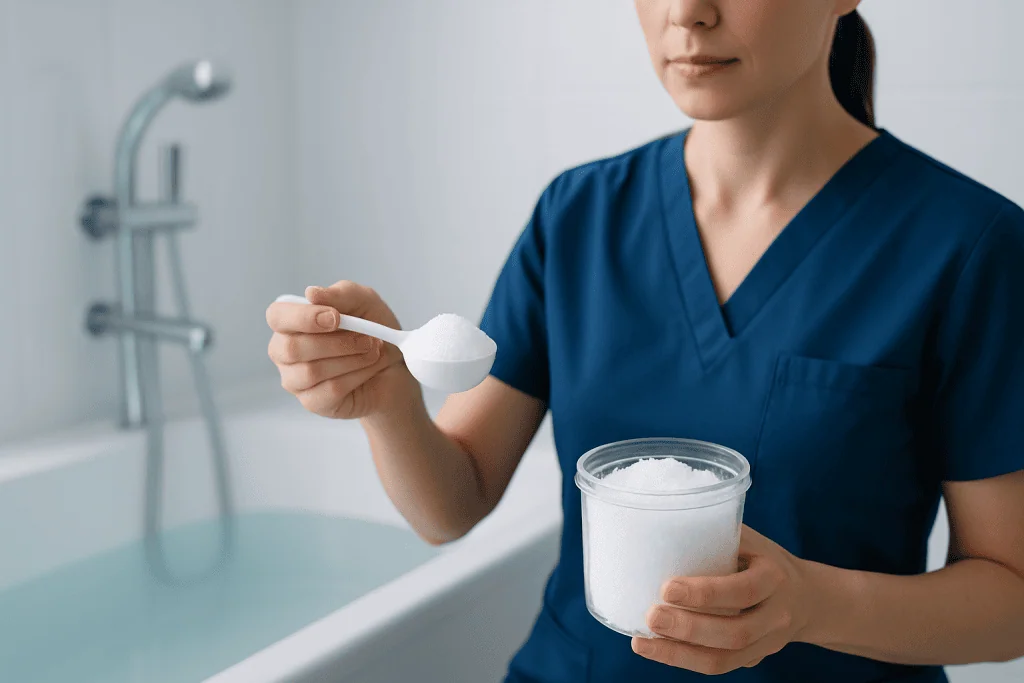
Epsom salt is magnesium sulfate, and it is dissolved into bathwater rather than applied in large amounts directly to the skin. For a standard bathtub filled with warm water, many people use around 2 cups. For a smaller soak, such as a foot bath, a much smaller amount is usually used, often a few tablespoons to about half a cup depending on the basin size.
Warm water is usually more comfortable than hot water. Very hot baths can dry the skin, increase lightheadedness, and be uncomfortable for people with heart, circulation, or blood pressure concerns. Stirring the water helps the salt dissolve evenly before getting in.
A practical routine may include:
- Using about 2 cups for a standard bathtub
- Soaking for 12 to 15 minutes
- Rinsing off afterward if the skin feels dry or sensitive
- Patting the skin dry and applying moisturizer if needed
- Drinking water before and after the bath if advised by a doctor
More is not necessarily better. Using very large amounts or soaking for long periods is more likely to cause skin dryness, irritation, or dizziness without clear added benefit. Following package directions and personal medical advice is a sensible approach.
What Epsom salt baths may help with

Many people use Epsom salt baths to feel more comfortable after exercise, prolonged standing, or a physically demanding day. The warm water itself may help relax muscles and support a sense of ease. Some people also use these baths for mild foot soreness, general tension, or self-care after minor overuse.
However, it is important to keep expectations realistic. Research does not clearly show that soaking in Epsom salt treats serious muscle injuries, removes “toxins,” or corrects magnesium deficiency through the skin in a dependable way. The main benefit for many people may be the soothing effect of warm water and a short period of rest.
If a person is using Epsom salt repeatedly because of joint pain, back pain, or persistent muscle symptoms, it may be worth discussing the issue with a doctor. Ongoing symptoms can sometimes relate to conditions such as rheumatic disorders or nerve-related pain, which need more targeted evaluation and care.
Who should be cautious before taking an Epsom salt bath
Although Epsom salt baths are commonly tolerated, they are not ideal for everyone. People with open cuts, infected skin, severe eczema, extensive rashes, or burns may find that bathing worsens irritation. Those with reduced sensation in the feet or legs, including some people with diabetes, should be careful because they may not notice if the water is too hot or the skin becomes irritated.
People with kidney disease, severe heart disease, significant circulation problems, or fragile skin should also ask a clinician before regular use. Pregnant individuals, older adults prone to dizziness, and anyone with a history of fainting in hot showers or baths may need extra caution with water temperature and time spent soaking.
A child should not be given an Epsom salt bath without checking the product directions and, when needed, confirming with a pediatrician. In any age group, Epsom salt should be kept out of reach and never used in a way not intended on the label.
If symptoms involve persistent numbness, burning, weakness, leg swelling, or changes in skin color, the issue may be more than simple soreness. In those situations, home comfort measures should not delay medical review.
Possible side effects and red flags
The most common side effects are usually mild and include dry skin, temporary irritation, itching, or feeling lightheaded after a warm bath. These effects are more likely if the water is too hot, the soak is too long, or the skin is already sensitive. Stopping the soak, rinsing the skin, and moisturizing are often enough for minor irritation.
Some symptoms should not be dismissed as normal. Medical advice is important if there is worsening redness, marked swelling, pus, fever, severe pain, blistering, shortness of breath, chest discomfort, or a rash that spreads. These features can suggest infection, inflammation, an allergic reaction, or another condition needing treatment.
People sometimes use Epsom salt baths for sore feet or leg discomfort when the real problem may be skin disease, poor circulation, arthritis, or an injury. If there is persistent heel pain, walking difficulty, deformity, or suspected structural injury, a doctor may recommend formal evaluation and, when appropriate, care such as orthopedic assessment.
When to seek medical care
Medical care is appropriate if symptoms are severe, do not improve, or repeatedly return despite rest and simple home measures. This includes pain lasting more than a few days, new swelling, reduced movement, numbness, weakness, or symptoms that interfere with sleep, work, or daily activities.
Urgent medical attention is needed for fever, rapidly spreading redness, a painful swollen limb, trouble breathing, chest pain, confusion, or signs of dehydration such as fainting and persistent dizziness. People with diabetes, poor circulation, or weakened immunity should seek advice sooner if any skin problem develops on the feet or legs.
For skin symptoms, doctors may look for eczema, contact dermatitis, fungal infection, or bacterial infection. For ongoing body aches or swelling, they may assess joints, nerves, muscles, and blood flow. Depending on the problem, next steps may involve dermatology care, imaging, blood tests, or referral to another specialist.
How doctors evaluate symptoms linked to bath use
If a person seeks care after an Epsom salt bath or because symptoms led them to try one, the doctor usually begins with the history. They ask what symptoms are present, when they started, whether one area or both sides are affected, what products were used, and whether there were prior skin reactions, injuries, or chronic conditions.
The physical examination often focuses on the skin, joints, muscles, nerves, and circulation. A clinician may check for warmth, redness, tenderness, range of motion, swelling, sensation changes, pulses, and signs of dehydration or infection. This helps separate harmless post-exercise soreness from conditions needing treatment.
Tests are not always necessary, but they may be used if symptoms suggest a deeper problem. A doctor might order blood work for inflammation or infection, assess blood sugar if wound healing is poor, or request imaging if an injury, arthritis, or a stress-related bone problem is suspected. In selected cases, evaluation may overlap with physical therapy and rehabilitation planning when pain or stiffness persists.
Near the end of care planning, clinicians usually discuss safe home routines as well. Acibadem International’s multidisciplinary specialists in JCI-accredited hospitals diagnose and treat skin, joint, muscle, and nerve conditions for international patients when further evaluation is needed.
Practical self-care tips and safer alternatives
If a person wants to use Epsom salt as a comfort measure, moderation is usually best. A warm, not hot, bath with about 2 cups of Epsom salt for 12 to 15 minutes is a reasonable starting point for most healthy adults. If any irritation develops, stopping the product is sensible.
Simple alternatives can be just as helpful. Hydration, gentle stretching, rest after exercise, supportive footwear, and a plain warm bath without additives may ease minor muscle tension. For dry or sensitive skin, fragrance-free cleansers and moisturizers are often more important than bath additives.
For pain, swelling, or stiffness that keeps returning, it is better to identify the cause than to rely on repeated soaks. A clinician can advise whether symptoms fit overuse, a skin condition, a circulation issue, inflammatory joint disease, or another problem requiring a more specific plan.
Frequently asked questions
How much Epsom salt should be used in a bath?
For most adults, about 2 cups in a standard bathtub is a common amount. A soak of around 12 to 15 minutes is usually enough. Package directions and personal medical advice should always take priority.
Can too much Epsom salt in a bath be harmful?
Using more than needed is not likely to improve results and may increase the chance of dry skin, irritation, or lightheadedness. Very hot water and long soaking times can add to these problems. If the skin becomes itchy, red, or uncomfortable, it is best to stop and rinse off.
How often can someone take an Epsom salt bath?
Occasional use is often well tolerated by healthy adults. Daily use may dry the skin in some people, especially if baths are hot or prolonged. Anyone with ongoing symptoms or a medical condition should ask a doctor how often is appropriate.
Do Epsom salt baths really work for muscle soreness?
Many people feel better after a warm soak, and that may help with comfort and relaxation. However, Epsom salt baths are not a proven treatment for significant injury or chronic pain conditions. Persistent or worsening soreness should be evaluated rather than repeatedly self-treated.
Who should avoid Epsom salt baths or ask a doctor first?
People with open wounds, severe skin disease, diabetes with reduced foot sensation, kidney disease, major circulation problems, or a history of dizziness in hot baths should be cautious. Pregnant individuals and young children may also need specific guidance. When in doubt, checking with a qualified clinician is safest.
When should symptoms prompt medical attention instead of another bath?
A person should seek care if there is fever, spreading redness, severe swelling, drainage, numbness, weakness, or pain that does not improve. Medical review is also important if symptoms keep coming back or interfere with walking, sleep, or daily life. These signs may point to infection, injury, inflammation, or another condition that needs proper treatment.
References
- American Academy of Dermatology
- Cleveland Clinic
- MedlinePlus
- National Center for Complementary and Integrative Health
- Mayo Clinic
This article is for general information only and is not a substitute for professional medical advice. Please consult a qualified doctor about your individual situation.
Explore treatments in Turkey — costs, top hospitals & a free quote
JCI-accredited · board-certified surgeons · reply within 24h
Check your numbers in seconds
BMI, calories, due date, blood pressure and 30+ more clinical calculators — free, instant, doctor-reviewed ranges.

More from the Health Library



Related Specialists

Assoc. Prof. Dr. Mehmet Sağır
Aesthetic Plastic & Reconstructive Surgery
Prof. Dr. Yasemin Ersoy
Clinical Laboratory
Dr. Berna Yayla Özker
Otorhinolaryngology
Dr. Süha Alzafer
Pulmonology