How to Get Rid of Bruises? Here Is What the Evidence Says

Most bruises heal without treatment over 1 to 2 weeks, though larger bruises may take longer. Cold packs, rest, elevation, and protecting the area are the most helpful early steps.
Key Takeaways
- Most bruises heal without treatment over 1 to 2 weeks, though larger bruises may take longer.
- Cold packs, rest, elevation, and protecting the area are the most helpful early steps.
- After the first 48 hours, gentle warmth and light movement may support comfort and recovery.
- Easy bruising, very large bruises, severe pain, or bruising without a clear injury may need medical review.
- Doctors may ask about medicines, bleeding symptoms, and sometimes order blood tests if bruising seems unusual.
Most bruises are harmless and improve on their own with time. Evidence-based self-care can reduce swelling and discomfort, while certain patterns of bruising should be checked by a doctor.
Overview: what helps bruises heal
If someone is wondering how to get rid of bruises, the short answer is that most bruises cannot be removed instantly, but they usually heal well with simple care. The best-supported steps are to use a cold pack soon after the injury, rest the area, elevate it if possible, and give the body time to reabsorb the trapped blood under the skin.
Bruises are very common after minor bumps, sports injuries, or procedures such as blood draws. They often look dramatic because skin discoloration can spread over a wider area than the original impact. In most cases, they are harmless and fade gradually through blue, purple, green, yellow, or brown shades as healing progresses.
That said, some bruises should not be ignored. Medical review is important if bruising appears without a clear cause, happens very often, is unusually large or painful, or comes with other warning signs such as nosebleeds, bleeding gums, blood in urine or stool, dizziness, or significant swelling. This balance is reassuring: most bruises are routine, but doctors do have clear ways to investigate bruising that seems out of the ordinary.
What a bruise is and how it changes over time
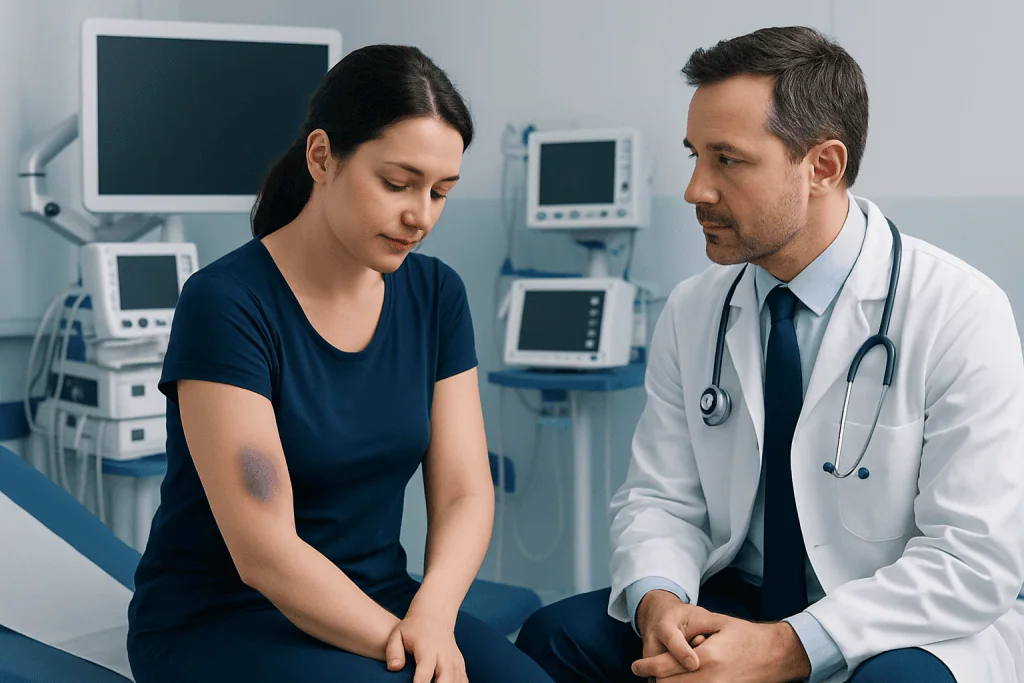
A bruise, also called a contusion, happens when small blood vessels under the skin break after an injury. Blood leaks into nearby tissues, creating discoloration, tenderness, and sometimes swelling. The skin itself is usually not broken, which is why the blood remains under the surface.
The color changes of a bruise reflect the body’s cleanup process. A fresh bruise may appear red, purple, or blue. Over several days it may turn green, then yellow or brown before fading. These changing colors are normal and do not usually mean the injury is getting worse.
Healing time depends on the size and depth of the bruise, the body area involved, age, medicines, and overall health. Small bruises often improve noticeably within a week, while larger bruises may take two weeks or more. Bruises on the legs may linger longer because gravity can contribute to swelling and slow clearance.
Some bruises involve deeper tissues and may feel firmer or more painful. A collection of blood under the skin, called a hematoma, can form after a more significant impact. This is different from a simple superficial bruise and may need medical assessment if it is large, expanding, or causing pressure symptoms.
What to do in the first 48 hours
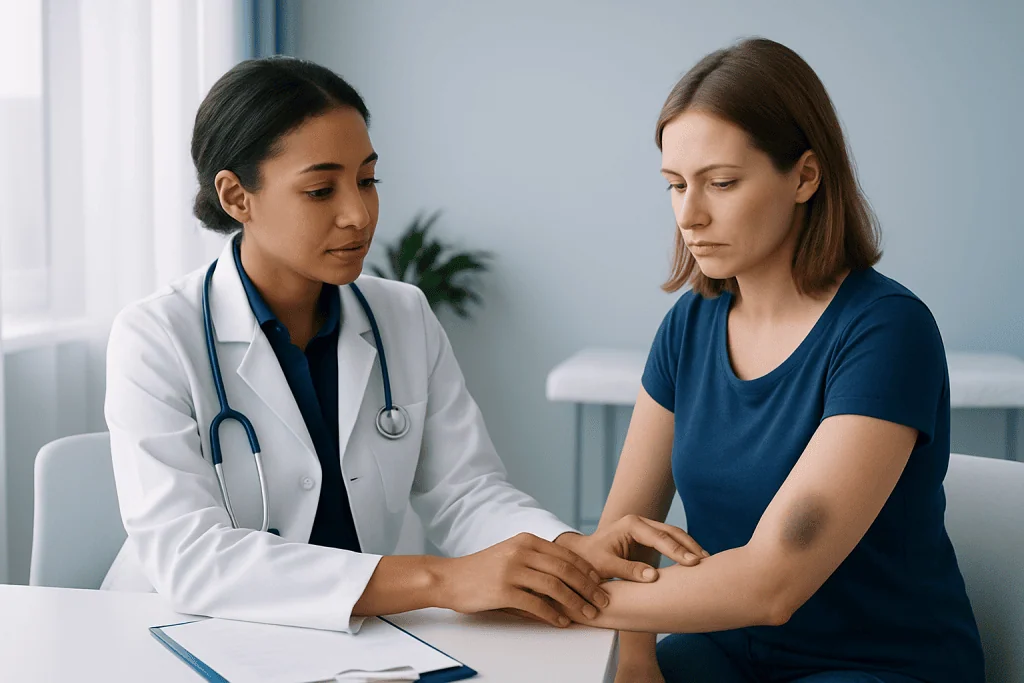
The first two days are when swelling and leakage from injured vessels are most active, so early care focuses on limiting these effects. A wrapped cold pack or bag of ice can be placed on the area for short intervals at a time. The cold should not touch the skin directly, as this can injure the skin.
Resting the injured area helps prevent more bleeding into the tissue. If the bruise is on an arm or leg, raising it above heart level when practical may reduce swelling. Light compression may help in some situations, but it should not be tight enough to cause numbness, tingling, increasing pain, or skin color changes.
Simple pain relief may be appropriate, but it is sensible to check with a doctor or pharmacist if the person has bleeding concerns, uses blood thinners, or has liver disease, kidney disease, or stomach ulcers. Aspirin and some anti-inflammatory medicines can affect bleeding in certain people, so individualized advice is best.
Rubbing or deep massage is usually not helpful right away and may worsen bleeding into the tissue. During the first 24 to 48 hours, it is generally better to protect the area from repeated impact and avoid activities that sharply increase pain or swelling.
What may help after the first two days
Once the early swelling phase has settled, gentle warmth may feel soothing and can support circulation to the area. A warm compress can be used for short periods if it is comfortable. Heat should be warm, not hot, especially on sensitive skin.
Gentle movement also matters. If the bruise is near a joint, easing back into comfortable motion may help prevent stiffness. The goal is not to push through pain, but to return gradually to normal use while protecting the area from another injury.
People often ask about creams, gels, or supplements for bruising. The evidence for many bruise products is limited or mixed, and no cream can make a bruise disappear overnight. Products may help with comfort in some cases, but time remains the main treatment.
A bruise should slowly improve, not steadily worsen. If swelling increases, pain becomes severe, numbness appears, or movement becomes difficult, the injury may be more than a simple bruise. Problems such as a significant muscle injury, a large hematoma, or a fracture may need prompt medical attention, including assessment of a hematoma or imaging.
Why some people bruise more easily
Bruising is more likely when blood vessels are fragile, the skin is thinner, or the body’s normal clotting process is affected. Aging can make bruises more common because skin and supportive tissues become more delicate over time. Sun-damaged skin may also bruise more easily.
Medicines are another important reason. Blood thinners, antiplatelet drugs, corticosteroids, and some supplements can increase bruising. This does not always mean something is wrong, but it does mean a doctor may want to review all prescription medicines, over-the-counter products, and herbal supplements.
Nutritional deficiencies, heavy alcohol use, liver disease, and some inherited or acquired bleeding conditions can also contribute. If bruising comes with frequent nosebleeds, gum bleeding, very heavy periods, or a family history of bleeding problems, a doctor may consider causes such as bleeding disorders like hemophilia or blood-related conditions such as anemia depending on the overall picture.
Not every unexplained bruise signals a serious illness. Even so, repeated unexplained bruising deserves a professional review because it can overlap with platelet problems, clotting factor issues, or skin and vascular changes that benefit from proper diagnosis.
When to seek medical care
Most bruises can be watched at home, but some situations call for prompt medical advice. A person should seek care if a bruise appears after a major injury, especially if there may be a broken bone, head injury, or injury to the chest or abdomen. Emergency assessment is particularly important if there is confusion, severe headache, trouble breathing, chest pain, or abdominal pain.
Medical review is also sensible for bruises that are very large, unusually painful, rapidly expanding, or associated with major swelling. Bruising around the eyes after a head injury, bruising that restricts movement, or bruising with numbness or weakness should be assessed. These signs can point to deeper tissue injury or pressure on nerves and blood vessels.
Doctors also look closely at bruising that happens often or without a clear cause. Recurrent bruising, bruises in unusual locations, or bruising accompanied by petechiae, nosebleeds, gum bleeding, fever, weight loss, or unusual fatigue may need further evaluation. In these cases, blood tests may be used to check blood counts, platelet levels, and how well blood clots.
During diagnosis, a doctor usually starts with a history and physical examination. They may ask about recent injuries, medicines, family history, menstrual bleeding, alcohol intake, and any past problems with surgery or dental bleeding. If needed, imaging such as an MRI scan or a CT scan may be used to look for deeper injury, and blood tests can help identify clotting or blood cell problems.
What not to do and common myths
One of the most common myths is that a bruise should be massaged aggressively to break it up. In reality, firm massage early on can irritate the injured tissue and may worsen pain or swelling. Gentle handling is usually better, especially in the first 48 hours.
Another misconception is that all bruises should be heated immediately. Early heat can increase blood flow while vessels are still leaking, which may make bruising look worse. Cold is usually more appropriate first, with warmth considered later once the initial swelling settles.
People may also worry if a bruise changes color over several days. This is expected and is usually part of normal healing. A bruise going from purple to green to yellow does not usually mean there is an infection or that the blood is spreading dangerously.
Finally, it is understandable to look for a fast fix, but no home remedy reliably makes bruises disappear overnight. The most evidence-based approach is basic supportive care, patience, and medical review when bruising patterns are unusual or accompanied by red flags.
Prevention and longer-term self-care
Preventing bruises starts with reducing falls, collisions, and repeated friction injuries where possible. Good lighting at home, supportive footwear, appropriate sports protection, and clearing tripping hazards can all help. For older adults, balance and strength exercises may reduce injury risk.
It is also helpful to review medicines periodically with a clinician, especially if bruising has increased. A person should never stop prescribed blood thinners on their own, but it is reasonable to ask whether bruising is an expected effect and whether monitoring is needed. If supplements are being used, these should be mentioned as well.
General health habits support tissue healing. Staying well nourished, eating a balanced diet, and avoiding smoking may all help the body repair itself. If bruising is frequent and there is concern about iron levels, clotting, or another medical issue, a clinician can advise on the right tests rather than relying on guesswork.
If a bruise is not following the expected pattern, expert input can be useful. Near the end of the care pathway, some people may need coordinated evaluation by imaging, laboratory, and specialty teams. Acibadem International’s multidisciplinary specialists and JCI-accredited hospitals diagnose and treat patients with bruising-related concerns, especially when deeper injury or an underlying blood problem is suspected.
Frequently asked questions
How long does it take for a bruise to go away?
Many small bruises improve within about 1 to 2 weeks. Larger or deeper bruises can take longer, especially on the legs. Color changes during healing are normal.
What is the fastest way to help a bruise heal?
There is no instant cure, but early cold, rest, and elevation can limit swelling and discomfort. After the first 48 hours, gentle warmth and comfortable movement may help. Time is still the main part of recovery.
Should a bruise be massaged?
Deep massage is usually not recommended right after the injury because it can irritate tissue and sometimes worsen bleeding under the skin. Gentle handling is safer. If the area is very painful or swollen, it is best to have it assessed.
When should unexplained bruising be checked by a doctor?
Bruising should be reviewed if it happens often, appears without a clear injury, or is paired with nosebleeds, gum bleeding, heavy periods, or unusual fatigue. A doctor may ask about medicines and order blood tests. This helps rule out platelet, clotting, or other blood-related problems.
Is it better to use ice or heat on a bruise?
Ice or a cold pack is generally more helpful during the first 24 to 48 hours because it can reduce swelling. Heat is usually considered later, once the early swelling phase has passed. Both should be used carefully to protect the skin.
Can bruising be a sign of something serious?
Most bruises are harmless and follow a clear injury. However, very large bruises, bruising after major trauma, or bruises with other bleeding symptoms may need prompt evaluation. Serious causes are less common, but they are important to identify when warning signs are present.
References
- National Institutes of Health
- American Academy of Family Physicians
- Mayo Clinic
- NHS
- Merck Manual Consumer Version
This article is for general information only and is not a substitute for professional medical advice. Please consult a qualified doctor about your individual situation.
Explore treatments in Turkey — costs, top hospitals & a free quote
JCI-accredited · board-certified surgeons · reply within 24h