How to Tighten Loose Skin? Here Is What the Evidence Says

Loose skin is usually a cosmetic concern rather than a dangerous medical problem. Skin may tighten somewhat over time, especially after gradual weight loss and good muscle-building habits.
Key Takeaways
- Loose skin is usually a cosmetic concern rather than a dangerous medical problem.
- Skin may tighten somewhat over time, especially after gradual weight loss and good muscle-building habits.
- Nutrition, strength training, sun protection, and moisturizer can support skin health but may not fully remove excess skin.
- Medical evaluation is important if loose skin appears suddenly, is associated with swelling or illness, or causes rashes, pain, or daily discomfort.
- Non-surgical and surgical treatments can help selected patients, depending on skin quality and the amount of excess tissue.
Loose skin is common and often harmless, especially after weight loss, pregnancy, or normal aging. How to tighten loose skin depends on why it developed, how much elasticity remains, and whether lifestyle measures or medical treatments are most appropriate.
Overview: what the evidence says about tightening loose skin
For many people, loose skin is harmless and happens for understandable reasons such as weight loss, pregnancy, or aging. In mild cases, skin may improve gradually with time, strength training, healthy nutrition, and skin-protective habits. When skin has stretched significantly or lost much of its elasticity, home measures may help appearance but often cannot fully tighten it.
The best approach depends on the cause, the area of the body involved, and whether the concern is mainly cosmetic or also affects comfort and function. Some people have only mild laxity in the face, neck, arms, or abdomen, while others have larger folds after major weight loss. Because skin tightening options work differently, a realistic plan usually starts with understanding what is actually changing in the skin.
It is also helpful to know when loose skin deserves medical review. While it is usually not a sign of serious disease, a doctor should assess sudden changes, skin breakdown, recurrent irritation, or symptoms such as unexplained swelling, fatigue, or rapid body changes. A clinician can then distinguish ordinary skin laxity from other causes and discuss evidence-based options.
Why loose skin happens
Skin stretches and recoils because of structural proteins, especially collagen and elastin. Over time, these fibers naturally change with age, sun exposure, smoking, hormonal shifts, and general wear. When skin is stretched for a long period, its ability to bounce back may become reduced.
Common causes include significant weight loss, pregnancy, and natural aging. After weight loss, the amount of skin tightening that happens on its own depends on factors such as age, genetics, how long the skin was stretched, smoking history, and the speed and amount of weight change. Loose skin after bariatric surgery is particularly common because weight loss may be large and rapid; in that setting, some people also explore weight-loss surgery follow-up care and body contouring discussions as part of longer-term recovery.
Other factors can make skin seem looser or less firm, including dehydration, sun damage, reduced muscle mass, and repeated weight cycling. In some cases, what appears to be loose skin may partly reflect changes in body composition. For example, loss of muscle can reduce support under the skin, making laxity more noticeable even without major weight loss.
Less commonly, a person may confuse loose skin with swelling, a hernia, or a skin condition. If an area is tender, asymmetric, suddenly enlarged, or associated with a lump, it should not be assumed to be simple skin laxity without medical assessment.
What can help at home

Home care is most useful for mild to moderate skin laxity and for supporting overall skin health. The clearest lifestyle strategy is gradual, sustainable weight management combined with strength training. Building muscle can improve body shape under the skin and may reduce the appearance of looseness, especially in the arms, thighs, and abdomen.
Good nutrition also matters. Adequate protein supports tissue repair and muscle maintenance, while a balanced diet provides vitamins and minerals involved in skin health. Staying hydrated helps the skin function normally, although hydration alone does not reverse major excess skin. Moisturizers can improve how skin feels and looks by reducing dryness, but they do not tighten deep structural laxity.
Sun protection is one of the most evidence-based long-term habits. Ultraviolet exposure accelerates collagen breakdown and can worsen skin aging, so regular sunscreen use and protective clothing help preserve what elasticity remains. Avoiding smoking is equally important because smoking impairs collagen and blood supply in the skin.
Topical products may offer modest benefits in selected cases, particularly those containing ingredients commonly used for photoaging. However, over-the-counter creams cannot remove excess skin folds. People should be cautious with products that promise dramatic tightening, especially if they cause irritation or are used on sensitive areas.
Medical treatments for loose skin
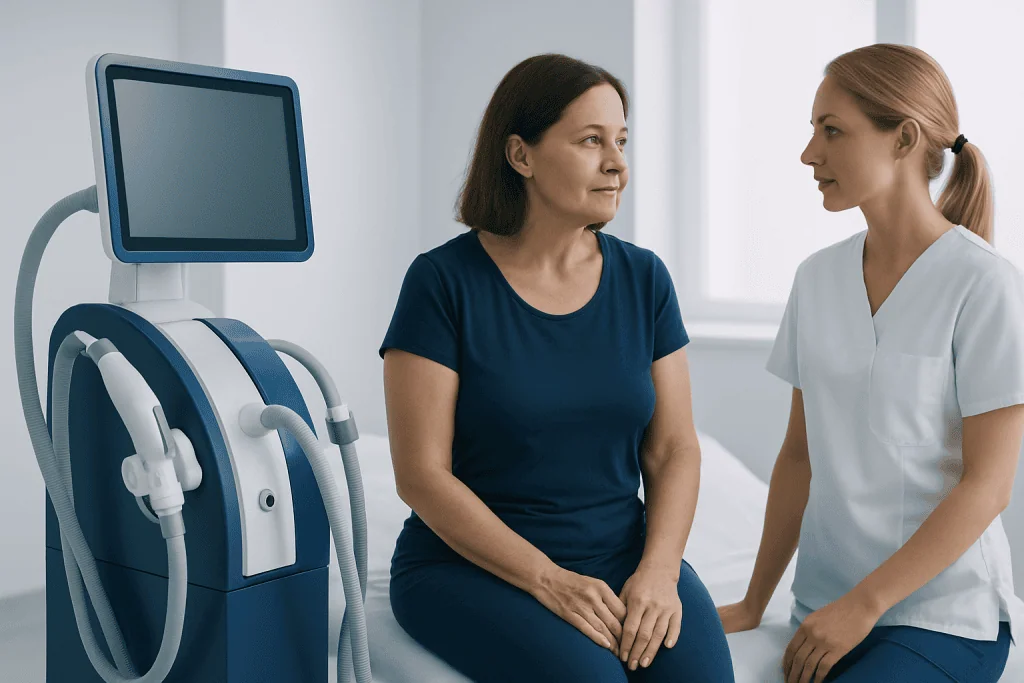
When home measures are not enough, doctors may discuss non-surgical or surgical options. Non-surgical treatments are generally most effective for mild to moderate laxity. Depending on the area and the person’s skin type, these may include technologies that heat deeper layers of the skin to stimulate collagen remodeling, such as radiofrequency or ultrasound-based treatments. Results are usually gradual and may be subtle rather than dramatic.
Injectable treatments and resurfacing procedures may also improve certain areas, especially the face, by addressing volume loss, texture, or fine wrinkling rather than large amounts of excess skin. Some people benefit from a broader evaluation within medical aesthetics when the main concern is skin firmness and contour rather than a large hanging fold.
Surgery may be considered when there is substantial excess skin after major weight loss or pregnancy, or when skin folds cause repeated irritation, hygiene problems, or movement difficulty. Procedures are tailored to the body area and may involve removal of extra skin and reshaping of underlying tissues. For abdominal laxity in selected patients, a surgeon may discuss abdominoplasty if the concern includes both excess skin and weakened abdominal contour.
Not every treatment suits every person. Medical history, smoking status, weight stability, healing ability, and expectations all influence which option is safest and most appropriate. A consultation with a qualified dermatologist or plastic surgeon helps match the treatment to the degree and type of skin laxity.
When to seek medical care
Loose skin itself is often not urgent, but some situations deserve professional review. A doctor should assess sudden or rapidly changing skin looseness, especially if it comes with unexplained weight loss, fatigue, swelling, or other new symptoms. These features may point to an underlying medical issue rather than simple loss of elasticity.
Medical care is also important if excess skin causes repeated rashes, fungal infections, sores, bleeding, unpleasant odor, or pain in skin folds. Some people develop chafing severe enough to affect walking, exercise, sleep, or daily hygiene. In these cases, treatment is not only about appearance but also comfort and skin health.
A person should also seek assessment if the area appears asymmetric, forms a distinct bulge, or feels like a mass. Conditions such as hernias or localized swelling can mimic loose skin in the abdomen or groin. If there is concern about changes after major weight loss, a clinician may also consider related metabolic health issues such as obesity and its treatment history when planning care.
How doctors evaluate loose skin
Evaluation usually begins with a history and physical examination. The doctor will ask when the looseness began, whether there was pregnancy or weight loss, how quickly body changes happened, and whether there are symptoms such as irritation, rash, pain, weakness, or swelling. Medication history, smoking, sun exposure, and previous surgery can also be relevant.
During the examination, the clinician looks at the location, degree, and quality of skin laxity. They may assess whether the concern is mainly excess skin, reduced elasticity, low muscle tone, scar tissue, fat distribution, or a combination of these. This distinction helps guide treatment because the best option for thin crepey skin is different from the best option for a large abdominal skin fold.
Tests are not always needed. However, if there are warning signs such as unexplained weight change, generalized swelling, or suspected hernia, the doctor may order blood tests or imaging. When symptoms suggest a skin disorder rather than simple laxity, referral to dermatology may be appropriate. If body contour after major weight loss is the main issue, specialists in plastic and reconstructive surgery may discuss functional and cosmetic options.
Setting realistic expectations
One of the most important parts of care is understanding what improvement is realistic. Mild looseness may improve with time, muscle building, and skin care, but major excess skin usually does not disappear completely without a procedure. People often feel frustrated by online claims that a single cream, supplement, or exercise routine can fully reverse long-standing skin stretching.
Results also vary by body area. The face and neck may respond differently from the abdomen, upper arms, thighs, or breasts. Age, genetics, skin thickness, and the amount of previous stretching all influence outcomes. In general, the longer and more significantly the skin was stretched, the less likely it is to tighten fully on its own.
That said, many people can achieve meaningful improvement in comfort, confidence, and body contour with a careful plan. A staged approach often works best: stabilize weight, build muscle, protect the skin, then review whether a non-surgical or surgical option is still desired. For international patients who need specialist assessment, Acibadem International’s multidisciplinary teams in JCI-accredited hospitals evaluate and treat loose skin concerns with individualized plans.
Frequently asked questions
Can loose skin tighten naturally over time?
Yes, some loose skin can improve naturally, especially if the weight loss was moderate and the skin still has good elasticity. Natural tightening is usually slower and more limited after large or rapid weight loss, pregnancy, or long-term stretching.
Does exercise tighten loose skin?
Exercise does not directly shrink excess skin, but it can improve the way the body looks by building muscle underneath it. Strength training is often more helpful than cardio alone for improving body contour in people with mild to moderate laxity.
Do creams really work for sagging skin?
Moisturizers can make skin look smoother and less dry, and some active ingredients may modestly improve texture. However, creams cannot remove large amounts of excess skin or fully restore deeply stretched collagen and elastin.
What is the best treatment for loose skin after major weight loss?
The best treatment depends on how much extra skin is present and whether it causes irritation or functional problems. For mild laxity, non-surgical treatments may help somewhat; for significant folds, surgery is often the most effective option.
When should someone worry about loose skin?
Loose skin is usually not dangerous, but medical review is important if it appears suddenly, changes quickly, or comes with symptoms such as swelling, pain, rashes, sores, or unexplained weight loss. A doctor can check whether another condition is contributing.
Can loose skin be prevented during weight loss?
Not always, but gradual weight loss, strength training, good nutrition, stable hydration, and avoiding smoking may help support better skin adaptation. Prevention is more likely to reduce the degree of laxity than to eliminate the risk completely.
References
- American Academy of Dermatology
- American Society of Plastic Surgeons
- National Institute on Aging
- British Association of Dermatologists
- Mayo Clinic
This article is for general information only and is not a substitute for professional medical advice. Please consult a qualified doctor about your individual situation.
Medical weight-loss options in Turkey — costs & eligibility
JCI-accredited · board-certified surgeons · reply within 24h