Ileostomy vs Colostomy: Key Differences and How Doctors Tell Them Apart
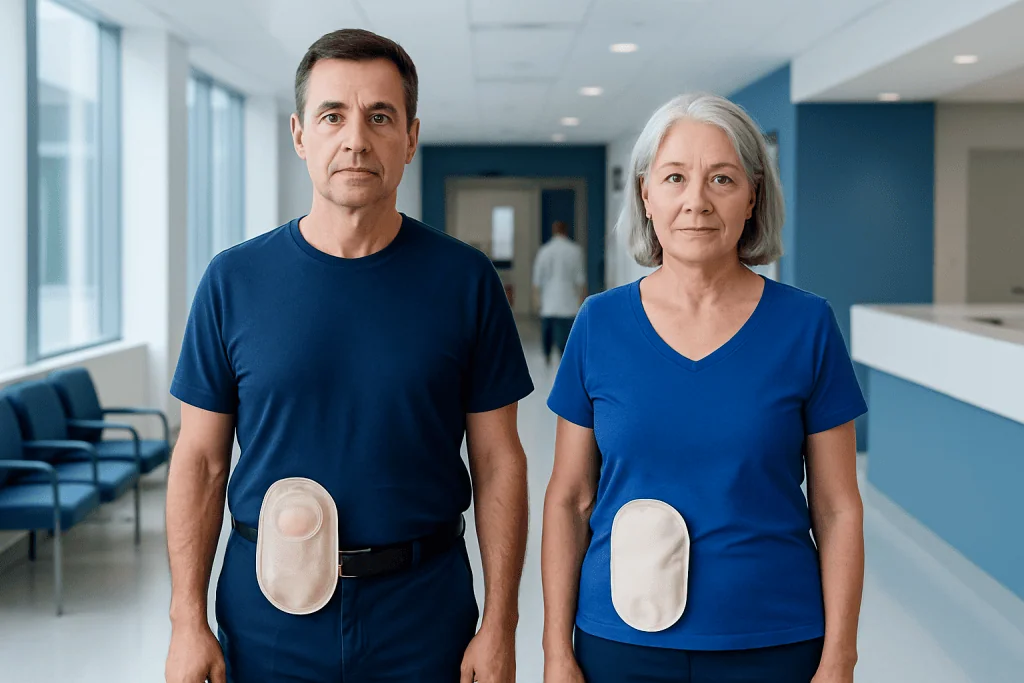
An ileostomy is made from the ileum, while a colostomy is made from the colon. Ileostomy output is usually more liquid and can cause greater fluid and salt loss.
Key Takeaways
- An ileostomy is made from the ileum, while a colostomy is made from the colon.
- Ileostomy output is usually more liquid and can cause greater fluid and salt loss.
- Colostomy output is often thicker and may be easier to regulate, depending on where it is located in the colon.
- Doctors tell them apart by surgical history, stoma location, appearance, and the type of output.
- Care needs differ, especially around hydration, skin protection, and appliance selection.
- New pain, reduced output, severe diarrhea, bleeding, or color change in the stoma needs medical review.
Ileostomy vs colostomy mainly comes down to which part of the bowel is brought to the skin surface: the small intestine in an ileostomy and the large intestine in a colostomy. This difference changes stool consistency, fluid loss, skin care needs, and the way clinicians assess and manage each type.
Overview: side-by-side comparison of ileostomy vs colostomy
In simple terms, ileostomy vs colostomy refers to two types of ostomy that reroute bowel contents through an opening in the abdomen called a stoma. In an ileostomy, the stoma is made from the end or loop of the small intestine, usually the ileum. In a colostomy, the stoma is created from part of the large intestine, or colon.
Because the small intestine and large intestine handle digestion differently, the output from each stoma is different too. The colon normally absorbs water and helps form stool, so bypassing it usually leads to thinner output. When more of the colon remains in use, output tends to be thicker and less frequent.
The table below gives a practical comparison that patients and caregivers often find helpful.
- Bowel segment: Ileostomy = ileum; Colostomy = colon
- Typical output: Ileostomy = liquid to paste-like; Colostomy = semi-formed to formed, depending on location
- Fluid loss risk: Higher with ileostomy
- Skin irritation risk: Often higher with ileostomy because enzymes and liquid output can irritate skin
- Common reasons: Inflammatory bowel disease, bowel cancer, trauma, obstruction, diverticular disease, congenital conditions
- Can be temporary or permanent: Yes, both can be either
- Pouching needs: Both use ostomy appliances, but fit and wear time may differ based on output
Although both surgeries can be life-saving or improve quality of life, neither is “better” in all situations. The right choice depends on the underlying condition, the part of the bowel involved, and whether the goal is short-term healing or long-term bowel diversion.
How a clinician tells them apart

Doctors do not rely on appearance alone. They first review the patient’s medical and surgical history, including why the ostomy was created and which operation was performed. A history of ulcerative colitis, for example, may make an ileostomy more likely, while surgery for certain colon problems may point toward a colostomy.
During the physical examination, the clinician looks at the stoma’s location, shape, size, and output. Ileostomies are often placed on the right side of the abdomen and usually produce more continuous, looser output. Colostomies are more often found on the left side, though location varies depending on the part of the colon used, and output may be thicker or less frequent.
The stoma’s appearance and the surrounding skin also provide clues. An ileostomy may protrude slightly more and can be associated with more skin irritation if the pouch seal is not secure. A colostomy may have thicker stool, less enzyme-rich drainage, and in some cases more predictable bowel patterns.
If there is uncertainty, the surgical record is the most reliable source. Imaging studies, endoscopy, and specialist review may also help if a patient is new to a care team, has had complex surgery, or is experiencing complications after treatment for conditions such as colon cancer or severe bowel inflammation.
Why they are created: causes and medical context

An ileostomy or colostomy may be created when stool needs to be diverted away from a diseased, injured, healing, or removed part of the bowel. This can happen after emergency surgery, planned cancer treatment, or operations for chronic digestive disease. Some ostomies are temporary and reversed later; others are permanent.
Common reasons for an ileostomy include inflammatory bowel diseases such as ulcerative colitis, some cases of Crohn’s disease, bowel perforation, trauma, and surgery involving the rectum or colon. A surgeon may also create a temporary ileostomy to protect a new bowel connection while it heals.
Common reasons for a colostomy include colon or rectal cancer, bowel obstruction, diverticular disease, injury, fistulas, and congenital conditions. Depending on which segment of the colon is used, a colostomy may be ascending, transverse, descending, or sigmoid, and this affects the consistency of output.
From a patient perspective, the most important point is that the stoma reflects the underlying bowel anatomy. The type of ostomy helps doctors anticipate hydration needs, nutritional concerns, skin care issues, and the kind of follow-up that may be required after colorectal surgery.
What daily output and symptoms are usually like
The difference most people notice first is the output. Ileostomy output is often looser, more frequent, and richer in digestive enzymes. It may be watery at times, especially soon after surgery, during illness, or after certain foods or medications. Because fluid leaves the body more quickly, dehydration can develop more easily with an ileostomy.
Colostomy output is usually thicker because part of the colon remains available to absorb water. If the stoma is lower in the colon, stool may be more formed and less frequent. Some people with a colostomy develop a more regular bowel pattern over time, although this varies widely.
Both types can have normal changes in output from day to day. Foods, hydration, activity level, infection, medications, and stress can all affect bowel function. Mild gas, occasional odor, and temporary shifts in stool consistency are common and do not always mean something is wrong.
However, some symptoms deserve closer attention. These include very high ileostomy output, no output when there is usually regular drainage, increasing abdominal pain, repeated vomiting, significant leakage around the appliance, bleeding that does not stop, or a stoma that turns dark, pale, or unusually swollen.
Diagnosis and follow-up when there is a problem
If a patient with an ostomy develops new symptoms, the clinical assessment begins with a focused history. The care team asks when the output changed, whether there is nausea, fever, cramping, skin breakdown, poor intake, or signs of dehydration such as dizziness, thirst, and reduced urination. They also review medications, diet, and recent illnesses.
The examination includes the abdomen, the stoma, and the skin around it. Clinicians check the color of the stoma, whether it is moist and pink to red, how much it protrudes, and whether there are signs of blockage, prolapse, retraction, or hernia. The pouching system is important too, since poor fit can cause leaks and painful skin irritation.
Depending on the concern, tests may include blood work to look at hydration and electrolyte balance, stool testing, abdominal imaging, or endoscopic evaluation. Patients with an ileostomy may need especially careful monitoring if output becomes very high, because sodium and fluid loss can occur quickly.
Follow-up often involves more than one specialist. Surgeons, gastroenterologists, dietitians, and stoma care nurses each play a role. When needed, treatment may involve hydration support, medication changes, appliance refitting, nutritional guidance, or evaluation for underlying issues such as Crohn’s disease.
What to do for each case: treatment and self-care differences
Care plans differ because ileostomies and colostomies behave differently. With an ileostomy, the main priorities are often hydration, electrolyte balance, and skin protection. Patients are usually advised to monitor output, drink enough fluids, and learn which foods may thicken or loosen stool. The pouching system must fit well because liquid output can irritate the skin quickly.
For a colostomy, routine care also centers on a secure pouch seal and healthy skin, but hydration emergencies are often less common than with an ileostomy. Some patients can develop a more regular emptying pattern over time. Food tolerance is individual, and a gradual return to a normal diet is often possible with guidance from the medical team.
If the stoma was created as part of treatment for bowel disease or cancer, the broader treatment plan still matters. This may include medicines, follow-up scans, endoscopy, or surgery. In selected cases, patients may later be evaluated for stoma reversal or other procedures related to colon cancer treatment or inflammatory bowel disease treatment.
Education is one of the most effective treatments. Learning how to empty and change the pouch, protect the skin, recognize normal variation, and spot early warning signs can improve comfort and confidence. For many patients, support from an ostomy nurse is especially valuable in the weeks after surgery and during any changes in body shape, activity, or diet.
When to seek medical care
Medical advice should be sought promptly if there are signs of dehydration, especially with an ileostomy. These include unusual thirst, dry mouth, dizziness, weakness, reduced urination, or very watery high-volume output. Early treatment can help prevent more serious problems.
A doctor should also review sudden changes such as no stoma output for several hours when there is normally regular drainage, worsening abdominal swelling, persistent vomiting, fever, severe cramping, or ongoing bleeding. These symptoms can suggest blockage, infection, or another complication that needs assessment.
The stoma itself should remain pink to red and moist. A stoma that becomes dark, pale, cold, very swollen, or painful needs urgent evaluation. Skin that is raw, broken, or persistently leaking around the appliance should also be assessed, since improving the fit can prevent further injury.
People traveling internationally or receiving care away from home may benefit from a coordinated specialist review. Near the end of the care pathway, a center such as Acibadem International can support diagnosis and treatment through multidisciplinary specialists and JCI-accredited hospitals for international patients.
Frequently asked questions
What is the main difference between an ileostomy and a colostomy?
The main difference is the part of the bowel used to create the stoma. An ileostomy uses the small intestine, while a colostomy uses the large intestine. This changes how much water is absorbed and affects stool consistency.
How can a doctor tell if a stoma is an ileostomy or a colostomy?
A doctor uses the surgical history, the stoma’s location on the abdomen, and the nature of the output. Ileostomy output is usually looser and more frequent, while colostomy output is often thicker. Surgical records provide the most definite answer when there is any doubt.
Is an ileostomy more serious than a colostomy?
Not necessarily. Each serves a different medical purpose, and the best option depends on the person’s condition and surgery. Ileostomies do require closer attention to hydration and skin care because their output is often more liquid.
Can both an ileostomy and a colostomy be reversed?
Yes, both can be temporary or permanent. Whether reversal is possible depends on the underlying disease, the condition of the remaining bowel, and how well healing has occurred. A surgeon can explain if reversal is realistic in an individual case.
Which type has more risk of dehydration?
An ileostomy generally carries a higher risk of dehydration because the colon is bypassed and less water is absorbed. This means output can be more liquid and fluid losses can be greater. Patients with an ileostomy are often advised to monitor output and fluid intake carefully.
Do people with a colostomy or ileostomy have to follow a special diet forever?
Not always. Many people return to a varied diet, but adjustments may be needed based on the type of stoma, symptoms, and individual food tolerance. A doctor or dietitian can help guide changes, especially after surgery or if output becomes difficult to manage.
References
- American Society of Colon and Rectal Surgeons
- United Ostomy Associations of America
- National Institute of Diabetes and Digestive and Kidney Diseases
- National Health Service
- Mayo Clinic
This article is for general information only and is not a substitute for professional medical advice. Please consult a qualified doctor about your individual situation.
Persistent digestive symptoms? Get evaluated in Turkey
JCI-accredited · board-certified surgeons · reply within 24h

More from the Health Library



Related Specialists

Assoc. Prof. Dr. Aylin Önder Dirican
Gynecology & Obstetrics
Gülsen Ersözlü
Physical Medicine & Rehabilitation
Prof. Dr. Tugan Beşe
Gynecology & Obstetrics
Assoc. Prof. Dr. Murat İçen
Check Up & Wellness Center