Intravenous: What Patients Need to Know

An intravenous line delivers fluids or treatments directly into a vein. IVs are used for hydration, medications, blood transfusion, contrast dyes, and nutrition support.
Key Takeaways
- An intravenous line delivers fluids or treatments directly into a vein.
- IVs are used for hydration, medications, blood transfusion, contrast dyes, and nutrition support.
- Most IV placements are quick and safe, though minor discomfort and bruising can occur.
- Possible complications include infection, vein irritation, fluid leakage, and rarely blood clots or allergic reactions.
- Patients should tell the care team about allergies, previous IV problems, and symptoms such as pain, swelling, or shortness of breath.
Intravenous treatment, often called an IV, is a common medical method for giving fluids, medicines, blood products, or nutrition directly into a vein. It is used when fast delivery, precise dosing, or reliable access to the bloodstream is needed.
Overview: what intravenous means
Intravenous means “within a vein.” In medical care, it refers to fluids, medicines, blood products, or nutrients given through a small tube placed into a vein. Because the substance enters the bloodstream directly, the effect is often faster and more predictable than treatments taken by mouth.
Intravenous care is widely used in hospitals, emergency departments, outpatient clinics, imaging centers, and sometimes at home under professional supervision. It can be as simple as a short course of fluids for dehydration or as specialized as long-term medication delivery, chemotherapy, or intravenous nutrition.
People often hear the term “IV” used in several ways. It may describe the small cannula in the vein, the tubing and fluid bag, or the treatment itself. Although IV care is routine, it is still a medical procedure that requires trained professionals, attention to hygiene, and regular monitoring.
Why an IV may be used
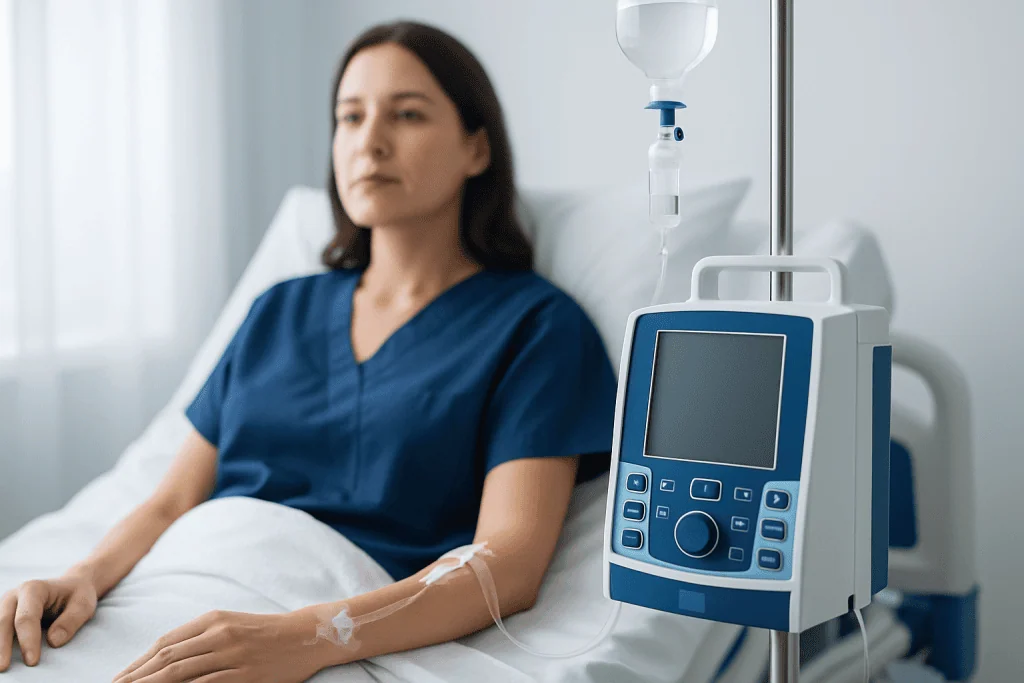
Doctors use intravenous treatment when the body needs something quickly, when a medicine cannot be taken by mouth, or when the dose must be carefully controlled. IV access can also be helpful if a person is vomiting, unconscious, preparing for surgery, or too unwell to drink enough fluids safely.
Common reasons for IV use include dehydration, infection treatment with antibiotics, pain relief, anesthesia, blood transfusion, and imaging tests that require contrast dye. In some cases, patients receive chemotherapy through an IV or IV medications for conditions affecting the heart, kidneys, lungs, or immune system.
An IV may also be used to support nutrition when the digestive system cannot be used normally. This approach is called parenteral nutrition and is reserved for specific medical situations. For some patients with severe fluid loss from illnesses such as diarrhea, intravenous fluids can be an important part of treatment.
- Fluids and electrolytes
- Antibiotics and other medicines
- Blood and blood components
- Contrast material for scans
- Nutrition support in selected cases
Types of intravenous access

Not all IV lines are the same. The most familiar type is a peripheral IV, usually placed in a vein in the hand, wrist, or arm. This is commonly used for short-term treatments such as fluids, antibiotics, or medications before and after procedures.
If treatment will continue for longer or the medication may irritate smaller veins, the team may recommend a central venous catheter. This type of line reaches a larger vein and includes devices such as PICC lines, tunneled catheters, and implanted ports. These are often used for repeated blood draws, long courses of therapy, or treatments like bone marrow transplantation.
In emergency or difficult-access situations, ultrasound guidance may help clinicians place an IV more safely and efficiently. The best option depends on the purpose of treatment, how long it is needed, the condition of the veins, and the patient’s overall health.
What patients can expect during IV placement and infusion
Before placing an IV, a healthcare professional usually confirms the patient’s identity, reviews allergies and medications, and explains why the IV is needed. The skin is cleaned carefully to reduce the risk of infection. A small needle helps guide a flexible plastic cannula into the vein; the needle is then removed, leaving the soft tube in place.
Most people feel a brief pinch or stinging sensation when the IV is inserted. Once secured with tape or a dressing, the line may be connected to a syringe, tubing, or an infusion pump that controls how quickly fluid or medicine enters the bloodstream. During treatment, staff may check the site regularly for comfort, flow, and signs of irritation.
Some IV medicines can cause a cool sensation in the arm, a temporary metallic taste, or mild discomfort as they begin to run. Patients should tell the team promptly if they notice burning, swelling, leaking, increasing pain, dizziness, rash, or difficulty breathing. In many settings, IV treatment can be combined with other care, such as medical check-up evaluations or imaging studies.
Benefits, risks, and possible complications
The main benefit of intravenous treatment is speed and control. It allows doctors to give an exact amount of fluid or medication directly into the bloodstream, which can be especially important in urgent care, surgery, serious infections, and treatment for chronic illnesses.
Most IVs are placed without major problems, but no medical procedure is completely risk-free. Minor issues can include bruising, tenderness, or the need for more than one attempt if veins are small or difficult to access. Some patients may develop phlebitis, which is irritation or inflammation of the vein.
Other complications may include infiltration, when fluid leaks into surrounding tissue, or infection at the insertion site. Less commonly, central lines can be linked with bloodstream infections, clotting, or problems related to placement. Allergic reactions may occur with certain medications or contrast agents, so it is important to mention any history of drug allergies, asthma, kidney disease, or reactions to prior infusions.
- Common minor effects: brief pain, bruising, or soreness
- Possible local complications: vein irritation, swelling, leakage, bleeding
- Less common serious issues: infection, blood clots, severe allergic reaction
- Central lines require closer monitoring than short-term peripheral IVs
How safety is maintained and what patients can do
IV safety depends on proper placement, sterile technique, appropriate monitoring, and clear communication between the patient and care team. Healthcare professionals choose the right type of line, check that the prescribed fluid or medicine is suitable for IV use, and monitor vital signs or lab results when needed.
Patients also play an important role. It helps to mention any previous difficulty with IV placement, a history of fainting, past reactions to medicines, skin sensitivity to dressings, or conditions that may affect veins. If movement is limited by the IV site, asking for help before walking can reduce the risk of pulling out the line accidentally.
During treatment, the dressing should generally be kept clean and dry unless the medical team advises otherwise. People should not ignore new redness, warmth, pus, increasing tenderness, or a swollen hand or arm. When IV therapy is part of treatment for a broader illness, the underlying cause also matters, such as infection, surgery recovery, or another condition that may require specialist evaluation.
When to seek medical care
Medical advice should be sought if a person thinks they may need IV treatment because they cannot keep fluids down, feel faint from dehydration, have signs of severe infection, or are unable to take essential medications by mouth. IV treatment should always be guided by a qualified healthcare professional rather than used casually or without a medical reason.
Urgent assessment is important if symptoms develop during or after an infusion, including trouble breathing, chest pain, facial swelling, hives, severe dizziness, confusion, or a rapidly worsening condition. These may signal an allergic reaction or another serious problem requiring immediate care.
After an IV has been removed, patients should contact a clinician if the insertion site becomes increasingly red, hard, swollen, hot, or painful, or if fever develops. Acibadem International’s multidisciplinary specialists and JCI-accredited hospitals diagnose and treat conditions that may require IV therapy, including supportive care linked to advanced treatments such as cancer treatment.
Frequently asked questions
Is intravenous treatment the same as an injection?
Not exactly. An injection may be given into a muscle, under the skin, or directly into a vein, while intravenous treatment specifically means delivery into a vein. IV treatment can be a quick injection or a slower infusion over time.
Does getting an IV hurt?
Most people feel a brief pinch when the IV is inserted. After placement, there may be mild soreness, but significant pain, burning, or swelling should be reported because it can mean the IV needs attention.
How long can an IV stay in place?
That depends on the type of IV, the reason for treatment, and the condition of the insertion site. Short-term peripheral IVs are usually used for limited periods, while central lines may stay in place longer under careful monitoring.
What is the difference between a peripheral IV and a central line?
A peripheral IV is placed in a smaller vein, usually in the hand or arm, and is commonly used for short-term treatment. A central line reaches a larger vein and is chosen when treatment is longer, more complex, or likely to irritate smaller veins.
Can IV fluids treat dehydration better than drinking water?
IV fluids can correct dehydration quickly when a person cannot drink enough, is vomiting, or needs close monitoring. For mild dehydration, drinking fluids may be enough, but the best approach depends on the cause and severity.
What symptoms during an infusion should be reported right away?
Patients should tell the care team immediately about pain, burning, leakage, swelling, rash, itching, dizziness, chest discomfort, or shortness of breath. These symptoms can signal irritation, infiltration, or an allergic reaction and should not be ignored.
References
- World Health Organization
- Centers for Disease Control and Prevention
- National Institute for Health and Care Excellence
- U.S. National Library of Medicine
- Infusion Nurses Society
This article is for general information only and is not a substitute for professional medical advice. Please consult a qualified doctor about your individual situation.
Explore treatments in Turkey — costs, top hospitals & a free quote
JCI-accredited · board-certified surgeons · reply within 24h