Kidney Biopsy Procedure: Procedure, Recovery and Results

Most kidney biopsies are needle procedures performed with local anaesthetic and imaging guidance, rather than open surgery. The biopsy can identify inflammation, scarring, immune-related disease, infection, rejection in a transplanted kidney, or changes associated with a kidney mass.
Key Takeaways
- Most kidney biopsies are needle procedures performed with local anaesthetic and imaging guidance, rather than open surgery.
- The biopsy can identify inflammation, scarring, immune-related disease, infection, rejection in a transplanted kidney, or changes associated with a kidney mass.
- People typically rest under observation for several hours and avoid strenuous activity or heavy lifting for about one to two weeks, following their clinician’s advice.
- Blood in the urine and soreness at the biopsy site can occur temporarily; significant bleeding is uncommon but requires prompt assessment.
- Results may take several days to a few weeks because the tissue is examined using several laboratory techniques.
A kidney biopsy procedure is a minimally invasive test in which a clinician removes a tiny sample of kidney tissue, usually with a needle guided by ultrasound or CT imaging. It can clarify the cause of abnormal kidney tests, blood or protein in the urine, transplant concerns, or selected kidney masses, helping the care team plan appropriate treatment.
Overview: what is a kidney biopsy procedure?
A kidney biopsy procedure, also called a renal biopsy, involves taking a very small piece of kidney tissue for examination under a microscope. It is most often performed through the skin using a hollow needle and real-time ultrasound guidance. The test helps a kidney specialist understand what is happening inside the kidneys when blood tests, urine tests, scans, or symptoms do not provide a complete answer.
The sample may show inflammation, immune deposits, scarring, infection-related changes, inherited conditions, or damage linked to diabetes, high blood pressure, medicines, and other causes. In people with a kidney transplant, a biopsy can help assess possible rejection or another problem affecting the transplanted organ. A biopsy is not needed for every kidney concern, but it can be especially useful when its findings are likely to change treatment or guide prognosis.
There are different approaches. A percutaneous biopsy is the standard method and uses a needle through the back or side. Less commonly, a surgical or transjugular approach may be considered when a needle biopsy is not suitable, such as in certain bleeding-risk situations or when anatomy makes access difficult.
Why it may be recommended and who is a candidate
A nephrologist may recommend a kidney biopsy when there is unexplained loss of kidney function, persistent protein or blood in the urine, suspected glomerulonephritis, or features suggesting an autoimmune or inflammatory kidney disease. It may also be used to evaluate a transplanted kidney that is not functioning as expected. The purpose is to obtain information that cannot reliably be determined by blood and urine tests alone.
Some kidney masses require tissue diagnosis, although not every mass should be biopsied and imaging may be sufficient in particular circumstances. When a tissue sample is appropriate, clinicians consider the person’s overall health, imaging findings, whether the result would influence management, and the safest way to obtain the sample. A biopsy for a mass is planned differently from a medical kidney biopsy and may involve urology, radiology, oncology, and pathology specialists.
Before recommending the test, the team reviews medicines, allergies, pregnancy status, blood pressure, kidney imaging, and blood-clotting results. Medications that affect bleeding, including some anticoagulants, antiplatelet medicines, and anti-inflammatory pain relievers, may need to be paused or adjusted only under the prescribing clinician’s direction. A biopsy may be delayed or avoided if blood pressure is poorly controlled, clotting is significantly abnormal, there is an active infection, or the potential risk outweighs the expected benefit.
How the kidney biopsy procedure is performed
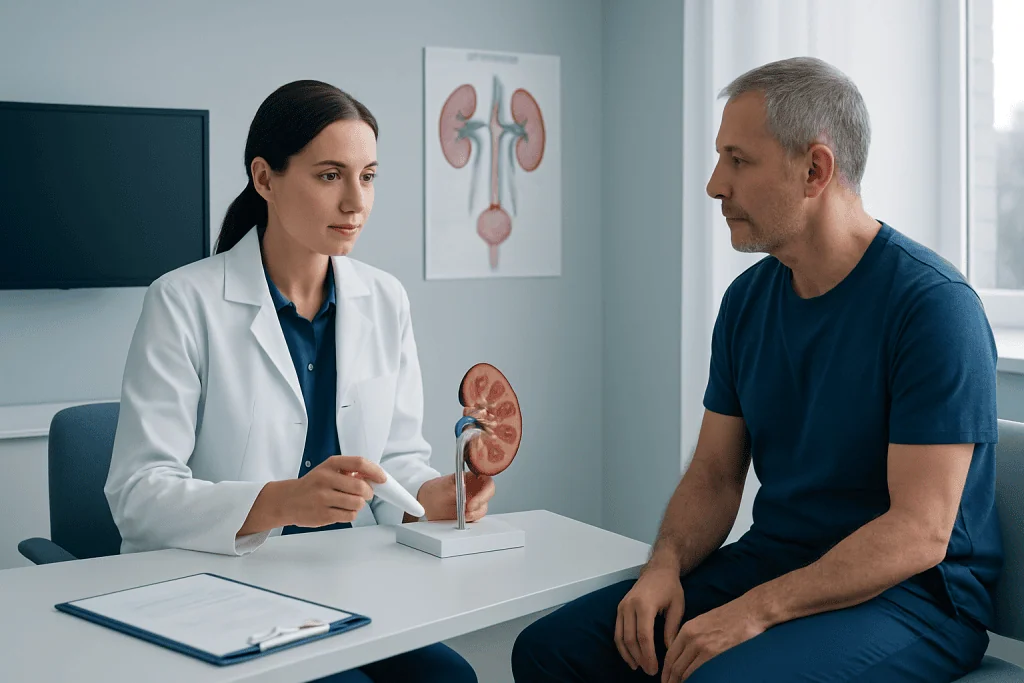
Preparation commonly includes blood and urine tests, a review of imaging, and instructions about fasting if sedation is planned. The clinician explains why the biopsy is being done, alternatives, potential risks, and what to expect afterward. Written consent is obtained, and a responsible adult may be needed to accompany the patient home, depending on local practice and whether sedation is used.
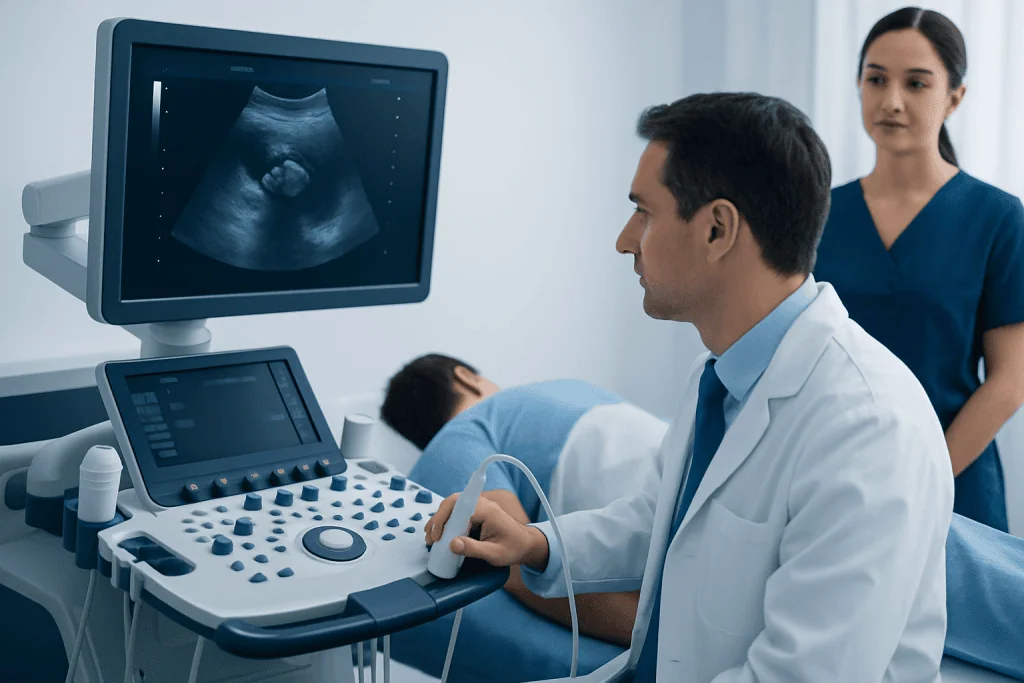
For a standard native-kidney biopsy, the patient usually lies face down with a support under the abdomen. A transplanted kidney is typically located in the lower abdomen, so the patient usually lies on their back. Ultrasound is used to locate the kidney and select the safest needle path. The skin is cleaned, sterile drapes are placed, and local anaesthetic is injected to numb the area. Some people also receive medication to help them relax.
Once the area is numb, the clinician makes a tiny skin opening and advances the biopsy needle while watching the image guidance. The needle makes a brief clicking sound as it collects one or more small tissue cores. Patients may be asked to hold their breath momentarily. Pressure and a dressing are applied afterward. The sampling part is usually short, although preparation, positioning, and post-procedure monitoring make the visit longer.
The tissue is sent to a pathology laboratory, where it may be examined by light microscopy, immunofluorescence, and electron microscopy. These complementary tests can reveal different patterns of kidney injury and may be important for reaching an accurate diagnosis.
Recovery timeline, benefits and possible risks
After the biopsy, the patient rests flat or in a supervised recovery area while staff monitor pulse, blood pressure, urine, and the biopsy site. Observation often lasts several hours, and some people may need overnight monitoring based on their medical history, the type of biopsy, symptoms, or local protocols. Drinking fluids may be encouraged when appropriate, and the team will advise when eating and walking can resume.
Mild tenderness or bruising near the needle site is common for a few days. A small amount of blood in the urine can occur shortly after the procedure, but it should improve. The main potential complication is bleeding around or from the kidney. Significant bleeding is uncommon, but it can occasionally require additional imaging, a procedure to stop bleeding, blood transfusion, or rarely surgery. Other uncommon risks include infection, injury to nearby structures, or an inadequate sample that needs repeat testing.
The key benefit is more precise information. A biopsy can distinguish conditions that may look similar on routine testing but require different care, such as immune-mediated inflammation versus chronic scarring. It may help clinicians decide whether monitoring, blood pressure management, immune-suppressing treatment, treatment of an underlying illness, or another approach is appropriate. Kidney care may also include evaluation for related conditions such as chronic kidney disease when relevant.
For international patients, Acibadem International’s multidisciplinary specialists and JCI-accredited hospitals can coordinate kidney biopsy assessment, pathology review, and treatment planning when a biopsy is clinically indicated.
How long should you rest after a kidney biopsy?
Most people are asked to rest in the hospital or clinic for several hours immediately after a kidney biopsy so the care team can monitor for bleeding. At home, many can return to light daily activities after one or two days if they feel well, but the exact plan depends on the biopsy type, kidney function, medicines, and whether any bleeding occurred.
Heavy lifting, strenuous exercise, running, contact sports, and physically demanding work are commonly avoided for about one to two weeks. The treating team’s instructions should take priority, as restrictions can be longer for some people. It is also important to ask when to restart anticoagulant or antiplatelet medicine; these should never be restarted or stopped without clinical guidance.
During recovery, patients should follow advice on fluids, pain relief, wound care, driving, and work. A clinician should be contacted promptly for increasingly severe flank or abdominal pain, dizziness or fainting, fever, difficulty passing urine, large blood clots in the urine, or visible blood in the urine that persists or returns after it had cleared.
What do kidney biopsy results show?
Results are interpreted alongside the person’s symptoms, kidney function, urine findings, imaging, medical history, and medications. A pathologist assesses the number and appearance of filtering units called glomeruli, as well as blood vessels, tubules, and supporting tissue. The report may describe inflammation, immune deposits, scarring, active injury, chronic damage, or another distinctive pattern.
Some preliminary information may be available within a few days, but complete results often take longer because specialized stains and electron microscopy require additional processing. The nephrologist or another responsible specialist discusses what the findings mean, whether they establish a diagnosis, and whether further tests are needed. A biopsy result is one part of a wider clinical assessment, not a result to interpret in isolation.
Treatment depends on the cause and severity of the kidney changes. It may include monitoring, managing blood pressure and diabetes, adjusting medicines, treating an infection or systemic illness, or considering medicines that control inflammation or an overactive immune response. If kidney function is severely affected, the care plan may also involve renal replacement planning or transplant services, tailored to the individual situation.
What percentage of kidney biopsies are cancer?
There is no single reliable percentage for all kidney biopsies because they are performed for different reasons. Most medical kidney biopsies are done to investigate kidney disease, such as protein in the urine, declining kidney function, or suspected inflammation; these are not primarily cancer investigations. In this setting, cancer is not usually the expected finding.
Biopsies performed specifically for a suspicious kidney mass are a separate group. The chance that a mass is cancer depends on its size, appearance on imaging, growth pattern, and the person’s overall clinical context. Some kidney masses are benign, and some are managed using imaging or surveillance rather than biopsy. A urologist and radiologist can explain whether biopsy would add useful information in an individual case.
If a biopsy identifies a tumour, pathology helps classify it and support next-step planning. Depending on the findings, evaluation may involve urology and oncology teams, including discussion of kidney cancer treatment when appropriate.
Is a kidney biopsy a major surgery? Is it very painful?
A standard kidney biopsy is generally not considered major surgery. It is usually a minimally invasive, image-guided needle procedure performed through a small skin opening rather than through a large incision. However, it is still an invasive test involving an organ with a rich blood supply, so careful screening, monitoring, and adherence to aftercare instructions are important.
The procedure should not be very painful because local anaesthetic numbs the skin and deeper tissues. People often feel a brief sting from the numbing injection, pressure during positioning, and a short clicking sensation when the biopsy needle collects the sample. Some experience mild soreness afterward, which usually improves over several days. The care team can recommend a suitable pain-relief option based on the person’s kidney health and current medicines.
Anxiety is understandable before any invasive test. Asking the team about the planned anaesthetic, whether sedation is available, how long observation will last, and what symptoms to watch for can make the experience more predictable. Patients should tell the team if they have had difficult procedures, strong anxiety, or a previous reaction to anaesthesia or contrast material.
When to seek medical care
Before a planned biopsy, patients should contact their clinical team if they develop fever, a urinary infection, new uncontrolled high blood pressure, pregnancy concerns, or changes in blood-thinning medicines. The procedure may need to be rescheduled or preparation adjusted to protect safety.
After a biopsy, urgent medical assessment is appropriate for heavy or persistent blood in the urine, blood clots, worsening back, side, or abdominal pain, fainting, severe weakness, shortness of breath, fever, chills, or inability to urinate. These symptoms do not always indicate a serious complication, but they should not be managed at home without advice.
Routine follow-up is also important to discuss pathology results and the care plan. Ongoing support may involve nephrology, urology, pathology, radiology, and other specialists depending on the reason for the biopsy and the findings.
Frequently asked questions
How long does a kidney biopsy procedure take?
The actual needle sampling often takes only a few minutes, but preparation, imaging guidance, anaesthetic, and monitoring mean the full visit is longer. Most patients remain under observation for several hours afterward, and some may need overnight monitoring depending on their circumstances.
How long should you rest after a kidney biopsy?
People usually rest under medical observation immediately after the procedure and take it easy at home for the next day or two. Heavy lifting, vigorous exercise, and strenuous work are commonly avoided for about one to two weeks, but the treating team should provide the individual timeline.
What percentage of kidney biopsies are cancer?
There is no meaningful single percentage because kidney biopsies are done for different reasons. Most biopsies performed for abnormal kidney function or urine findings assess kidney disease rather than cancer, while biopsies of kidney masses are a separate, selected clinical group.
Is a kidney biopsy a major surgery?
A usual percutaneous kidney biopsy is not major surgery. It is a minimally invasive procedure performed with a needle through the skin and guided by imaging, although it still requires careful preparation and monitoring because bleeding can occur.
Is a kidney biopsy very painful?
Local anaesthetic is used to numb the biopsy area, so severe pain is not expected. A person may feel the brief sting of the anaesthetic injection, pressure, or a clicking sensation during sampling, followed by mild soreness for a few days.
When will kidney biopsy results be ready?
Some information may be available within several days, but a full report can take one to several weeks. This is because kidney tissue may need multiple forms of microscopic examination, including special staining and electron microscopy.
References
- National Institute of Diabetes and Digestive and Kidney Diseases
- National Kidney Foundation
- Kidney Disease: Improving Global Outcomes
- American Society of Nephrology
- National Cancer Institute
This article is for general information only and is not a substitute for professional medical advice. Please consult a qualified doctor about your individual situation.
Oncology care in Turkey — second opinion and treatment plan
JCI-accredited · board-certified surgeons · reply within 24h
Check your numbers in seconds
BMI, calories, due date, blood pressure and 30+ more clinical calculators — free, instant, doctor-reviewed ranges.