Mallet Toe — Explained by Medical Evidence, Not Myths

Mallet toe affects the end joint of a toe, most often the second toe, causing the tip to bend downward. Tight or narrow shoes, foot structure, and muscle-tendon imbalance are common contributors.
Key Takeaways
- Mallet toe affects the end joint of a toe, most often the second toe, causing the tip to bend downward.
- Tight or narrow shoes, foot structure, and muscle-tendon imbalance are common contributors.
- Early treatment may help relieve pain and slow progression with shoe changes, pads, exercises, and orthotics.
- A fixed or painful deformity may require specialist evaluation and sometimes surgery.
- Persistent pain, corns, skin breakdown, or trouble walking are reasons to seek medical care.
Mallet toe is a toe deformity in which the joint closest to the toenail bends downward, making the tip of the toe curl into the ground or shoe. It is usually manageable, especially when identified early, and treatment ranges from footwear changes to surgery when the deformity becomes rigid or painful.
Overview: what mallet toe means
Mallet toe is a deformity of the small joint nearest the toenail, called the distal interphalangeal joint. In mallet toe, this end joint bends downward, so the toe tip points toward the floor. The condition most often affects the second toe, but it can also involve other lesser toes.
People sometimes confuse mallet toe with hammer toe or claw toe. The difference is mainly which joints are bent. In mallet toe, the bend is at the end joint only. In hammer toe, the middle joint is typically bent, while claw toe usually involves both the middle and end joints, often with additional changes at the base of the toe.
Mallet toe may begin as a flexible deformity, meaning the toe can still be straightened by hand. Over time, it can become rigid as soft tissues tighten and the joint stiffens. This is why early attention matters: addressing pressure and imbalance may reduce discomfort and help prevent progression.
Symptoms and how it may affect daily life
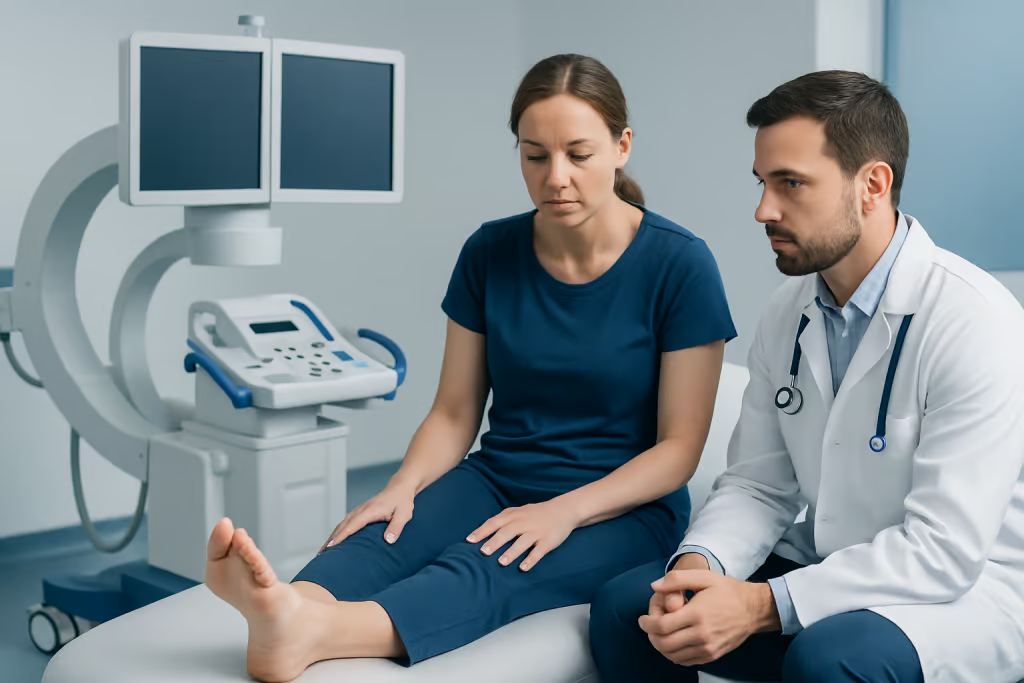
The most visible sign of mallet toe is a toe tip that curls downward. At first, this may be more of a cosmetic concern than a painful one. As friction increases inside shoes, however, symptoms can become more noticeable and interfere with walking, exercise, or standing for long periods.
Common symptoms include pain at the end of the toe, especially when wearing closed shoes; redness or swelling over the bent joint; and thickened skin such as a corn or callus where the toe rubs against footwear. Some people also notice nail irritation if the toe repeatedly presses against the front of the shoe.
If the deformity becomes rigid, the toe may feel stiff and difficult to move. Weight distribution in the foot can also change, sometimes leading to discomfort in the ball of the foot. Other forefoot problems may exist alongside mallet toe, including bunions or flatfoot, which can affect toe alignment and shoe fit.
- Toe tip points downward
- Pain or tenderness in shoes
- Corns, calluses, or skin irritation
- Stiffness or reduced toe movement
- Difficulty finding comfortable footwear
Why mallet toe happens
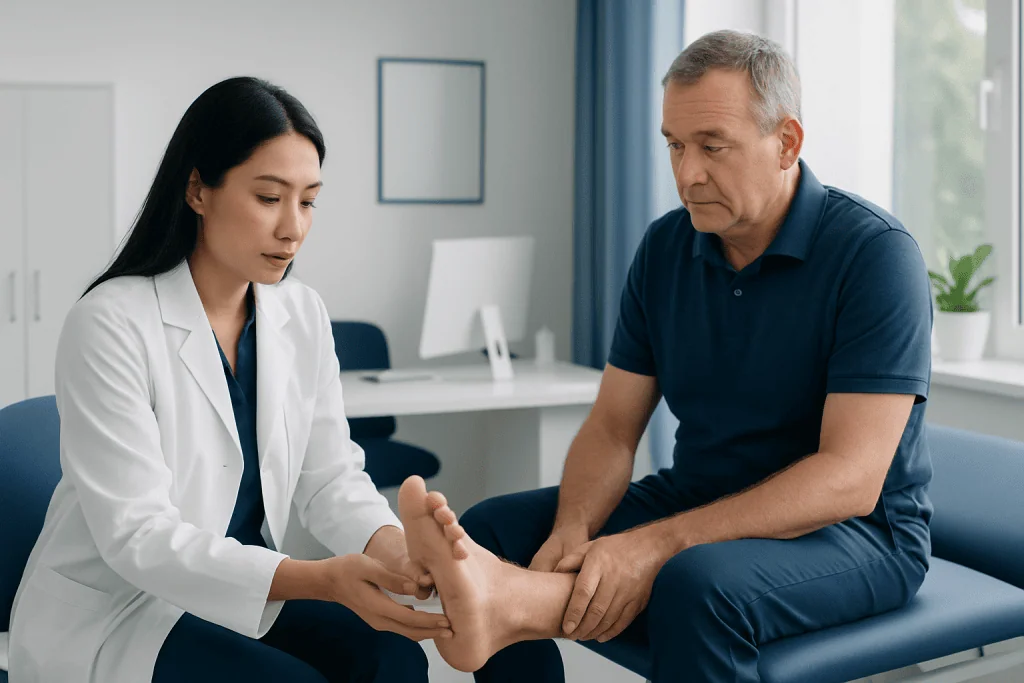
Mallet toe develops when the forces that normally keep a toe straight become unbalanced. Tendons and small muscles pull on the toe from different directions. If one pull becomes stronger, or if the toe is repeatedly pushed into a bent position, the end joint can gradually adopt that shape.
Footwear is a common factor. Shoes with a narrow toe box, high heels, or a short front section can crowd the toes and force them to curl. Repeated pressure over time may lead to soft-tissue tightening and joint changes. This does not mean shoes are always the only cause, but they often contribute.
Structural and medical factors may also play a role. A long second toe, high arches, previous toe injury, arthritis, and conditions that affect nerves or muscles can increase risk. Mallet toe may occur together with other toe or forefoot deformities, such as hallux valgus, because altered foot mechanics can change how pressure is distributed.
Risk often increases with age because joints may become less flexible and supportive tissues may weaken. Still, mallet toe can occur in adults of many ages, particularly in people whose work, activity, or shoe choices place repeated stress on the toes.
How doctors diagnose mallet toe
Diagnosis usually begins with a medical history and physical examination. A doctor asks about pain, shoe-related symptoms, past injuries, and whether the toe has become stiffer over time. The examination focuses on toe position, flexibility, skin changes, and areas of pressure under or around the foot.
An important part of the assessment is determining whether the deformity is flexible or rigid. A flexible toe can often be gently straightened during the exam, which may affect treatment choices. A rigid toe usually reflects more established tissue shortening or joint contracture and may respond less well to simple conservative measures.
X-rays are sometimes used, especially if there is significant pain, concern about arthritis, a prior injury, or planning for surgery. Imaging can show the alignment of the toe bones and help rule out other causes of pain. If symptoms suggest a broader foot problem, a specialist may also assess gait and overall foot structure.
When symptoms are persistent or the diagnosis is uncertain, referral to a foot and ankle specialist may be helpful. In some settings, care may involve evaluation by orthopedic teams experienced in forefoot problems, including orthopedics and traumatology.
Treatment options: from simple measures to surgery
Treatment depends on how painful the toe is, how long the deformity has been present, and whether it remains flexible. Many people start with conservative care. The first step is usually changing footwear: shoes with a wide, deep toe box can reduce rubbing and pressure on the bent joint. Soft padding, toe sleeves, and protective corn pads may also help.
Doctors may recommend stretching or toe exercises when the deformity is still flexible, although exercises do not always fully reverse the shape. Orthotic devices or shoe inserts can sometimes improve pressure distribution in the forefoot. If calluses are present, careful skin care and professional debridement may reduce discomfort.
When pain persists despite these measures, or when the deformity becomes fixed, surgery may be considered. The exact procedure depends on the joint involved and whether other toe problems are present. Surgical treatment may aim to release tight soft tissues, correct the toe position, or address the joint itself. In selected cases, a specialist may discuss procedures within foot surgery as part of a tailored plan.
Recovery varies according to the procedure performed and the person’s overall foot health. A doctor will usually advise on dressing care, protected walking, swelling control, and footwear during healing. Because treatment should fit the individual, it is best decided after a thorough clinical assessment rather than by self-diagnosis alone.
Prevention and self-care
Not every case of mallet toe can be prevented, but reducing repeated pressure on the toes is a practical place to start. Shoes should have enough width and depth in the toe box to allow the toes to lie flat without crowding. If the toe rubs at the front or top of the shoe, a different size or shape may be needed.
People who are prone to forefoot problems may benefit from avoiding prolonged use of high heels or very narrow shoes. Rotating footwear, using cushioned socks, and checking for pressure points after a new pair of shoes can also help. If a long second toe or another foot-shape issue affects fit, a specialist can advise on inserts or modifications.
Simple self-care may relieve mild symptoms. This can include protective pads, gentle stretching if advised by a clinician, and attention to corns or calluses. It is safer not to cut corns at home, especially for people with diabetes, poor circulation, or reduced sensation in the feet.
For individuals with recurrent pain or multiple foot deformities, broader assessment may be useful. Depending on the situation, a care plan may include rehabilitation guidance or shoe and support recommendations linked to physical therapy and rehabilitation after specialist review.
When to seek medical care
Medical care is appropriate if mallet toe is painful, getting worse, or making it hard to walk or wear regular shoes. A professional assessment is also important when there are recurring corns, skin breakdown, nail problems, or signs of infection such as increasing redness, warmth, or drainage.
People with diabetes, peripheral neuropathy, circulation problems, or inflammatory arthritis should seek advice sooner rather than later. In these situations, even small areas of rubbing can lead to more significant skin or foot complications. Prompt evaluation helps protect the skin and guide safer treatment choices.
If toe pain follows an injury, or if the toe suddenly changes shape, swelling and imaging may be needed to rule out fracture or other structural damage. Near the end of the care pathway, some patients may prefer treatment in a center with coordinated foot and ankle expertise. Acibadem International’s multidisciplinary specialists in JCI-accredited hospitals evaluate and treat mallet toe and related foot conditions for international patients.
Frequently asked questions
Is mallet toe the same as hammer toe?
No. Mallet toe affects the end joint of the toe, closest to the nail, while hammer toe usually affects the middle joint. The names are often used interchangeably in everyday conversation, but medically they describe different joint positions.
Can mallet toe go away without treatment?
A mild, flexible mallet toe may feel better with footwear changes and pressure relief, but the deformity does not always fully disappear on its own. If the toe continues to bend over time, it can become rigid and harder to treat conservatively.
What shoes are best for mallet toe?
Shoes with a wide, deep toe box are generally the most comfortable because they reduce pressure on the toe tip and top of the joint. Soft uppers and low heels may also help. The best shoe is one that allows the toes to rest naturally without crowding.
Does mallet toe always need surgery?
No. Many people improve with non-surgical measures such as better-fitting shoes, pads, and treatment of calluses. Surgery is usually considered when pain persists, the deformity is rigid, or daily activities remain limited despite conservative care.
Is mallet toe painful?
It can be, but not always at first. Pain often develops because the bent toe rubs against footwear or because thickened skin forms where pressure is repeated. Stiffness and discomfort may increase as the deformity becomes more fixed.
Who should see a doctor sooner for mallet toe?
People with diabetes, nerve problems, poor circulation, or immune-related conditions should seek medical advice earlier. These conditions can increase the risk of skin injury, infection, and delayed healing, even from minor toe rubbing.
References
- American Academy of Orthopaedic Surgeons
- American Orthopaedic Foot & Ankle Society
- National Institute of Arthritis and Musculoskeletal and Skin Diseases
- NHS
- Merck Manual Consumer Version
This article is for general information only and is not a substitute for professional medical advice. Please consult a qualified doctor about your individual situation.
Joint and spine care in Turkey — expert assessment & treatment
JCI-accredited · board-certified surgeons · reply within 24h

More from the Health Library



Related Specialists

Dr. Merve Albayrak Barı
Gynecology & Obstetrics
Dr. Ayşe Yemişçi
Dermatology
Dilara Çitoğlu
Physical Medicine & Rehabilitation
Dr. Sema Eryilmaz
Pediatric Endocrinology