Masked Facies: What Patients Need to Know

Masked facies means the face appears less expressive, even when a person feels normal emotions. It is a sign, not a disease itself, and often points to an underlying neurologic or movement disorder.
Key Takeaways
- Masked facies means the face appears less expressive, even when a person feels normal emotions.
- It is a sign, not a disease itself, and often points to an underlying neurologic or movement disorder.
- Parkinson’s disease is a common cause, but medications and other conditions can also contribute.
- Diagnosis focuses on the overall pattern of symptoms, neurologic examination, and medical history.
- Treatment aims to manage the underlying cause and may include medication changes, therapy, and supportive care.
Masked facies is a term for reduced facial expression, sometimes called facial masking or hypomimia. It is most often associated with Parkinson’s disease, but it can also appear with other neurologic conditions, certain medicines, or changes affecting facial movement.
Overview: what masked facies means
Masked facies is a visible reduction in spontaneous facial expression. A person may seem serious, tired, or emotionally distant even though they are feeling and understanding emotions normally. Clinicians may also use the term hypomimia to describe this change.
This happens when the small facial muscles move less often or less fully than expected. In everyday life, facial expression usually changes automatically during conversation, smiling, blinking, and reacting to emotions. With masked facies, these automatic movements can become less noticeable.
Masked facies is not a diagnosis on its own. Instead, it is a clinical sign that can occur in movement disorders, some neurologic diseases, and occasionally as a side effect of medications. Because facial expression plays a large role in communication, this symptom can affect social interactions and quality of life as much as physical comfort.
How it may look and feel in daily life
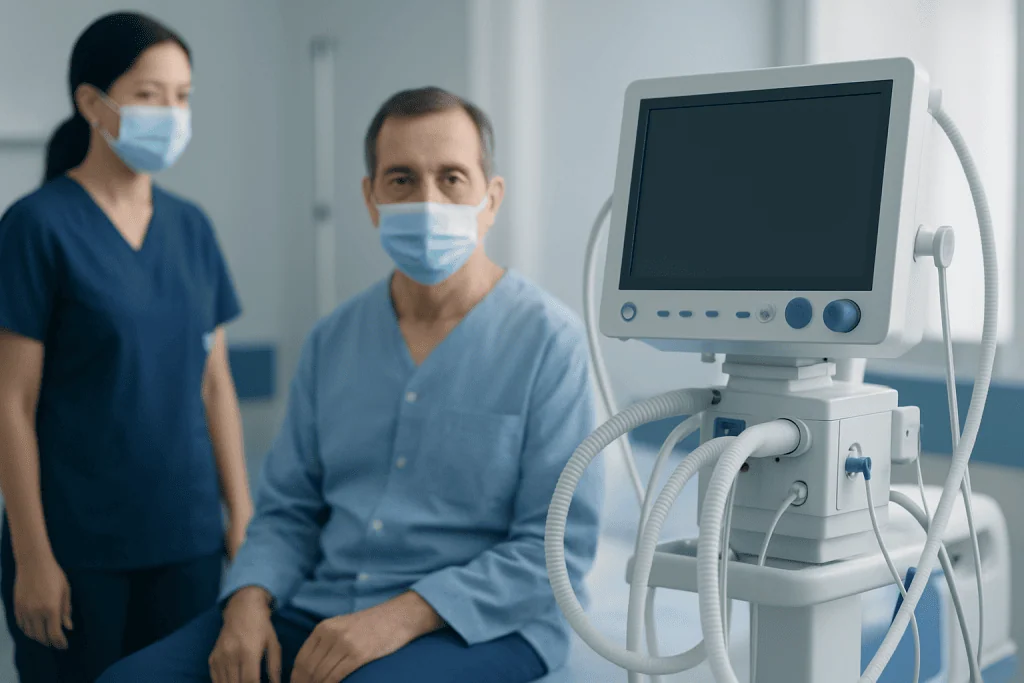
People with masked facies may have a face that looks unusually still, less animated, or less responsive during conversation. Family members may notice fewer spontaneous smiles, less eyebrow movement, a fixed gaze, or reduced blinking. The voice may also sound softer or more monotone in some cases, especially when a movement disorder is present.
The symptom can be misunderstood. Others may assume the person is sad, angry, uninterested, or detached when that is not true. This can be frustrating for patients, particularly when they feel mentally engaged but cannot easily show it through facial movement.
Masked facies may occur along with other changes such as:
- Slower body movements
- Small or cramped handwriting
- Stiffness in the arms, legs, or neck
- Tremor at rest
- Soft speech or reduced voice volume
- Difficulty swallowing or drooling in some cases
Not every person will have the same pattern. In mild cases, the change is subtle and only close contacts notice it. In more advanced cases, facial masking can become a prominent part of the person’s appearance and communication style.
Common causes and risk factors

The cause of masked facies depends on why facial movement is reduced. One of the most recognized causes is Parkinson’s disease, a neurologic condition that affects movement control. In Parkinson’s, the brain’s signaling systems for smooth, automatic movement become less effective, so the face may move less naturally. For readers who want context, this symptom is often discussed alongside Parkinson’s disease.
Other movement-related conditions can also cause similar facial masking. These may include atypical parkinsonian syndromes, such as progressive supranuclear palsy or multiple system atrophy. Some people with depression, catatonia, or certain neurodegenerative disorders may also appear less expressive, although the reason is not always the same as in Parkinson’s disease.
Medications are another important consideration. Drugs that block dopamine signaling, including some antipsychotic and anti-nausea medicines, can lead to drug-induced parkinsonism, which may include masked facies. This is why a careful medication review is an important part of assessment.
Risk factors depend on the underlying condition rather than masked facies itself. They may include older age, a personal or family history of movement disorders, exposure to dopamine-blocking medications, and the presence of other neurologic symptoms such as stiffness, slowed movement, or balance difficulty.
How doctors evaluate masked facies
Diagnosis begins with a detailed medical history and physical examination. A doctor will usually ask when the change in facial expression started, whether it is getting worse, and whether there are related symptoms such as tremor, stiffness, slow movement, changes in walking, swallowing problems, or mood changes. They will also review all prescription medicines, over-the-counter products, and supplements.
During the examination, the clinician observes both spontaneous expression and voluntary movement. They may watch blinking, smiling, speaking, and emotional reactions during conversation. A neurologic exam often includes testing muscle tone, gait, balance, coordination, eye movements, and fine motor skills to look for a broader movement disorder pattern.
There is no single test that confirms masked facies itself. Instead, tests are chosen to identify the likely cause. Depending on the situation, evaluation may include blood tests, brain imaging, or specialist assessment in neurology. When Parkinson’s disease or related disorders are suspected, referral to a movement disorder specialist can be especially helpful.
If the presentation suggests a broader neurologic issue, some patients may need advanced assessment through neurology evaluation or supportive imaging such as MRI scanning to rule out other causes of facial movement change.
Treatment and supportive care
Treatment for masked facies focuses on the underlying cause. If it is related to Parkinson’s disease or another movement disorder, improving overall motor control may also improve facial expression. Management often includes medications prescribed by a neurologist, rehabilitation strategies, and regular follow-up to monitor changes over time.
When medicines are contributing, a doctor may consider adjusting the dose or changing to an alternative if it is medically safe to do so. Patients should not stop or alter prescription medications on their own, especially psychiatric or neurologic medicines, because doing so can be unsafe.
Supportive therapies can also help. Speech and language therapy may improve communication, voice projection, and facial exercise strategies. In some cases, structured physical therapy and rehabilitation supports posture, movement, and overall function. If swallowing, drooling, or advanced movement symptoms are present, coordinated Parkinson’s disease treatment may be part of ongoing care.
Because facial masking can affect social confidence, practical coping tools matter. Patients may benefit from consciously using voice tone, eye contact, and verbal cues to express feelings. Family members often find it helpful to understand that the person’s emotional range may be intact even if facial signals are reduced.
Living with masked facies: communication and self-care
Self-care starts with understanding that masked facies is usually a physical communication change, not a loss of emotion or interest. Explaining this to close family, friends, and coworkers can reduce misunderstanding. Simple statements such as “my face may not always show how I feel” can make conversations easier and less stressful.
Daily habits can support comfort and communication. Good sleep, regular movement, hydration, and taking medicines as prescribed may help overall neurologic function. For people with known movement disorders, keeping follow-up appointments and reporting new symptoms early can help treatment stay effective.
Practical strategies may include:
- Speaking clearly and at a steady volume
- Using intentional gestures and posture during conversation
- Practicing facial and speech exercises recommended by a therapist
- Eating slowly and seeking help if swallowing becomes difficult
- Asking family members to focus on words and tone, not only facial expression
For international patients needing coordinated care, Acibadem International’s multidisciplinary specialists in JCI-accredited hospitals diagnose and treat movement-related conditions with personalized evaluation and rehabilitation planning.
When to seek medical care
Medical advice is appropriate any time a new reduction in facial expression appears without an obvious explanation. An evaluation is especially important if masked facies occurs together with tremor, stiffness, slowed movement, changes in walking, balance problems, swallowing difficulty, or a softer voice. These features can suggest an underlying neurologic cause that should be assessed by a qualified clinician.
Prompt medical attention is also needed if the symptom develops after starting a new medication, particularly one used for nausea, mood, or psychosis. A doctor can determine whether a drug side effect may be involved and whether a change in treatment is safe.
Urgent care should be sought if reduced facial movement appears suddenly, affects only one side of the face, or occurs with symptoms such as weakness, severe headache, confusion, or speech difficulty. In those situations, doctors may need to rule out acute conditions that require immediate treatment.
Frequently asked questions
Is masked facies the same as Parkinson’s disease?
No. Masked facies is a symptom or clinical sign, not a disease by itself. Parkinson’s disease is one common cause, but other neurologic conditions and some medications can also lead to reduced facial expression.
Can a person with masked facies still feel emotions normally?
Yes, often they can. The main issue is that the face may not show emotions as clearly as before. This can cause others to misread mood or interest, even when the person feels emotionally normal and engaged.
Does masked facies always mean a serious neurologic problem?
Not always, but it should be assessed if it is new, persistent, or associated with other symptoms. Sometimes the cause is medication-related rather than a progressive neurologic disease. A medical evaluation helps clarify the reason.
Can masked facies improve with treatment?
It can improve in some people, depending on the cause. Treating the underlying condition, adjusting medications when appropriate, and using speech or rehabilitation therapies may help facial movement and communication.
What doctor should evaluate masked facies?
A primary care doctor can start the evaluation, especially by reviewing symptoms and medications. If a movement disorder or other neurologic cause is suspected, a neurologist is usually the most appropriate specialist.
Is masked facies a problem only in older adults?
It is more often recognized in older adults because conditions like Parkinson’s disease become more common with age. However, medication side effects and some neurologic conditions can affect younger adults as well.
References
- National Institute of Neurological Disorders and Stroke
- National Institute on Aging
- Parkinson's Foundation
- American Academy of Neurology
- NHS
This article is for general information only and is not a substitute for professional medical advice. Please consult a qualified doctor about your individual situation.
Explore treatments in Turkey — costs, top hospitals & a free quote
JCI-accredited · board-certified surgeons · reply within 24h