Mental Health and Social Media in Adults: How to Recognize Harmful Patterns

Social media affects adults differently, and its impact depends on how, why, and how often it is used. Warning signs include compulsive checking, worsening mood, poor sleep, comparison, and difficulty disconnecting.
Key Takeaways
- Social media affects adults differently, and its impact depends on how, why, and how often it is used.
- Warning signs include compulsive checking, worsening mood, poor sleep, comparison, and difficulty disconnecting.
- Not all heavy use is harmful, but social media becomes a concern when it disrupts relationships, work, or mental well-being.
- Healthy changes such as setting limits, curating feeds, and protecting sleep can reduce negative effects.
- Professional support may help if social media use is linked with anxiety, depression, isolation, or loss of control.
Social media can help adults stay informed and connected, but it can also affect mood, sleep, self-esteem, and daily functioning. Recognizing harmful patterns early can help a person set healthier boundaries and seek support when needed.
Overview: How Social Media Can Affect Adult Mental Health
Social media is part of everyday life for many adults. It can support connection with friends and family, provide professional networking, offer entertainment, and create access to communities that may feel supportive and meaningful. For some people, it can even reduce loneliness by helping them stay in touch across distance or life changes.
At the same time, social media can influence mental health in less helpful ways. Constant exposure to curated images, upsetting news, online conflict, and repeated notifications may contribute to stress, comparison, sleep disruption, or emotional overload. The effect is not the same for everyone, and a person’s mental health, personality, life circumstances, and reasons for using social media all matter.
The main concern is not simply how many hours a person spends online. More important questions include whether social media leaves them feeling informed or drained, connected or isolated, calm or agitated, and whether it supports or interferes with daily life. When use begins to feel compulsive or consistently worsens well-being, it may be time to reassess habits.
Signs of Harmful Social Media Patterns

Harmful patterns usually develop gradually rather than appearing all at once. A person may notice that they reach for their phone automatically, feel uncomfortable when they cannot check updates, or keep scrolling longer than intended. Over time, this can create a cycle in which social media is used to cope with stress but actually increases it.
Common warning signs include noticeable mood changes during or after use. A person may feel more anxious, irritable, sad, restless, or dissatisfied with their own life after spending time online. Others may find that social media increases self-criticism, body image concerns, or fear of missing out.
Behavioral clues can also be important. Social media may be causing harm if it regularly interrupts sleep, work, exercise, meals, conversations, or time with loved ones. Some adults begin avoiding offline activities they once enjoyed, while others repeatedly check platforms during meetings, while driving, or in other situations where attention should be elsewhere.
- Checking platforms first thing in the morning and last thing at night
- Feeling tense, low, or inadequate after scrolling
- Comparing appearance, success, relationships, or lifestyle with others
- Difficulty stopping even when the experience is no longer enjoyable
- Using social media to avoid stress, loneliness, or uncomfortable emotions
- Reduced concentration, productivity, or real-life social engagement
Why Social Media Can Become Unhealthy
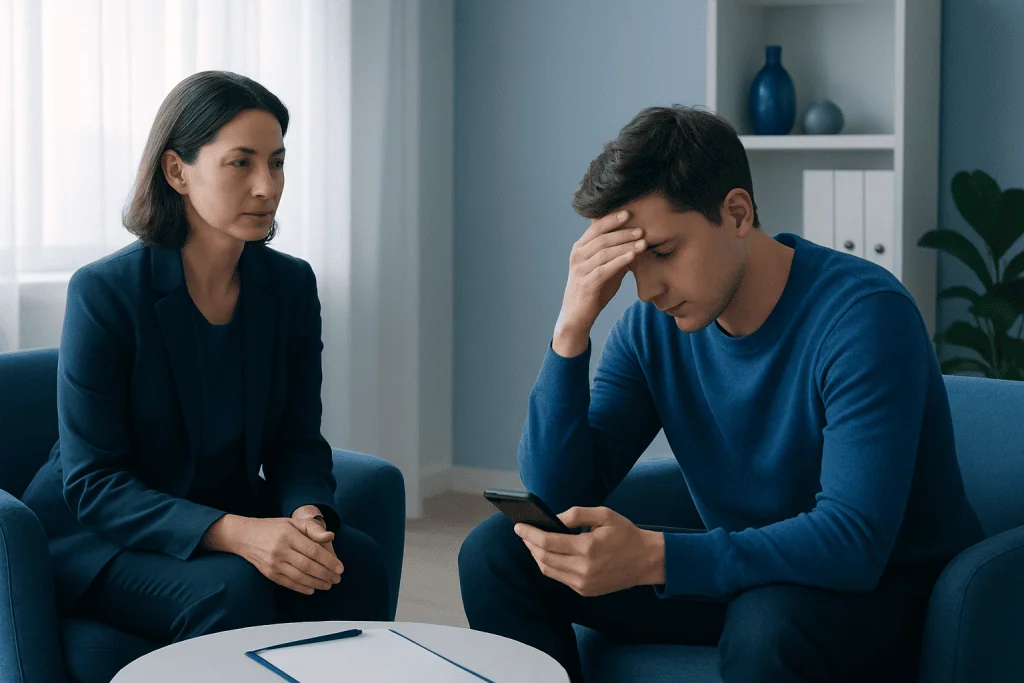
Several features of social media can make unhealthy patterns more likely. Platforms are designed to keep attention through endless feeds, personalized content, notifications, and frequent rewards such as likes, comments, and new posts. These features can encourage repeated checking and make it harder to stop at a planned time.
Comparison is another major factor. People often share highlights rather than ordinary struggles, which can create an unrealistic sense that others are happier, more successful, more attractive, or more socially fulfilled. Repeated comparison may affect self-esteem and increase dissatisfaction, especially during already stressful periods.
Emotional exposure also matters. Doomscrolling, online arguments, harassment, misinformation, and distressing world events can increase feelings of worry or helplessness. For adults who already live with anxiety, depression, trauma, loneliness, or perfectionism, social media may intensify symptoms rather than simply reflect them.
Risk can also rise when social media replaces basic self-care. If a person stays awake late scrolling, skips exercise, withdraws from supportive relationships, or spends less time on hobbies and rest, the negative mental health effects may become more noticeable. In many cases, the issue is a combination of platform design, personal vulnerability, and lifestyle imbalance.
Symptoms and Mental Health Effects to Watch For
The emotional effects of harmful social media use can vary widely. Some adults mainly experience anxiety, including nervousness, tension, racing thoughts, or a strong urge to keep checking for updates. Others may notice sadness, emptiness, low motivation, or increased loneliness despite being frequently online.
Sleep problems are especially common. Late-night screen use, emotionally stimulating content, and constant notifications can make it harder to fall asleep or stay asleep. Poor sleep can then worsen mood, concentration, and resilience during the day, creating a cycle that is easy to miss.
Social media may also influence self-image and relationships. A person might become more self-conscious about appearance, status, achievements, or social life. They may feel excluded when seeing gatherings they were not part of, or they may become less present in face-to-face interactions because attention is drawn back to the phone.
These effects do not always mean a mental health disorder is present. However, if symptoms are persistent, distressing, or begin to interfere with work, home life, or personal relationships, a professional assessment may be helpful. Social media can be both a contributing factor and a signal that a person may be struggling with broader concerns such as depression or anxiety disorders.
How Harmful Patterns Are Recognized and Assessed
There is no single medical test for unhealthy social media use. Recognition usually starts with self-observation or concerns raised by a partner, friend, family member, or healthcare professional. A doctor or mental health specialist may ask about screen habits, sleep, mood, concentration, work performance, and relationships to understand whether social media is playing a harmful role.
Keeping a simple record can be useful. Tracking when social media is used, for how long, what feelings come before and after, and which apps have the strongest effect can reveal patterns that are easy to overlook. Some people discover that certain types of content, such as appearance-focused posts or conflict-heavy comment sections, affect them more than others.
Assessment also considers context. Social media use may increase during stressful life events, grief, illness, isolation, or work pressure. In these situations, the goal is not to judge screen time alone but to understand what need the person is trying to meet and whether the current habit is helping or worsening that need.
If symptoms suggest an underlying mental health condition, a clinician may recommend further evaluation. In some cases, treatment focuses less on the apps themselves and more on the anxiety, low mood, compulsive behaviors, or stress that make unhealthy use more likely.
Treatment Options and Practical Ways to Regain Balance
Support begins with realistic, compassionate changes rather than strict self-criticism. Many adults benefit from setting app limits, turning off nonessential notifications, removing phones from the bedroom, or choosing specific times to check social media instead of responding to every prompt. Small changes can lower the sense of constant urgency.
It can also help to curate the online environment. Unfollowing accounts that trigger comparison, distress, or conflict and choosing more informative, supportive, or calming content may improve the overall experience. Replacing passive scrolling with more intentional use, such as messaging a friend or joining a meaningful community, can make online time feel healthier.
When social media is tied to anxiety, depression, loneliness, or loss of control, professional mental health care may be helpful. Approaches such as psychotherapy can help a person understand emotional triggers, build coping skills, improve self-esteem, and develop healthier routines. If a clinician identifies a related condition, treatment may also include broader psychiatric care or structured cognitive behavioral therapy.
Near the end of the care journey, some people benefit from a more comprehensive plan that includes sleep support, stress management, and lifestyle counseling. Acibadem International’s multidisciplinary specialists in JCI-accredited hospitals evaluate and treat mental health concerns for international patients when social media habits are part of a wider emotional health picture.
Prevention, Self-Care, and When to Seek Professional Help
Prevention focuses on keeping social media in proportion to the rest of life. Helpful habits include maintaining regular sleep, exercise, meals, work breaks, and in-person relationships. A person may find it useful to create phone-free times during meals, before bed, during conversations, and during focused work.
Mindful use is another protective strategy. Before opening an app, it can help to ask, “Why am I going on now?” If the answer is boredom, stress, loneliness, or avoidance, another activity such as a walk, a short breathing exercise, journaling, or contacting a trusted person may be more restorative.
Professional help is worth considering if social media use feels out of control, repeatedly worsens mood, or contributes to conflict at home or work. Care is also important if there are signs of depression, severe anxiety, panic, social withdrawal, self-harm thoughts, or major sleep disruption. A qualified doctor or mental health professional can help identify what is happening and recommend appropriate support.
Seeking help is not a sign of weakness or failure. Social media is built to capture attention, and many adults need support to create healthier boundaries. Early action can improve emotional well-being, relationships, concentration, and overall quality of life.
Frequently asked questions
Can social media really affect adult mental health?
Yes. Social media can influence mood, stress, sleep, self-esteem, and feelings of connection or isolation. Its effects depend on how a person uses it, what content they see, and whether it supports or disrupts everyday life.
How can someone tell the difference between normal use and a harmful pattern?
A harmful pattern is more likely when social media regularly causes distress or interferes with sleep, work, relationships, or daily responsibilities. Warning signs include compulsive checking, feeling worse after use, and struggling to stop even when the experience is no longer helpful.
Does using social media a lot always mean there is a problem?
No. High use alone does not always mean harm, especially if the person uses social media intentionally for work, learning, or meaningful connection. The key issue is whether it has a negative effect on mental health or daily functioning.
Can social media make anxiety or depression worse?
It can. Constant comparison, distressing news, online conflict, and disrupted sleep may intensify existing anxiety or depression in some adults. It can also become a way of avoiding difficult feelings, which may delay healthier coping.
What are some simple ways to build healthier social media habits?
Helpful steps include turning off nonessential notifications, avoiding screens before bed, setting time limits, and unfollowing content that triggers stress or comparison. Replacing passive scrolling with intentional communication or offline activities can also make a difference.
When should a person seek professional help?
Professional support is a good idea if social media use feels hard to control, consistently affects mood, or causes problems in relationships, work, or sleep. Immediate help is especially important if there are thoughts of self-harm, severe depression, or overwhelming anxiety.
References
- World Health Organization
- National Institute of Mental Health
- American Psychiatric Association
- Centers for Disease Control and Prevention
- Mayo Clinic
This article is for general information only and is not a substitute for professional medical advice. Please consult a qualified doctor about your individual situation.
Explore treatments in Turkey — costs, top hospitals & a free quote
JCI-accredited · board-certified surgeons · reply within 24h
Add us as a Preferred Source to see more of our trusted health content across Google Search, AI Overviews and Discover.