Minor Shingles Rash Pictures Explained: Common Triggers and Red Flags
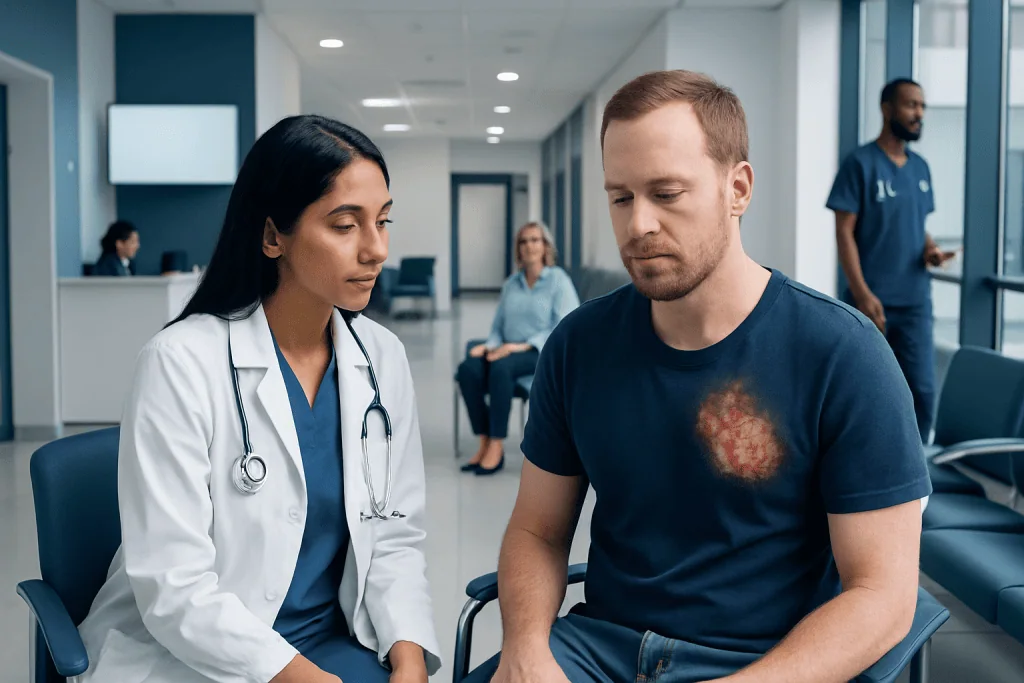
A minor shingles rash often appears as a small patch or stripe of blisters on one side of the body or face. Pain, burning, tingling, or itching may start before the skin changes are visible.
Key Takeaways
- A minor shingles rash often appears as a small patch or stripe of blisters on one side of the body or face.
- Pain, burning, tingling, or itching may start before the skin changes are visible.
- A mild-looking rash can still cause nerve pain and should not be ignored.
- Urgent evaluation is important if the rash affects the eye, face, ear, or a person with a weakened immune system.
- Shingles can resemble other rashes, so diagnosis is based on both appearance and symptoms.
Minor shingles rash pictures typically show a small, one-sided cluster or band of red spots and fluid-filled blisters, often with burning, tingling, or pain before the rash appears. Even when the rash looks mild, shingles can still need prompt medical attention because early treatment may reduce discomfort and lower the risk of complications.
What minor shingles rash pictures usually show
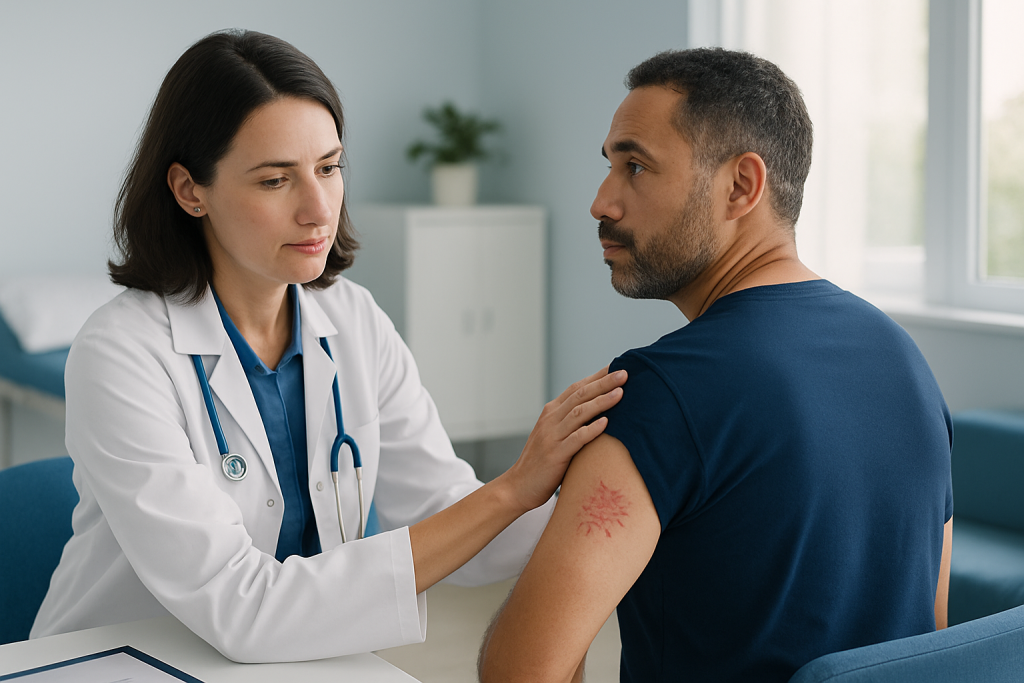
When people search for minor shingles rash pictures, they are usually trying to decide whether a small, localized rash could be shingles rather than a simple skin irritation. In many mild cases, the rash appears as a narrow patch or short band of red skin with grouped blisters on only one side of the body. Common areas include the chest, back, waist, neck, or face.
The appearance often changes over several days. It may begin with redness or tiny raised spots, then form small fluid-filled blisters that can look similar to chickenpox but stay in a more limited area. The blisters later dry, crust, and gradually heal. In a minor case, the area may be small, but the discomfort can still be more noticeable than the rash itself.
One feature that helps distinguish shingles from many other rashes is its one-sided pattern. The rash usually follows the path of a single nerve, called a dermatome, and does not cross the body’s midline. People may notice that it wraps around part of the trunk like a stripe, or forms a compact cluster on the forehead, scalp, or elsewhere.
Pictures can be helpful, but they do not replace a clinical assessment. A rash that looks mild in a photo may be more painful, more widespread, or in a riskier location in real life. Shingles is related to the same virus that causes chickenpox, and it is best evaluated promptly if symptoms suggest it.
Early symptoms and how a mild rash can feel
Shingles does not always begin with visible blisters. In the early stage, a person may feel burning, tingling, stabbing pain, itching, or unusual skin sensitivity in one limited area. Some describe it as sunburn-like tenderness or a deep nerve pain that seems out of proportion to the skin changes.
These sensations can start one to several days before the rash appears. A person may also feel tired, mildly unwell, or have a headache, although many mild cases do not cause major general symptoms. Once the rash develops, the area may become painful to touch, and clothing may feel irritating against the skin.
Even a small rash can cause significant discomfort because shingles affects nerves as well as skin. That is why a “minor” appearance does not always mean a minor illness. Some people have only a few blisters but still develop lingering nerve pain after the rash fades.
- Burning or tingling on one side of the body
- Localized pain before the rash starts
- Clusters of small blisters on a red base
- Itching, tenderness, or skin sensitivity
- Crusting over within about 7 to 10 days
Common triggers and who is more likely to get shingles
Shingles happens when the varicella-zoster virus, which stays inactive in nerve tissue after earlier chickenpox infection, becomes active again. The exact reason this reactivation happens is not always clear, but it is more common when the immune system is less able to keep the virus suppressed.
Age is one of the best-known risk factors. Shingles becomes more common in older adults, but it can occur at any age in people who have had chickenpox. It may also develop in people whose immune systems are weakened by illness, cancer treatment, certain medications, or organ transplantation.
Stress, recent illness, poor sleep, and physical strain are often discussed as possible triggers, but they are not the sole cause. In many cases, there is no obvious trigger at all. What matters most is understanding that shingles is a viral nerve rash, not simply a reaction to a skin product, heat, or food.
People looking at minor shingles rash pictures sometimes assume that only severe, widespread cases count as shingles. In reality, mild or localized rashes are common. However, if there is uncertainty, a clinician may also consider other conditions such as contact dermatitis, insect bites, herpes simplex, eczema, or cellulitis depending on the appearance and symptoms.
How doctors tell shingles from similar-looking rashes
Doctors usually diagnose shingles based on the pattern of symptoms and the appearance of the rash. A one-sided, painful cluster of blisters in a stripe-like distribution is strongly suggestive. The history of burning or tingling before the rash is another helpful clue.
In some cases, diagnosis is less straightforward. Very early shingles may look like a few red spots, and later stages may resemble crusted eczema or healing bites. On the face, scalp, or around the eye, the rash may be mistaken for other inflammatory or infectious conditions. If needed, a doctor may take a sample from a blister for laboratory testing.
Pictures found online can support recognition, but they cannot confirm whether a rash is shingles or rule out another diagnosis. This matters because some look-alike conditions need different treatment, and antiviral medicines for shingles are most helpful when started early. If nerve pain is prominent, symptoms may also overlap with other nerve-related conditions that need medical review.
If there is concern about the eye, ear, or nervous system, the doctor may recommend additional specialist assessment. Depending on the symptoms, this can include an eye examination, neurological evaluation, or tests to check for complications.
Treatment options for a mild shingles rash
Treatment depends on the person’s age, overall health, how long symptoms have been present, and where the rash is located. Antiviral medicines are commonly used, especially when shingles is diagnosed early. They may help shorten the illness and reduce the chance of complications, particularly if started within the first few days after the rash appears.
Pain relief is also an important part of care. Some people need only simple measures such as cool compresses, loose clothing, rest, and over-the-counter pain medicine if appropriate for them. Others may need prescription treatment if the nerve pain is more intense. The skin should be kept clean and dry, and scratching should be avoided to reduce irritation and secondary infection.
When shingles affects the face, eye region, or ear, treatment may be more urgent and sometimes more specialized. Eye involvement can threaten vision, so rapid assessment matters. In some situations, a doctor may advise specialist care such as ophthalmology evaluation or broader management through neurology care if nerve-related symptoms are prominent.
For patients who need coordinated assessment, Acibadem International’s multidisciplinary specialists and JCI-accredited hospitals diagnose and treat shingles-related complications for international patients. The main goal in any setting is timely diagnosis, symptom control, and protection against avoidable complications.
Self-care, prevention, and reducing spread
At home, a person with shingles can support healing by resting, staying hydrated, and protecting the rash from friction. Cool, damp compresses may soothe the skin. Loose cotton clothing is often more comfortable than tight or rough fabrics. It is best not to pick at blisters or crusts.
Until the blisters have dried and crusted over, the virus can spread through direct contact with the fluid and cause chickenpox in someone who has never had chickenpox or has not been vaccinated. Because of this, the rash should be covered when possible, hands should be washed often, and close contact should be limited with newborns, pregnant people who are not immune, and anyone with a weakened immune system.
Vaccination is the most effective way to lower the risk of shingles and its complications in eligible adults. A clinician can advise who should receive the shingles vaccine based on age, health status, and local guidance. Vaccination does not treat an active rash, but it helps prevent future episodes and reduces the chance of prolonged nerve pain.
People who experience lingering pain after the rash clears may need follow-up care. Persistent nerve pain is a recognized complication of shingles and should be discussed with a doctor rather than managed indefinitely at home.
When to seek medical care
Medical care should be sought promptly if a rash looks like shingles, even when it seems small. Early treatment can be most useful in the first 72 hours after the rash begins, and a clinician can help confirm whether the rash is truly shingles or another condition.
Urgent assessment is especially important if the rash is near the eye, on the eyelid, forehead, nose, inside the ear, or on the face. These locations may be linked with complications involving vision, hearing, balance, or facial nerves. People who are pregnant, older, or immunocompromised should also contact a doctor early.
- Severe pain or rapidly worsening rash
- Eye redness, eye pain, blurred vision, or light sensitivity
- Facial weakness, ear pain, or dizziness
- Fever, widespread rash, or signs of bacterial skin infection
- Shingles symptoms in someone receiving chemotherapy or immune-suppressing treatment
If the rash is unclear and there is concern about other infections or skin disease, further evaluation may be needed. In more complex cases, clinicians may involve specialists in dermatology or infectious diseases to guide diagnosis and treatment safely.
Frequently asked questions
Can shingles be mild and still be shingles?
Yes. Some people develop only a small cluster or short band of blisters, but the rash can still be shingles. The amount of visible rash does not always match the level of nerve pain or the risk of complications.
What does a minor shingles rash look like at first?
It may start as localized redness, small bumps, or a few grouped blisters on one side of the body or face. Many people notice burning, tingling, or pain before the skin changes become obvious.
How can someone tell shingles from a simple skin rash?
Shingles often has a one-sided pattern and tends to follow a narrow strip of skin served by a nerve. Pain, tingling, or sensitivity before the rash appears also makes shingles more likely, but a doctor may still need to examine it.
Is shingles contagious?
Shingles itself is not passed from one person to another in the same way as a cold. However, fluid from the blisters can spread the varicella-zoster virus and cause chickenpox in someone who is not immune.
Should a mild shingles rash still be treated?
Often, yes. A clinician may recommend antiviral treatment, especially if the rash is recent, painful, on the face, or the person has a weakened immune system. Early treatment may help shorten symptoms and reduce complications.
When is shingles an emergency?
It needs urgent attention if it affects the eye, causes vision changes, involves the ear with dizziness or facial weakness, or occurs in someone who is immunocompromised. Severe pain, widespread rash, or signs of secondary infection also need prompt medical review.
References
- Centers for Disease Control and Prevention
- National Institute on Aging
- American Academy of Dermatology
- National Health Service
- Mayo Clinic
This article is for general information only and is not a substitute for professional medical advice. Please consult a qualified doctor about your individual situation.
Shingles in Turkey — costs, top hospitals & a free quote
JCI-accredited · board-certified surgeons · reply within 24h
Add us as a Preferred Source to see more of our trusted health content across Google Search, AI Overviews and Discover.