Quick answer
Shingles is a viral infection caused by reactivation of the chickenpox virus, typically producing a painful, blistering rash and sometimes nerve-related pain that can persist after the skin heals. At Acibadem in Turkey, evaluation focuses on confirming the diagnosis, easing symptoms, and helping prevent complications through timely medical treatment and supportive care.
What is shingles?
Shingles is a viral infection that causes a painful rash, most often appearing as a stripe or band of blisters on one side of the body or face. The medical name for shingles is herpes zoster. It is caused by the varicella-zoster virus, which is the same virus that causes chickenpox. After a person recovers from chickenpox, the virus does not leave the body. Instead, it stays inactive, or dormant, in nerve tissue near the spinal cord and brain. Years or even decades later, the virus can reactivate and travel along nerve pathways to the skin, producing the rash and pain known as shingles.
Anyone who has had chickenpox can develop shingles, and this includes most adults who grew up before chickenpox vaccination became widespread. The condition is much more common in people over the age of 50, and the risk continues to rise with age. People whose immune systems are weakened, for example by certain illnesses or medications, are also at higher risk. Shingles itself is not passed directly from one person to another. However, a person with an active shingles rash can pass the varicella-zoster virus to someone who has never had chickenpox or the chickenpox vaccine, and that person would then develop chickenpox, not shingles.
Most people who develop shingles have only one episode in their lifetime, although it is possible to have shingles more than once. Understanding what is shingles, how it develops, and when to seek care can help patients get treatment early, which often shortens the illness and reduces the risk of complications.
Symptoms of shingles
Shingles symptoms usually develop in stages, and the early signs can be easy to mistake for other problems. Many people feel pain, burning, tingling, or unusual sensitivity in one area of skin before any rash appears. This early stage, sometimes called the prodrome, may last several days.
Common shingles symptoms include:
- Pain, burning, or tingling in a band of skin on one side of the body, often the chest, back, abdomen, or face
- Sensitivity to touch in the affected area, where even light contact with clothing can be uncomfortable
- A red rash that appears a few days after the pain begins, typically in a stripe following the path of a nerve
- Fluid-filled blisters that break open and then crust over
- Itching in or around the rash
- Fever, headache, chills, or fatigue in some people, especially early in the illness
A key feature of shingles is that the rash almost always affects only one side of the body. This is because the virus reactivates within a single nerve root, and the rash follows the area of skin supplied by that nerve, an area doctors call a dermatome. The blisters usually scab over within seven to ten days, and the rash generally clears within two to four weeks, although this varies from person to person.
Symptoms can differ depending on where the virus reactivates. When shingles affects the nerve serving the eye and forehead, a condition called herpes zoster ophthalmicus, it can cause eye redness, pain, swelling, and vision changes, and it requires urgent medical attention because it can threaten sight. When the virus affects a nerve near the ear, a condition sometimes called Ramsay Hunt syndrome, it can cause ear pain, a rash in or around the ear, hearing changes, dizziness, and weakness of the facial muscles on one side. In some people, particularly those with weakened immune systems, the rash may be more widespread or more severe.
The most common lasting complication of shingles is postherpetic neuralgia, which means nerve pain that continues after the rash has healed. This pain can persist for months and, in some cases, longer. It is more common in older adults and in people whose initial pain or rash was severe.
Causes and risk factors
The direct cause of shingles is reactivation of the varicella-zoster virus. After a childhood or adult episode of chickenpox, the virus remains hidden in nerve cells in a resting state. The immune system usually keeps it under control. When immune defenses weaken, whether because of aging, illness, stress, or medication, the virus can become active again. Once reactivated, it multiplies and moves along the nerve to the skin, causing inflammation of the nerve and the characteristic painful rash. This process explains most shingles causes, and it also explains why only people who have previously been infected with the varicella-zoster virus can develop shingles.
Factors that increase the risk of developing shingles include:
- Age over 50: the immune system’s control over the dormant virus tends to weaken with age, and both the risk of shingles and the risk of complications rise in older adults
- Weakened immune system: conditions such as HIV infection or certain cancers, and treatments such as chemotherapy, long-term corticosteroids, or medications taken after organ transplantation, can allow the virus to reactivate
- Previous chickenpox infection: this is a requirement, since shingles can only occur in someone who carries the dormant virus
- Significant physical or emotional stress: in some cases, major stress or serious illness appears to precede an episode, although the connection is not fully understood
- Recent surgery or trauma: in some people, physical stress on the body may contribute to reactivation
It is important to repeat that shingles is not caught from another person with shingles. However, the fluid inside the blisters contains the virus. Someone who has never had chickenpox or the chickenpox vaccine can catch the virus through direct contact with the open blisters and develop chickenpox as a result. For this reason, people with active shingles are usually advised to keep the rash covered, avoid touching or scratching it, wash their hands often, and avoid close contact with pregnant women who have not had chickenpox, newborns, and people with weakened immune systems until the blisters have crusted over.
Vaccination is a recognized way to reduce risk. A shingles vaccine is recommended in many countries for adults over a certain age and for some people with weakened immune systems. Your doctor can advise whether vaccination is appropriate for you based on your age, health history, and local guidelines.
Diagnosis
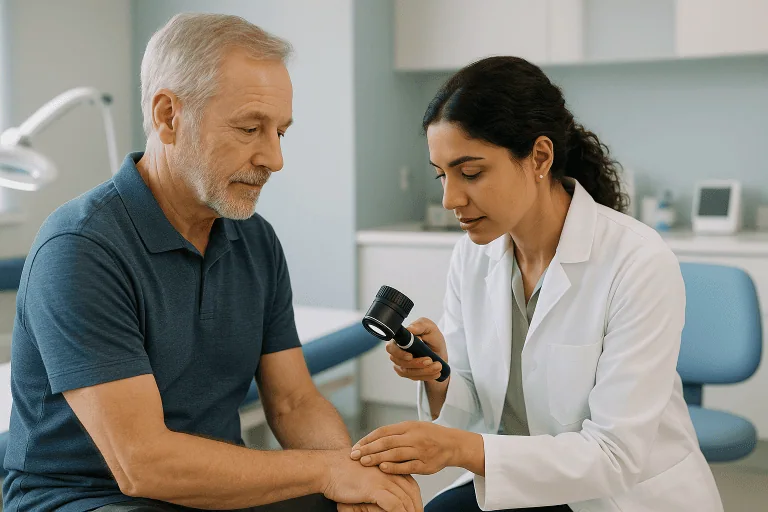
In most cases, shingles diagnosis is clinical, meaning doctors identify the condition by examining the rash and asking about symptoms rather than by ordering tests. The combination of pain on one side of the body followed by a band-like rash of blisters along a single dermatome is distinctive, and an experienced physician can often confirm shingles from the history and physical examination alone.
During the visit, the doctor will typically ask:
- When the pain or unusual skin sensation began and where it is located
- When the rash appeared and how it has changed
- Whether you have had chickenpox or the chickenpox vaccine in the past
- Whether you have any conditions or take any medications that weaken the immune system
- Whether you have symptoms affecting the eye, ear, or face
When the diagnosis is uncertain, for example if the rash looks unusual, appears in more than one area, or occurs in a person with a weakened immune system, laboratory tests may be used. The most common is a polymerase chain reaction (PCR) test, which detects the genetic material of the varicella-zoster virus in a sample of fluid or cells taken by gently swabbing a blister. PCR is sensitive and can confirm the virus even when the rash is atypical. Older methods, such as viral culture or direct fluorescent antibody testing, are used less often. Blood tests that look for antibodies to the virus are generally less helpful for diagnosing an active episode, because most adults already carry antibodies from past chickenpox infection.
Imaging studies such as X-rays or scans are not needed to diagnose shingles itself. They may occasionally be used if a doctor needs to rule out other causes of pain, since the early pain of shingles, before the rash appears, can sometimes be mistaken for heart, lung, kidney, or spine problems depending on its location. If shingles affects the eye area, the doctor will usually refer the patient urgently to an eye specialist, an ophthalmologist, for a detailed eye examination.
Treatment options
There is no treatment that removes the varicella-zoster virus from the body, but shingles treatment can shorten the illness, ease pain, and lower the risk of complications. Treatment works best when it is started early, ideally within 72 hours of the rash appearing, so prompt medical evaluation is important. An overview of how this condition is managed is available on the shingles treatment page, and the condition is commonly evaluated and managed within a dermatology department, often together with other specialists when the eye, ear, or nerves are significantly involved.
Antiviral medication
Antiviral drugs are the cornerstone of shingles treatment. Medicines such as acyclovir, valacyclovir, and famciclovir slow the multiplication of the virus. When started early, they can help the rash heal faster, reduce the severity of pain, and may lower the risk of lasting nerve pain. Antivirals are usually taken by mouth for about a week, although people with severe disease or weakened immune systems may need treatment given through a vein in the hospital. Your doctor will choose the medication and duration based on your overall health and the severity of the episode.
Pain management
Pain control is a central part of care, because shingles pain can be intense. Options vary with the severity of pain and may include:
- Over-the-counter pain relievers, such as acetaminophen or anti-inflammatory drugs, for milder pain
- Prescription pain medications for short periods when pain is severe
- Medicines that calm nerve pain, such as gabapentin or pregabalin, and certain antidepressants that are also effective for nerve pain, particularly when pain persists after the rash heals
- Topical treatments, such as lidocaine patches or creams applied to healed skin, for localized ongoing pain
- Nerve block injections, performed by pain specialists in selected cases of severe or persistent pain
Skin care and supportive measures
Simple home measures often ease discomfort while the rash heals. Cool, moist compresses on the rash, calamine lotion, loose cotton clothing, and keeping the area clean and dry can all help. Scratching should be avoided because it can lead to bacterial infection of the skin and scarring. If the blisters become increasingly red, warm, or filled with pus, a doctor should evaluate the area, as antibiotics may be needed for a secondary skin infection.
Watchful waiting and follow-up
In mild cases, particularly in younger, otherwise healthy people who present after the window when antivirals are most useful, a doctor may recommend supportive care and monitoring rather than antiviral medication. This decision depends on individual circumstances and should be made with a physician. Follow-up is important if pain continues after the rash heals, since early treatment of postherpetic neuralgia may improve comfort. Surgery is not a treatment for shingles itself; the condition is managed with medication and supportive care.
Special situations
Shingles affecting the eye is treated urgently with antiviral medication and specialist eye care to protect vision. Shingles near the ear with facial weakness may be treated with antivirals and, in some cases, corticosteroids, under close medical supervision. People with weakened immune systems usually receive more intensive treatment and closer follow-up because they are at higher risk of widespread or severe disease.
Living with shingles and outlook
For most people, the outlook after shingles is good. The rash typically heals within two to four weeks, and in many cases the pain fades as the skin recovers. Early antiviral treatment often shortens the course and reduces discomfort, although no treatment can guarantee a specific outcome.
The main long-term concern is postherpetic neuralgia, the nerve pain that can persist after the rash has healed. This is more likely in older adults and in people who had severe pain or a severe rash during the acute illness. Postherpetic neuralgia can affect sleep, mood, and daily activities, but a range of treatments, including nerve-pain medications, topical therapies, and pain-clinic procedures, can often reduce it over time. If pain continues after your rash heals, it is worth returning to your doctor rather than assuming nothing can be done.
During recovery, practical steps can make daily life easier. Rest as needed, wear loose clothing over the affected area, keep the rash covered until it crusts over, and avoid close contact with people who could be harmed by the virus, such as newborns, pregnant women who have not had chickenpox, and people with weakened immune systems. Managing stress, eating well, and sleeping enough support the immune system during recovery, although these measures are supportive rather than curative.
Recurrence is possible but not common; most people experience shingles only once. After recovery, your doctor may discuss shingles vaccination to reduce the chance of a future episode, depending on your age and health status.
Frequently asked questions
What is shingles and how is it different from chickenpox?
Shingles and chickenpox are caused by the same virus, the varicella-zoster virus, but they are different illnesses. Chickenpox is the first infection, usually in childhood, and causes an itchy rash over much of the body. Shingles occurs later in life when the dormant virus reactivates in a single nerve, producing a painful, blistering rash usually limited to one band of skin on one side of the body.
Is shingles contagious?
You cannot catch shingles from someone who has it. However, a person with an active shingles rash can pass the virus to someone who has never had chickenpox or the chickenpox vaccine through direct contact with the blister fluid, and that person could develop chickenpox. Once the blisters have crusted over, the risk of spreading the virus is much lower.
How long does shingles last?
In many cases, the rash scabs over within seven to ten days and clears within two to four weeks. Pain sometimes lasts longer than the rash. If pain continues for months after the skin has healed, this is called postherpetic neuralgia and should be discussed with a doctor, because treatments are available to help manage it.
Can shingles heal on its own without treatment?
The rash often heals on its own in otherwise healthy people, but medical evaluation is still recommended. Antiviral medication started early can shorten the illness, ease pain, and may reduce the risk of complications such as long-lasting nerve pain. Shingles involving the eye, ear, or face, or occurring in someone with a weakened immune system, should always be treated promptly.
How serious is shingles?
Severity varies widely. Many people have a moderately painful rash that heals within a few weeks. However, shingles can be serious when it affects the eye, where it can threaten vision, or in people with weakened immune systems, where it can spread more widely. The most common lasting problem is persistent nerve pain. Because early treatment often improves outcomes, it is best to see a doctor as soon as shingles is suspected.
Can you get shingles more than once?
Yes, although most people have only one episode in their lifetime. Repeat episodes are possible, particularly in people with weakened immune systems. Vaccination after recovery may reduce the chance of another episode; your doctor can advise whether it is appropriate for you.
What triggers a shingles outbreak?
Shingles occurs when the dormant varicella-zoster virus reactivates. The most consistent factors are increasing age and a weakened immune system, whether from illness or from medications that suppress immunity. Significant physical or emotional stress and serious illness may also play a role in some cases, although a specific trigger cannot always be identified.
When to see a doctor
See a doctor as soon as possible if you suspect shingles, because antiviral treatment works best when started within about 72 hours of the rash appearing. Early evaluation also helps confirm the diagnosis, since other conditions can cause similar pain or rashes.
Seek urgent medical care if you notice any of the following warning signs:
- Rash or pain near the eye, or any eye redness, swelling, light sensitivity, or change in vision, because shingles in this area can permanently damage sight
- Rash in or around the ear with ear pain, hearing changes, dizziness, or weakness or drooping of the face on one side
- Widespread rash covering large areas of the body or crossing to both sides
- High fever, confusion, severe headache, or a stiff neck, which may suggest a more serious infection
- Signs of skin infection, such as increasing redness, warmth, swelling, or pus at the rash site
- Severe pain that is not controlled by the measures you are using at home
- Shingles symptoms in anyone with a weakened immune system, including people receiving chemotherapy, taking immune-suppressing medication, or living with conditions that lower immunity
- Pain that continues or worsens after the rash has healed, which may indicate postherpetic neuralgia that can benefit from treatment
If you are unsure whether your symptoms are shingles, it is safer to be examined early. A doctor can confirm the diagnosis, start treatment when appropriate, and advise you on how to protect vulnerable people around you while the rash heals.
Medically reviewed by the Acıbadem International Medical Board September 2, 2026
See our medical review board →
Update history
- PublishedJune 14, 2026
- Medical review approvedSeptember 2, 2026
- Last content updateSeptember 2, 2026