Partial Knee Replacement: How It Works, Recovery, and What to Expect
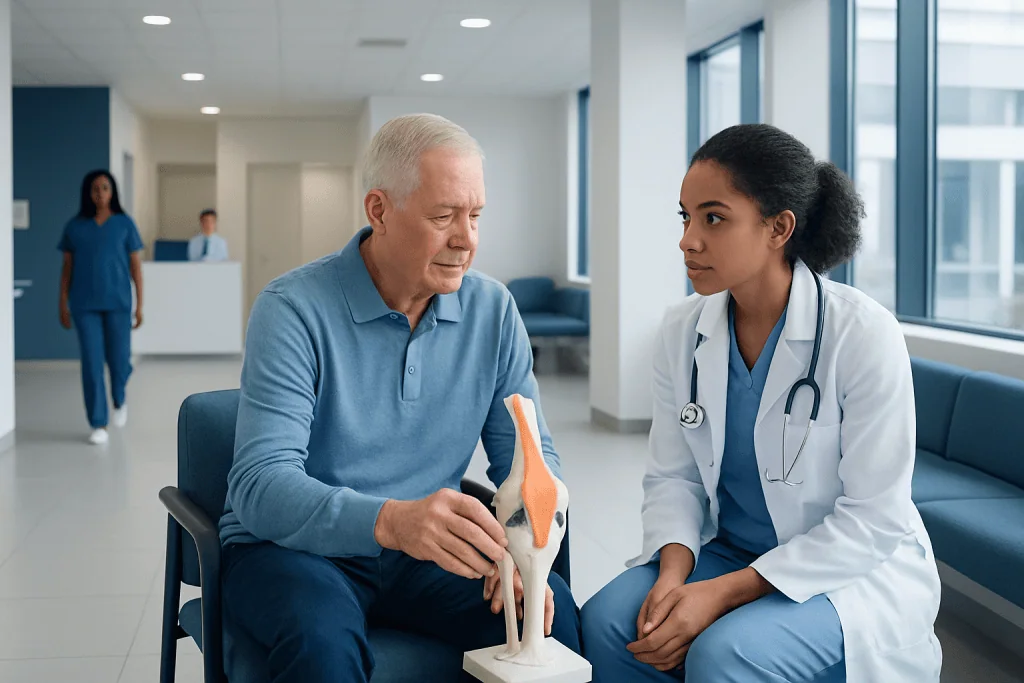
Partial knee replacement treats damage limited to one knee compartment rather than the entire joint. It may offer less postoperative pain, a smaller incision, and quicker recovery than total knee replacement for appropriate candidates.
Key Takeaways
- Partial knee replacement treats damage limited to one knee compartment rather than the entire joint.
- It may offer less postoperative pain, a smaller incision, and quicker recovery than total knee replacement for appropriate candidates.
- Careful evaluation is essential because not everyone with knee arthritis is a good candidate for this procedure.
- Recovery usually involves early walking, physical therapy, and a gradual return to daily activities over weeks to months.
- Benefits can include pain relief and improved function, but risks such as infection, blood clots, stiffness, or later revision surgery still exist.
Medically reviewed by the Acıbadem International Medical Board — July 24, 2026
Partial knee replacement is a surgical option for people whose arthritis affects only one part of the knee. It works by replacing the damaged compartment while preserving healthy bone, cartilage, and ligaments, which can support a more natural-feeling knee and a shorter recovery than total knee replacement in selected patients.
Overview: what partial knee replacement is and how it works
Partial knee replacement is a type of knee surgery that replaces only the worn or damaged section of the knee joint. It is most often used when arthritis is limited to a single compartment of the knee, usually the inner, outer, or kneecap side. Because the healthy parts of the joint are preserved, many patients experience a knee that feels more natural than after a total knee replacement.
The knee has three main compartments. In partial knee replacement, the surgeon removes damaged cartilage and a small amount of bone from the affected compartment and resurfaces it with metal and plastic implants. The other compartments, along with important ligaments such as the anterior cruciate ligament in many cases, are left intact if they are healthy.
This operation is also called unicompartmental knee replacement or partial knee arthroplasty. It is different from total knee replacement because it does not replace the entire joint. For the right patient, this more targeted approach can reduce tissue disruption and support faster rehabilitation.
Who may be a candidate for partial knee replacement
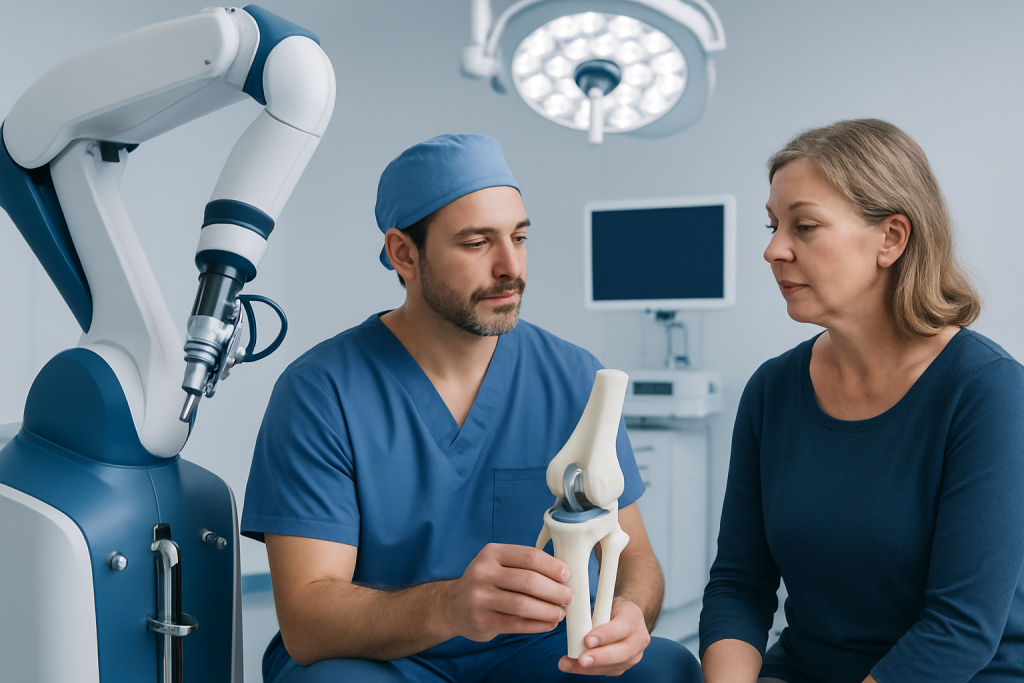
The best candidates usually have pain, stiffness, and reduced function caused by arthritis that is clearly limited to one compartment of the knee. This often includes osteoarthritis, but some patients with localized inflammatory or post-traumatic changes may also be considered after specialist assessment. Symptoms typically continue despite non-surgical treatment such as exercise therapy, weight management, pain-relieving medicines, activity changes, or injections.
Doctors look at more than just an X-ray. Good candidacy also depends on knee stability, range of motion, alignment, ligament function, and the condition of the remaining cartilage. Patients whose arthritis affects several compartments, who have major deformity, severe stiffness, or significant ligament damage may be better suited to a total knee replacement instead.
Age alone does not decide eligibility. Some younger, active adults and some older adults can both be suitable candidates if the pattern of damage is localized. The main question is whether the disease is truly limited enough for a partial procedure to relieve symptoms safely and durably.
People with symptoms from osteoarthritis of the knee often ask whether preserving more of the joint is possible. A consultation with an orthopedic surgeon helps clarify whether the painful area is confined enough for partial knee replacement or whether broader joint damage is present.
Step by step: what happens during the procedure
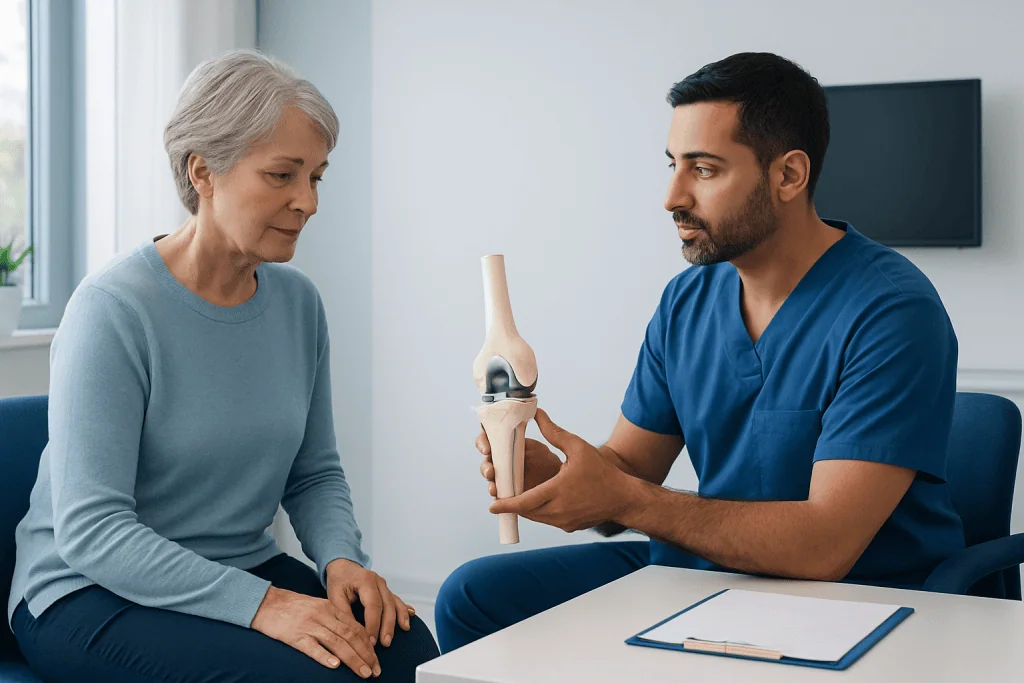
Before surgery, the care team reviews medical history, imaging, medications, and anesthesia planning. Patients are usually advised about fasting, stopping certain medicines when appropriate, and preparing the home for recovery. On the day of surgery, the procedure is commonly performed with regional or general anesthesia, depending on the patient’s needs and the anesthesiologist’s plan.
During the operation, the surgeon makes an incision over the knee and carefully reaches the affected compartment while protecting the healthy tissues. The damaged cartilage and a thin layer of bone are removed from the involved area. The surfaces are then shaped to fit the implant components precisely.
Metal components are fixed to the prepared bone surfaces, and a plastic insert is placed between them to create a smooth gliding surface. The goal is to restore alignment and movement while preserving as much normal bone and ligament function as possible. In many centers, surgical planning may involve advanced imaging or technology to improve precision, but the exact technique varies.
After the implants are checked for fit, stability, and motion, the incision is closed and the patient is monitored in recovery. Some patients go home the same day, while others stay in the hospital for short observation, especially if they have other medical conditions or need additional support.
Benefits, limits, and possible risks
One of the main advantages of partial knee replacement is that it treats only the damaged part of the joint. Compared with total knee replacement, this may mean a smaller incision, less blood loss, less postoperative pain, a shorter hospital stay, and a faster return to walking and everyday activities. Some patients also report that the knee feels more natural because more of the original joint and ligaments are preserved.
However, these benefits depend on proper patient selection. Partial knee replacement is not simply a smaller version of total knee replacement; it is a different procedure for a specific pattern of disease. If arthritis is already affecting other compartments, pain may continue or return over time, and another operation may eventually be needed.
As with any surgery, there are risks. These can include infection, bleeding, blood clots, stiffness, persistent pain, implant loosening, nerve or blood vessel injury, anesthesia-related problems, and the need for revision surgery. There is also a chance that arthritis may progress in the unreplaced parts of the knee later on.
For some people with more advanced or widespread joint damage, robotic knee replacement planning or other surgical approaches may be discussed, but the best option depends on anatomy, severity of disease, and the surgeon’s evaluation. Shared decision-making is important so the expected benefits and possible limitations are understood clearly before surgery.
Recovery timeline and rehabilitation
Recovery after partial knee replacement usually begins on the day of surgery or the next morning. Many patients stand and walk with support soon after the procedure. Early movement is encouraged because it helps improve circulation, reduces stiffness, and starts the process of restoring confidence in the joint.
In the first few weeks, swelling, soreness, and fatigue are common, but these typically improve gradually. Pain control, wound care, walking aids, and exercises are important parts of early recovery. Physical therapy focuses on range of motion, strengthening, balance, and walking pattern. Some people use a walker or crutches briefly, then transition to a cane and later to unassisted walking.
Many patients can return to desk-based work and light daily activities within several weeks, although recovery is individual. Driving, work, stairs, and exercise depend on pain control, strength, mobility, and which knee was operated on. Higher-impact sports are usually discouraged, while walking, cycling, swimming, and low-impact fitness activities are often recommended once healing progresses.
Improvement continues over several months. Follow-up visits help the surgeon monitor healing and implant position. For patients who need comprehensive rehabilitation support after orthopedic surgery, options such as physical therapy and rehabilitation can play an important role in regaining movement and function safely.
How doctors diagnose knee damage and plan surgery
Diagnosis starts with a detailed history and physical examination. The doctor asks where the pain is located, what activities worsen it, whether the knee gives way or locks, and how much function has been lost. Exam findings such as tenderness in one compartment, alignment changes, and range-of-motion limits can help suggest whether the problem is localized.
X-rays are the main imaging test used to assess joint space narrowing, bone changes, and which compartments are affected. Weight-bearing views are especially helpful because they show how the joint behaves under load. In some cases, MRI or other imaging may be used to look at cartilage, ligaments, or other structures when the diagnosis is not straightforward.
The planning process also considers overall health. Conditions such as diabetes, heart disease, obesity, or smoking history do not always prevent surgery, but they can affect preparation, risk, and recovery. Preoperative evaluation helps reduce complications and supports safer anesthesia and rehabilitation planning.
If symptoms are related to advanced knee osteoarthritis, the surgeon will compare non-surgical care with the potential benefits of surgery. This discussion often includes whether partial replacement is likely to relieve pain effectively or whether total knee replacement would offer a better long-term result.
Self-care before and after surgery
Preparation can make recovery smoother. Patients are often advised to strengthen the leg as much as comfort allows before surgery, improve general fitness, stop smoking if possible, and discuss all medications and supplements with the care team. Home planning is also helpful, such as arranging support, removing trip hazards, and placing commonly used items within easy reach.
After surgery, self-care usually includes taking medicines as directed, doing daily exercises, using ice and elevation to help control swelling, and keeping the wound clean and dry according to instructions. Gradually increasing walking and activity is important, but overexertion can increase pain and swelling.
Protecting the new joint matters as well. Patients are commonly encouraged to maintain a healthy body weight, choose low-impact physical activity, and attend follow-up appointments. These steps can support implant longevity and overall joint health.
Near the end of treatment planning, some patients seek coordinated orthopedic care abroad. Acibadem International’s multidisciplinary specialists and JCI-accredited hospitals diagnose and treat knee conditions for international patients, including assessment for knee replacement when appropriate.
When to seek medical care
Medical advice should be sought if knee pain is persistent, limits walking or stairs, disrupts sleep, or does not improve with conservative treatment. An orthopedic evaluation is also important if the knee becomes increasingly stiff, unstable, or noticeably bowed.
After surgery, patients should contact their doctor promptly if they develop increasing redness around the incision, fever, drainage from the wound, worsening calf pain, sudden swelling, chest pain, or shortness of breath. These symptoms do not always mean a serious complication, but they need urgent assessment.
It is also reasonable to speak with a doctor if recovery seems to stall. Ongoing severe pain, inability to progress with walking, or persistent loss of motion may mean the rehabilitation plan needs adjustment or that another issue should be checked.
Frequently asked questions
Is partial knee replacement better than total knee replacement?
Neither procedure is automatically better for everyone. Partial knee replacement can offer faster recovery and a more natural-feeling knee when damage is limited to one compartment. Total knee replacement is usually more appropriate when arthritis affects larger areas of the joint.
How long does it take to recover from partial knee replacement?
Many people begin walking shortly after surgery and make meaningful progress within the first few weeks. Full recovery is gradual and may continue for several months as swelling improves and strength returns. The exact timeline depends on overall health, rehabilitation, and the demands of daily activities.
How painful is partial knee replacement recovery?
Some pain and swelling are expected after surgery, especially in the first days to weeks. However, pain is usually managed with a structured treatment plan that may include medication, icing, movement, and therapy. Many patients find recovery more manageable than they expected, particularly with early rehabilitation and good support.
How long does a partial knee replacement last?
A partial knee replacement can last many years, but longevity varies by age, activity level, implant type, surgical technique, and whether arthritis progresses in the rest of the knee. Some patients may eventually need revision surgery or conversion to a total knee replacement. Regular follow-up helps monitor long-term results.
Can arthritis come back after partial knee replacement?
The replaced compartment itself does not regrow arthritis in the same way, but arthritis can progress in the untreated parts of the knee over time. This is one reason careful patient selection is so important before surgery. Ongoing symptoms after recovery should be evaluated by a doctor.
Will I be able to walk normally after partial knee replacement?
Many patients regain smoother walking and better function once pain decreases and strength improves. Because healthy ligaments and bone are preserved, the knee may feel more natural than with some broader procedures. Physical therapy and gradual activity progression are important for the best walking pattern.
References
- American Academy of Orthopaedic Surgeons
- National Institute for Health and Care Excellence
- National Institute of Arthritis and Musculoskeletal and Skin Diseases
- Arthritis Foundation
- American Association of Hip and Knee Surgeons
This article is for general information only and is not a substitute for professional medical advice. Please consult a qualified doctor about your individual situation.
Explore treatments in Turkey — costs, top hospitals & a free quote
JCI-accredited · board-certified surgeons · reply within 24h