Water Aerobics: What Patients Need to Know
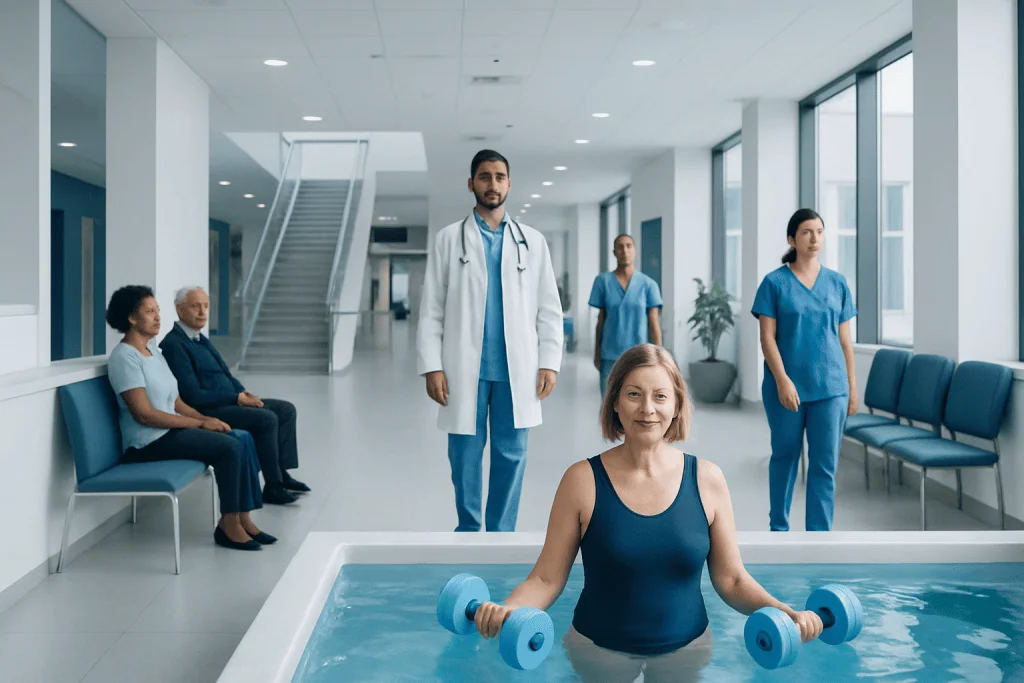
Water aerobics combines aerobic movement with the natural resistance and support of water. It may be especially helpful for joint pain, recovery, balance training, and general fitness.
Key Takeaways
- Water aerobics combines aerobic movement with the natural resistance and support of water.
- It may be especially helpful for joint pain, recovery, balance training, and general fitness.
- Most people do not need to know how to swim if classes are held in shallow water and supervised.
- Proper pool safety, hydration, and gradual progression help reduce the risk of injury.
- People with heart, lung, skin, or mobility conditions should ask a doctor what type of aquatic exercise is appropriate.
Water aerobics is a form of low-impact exercise performed in a pool, often suitable for people who want to improve fitness while placing less stress on joints and muscles. It can help with strength, endurance, balance, and mobility, but the best routine depends on a person’s health, swimming ability, and medical conditions.
Overview: What water aerobics is and why people choose it
Water aerobics is structured exercise performed in water, usually in a shallow pool. It often includes walking, leg lifts, arm movements, balance drills, and rhythmic exercises that raise the heart rate without the same impact seen in land-based workouts. For many patients, this makes it a practical option for staying active when running, jumping, or high-impact classes feel uncomfortable.
The main reason water aerobics feels different is the water itself. Buoyancy helps support body weight, which can reduce stress on the knees, hips, ankles, and lower back. At the same time, water provides gentle resistance in every direction, so muscles work throughout the movements even when the exercise feels relatively controlled.
People use water aerobics for different goals. Some want general cardiovascular fitness, some want to improve flexibility and balance, and others are looking for a more comfortable way to exercise during recovery, aging, or weight management. It may also be recommended as part of a broader rehabilitation plan, including physical therapy and rehabilitation for movement and function.
How water aerobics affects the body
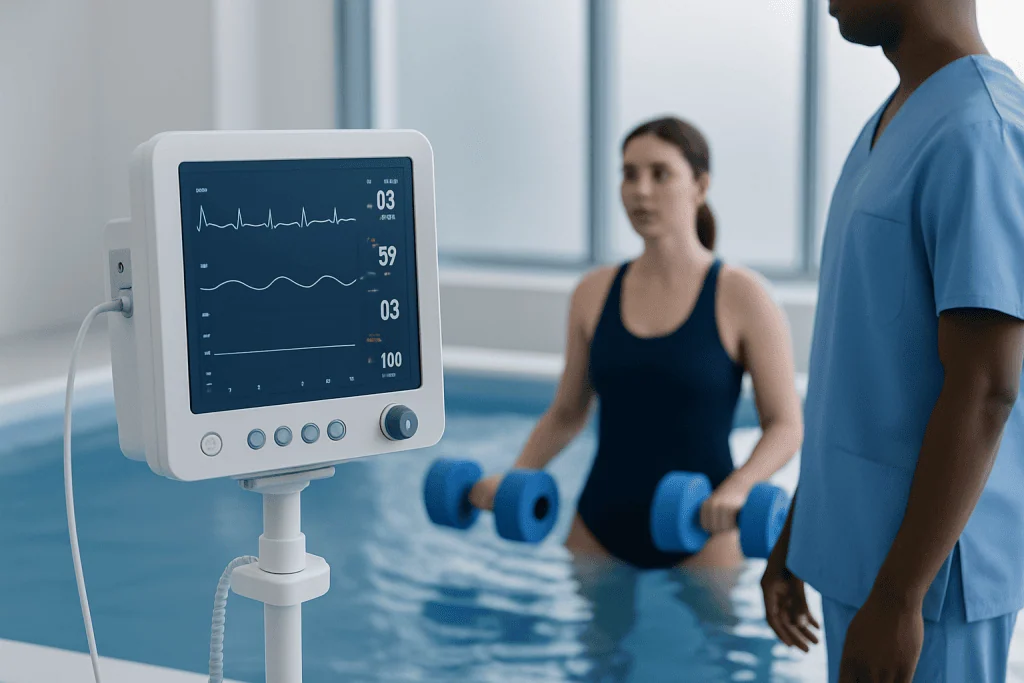
Water changes how the body moves and responds to exercise. Because the body is partly supported, movement may feel easier for painful joints, but the water’s resistance still challenges muscles and the cardiovascular system. This combination is one reason aquatic exercise is often used for people who need both support and strengthening.
Exercise in water can help improve endurance, muscle tone, and coordination. Moving against resistance may strengthen the legs, hips, core, shoulders, and arms. Depending on the pace and type of class, water aerobics can range from gentle therapeutic movement to a moderate workout that supports heart health and calorie use.
Water may also help some people feel more stable. The slower, controlled environment can be useful for those working on balance or confidence with movement. This can be relevant for people recovering from injury or living with neurological or musculoskeletal problems that affect gait or coordination.
- Buoyancy reduces loading on weight-bearing joints
- Resistance supports strength and muscle endurance
- Water pressure may aid body awareness and controlled movement
- Warm pools can help some people relax stiff muscles
Who may benefit most from water aerobics

Water aerobics can be appropriate for many adults, including beginners, older adults, and people returning to exercise after a period of inactivity. It is commonly chosen by those who want a joint-friendly activity that can be adjusted to different fitness levels. In a supervised setting, movements can often be modified by speed, depth of water, body position, or the use of flotation and resistance equipment.
People with joint discomfort may find water exercise easier to tolerate than land-based classes. This can include those living with osteoarthritis or chronic stiffness in the hips, knees, and spine. Some patients with excess body weight also prefer the pool because it can make movement feel more manageable and less painful while building confidence with exercise.
Water aerobics may also help during recovery from some orthopedic injuries or surgeries, once a doctor says pool activity is safe. In selected patients, it can complement care plans involving orthopedic evaluation and treatment or structured rehabilitation. For others, it may simply be an enjoyable way to maintain routine activity, which can support long-term overall health.
Still, suitability depends on the individual. The same class may be ideal for one patient and too demanding for another. Intensity, pool temperature, mobility needs, and any heart, lung, skin, or neurological condition should all be considered before starting.
Potential risks and who should use caution
Although water aerobics is generally considered low impact, it is not risk-free. Slips on wet pool surfaces, muscle strain from unfamiliar movements, fatigue, and dehydration can occur. Some people also overestimate how easy a class will be and start at an intensity that is too high for their current fitness level.
Certain medical conditions require additional caution. Patients with poorly controlled heart disease, severe breathing problems, open wounds, infections, uncontrolled seizures, or significant balance impairment may need medical clearance or a more specialized aquatic program. Those with chlorine sensitivity, some skin conditions, or incontinence concerns may also need guidance before joining a group class.
Pool temperature matters as well. Very warm water may not be ideal for some people with heart or circulation problems, while cooler water may aggravate muscle stiffness in others. If a person has had a recent surgery or has a chronic neurological condition, individual advice is important. In some cases, evaluation by neurology specialists or a rehabilitation team helps determine the safest type of exercise.
What a safe and effective water aerobics routine looks like
A good water aerobics routine usually starts with a short warm-up, such as slow walking in place, shoulder rolls, or gentle range-of-motion exercises. The main session may include marching, side steps, knee lifts, arm sweeps, kicks, balance work, or simple choreographed movements. Many classes end with a cool-down and stretching to help the body transition back to rest.
Beginners often do best with shorter sessions and moderate intensity. A person does not need to move fast to benefit. In water, slow and controlled movements can still be challenging because resistance is constant. Over time, intensity can be increased by moving faster, using foam weights or paddles, or working in deeper water if appropriate and supervised.
Technique and safety are more important than trying to keep up with others. Supportive footwear designed for pool use may reduce slipping. It is also helpful to drink water before and after class, even if the body does not feel sweaty in the pool. People who feel dizzy, short of breath, unusually tired, or in pain should stop and let the instructor know.
- Choose a class matched to fitness and mobility level
- Start gradually and increase effort over time
- Use rails, flotation aids, or shallow water if needed
- Avoid pushing through chest pain, severe shortness of breath, or joint pain
How water aerobics compares with other exercise options
Water aerobics is not automatically better than walking, cycling, strength training, or physical therapy exercises. Instead, it offers a different environment that may make exercise more accessible for certain patients. Someone with healthy joints and good exercise tolerance may benefit just as much from land-based activity, while another person with pain or reduced mobility may find the pool far more sustainable.
One important difference is impact. Activities such as brisk walking or jogging provide weight-bearing stimulus that can support bone health, while water exercise reduces impact and loading. For that reason, some people benefit from a combination of aquatic and land-based exercise rather than using only one approach.
Water aerobics can be especially useful as a bridge. It may help a person rebuild confidence, stamina, and movement quality before progressing to other forms of exercise. In patients with back pain, joint disease, or deconditioning, clinicians sometimes combine pool work with targeted strengthening, flexibility, and home exercise plans.
Prevention, self-care, and practical tips before starting
Before starting water aerobics, patients should think about the practical side as well as the medical side. It helps to choose a supervised program, especially at the beginning. Instructors with experience in older adults, rehabilitation, or chronic conditions can often offer safer modifications than a general fitness class.
Patients should wear comfortable swim clothing that allows easy movement and consider non-slip pool shoes. Entering and leaving the pool safely matters just as much as the class itself, particularly for those with arthritis, weakness, or balance concerns. Showering after pool use and changing out of wet clothing promptly may help reduce skin irritation.
Self-monitoring is important. Mild muscle tiredness can be normal when starting a new activity, but persistent pain, swelling, palpitations, or next-day exhaustion suggest the routine may need adjustment. People who have a history of falls, chronic pain, or neurological symptoms may benefit from a tailored exercise plan. Near the end of the care pathway, some patients choose assessment in a multidisciplinary setting; Acibadem International’s specialists in JCI-accredited hospitals diagnose and treat conditions that can affect safe exercise participation for international patients.
When to seek medical care
Medical advice is recommended before beginning water aerobics if a person has heart disease, lung disease, uncontrolled high blood pressure, recent surgery, severe joint pain, dizziness, fainting episodes, or a condition that affects balance or sensation. Guidance is also sensible for anyone who is unsure whether pool exercise is safe during recovery from injury or illness.
A person should stop exercising and seek prompt medical care if symptoms develop during or after class, such as chest pain, severe shortness of breath, fainting, sudden weakness, marked joint swelling, or confusion. New neurological symptoms, including numbness, one-sided weakness, or trouble speaking, should be treated as urgent.
Persistent pain that lasts beyond normal post-exercise soreness is also a reason for evaluation. If exercise is being considered as part of recovery from an injury, chronic musculoskeletal condition, or mobility disorder, a doctor or rehabilitation professional can help decide whether aquatic exercise, land-based exercise, or a combination is the best option.
Frequently asked questions
Is water aerobics good for beginners?
Yes. Water aerobics is often suitable for beginners because the water supports the body and reduces impact on the joints. Many classes can be adjusted for different ages, fitness levels, and mobility needs.
Do people need to know how to swim to do water aerobics?
Usually not. Many water aerobics classes take place in shallow water where participants can stand comfortably. Even so, people should always tell the instructor if they are not confident in the water.
Can water aerobics help with arthritis?
It may help some people with arthritis by allowing movement with less joint loading than land-based exercise. The water’s resistance can also support gentle strengthening, but the program should match the person’s symptoms and abilities.
Is water aerobics enough exercise on its own?
For some people, it can be a meaningful part of a healthy routine, especially if it improves consistency and comfort. However, many patients benefit from a broader plan that may also include strength training, balance work, and some land-based activity if appropriate.
Can older adults do water aerobics safely?
Often yes, especially in supervised classes designed for older adults. Safety depends on individual health, balance, cardiovascular status, and ease of entering and leaving the pool.
What should a person do if they feel pain during class?
They should stop the activity and tell the instructor. Mild muscle effort is expected, but sharp pain, chest discomfort, dizziness, or severe shortness of breath should be checked by a medical professional.
This article is for general information only and is not a substitute for professional medical advice. Please consult a qualified doctor about your individual situation.
Joint and spine care in Turkey — expert assessment & treatment
JCI-accredited · board-certified surgeons · reply within 24h
Add us as a Preferred Source to see more of our trusted health content across Google Search, AI Overviews and Discover.
Check your numbers in seconds
BMI, calories, due date, blood pressure and 30+ more clinical calculators — free, instant, doctor-reviewed ranges.

More from the Health Library

PTSD: A Complete Medical Overview

Fidget Spinner Fidget Spinners: What Patients Need to Know

Fatty Fish: What Patients Need to Know

Frailty: An Evidence-Based Guide for Patients

Disc Desiccation — Explained by Medical Evidence, Not Myths