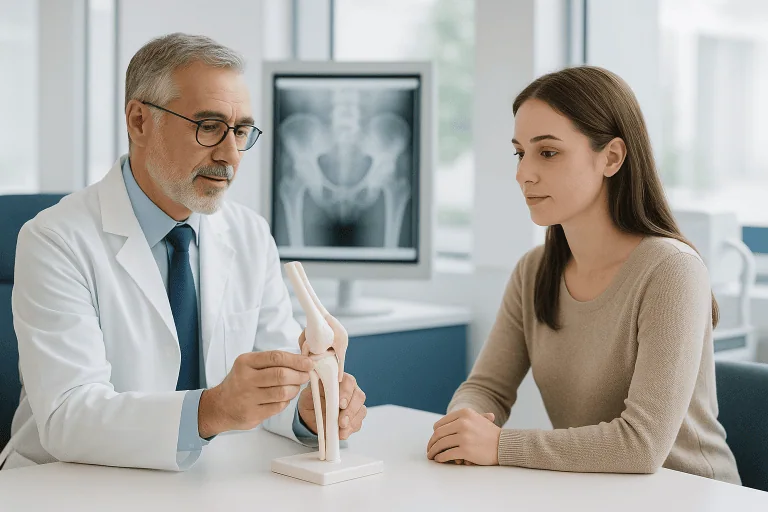
Knee Osteoarthritis
Knee Osteoarthritis causes knee pain, stiffness and reduced mobility. Learn symptoms, diagnosis, treatment options and when to see a specialist.
Quick answer
Knee osteoarthritis is a degenerative joint condition in which the cartilage in the knee gradually wears down, causing pain, stiffness, swelling, and reduced movement. Treatment depends on symptoms and stage, and may include lifestyle measures, medication, physical therapy, injections, or surgery such as knee replacement when conservative options no longer provide relief.
What is knee osteoarthritis?
Knee osteoarthritis is a long-term joint condition in which the cartilage inside the knee gradually wears down. Cartilage is the smooth, rubbery tissue that covers the ends of the bones and allows them to glide against each other with very little friction. When this protective layer thins or breaks down, the bones begin to rub more directly against one another, which can cause pain, stiffness, swelling, and reduced movement in the knee.
Doctors sometimes call this condition “wear-and-tear arthritis” or degenerative joint disease. In medical coding systems it is often listed under the code M17.9, which simply refers to knee osteoarthritis without further specification. Although the term “wear and tear” is common, researchers now understand that knee osteoarthritis is more than simple mechanical wearing. It involves changes in the whole joint, including the cartilage, the underlying bone, the joint lining (called the synovium), and the surrounding muscles and ligaments.
Knee osteoarthritis is one of the most common joint conditions worldwide. It becomes more frequent with age and is often seen in people over 50, although younger adults can develop it too, especially after a knee injury. It affects both men and women, and women are affected somewhat more often, particularly after menopause. The condition can involve one knee or both, and it can affect different parts of the joint, such as the inner (medial) side, the outer (lateral) side, or the area behind the kneecap.
Understanding what is knee osteoarthritis, how it develops, and what can be done about it helps many people manage their symptoms and stay active for as long as possible. While there is currently no way to reverse cartilage loss, a wide range of treatments can reduce pain and improve function.
Symptoms of knee osteoarthritis
Knee osteoarthritis symptoms usually develop slowly over months or years. Early on, many people notice discomfort only after activity. As the condition progresses, symptoms may occur more often, last longer, and begin to interfere with daily life.
Common knee osteoarthritis symptoms include:
- Pain in or around the knee, often worse during or after activity such as walking, climbing stairs, or standing for long periods.
- Stiffness, especially in the morning or after sitting for a while. This stiffness typically eases within about 30 minutes of moving around, which helps distinguish it from some inflammatory forms of arthritis.
- Swelling around the joint, which may come and go. This can be caused by extra fluid in the joint or by soft-tissue inflammation.
- Grating, crackling, or clicking sensations (called crepitus) when bending or straightening the knee.
- Reduced range of motion, meaning the knee does not bend or straighten as fully as it once did.
- A feeling of weakness or instability, as if the knee might give way or buckle.
- Tenderness when pressing on the joint line, where the two main leg bones meet.
Symptoms often vary by stage. In early or mild knee osteoarthritis, pain may appear only after strenuous activity and settle with rest. In moderate disease, pain may occur during everyday tasks such as walking short distances or getting up from a chair. In advanced knee osteoarthritis, pain can be present at rest or during the night, the knee may look visibly enlarged or misaligned (for example, developing a bow-legged or knock-kneed appearance), and mobility can become significantly limited.
The location of symptoms can also depend on which part of the knee is most affected. Osteoarthritis behind the kneecap (patellofemoral osteoarthritis) often causes pain at the front of the knee when climbing stairs, squatting, or sitting for long periods. Osteoarthritis on the inner side of the knee, which is the most common pattern, tends to cause pain along the inner joint line.
It is worth knowing that the severity of symptoms does not always match what is seen on an X-ray. Some people with noticeable joint changes on imaging have little pain, while others with milder imaging findings experience considerable discomfort.
Causes and risk factors
There is usually no single cause of knee osteoarthritis. Instead, it develops from a combination of factors that place stress on the joint or affect the body’s ability to maintain healthy cartilage. Common knee osteoarthritis causes and risk factors include:
- Age. Cartilage naturally loses some of its resilience over time, and the risk of knee osteoarthritis rises with age, particularly after 50.
- Excess body weight. The knee carries several times the body’s weight with each step, so extra weight increases the load on the joint. Body fat may also release substances that promote low-level inflammation in joints.
- Previous knee injury. Fractures near the joint, torn ligaments (such as the anterior cruciate ligament, a stabilizing band inside the knee), or damage to the meniscus (a cushioning pad of cartilage) can raise the risk of osteoarthritis later, sometimes many years after the injury. This is often called post-traumatic osteoarthritis.
- Genetics. Knee osteoarthritis tends to run in some families, suggesting inherited differences in cartilage structure or joint shape play a role.
- Sex. Women are affected more often than men, especially after menopause.
- Repetitive stress on the knee. Occupations or activities involving frequent kneeling, squatting, heavy lifting, or climbing may increase risk over time.
- Joint alignment and shape. Being naturally bow-legged or knock-kneed, or having differences in leg length, can concentrate load on one part of the knee.
- Muscle weakness. Weak thigh muscles, particularly the quadriceps at the front of the thigh, provide less support and shock absorption for the joint.
- Other joint conditions. Previous inflammatory arthritis, gout (a form of arthritis caused by crystal deposits), or joint infections can damage cartilage and lead to secondary osteoarthritis.
Ordinary, moderate exercise such as walking or recreational sport is not considered a cause of knee osteoarthritis in a healthy joint. In fact, regular movement helps nourish cartilage and strengthen the muscles that protect the knee.
Diagnosis
Knee osteoarthritis diagnosis is usually based on a combination of your medical history, a physical examination, and imaging when needed. There is no single blood test that confirms osteoarthritis; instead, doctors piece together several types of information.
Medical history and physical examination
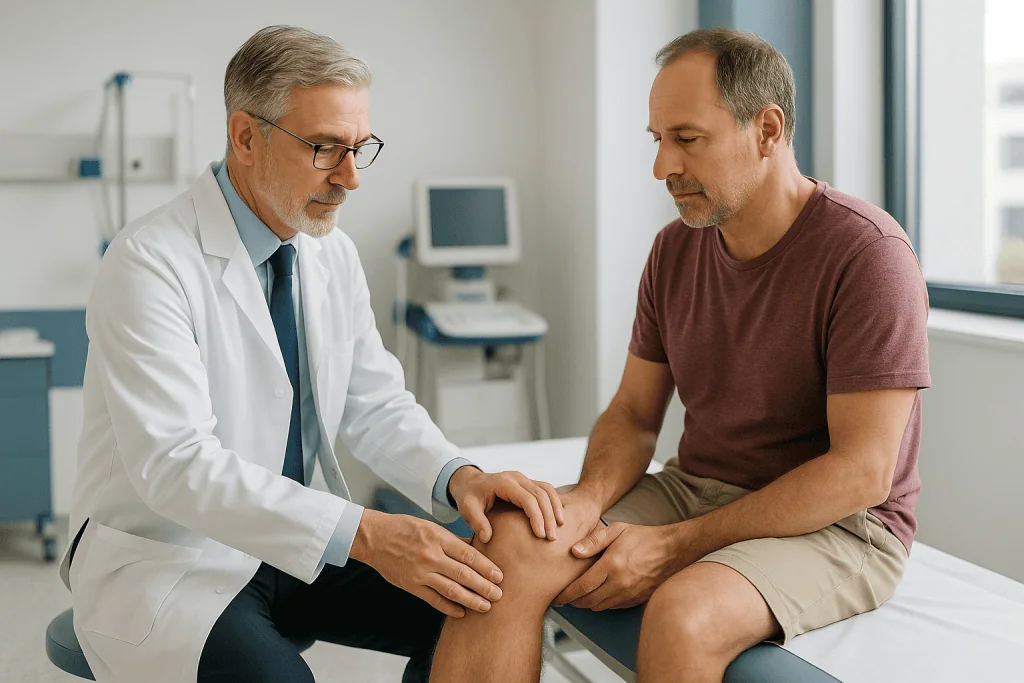
Your doctor will typically ask when the pain started, what makes it better or worse, whether you have morning stiffness and how long it lasts, and whether you have had knee injuries in the past. During the examination, the doctor may look for swelling, tenderness along the joint line, crepitus, limited range of motion, and changes in leg alignment. They may also check how you walk and assess the strength of your leg muscles.
Imaging tests
A plain X-ray is the most common imaging test. In knee osteoarthritis, X-rays often show narrowing of the space between the bones (a sign of cartilage loss), small bony growths at the joint edges called osteophytes or bone spurs, and increased density of the bone just under the cartilage. X-rays taken while you are standing give a more accurate picture of joint space narrowing, because the knee is under load.
Magnetic resonance imaging (MRI), which uses magnetic fields to create detailed pictures of soft tissues, is not usually needed to diagnose knee osteoarthritis. Your doctor may order an MRI if the diagnosis is unclear or if another problem, such as a significant meniscus tear, is suspected.
Laboratory tests
Blood tests cannot confirm osteoarthritis, but they can help rule out other conditions such as rheumatoid arthritis (an autoimmune form of joint inflammation) or gout. If the knee is very swollen, the doctor may remove a small sample of joint fluid with a needle (a procedure called joint aspiration) to check for infection or crystals.
Diagnostic criteria
In many cases, doctors can make a confident clinical diagnosis in a person over 45 who has activity-related knee pain and either no morning stiffness or stiffness lasting less than about 30 minutes, without necessarily ordering imaging. When the picture is less typical, or when treatment decisions such as surgery are being considered, imaging plays a larger role.
Treatment options for knee osteoarthritis
Knee osteoarthritis treatment aims to relieve pain, maintain or improve mobility, and slow the impact of the condition on daily life. There is currently no treatment proven to regrow lost cartilage, so care focuses on managing symptoms and protecting the joint. Treatment is usually stepwise, starting with the simplest and safest measures. Care is generally coordinated by orthopedic specialists; at Acibadem, for example, this condition is managed within the Orthopedics & Joint Center, often together with physical therapists.
Self-care and watchful waiting
For mild symptoms, doctors often recommend a period of monitoring combined with lifestyle measures. These are the foundation of treatment at every stage:
- Exercise. Regular low-impact activity such as walking, cycling, or swimming, combined with exercises to strengthen the thigh and hip muscles, is one of the most effective ways to reduce pain and improve function.
- Weight management. If you carry extra weight, even modest weight loss can meaningfully reduce the load on the knee and often eases symptoms.
- Physical therapy. A physical therapist can design a tailored program, teach joint-protection techniques, and help improve balance and walking patterns.
- Supportive devices. Cushioned footwear, a cane used on the opposite side, or in some cases a knee brace may reduce strain on the joint.
- Heat and cold. Warm packs may ease stiffness, while cold packs can help with swelling after activity.
Medications
Medicines do not change the course of knee osteoarthritis, but they can help control pain. Options your doctor may discuss include:
- Topical anti-inflammatory gels or creams applied to the skin over the knee. These are often tried first because they have fewer body-wide side effects.
- Oral pain relievers such as acetaminophen (paracetamol) or nonsteroidal anti-inflammatory drugs (NSAIDs) like ibuprofen or naproxen. NSAIDs can affect the stomach, kidneys, and heart, so they should be used at the lowest effective dose and reviewed regularly, especially in older adults.
- Duloxetine, a medicine that affects pain signaling, which is sometimes used for persistent osteoarthritis pain.
Opioid painkillers are generally avoided for long-term knee osteoarthritis because of their risks and limited benefit. Supplements such as glucosamine and chondroitin are widely sold, but the evidence for meaningful benefit is mixed, so discuss them with your doctor before use.
Injections and procedures
When pain persists despite the measures above, your doctor may suggest an injection into the joint:
- Corticosteroid injections can reduce inflammation and pain for a limited period, often weeks to a few months. They are usually not repeated too frequently, because repeated injections may affect joint tissues over time.
- Hyaluronic acid injections, sometimes called viscosupplementation, add a gel-like substance similar to natural joint fluid. Evidence for their benefit is mixed, and guidelines differ on their use; your doctor can explain whether they might be appropriate for you.
- Other injections, such as platelet-rich plasma (a preparation made from your own blood), are areas of ongoing research, and their long-term effectiveness is not yet firmly established.
Surgery
Surgery is generally considered when significant pain and disability persist despite thorough nonsurgical treatment. Options depend on your age, activity level, and the pattern of joint damage:
- Osteotomy, a procedure that realigns the leg bone to shift weight away from the damaged part of the knee, may be an option for some younger, active patients with damage limited to one side of the joint.
- Partial knee replacement replaces only the worn compartment of the knee with metal and plastic components, preserving the healthy parts of the joint.
- Total knee replacement replaces the damaged joint surfaces of the whole knee. It is a well-established operation that, in many cases, substantially reduces pain and improves function, although recovery takes time and outcomes vary from person to person.
Arthroscopic “clean-out” surgery (keyhole surgery to wash out or trim tissue) is generally not recommended for knee osteoarthritis alone, as studies have not shown lasting benefit for most patients with degenerative changes.
Living with knee osteoarthritis and outlook
Knee osteoarthritis is a chronic condition, which means it is long-lasting and cannot currently be cured. However, its course varies widely. In many people, symptoms progress slowly over years, and some experience long periods of stability or even improvement in symptoms with good management. Others find that the condition gradually limits their activities and eventually needs surgical treatment.
Day to day, many people manage well by staying active within their comfort limits, keeping their leg muscles strong, maintaining a healthy weight, pacing activities, and using pain-relief strategies when needed. Avoiding movement out of fear of “wearing out” the knee is usually counterproductive; inactivity weakens the muscles that support the joint and often makes stiffness and pain worse.
Living with persistent pain can also affect sleep, mood, and independence. If you notice these effects, mention them to your doctor, as addressing them is part of good osteoarthritis care. With appropriate treatment and self-management, many people with knee osteoarthritis continue to work, exercise, and enjoy their usual activities, sometimes with adjustments. No outcome can be guaranteed, but early attention to weight, muscle strength, and activity habits often improves long-term function.
Frequently asked questions
What is knee osteoarthritis in simple terms?
Knee osteoarthritis is the gradual breakdown of the smooth cartilage that cushions the bones inside the knee. As the cartilage thins, the joint becomes painful, stiff, and sometimes swollen. It is the most common form of arthritis affecting the knee and becomes more frequent with age, though injuries and other factors can cause it in younger people too.
Can knee osteoarthritis heal on its own?
Cartilage has a very limited ability to repair itself, so knee osteoarthritis does not usually heal or reverse on its own. However, symptoms often fluctuate, and many people improve considerably with exercise, weight management, and other treatments. The goal of care is to control pain and protect the joint, rather than to restore the cartilage that has been lost.
How serious is knee osteoarthritis?
The seriousness varies widely from person to person. Some people have mild, occasional symptoms for many years, while others develop significant pain and disability that affect walking, work, and daily activities. Knee osteoarthritis is not life-threatening, but advanced disease can substantially reduce quality of life, which is why early management and, when appropriate, surgical treatment are important topics to discuss with your doctor.
What is the best treatment for knee osteoarthritis?
There is no single best knee osteoarthritis treatment; care is tailored to your symptoms, stage of disease, and overall health. For most people, the foundation is regular low-impact exercise, muscle strengthening, and weight management if needed. Medications, injections, and physical therapy may be added for pain control, and surgery such as knee replacement is considered when other measures no longer provide adequate relief.
Is walking good or bad for knee osteoarthritis?
For most people, walking is beneficial. Regular, moderate walking helps keep the joint mobile, strengthens supporting muscles, and supports weight management. It is normal to feel some discomfort when starting, but pain that steadily worsens with activity or lasts long afterward is a sign to adjust the pace or distance. A doctor or physical therapist can help you find a level of activity that suits your knee.
How long is recovery after knee replacement for osteoarthritis?
Recovery varies, but many people are walking with support within a day or two of surgery and gradually return to everyday activities over the following weeks. Meaningful improvement often continues for several months, and full recovery of strength and function can take up to a year in some cases. Your surgical team can give you a more personal estimate based on your health and the type of operation.
Can young people get knee osteoarthritis?
Yes. Although knee osteoarthritis is most common in people over 50, younger adults can develop it, particularly after knee injuries such as ligament tears, meniscus damage, or fractures near the joint. Genetic factors, joint alignment problems, and excess body weight can also contribute at younger ages. Young people with persistent knee pain after an injury should have the joint evaluated.
When to see a doctor
Make an appointment with a doctor if you have knee pain or stiffness that lasts more than a few weeks, keeps returning, interferes with sleep or daily activities, or is not improving with rest and simple self-care. Early evaluation allows an accurate knee osteoarthritis diagnosis and helps you start effective management sooner.
Seek medical attention promptly if you notice any of the following warning signs, as they may indicate a problem other than, or in addition to, osteoarthritis:
- A hot, red, and very swollen knee, especially with fever or chills, which could indicate a joint infection requiring urgent treatment.
- Sudden, severe knee pain after an injury, or an inability to put weight on the leg.
- Obvious deformity of the knee or a joint that appears out of place.
- A knee that locks completely and cannot be bent or straightened.
- Rapid swelling within hours of an injury or without any clear cause.
- Numbness, tingling, or a cold, pale foot on the affected side, which may suggest nerve or blood vessel involvement.
- Unexplained weight loss or feeling generally unwell alongside joint pain.
If you have already been diagnosed with knee osteoarthritis, contact your doctor if your symptoms change suddenly, if pain becomes constant or wakes you at night, or if your current treatment is no longer controlling your symptoms. Adjusting the treatment plan over time is a normal part of managing this condition.
Patient Guides for This Condition
From the Acibadem Blog

Knee Gel Injections: Cost and Evidence for Hyaluronic Acid, Honestly
The price of hyaluronic acid knee injections varies widely with the product used, the number of injections in a course, imaging guidance, and country,…

Stem Cell Therapy for Knees: Where the Science Actually Stands
Stem cell therapy for knees remains experimental. Small studies suggest injections of bone-marrow or fat-derived cells may ease osteoarthritis pain for some people, but…
Medically reviewed by the Acıbadem International Medical Board September 3, 2026
See our medical review board →
Update history
- PublishedJune 8, 2026
- Medical review approvedSeptember 3, 2026
- Last content updateSeptember 3, 2026